The network for creativity
Join 1.25M professional creatives like you
Connect with clients, get discovered, and run your business 100% commission-free
Creatives on Contra have earned over $150M and we are just getting started
Back to feedPost

Strong AI Candidates Don’t Buy Vision. They Buy Clarity.
Something I’m seeing more clearly in AI/ML/robotics hiring right now:
The strongest candidates are not just asking:
“Is this company doing AI?”
They’re asking:
“Is this a real technical problem?”
“Will I own something meaningful?”
“Is the infrastructure serious?”
“Are the founders clear on what needs to work in the next 90 days?”
“Will I be surrounded by people who can actually build?”
That last one matters more than most teams realize.
A lot of early-stage companies still try to attract AI talent with broad vision language:
“We’re transforming the future of X.”
“We’re building agentic workflows.”
“We’re applying AI to a massive market.”
That might get attention.
It rarely closes the candidate.
The best AI/ML/robotics engineers are looking for evidence.
They want to know whether the company understands the real work after the demo: messy data, latency, deployment constraints, model behavior, hardware limitations, infrastructure tradeoffs, customer weirdness, and all the unsexy problems that separate a prototype from a product.
This is where founders accidentally lose strong candidates.
Not because the company is weak.
Because the role is too vague.
The must-haves are blurred with the nice-to-haves. The candidate can’t tell whether they’re joining a serious technical mission or becoming the person responsible for making the AI slide deck true.
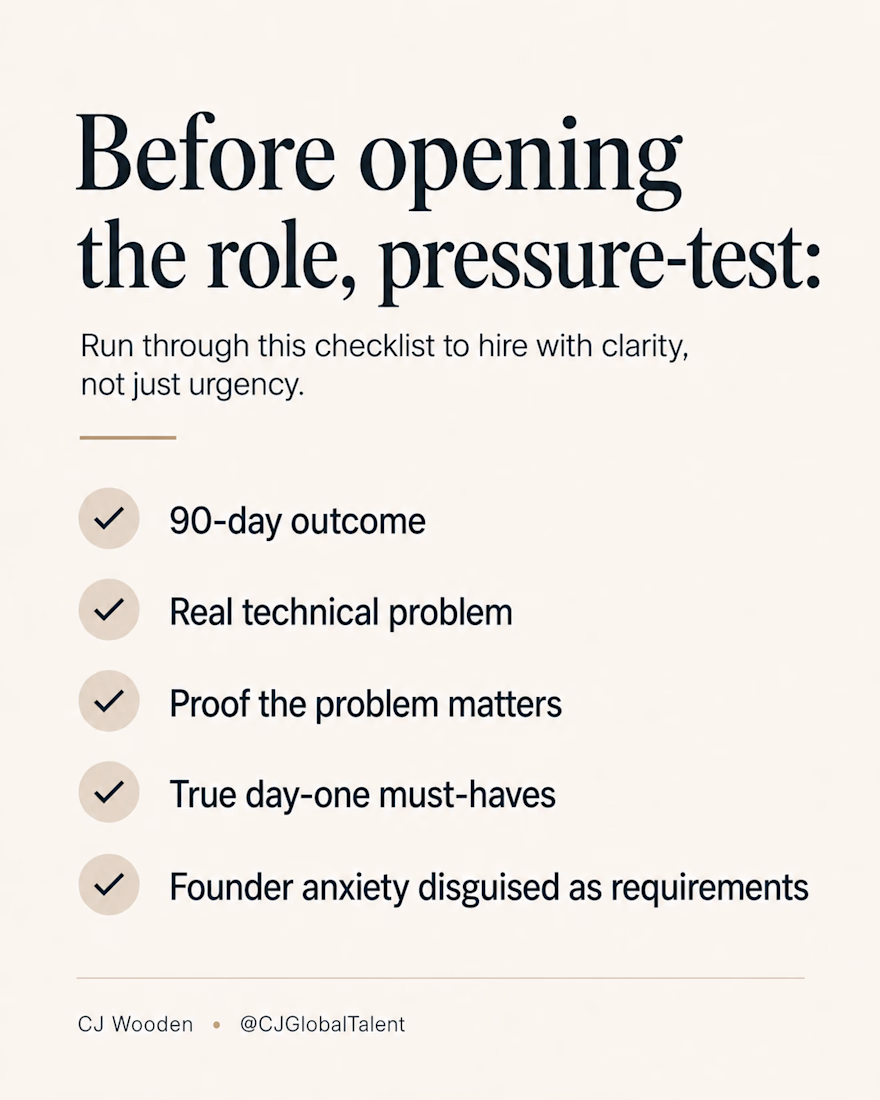
Before opening another AI/ML/robotics role, I’d pressure-test five things:
What must this person make true in the first 90 days?
What technical problem will make a great engineer lean forward?
What proof can you show that the problem is real?
Which requirements are actually essential on day one?
Which ones are just founder anxiety in bullet-point form?
This applies beyond technical hiring too.
Consultants, creatives, operators, and founders all deal with the same thing:
Strong people don’t just buy the opportunity.
They buy the clarity.
If your role, project, or client brief feels fuzzy, strong people hesitate.
If it feels clear, specific, and grounded in real outcomes, they engage.
If you’re hiring for a hard technical role right now and your pipeline is noisy, I’m happy to help you pressure-test the role before you spend another month chasing the wrong people.
The network for creativity
Join 1.25M professional creatives like you
Connect with clients, get discovered, and run your business 100% commission-free
Creatives on Contra have earned over $150M and we are just getting started





Related posts


Does an AI brand still need to look like an AI brand?
Lupr helps small and growing businesses adopt AI without the complexity, so the identity needed to do the same.
We built a clean, approachable system around movement, connection and continuous improvement, without leaning on the usual futuristic tech clichés.
The idea was simple: make AI feel like useful business infrastructure, not something you need to be an expert to understand.
As AI becomes part of everyday business, do you think brands still need to visibly signal “AI”?
Full case study below 👇


Great design it feels alive 🎉🎉❤️❤️


Lately I’ve been working on something I call “Curative Intelligence,” and this is the first time I’m using that approach for a paid project.
The team came to me because they wanted something that didn’t feel generic. Instead of following the usual branding process, they were open to experimenting, exploring different directions, and pushing the capabilities of AI before landing on the final logo design.
They wanted to see how far we could take it, and were willing to take that leap of faith by moving away from the traditional routes to creating a winning brand design.
For me, this project wasn’t just about designing a logo. It was about giving experimentation, AI, and creative intuition the same space in the process.
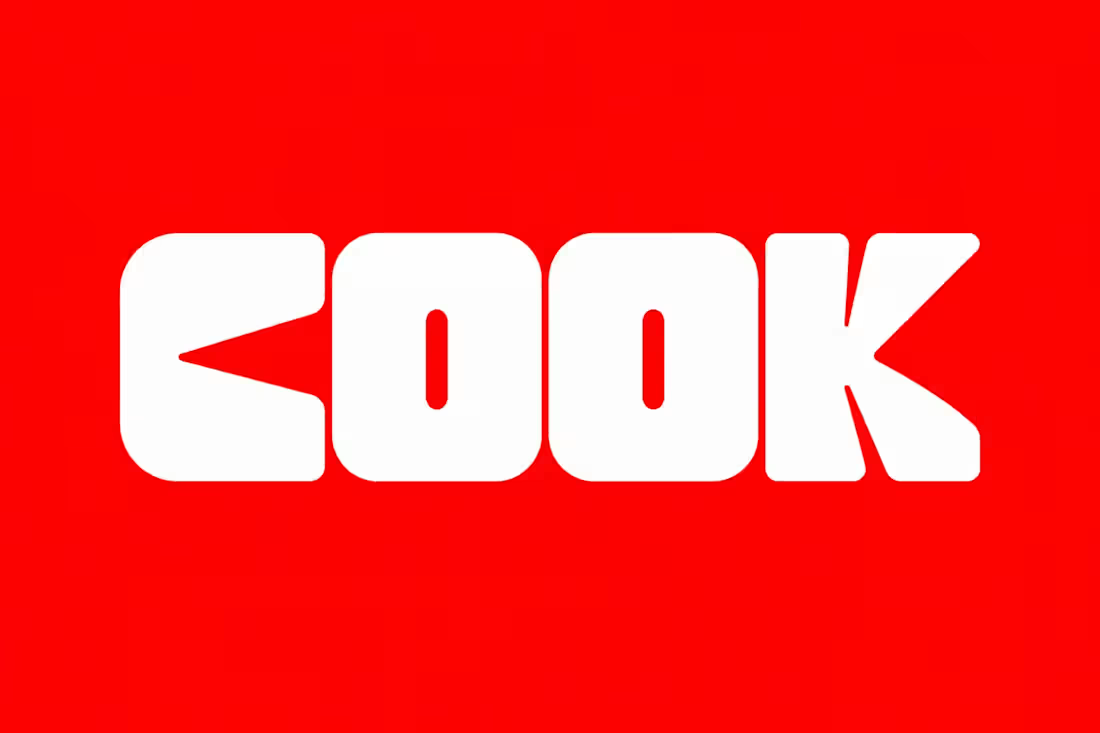
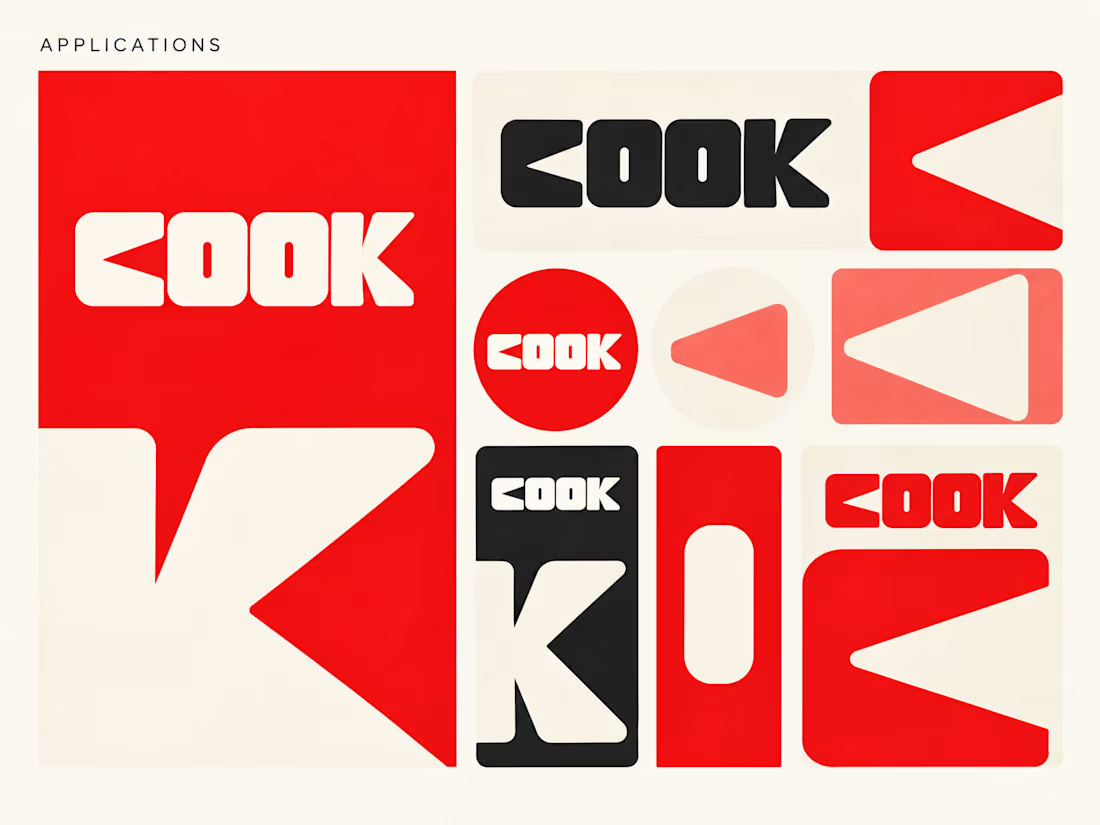
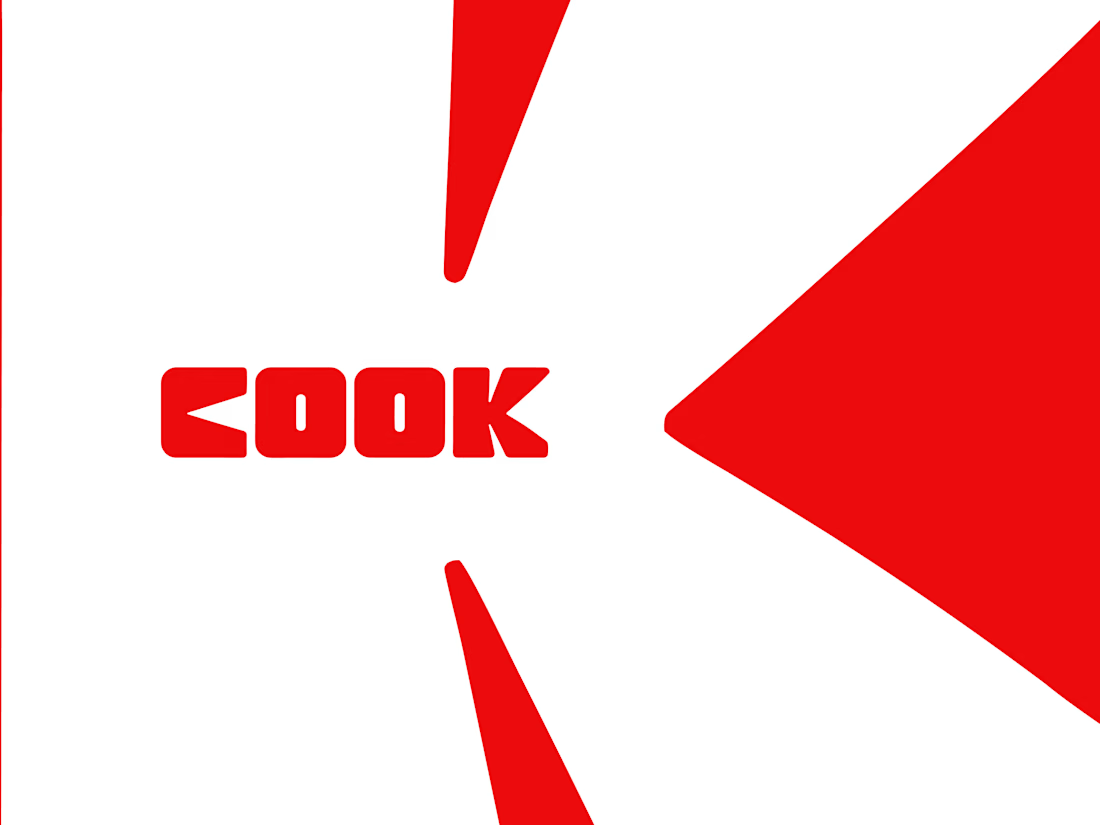
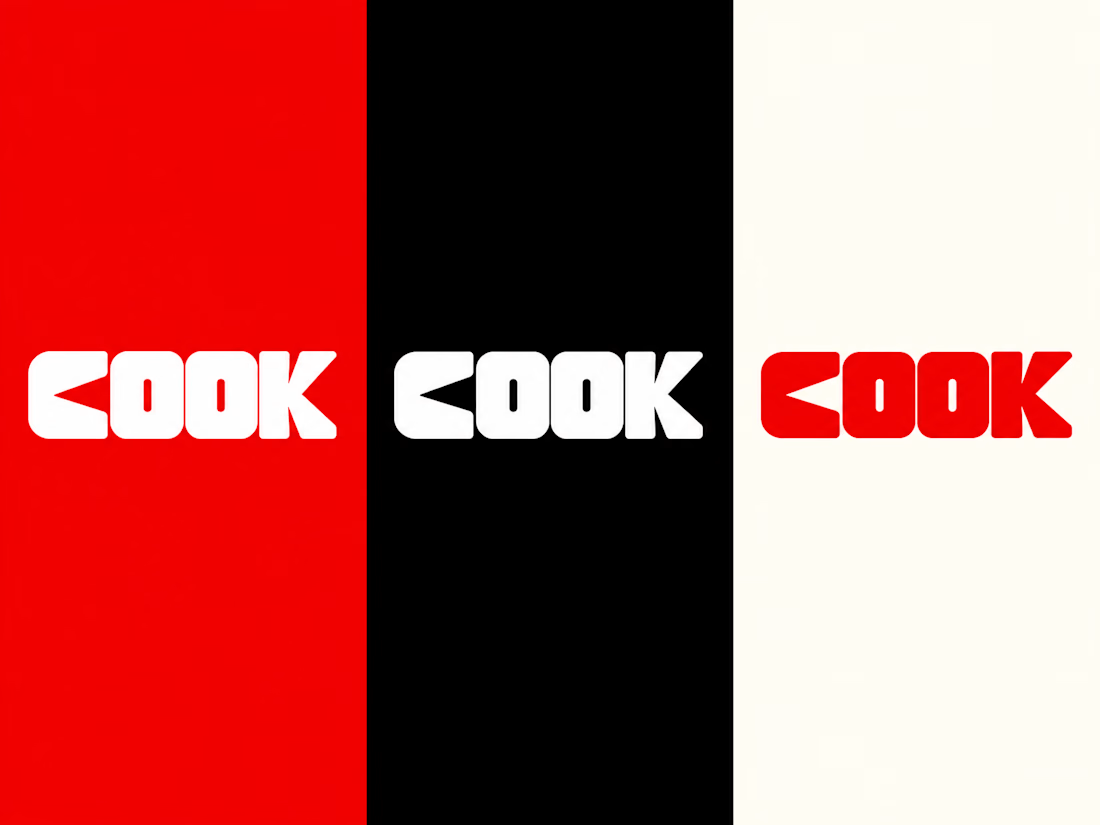

The chunky wordmark with the cut-in notch is memorable. How much of the final shape came from the AI explorations?

Then: 1 month, 1 template.
Now: 1 week, 15 templates.
Same designer, different workflow.
I wrote up how I built no-code.supply: fifteen website templates, each with its own brand, in HTML and React, and some in Framer too. Claude Code did most of the typing. I did the directing.

no-code.supply
How I built 15 website templates with an AI coding agent in a week
How I built 15 AI-ready website templates with Claude Code in a week: the workflow, the quality bar, and why a template is only the starting point.
Going from one template a month to fifteen a week is wild. How much of the design direction did you still do by hand?


