The network for creativity
Join 1.25M professional creatives like you
Connect with clients, get discovered, and run your business 100% commission-free
Creatives on Contra have earned over $150M and we are just getting started
Back to feedPost

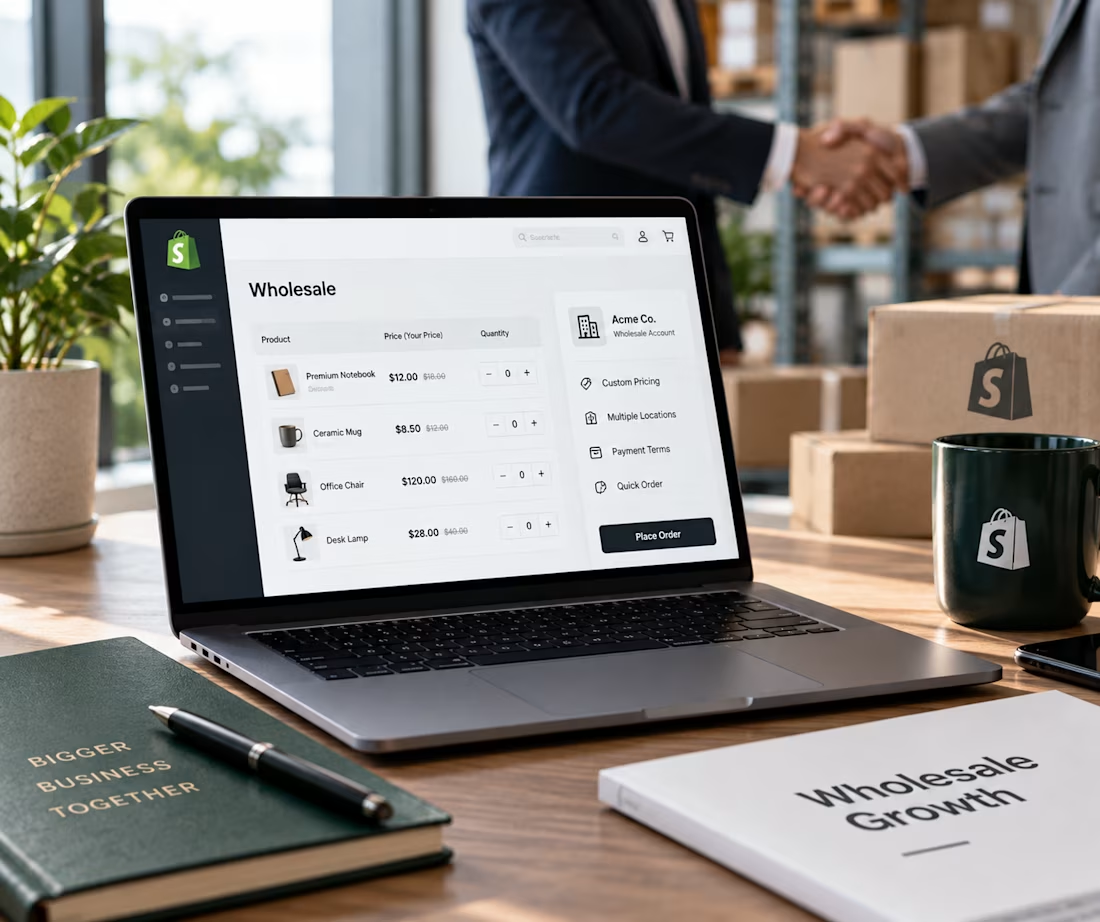
Building a Shopify B2B store? Don’t treat it like a normal D2C store.
One of the biggest mistakes I see is trying to use the same approach for both B2C and B2B.
B2B usually requires much more complex logic:
🔹 Different pricing for different companies
🔹 Multiple locations under one company
🔹 Customer-specific catalogs
🔹 Payment terms & purchase orders
🔹 Minimum order quantities
🔹 Bulk ordering
And sometimes, Shopify’s standard functionality isn't enough.
That’s where custom Shopify development becomes important.
The goal isn't just to make the store look good.
The goal is to build a B2B system that makes ordering easier for customers and operations easier for the business.
If you're planning a Shopify B2B project and need help with the technical side, feel free to connect.

The network for creativity
Join 1.25M professional creatives like you
Connect with clients, get discovered, and run your business 100% commission-free
Creatives on Contra have earned over $150M and we are just getting started






Related posts

✨ Your website is your brand's first impression. Make it count.
Recently, I worked on an e-commerce website project focused on creating a premium shopping experience through elegant visuals, strategic product presentation, and conversion-focused design.
From curated collections to seamless navigation, every detail was designed to turn visitors into potential customers.
Let's talk! What's more important to you when visiting an online store: beautiful design or an effortless shopping experience? 👇
#EcommerceDesign #Shopify #WebDesign #UIUXDesign #WebsiteDesign


Beautiful design grabs attention, but a smooth shopping experience is what keeps customers engaged and encourages them to buy. I believe the best e-commerce websites combine both. Great work on this!

Which store would make you buy the cup?
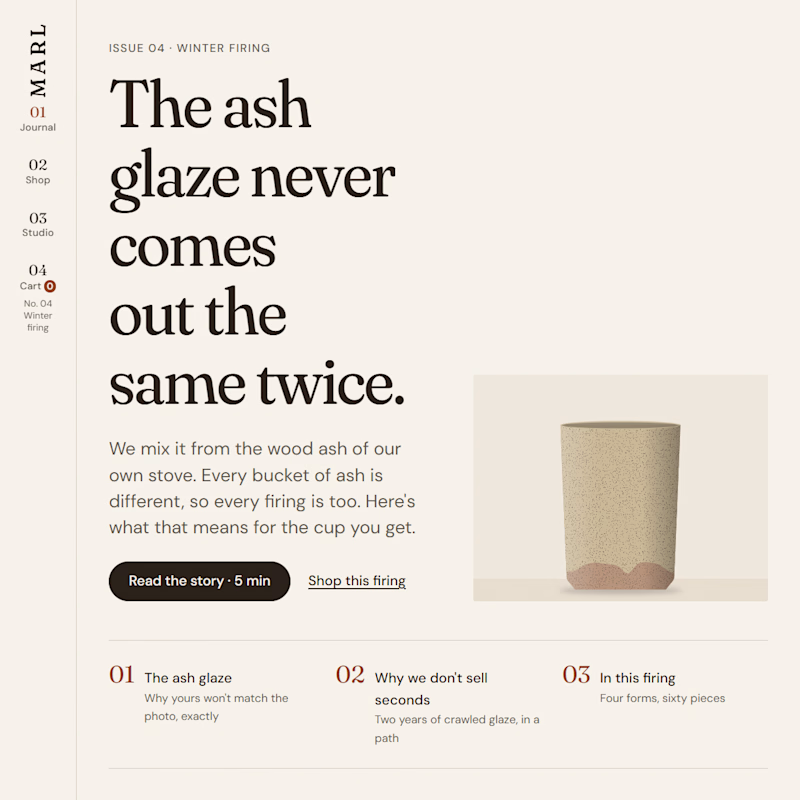
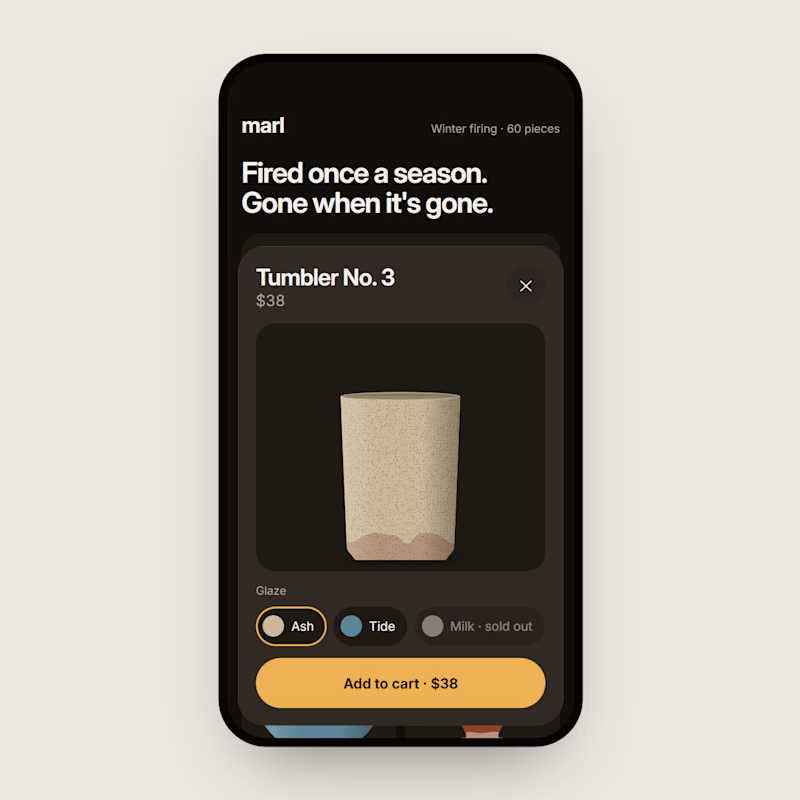
Same pottery, same cups, two completely different stores. MARL is a small pottery that doesn't exist, and this time there's no 3D at all, every cup is drawn in code.
A is a magazine. Every firing is a new issue, and the cups sit inside the story of how they were made.
B is a pocket app. Tap a cup and the bar at the bottom grows into the product, pick a glaze, and it folds right back into your cart.
Which one would you actually buy from? Vote, then tell me why.
Both are live at tenetary.com/work/three-directions, next to a third direction I left out of the vote.
2 voted
100%
0 voted
0%
2 votes
Closed

A, and the headline is what won me: "The ash glaze never comes out the same twice" already works as a launch email subject. If every firing is an issue, the list becomes where people wait for the next one. B is the easier checkout on a phone, though.

Why does the product feed say $29 when Shopify says $24?
I built a short audit demo around that question. I matched variants by ID and compared the feed with the storefront. The price was a straightforward fix. A USD/CAD mismatch needed a closer look at which market each value came from.
The fictional catalog surfaced four proposed edits and three cases for manual review. Here’s how I turned those findings into a report.
