The network for creativity
Join 1.25M professional creatives like you
Connect with clients, get discovered, and run your business 100% commission-free
Creatives on Contra have earned over $150M and we are just getting started
Back to feedPost

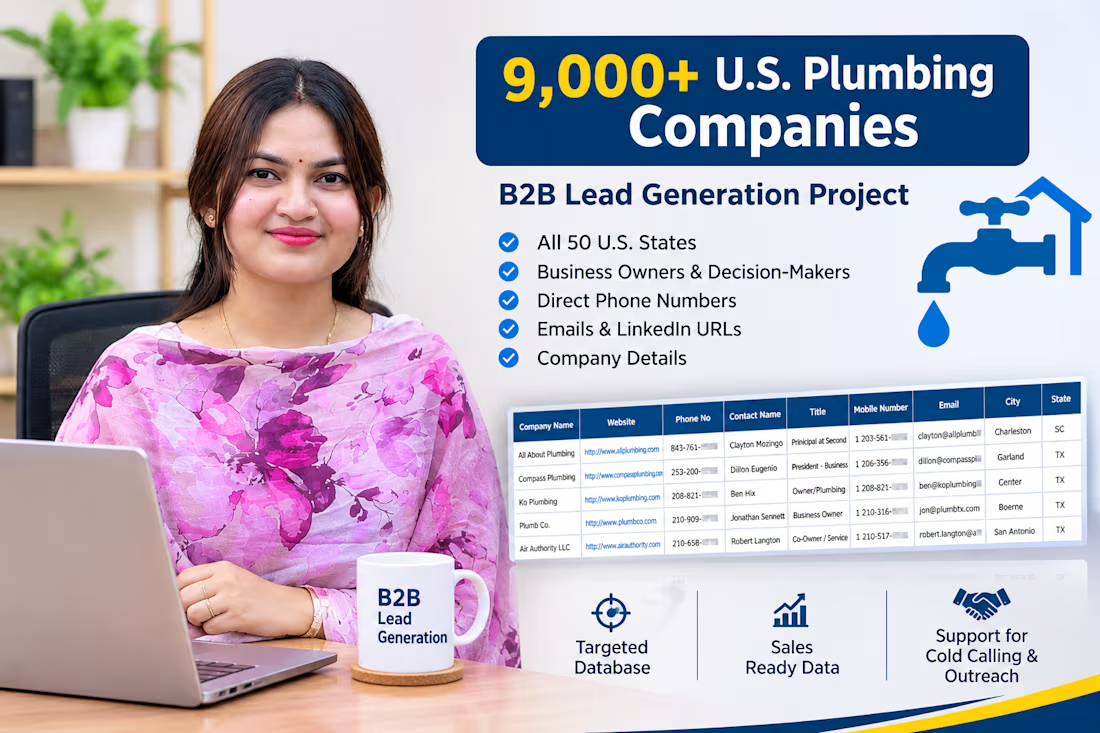
Building Targeted B2B Databases for Sales Teams- 9,000+ U.S. Plumbing Companies
For this project, I compiled a database of 9,000+ small and medium-sized plumbing companies across all 50 U.S. states.
The focus was on identifying business owners and relevant decision-makers and organizing their contact information into a structured database for the client's cold calling team.
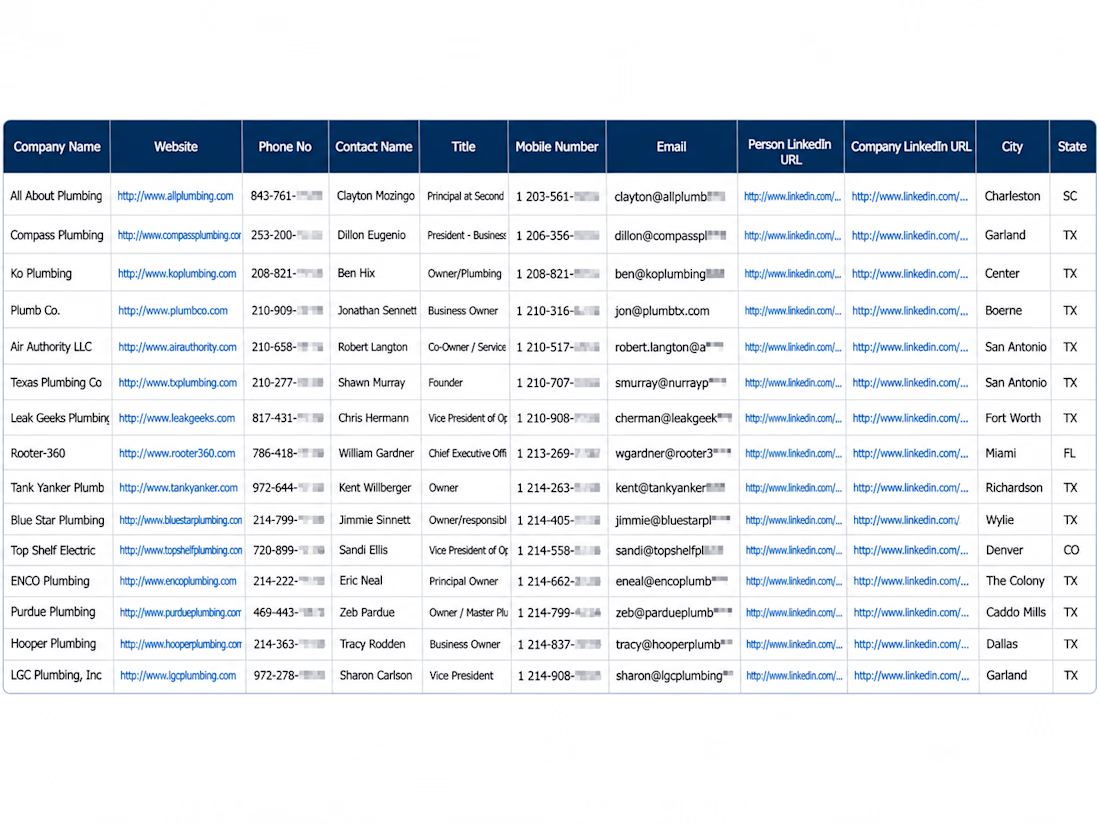
What the database includes:
Company name and website
Owner and senior decision-maker contacts
Job titles and business phone numbers
Direct mobile phone numbers
Email addresses
Personal and company LinkedIn URLs
City and state
The goal was to make company research and decision-maker identification easier for the client's sales team.
I provide customized B2B lead generation, decision-maker research, contact enrichment, and industry-specific databases based on client requirements.
#B2BLeadGeneration #DataResearch #LeadGeneration #Contra


The network for creativity
Join 1.25M professional creatives like you
Connect with clients, get discovered, and run your business 100% commission-free
Creatives on Contra have earned over $150M and we are just getting started
Related posts

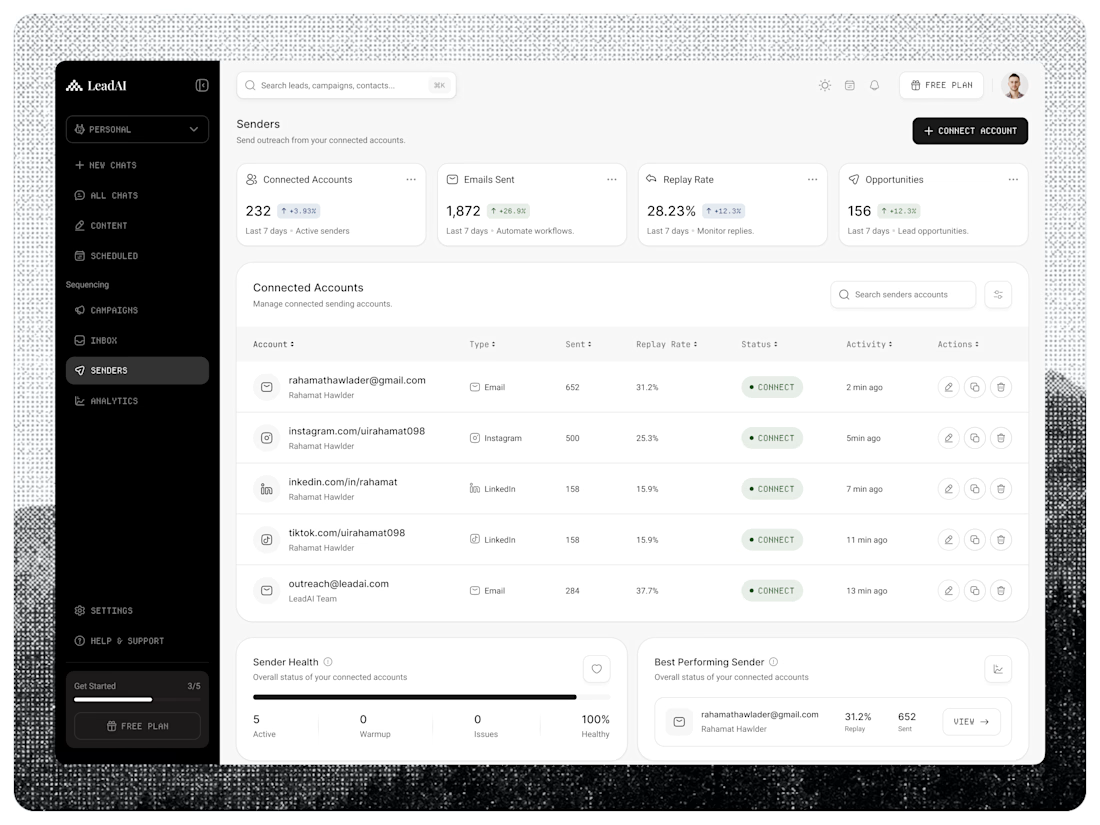
LeadAI — AI Lead Generation SaaS Dashboard
A modern AI-powered lead generation dashboard designed to simplify sales automation, schedule workflows, and help teams manage prospecting activities.
The interface combines a clean SaaS layout, automation analytics, status indicators, and an organized schedule management table.
Project Highlights:
AI Lead Generation Dashboard
Scheduled Automation Management
Sales & Prospecting Analytics
Clean SaaS Dashboard UI
Modern B2B User Experience
Available for UI/UX & AI Product Design projects. 🎯
✅ Full-Time | Contract | Remote



Building an AI Client-Finding System That Prioritizes Relevance Over Volume
Hey frens! How I’m approaching AI-assisted research, outreach preparation, and follow-up as a hands-on CMO and entrepreneur.
Finding potential clients is not just a search problem. It is a judgment problem.
You can collect company names, identify decision-makers, and prepare messages—and still have no convincing reason for someone to speak with you.
That is why the AI-assisted client-finding system I’m designing starts with relevance, not volume.
The objective is not to automate as much outreach as possible. It is to identify where my work could genuinely be useful, investigate the opportunity, and prepare a better conversation.
Define the opportunity before choosing the tools
Before building a workflow, I want a clear brief:
What result can I help a client achieve?
Which businesses can I serve well?
What changes might make my service more relevant?
What evidence would justify a closer look?
What would make an opportunity unsuitable?
For example, imagine you help property agencies improve enquiry handling and follow-up.
An agency announcing a new office could be worth researching. But expansion does not prove that its existing processes are broken.
The announcement is a fact. A possible need for your service is a hypothesis.
A useful system should keep those two things separate.
Make research the first deliverable
Instead of asking AI for “100 qualified leads,” I would ask for a small set of evidence-backed opportunity notes.
Each note should explain:
What happened and when.
Where the information came from.
Why it might relate to the offer.
What remains unknown.
Whether the next step should be further research, a conversation, or no action.
That final option matters.
If every company receives a positive recommendation, the workflow is not helping me prioritize. It is simply generating justifications for outreach.
Prepare a conversation, not a diagnosis
Research should improve the questions we ask.
It should not encourage claims such as:
“Your agency is losing leads, and I can fix it.”
Unless we have evidence, that is an assumption.
For a hypothetical agency that has genuinely announced an expansion, a more useful opening could be:
“I saw your announcement about the new office. Is enquiry handling managed centrally as you expand, or does each office handle it separately?”
That question creates space to understand the business before proposing a solution.
Any approach would still need an appropriate contact channel and human review.
Build a controlled workflow
The structure I want to implement is straightforward:
My proposed stack includes Claude for research synthesis and drafting, n8n for orchestration, and a CRM as the operational record. These are implementation options—not a claim that the complete system is already running.
The shared record matters as much as the AI component. It needs to show who owns the relationship, what has been discussed, whether further contact is appropriate, and what should happen next.
Measure commercial usefulness
I would judge the pilot by research accuracy, the quality of recommendations, useful conversations, qualified opportunities, and review time.
Messages sent would be a secondary metric.
The first version should be small enough to inspect closely. Before expanding it, I want to understand where the research fails, which drafts need rewriting, and what actually leads to meaningful conversations.
That is the direction I’m taking: using AI to support disciplined business development, while keeping responsibility for the relationship with a human.
For the full framework, practical prompts, and implementation considerations, read the complete article in my newsletter, The New Entrepreneurship:

A portfolio on data entry and N8N automation. Message Me NOW!