The network for creativity
Join 1.25M professional creatives like you
Connect with clients, get discovered, and run your business 100% commission-free
Creatives on Contra have earned over $150M and we are just getting started
Back to feedPost

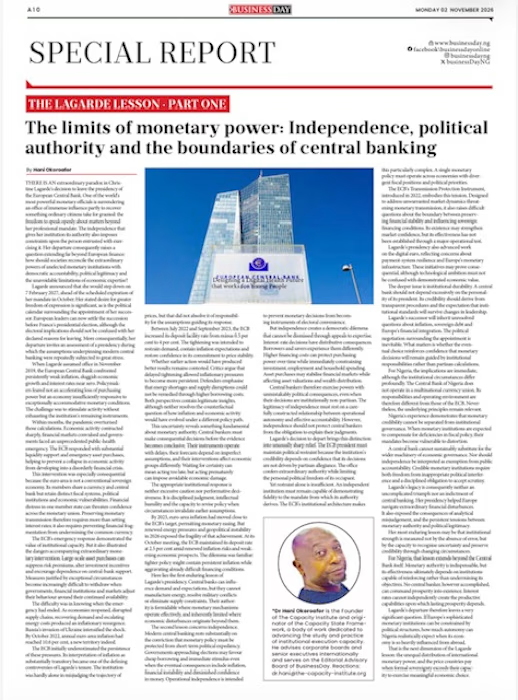
The Lagarde Lesson: Rethinking Monetary Power, Economic Sovereignty and Nigeria's Development
A Four-Part BusinessDay Editorial Series | Dr Hani Okoroafor
The Lagarde Lesson is a four-part analytical series examining the profound relationship between monetary leadership, institutional independence, economic sovereignty and national development, drawing on the leadership of Christine Lagarde at the European Central Bank and its wider implications for Nigeria.
Published as four consecutive articles in BusinessDay, the series moves beyond conventional commentary on central banking to interrogate a fundamental question: Why do some economies translate monetary credibility into sustained prosperity while others remain trapped in cycles of instability, dependence and underperformance?
The first article, The Limits of Monetary Power, examines the delicate relationship between central bank independence, political authority and democratic accountability. It challenges the assumption that monetary institutions can independently resolve structural economic weaknesses, emphasising the boundaries of technocratic power.
The second, The Price of Dependence, explores the international architecture of monetary influence, examining how global financial hierarchies constrain the economic choices available to developing nations. It considers Nigeria's vulnerability to external monetary conditions, capital movements and currency pressures, redefining economic sovereignty as the capacity to make credible choices under pressure.
The third, The Missing Transmission, investigates why monetary stability and institutional credibility do not automatically translate into productive investment, enterprise development, employment and rising household prosperity. It identifies the structural and institutional weaknesses that interrupt the transmission of financial confidence into real economic transformation.
The concluding article, Beyond the Central Bank, advances a broader institutional perspective, arguing that sustainable prosperity requires coordinated systems connecting monetary credibility, financial intermediation, productive investment and effective economic governance.
Together, the four articles demonstrate an integrated approach to executive research, comparative institutional analysis, economic interpretation and strategic thought leadership.
The series combines international economic perspectives with Nigeria-specific institutional realities, translating complex monetary and development questions into accessible, evidence-informed arguments relevant to policymakers, business leaders, investors and informed readers.

The network for creativity
Join 1.25M professional creatives like you
Connect with clients, get discovered, and run your business 100% commission-free
Creatives on Contra have earned over $150M and we are just getting started
Related posts

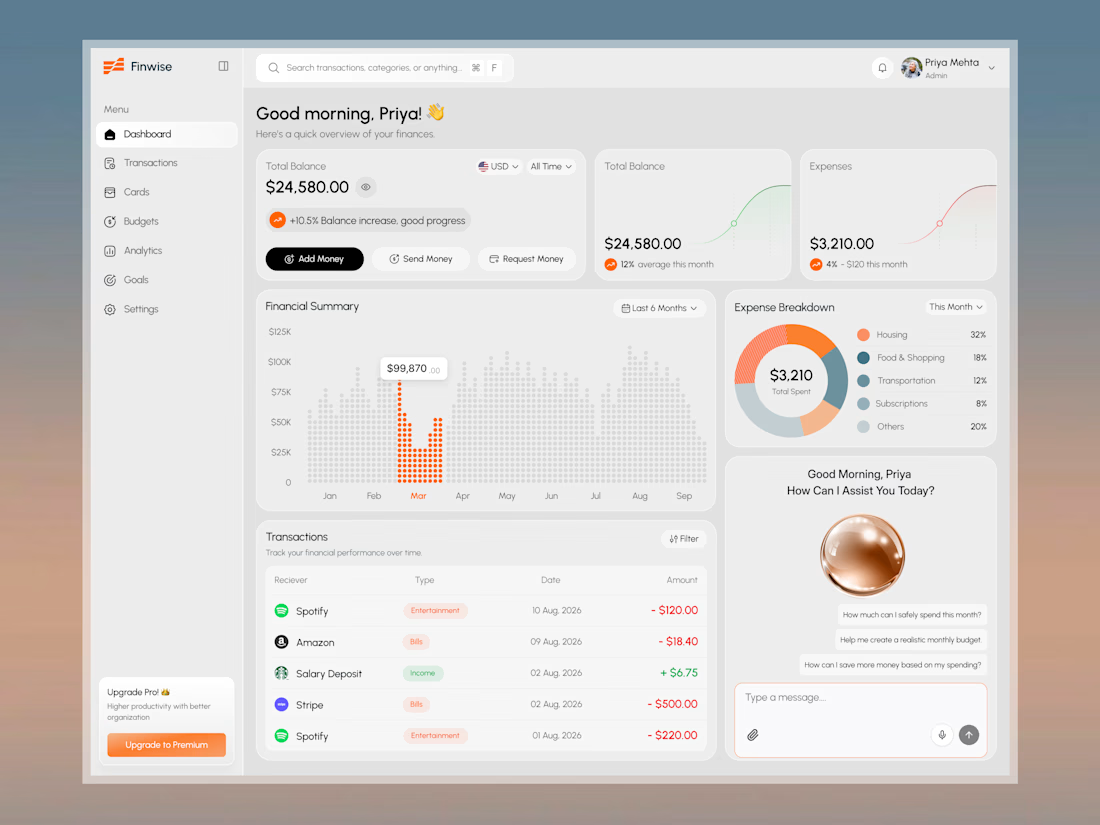
Finwise: Smart Money Dashboard with AI Assistant


this is amazing . love the visual

Visual exploration for Crafting.
Unifying 2D and 3D contrasts within a cohesive visual language.


Facebook Page Management for Clothing Brand
I managed NOVA APPAREL page:
✅ 12.4K followers (+8.2% growth)
✅ 42K Reach (+12.5%)
✅ 3.1K Profile visits
✅ Top post: Summer Collection 8.6K Reach
I do content planning, posting, growth.



Great results! Consistent content planning really helps a brand grow. 👏