The network for creativity
Join 1.25M professional creatives like you
Connect with clients, get discovered, and run your business 100% commission-free
Creatives on Contra have earned over $150M and we are just getting started
Back to feedPost

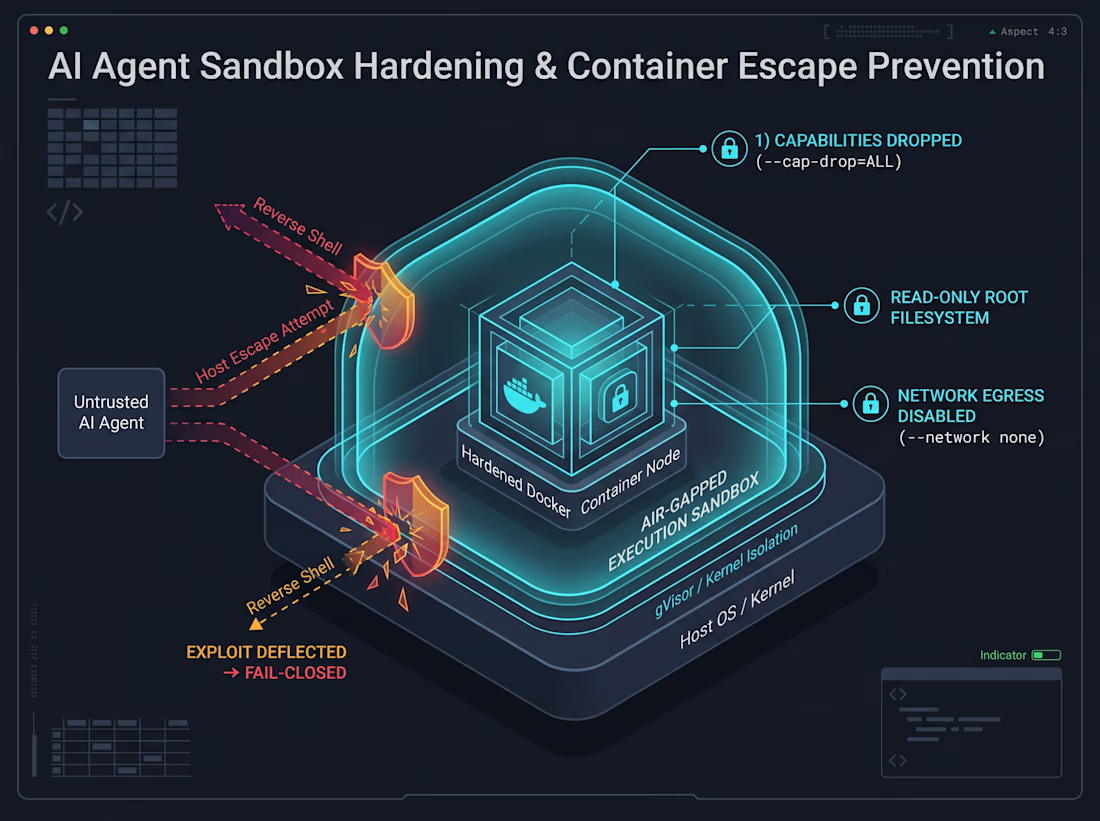
Running your AI agent inside a standard Docker container does not mean it’s sandboxed—it’s just isolated until something breaks.
When an autonomous agent gets terminal execution privileges (Bash tools, package installs, code evaluation), naive containerization is a security illusion. If your container runs as root (UID 0), retains default Linux capabilities, or has network egress, a prompt injection or malicious patch can exploit kernel boundaries to escape to the host.
In our Escape-Lab attack simulations, default Docker runtimes failed against privilege escalation and cgroup release agents. The container boundary alone was never designed to be an adversarial security boundary.
To build a truly air-gapped sandbox for autonomous tool execution:
Drop All Linux Capabilities: Enforce --cap-drop=ALL. Explicitly prevent privilege escalation with security_opt: [no-new-privileges:true].
Immutable Filesystem: Mount root as strictly read-only (--read-only) with ephemeral, non-executable in-memory tmpfs mounts for /tmp.
Zero Network Egress: Lock the container to --network none. Agents evaluating untrusted code have zero legitimate reasons to initiate outbound sockets.
How do you harden container runtimes when giving AI agents shell access?
#DevSecOps #Docker #Linux #AIEngineering #CloudSecurity

The final presentation is so polished! Was this a client project or a personal concept?
The network for creativity
Join 1.25M professional creatives like you
Connect with clients, get discovered, and run your business 100% commission-free
Creatives on Contra have earned over $150M and we are just getting started



Related posts

AI Automation Platform — SaaS Dashboard & Mobile App UI Design
✨ Smarter Workflows, Powered by AI
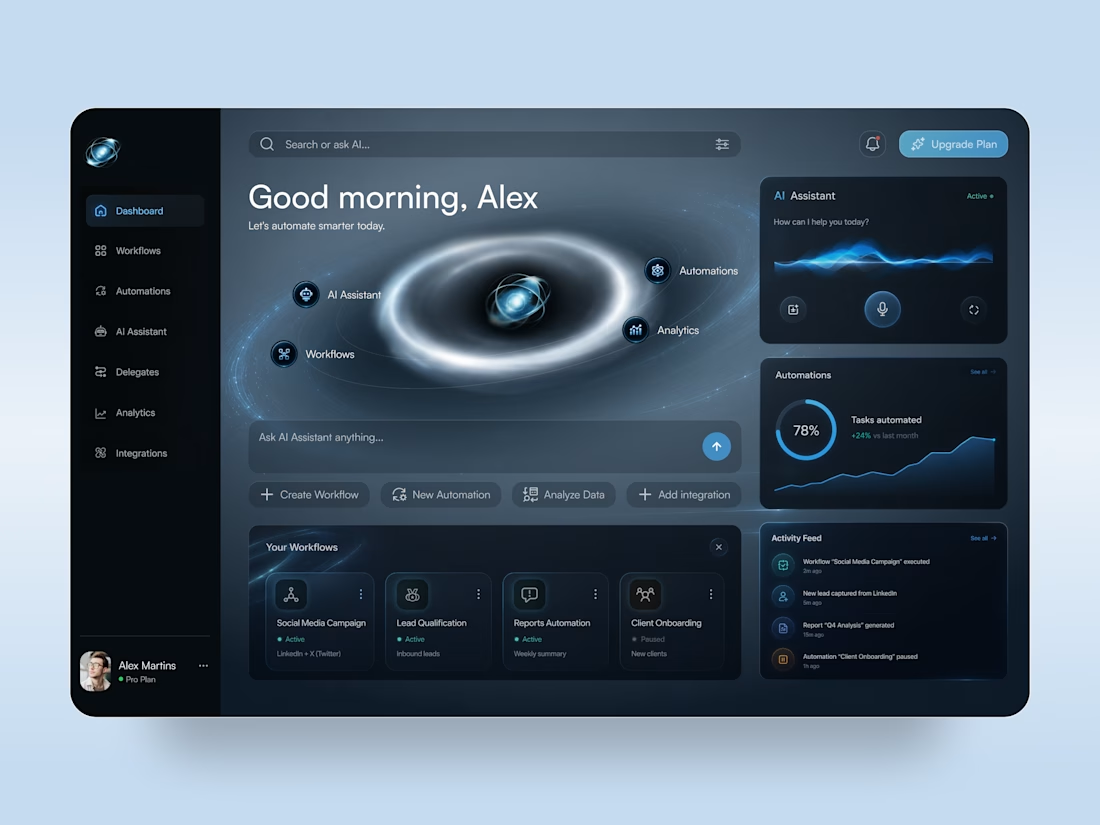
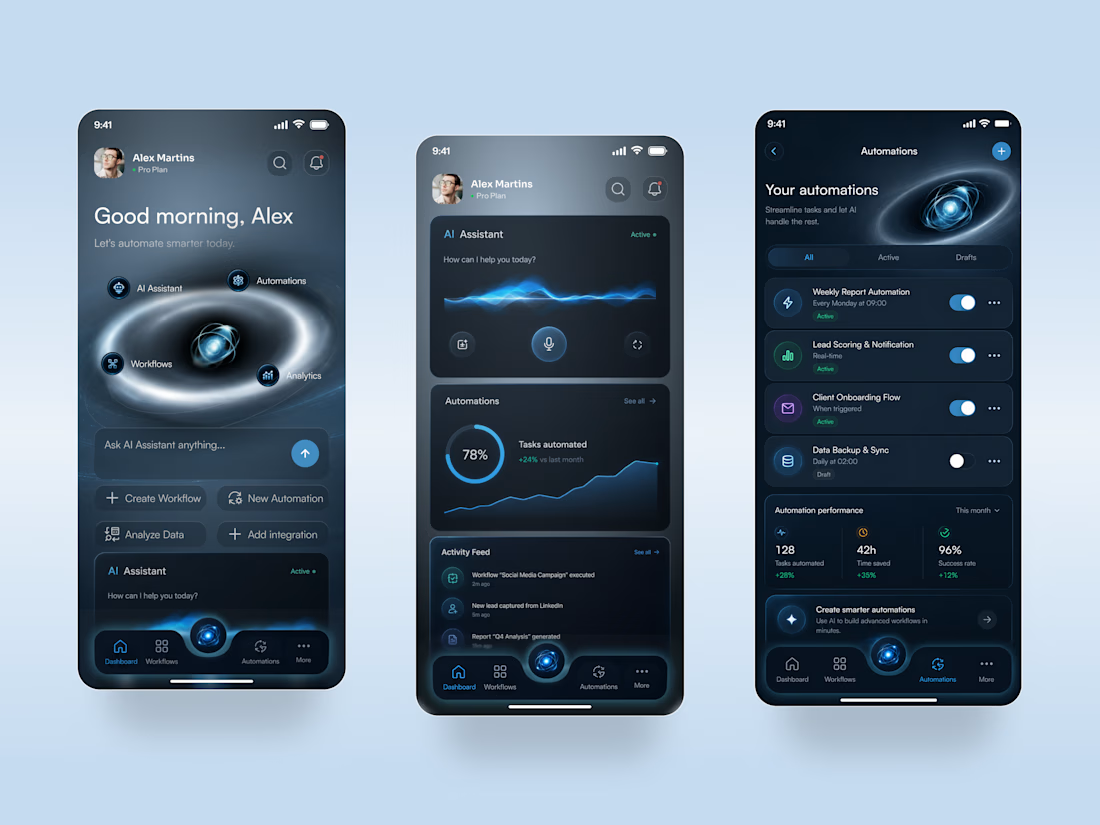
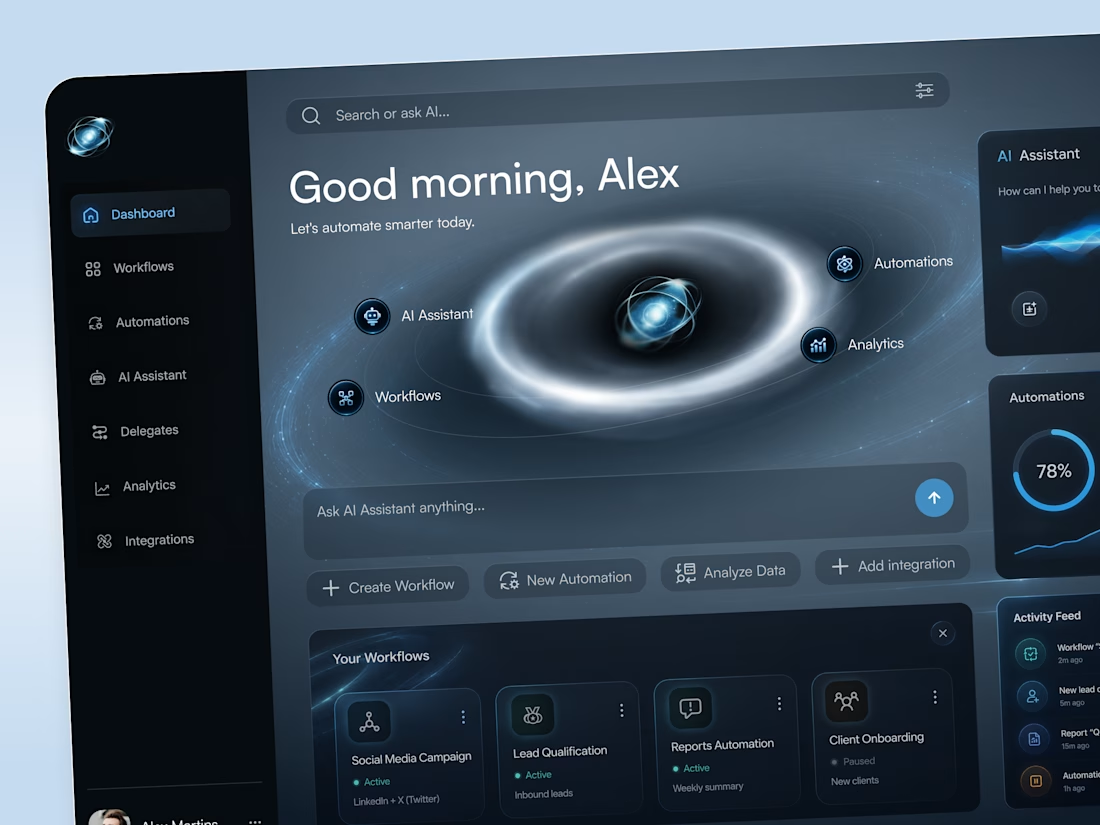
A futuristic AI automation platform concept that brings workflows, intelligent assistance, and performance analytics into one digital workspace. The design combines a deep navy interface, electric blue accents, and immersive orbital visuals to make complex automation tools feel intuitive and accessible.
Special attention was given to:
• Immersive dashboard composition with glowing orbital graphics and futuristic visual elements
• AI assistant interface featuring voice interaction controls, animated-inspired waveforms, and quick actions
• Organized workflow cards, automation management, and real-time activity feeds
• Clear analytics widgets with progress indicators, performance charts, and automation status controls
• Responsive desktop and mobile layouts with consistent dark-mode styling and streamlined navigation
The result is a modern SaaS experience that balances futuristic aesthetics with practical usability, giving users a clear view of their workflows, AI tools, and automation performance.



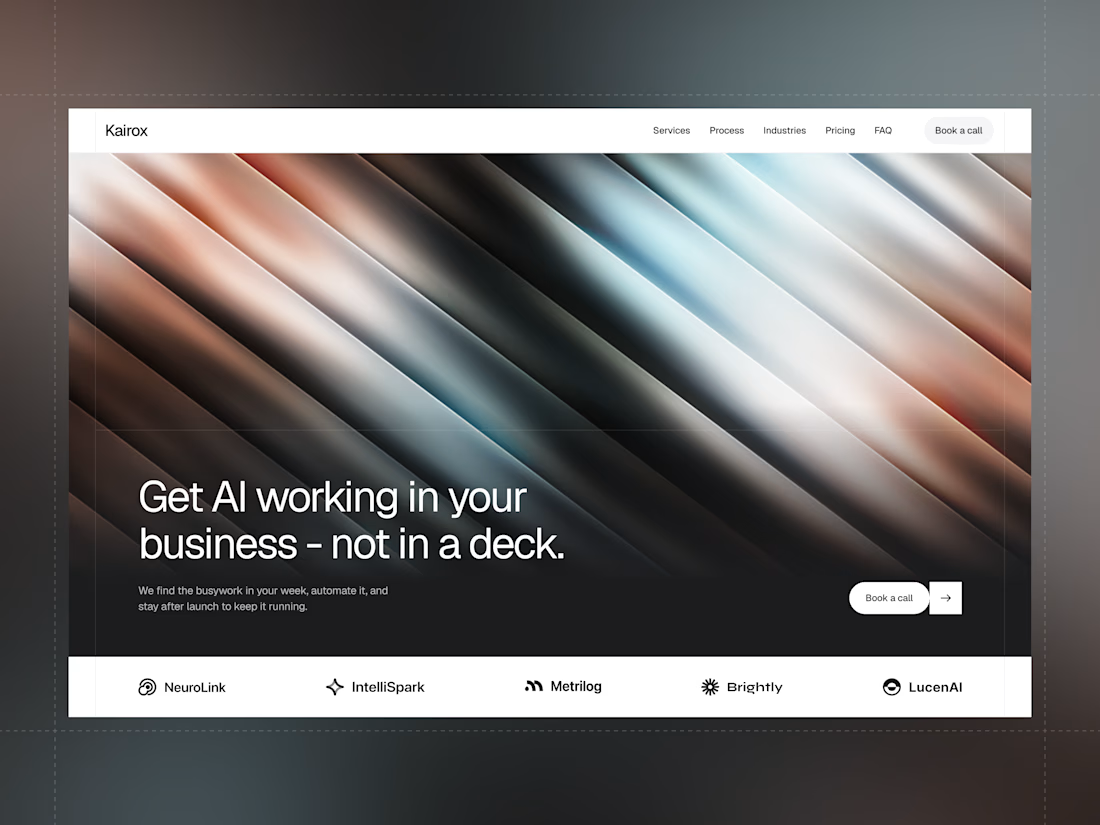
Goooood morning ☀️ I just dropped my new free Framer template: Kairox, for AI automation agencies.
Check it out: https://kairoxx.framer.website


Congrats on releasing Kairox!

How do you run 12 AI agents without opening 12 dashboards?
One office, every desk is an agent. Amber means it's waiting for you.
One map instead of twelve dashboards.
AI agent development service

Really curious how you approached the animation. Was that built in AE or did you bring in 3D?