The network for creativity
Join 1.25M professional creatives like you
Connect with clients, get discovered, and run your business 100% commission-free
Creatives on Contra have earned over $150M and we are just getting started
Back to feedPost

A client's website stopped serving her content and started serving a Japanese e-commerce storefront instead. She runs a coaching practice, speaks only English, and sells no physical products, so the pages had nothing to do with her business. Something had taken over the site's output.
I started with the file system and the logs rather than the front end, since defacement is usually a symptom. Scanning for recently added and recently modified files turned up several that had been named to pass as part of the core installation. The code inside them was obfuscated, which is not on its own proof of anything, but combined with the timestamps and the placement it was enough to keep pulling. The files turned out to be doing two jobs: injecting the spam content, and hiding themselves from the server so nothing looked wrong from the inside.
Removal was the careful part. Injected code sits alongside legitimate files and deleting broadly takes the site down with it, so I traced each added and modified file individually and restored the originals rather than clearing wholesale. Once the payload was out I closed the backdoor that allowed the initial access, then locked down file permissions so the same write path could not be used again.
The site came back clean. The client recorded a thank you video afterwards, which I still have.

The network for creativity
Join 1.25M professional creatives like you
Connect with clients, get discovered, and run your business 100% commission-free
Creatives on Contra have earned over $150M and we are just getting started










Related posts

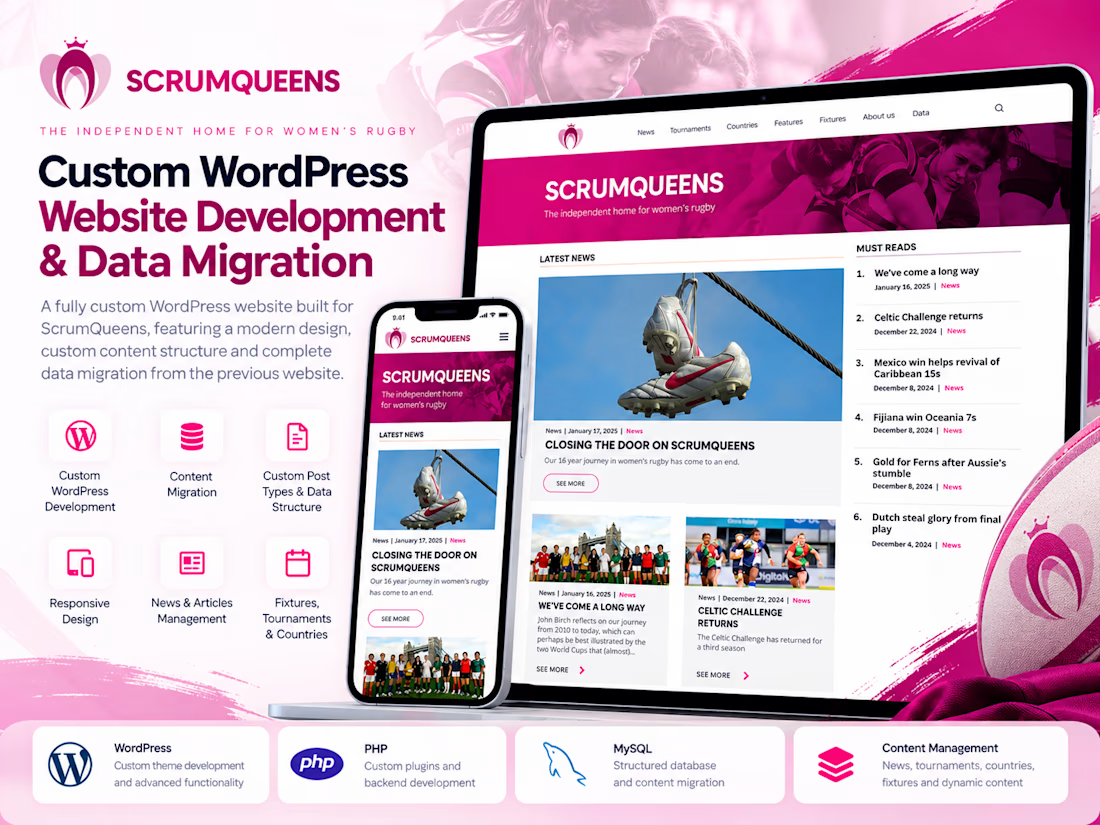
Developed a fully custom WordPress website for ScrumQueens, transforming the previous website into a modern, structured, and maintainable digital platform.
Key Contributions:
Custom-developed the WordPress website to support the project's specific content and business requirements.
Designed and implemented custom WordPress data structures for organized content management.
Migrated a large volume of content and data from the previous website into the new custom WordPress structure.
Worked with WordPress development capabilities, including PHP, custom post types, and content management functionality.
Focused on maintaining content integrity throughout the migration and making ongoing website management easier.
Tech Stack: WordPress, PHP, MySQL, HTML, CSS, JavaScript.
The project demonstrates hands-on expertise in custom WordPress development, complex content migrations, and building maintainable CMS solutions.



How did you check the older content after migration? Matching article counts is one step, but I'd be curious how you checked images and links inside the articles.

🌿 A website can look beautiful and still tell a powerful story.
This WordPress website design combines thoughtful typography, calming colors, and a clean layout to create a meaningful digital experience.
Which section catches your attention first: the hero, services, or FAQ? 👇
#WordPress #WebDesign #WebsiteDesign #Typography #UIUXDesign





Coming-soon landing page design & development for Peak.
Most coming-soon pages just say "soon". I wanted this one to show the whole product. 🚀 🚀 🚀
gopeak.design is the coming-soon site for Peak, an all-in-one WordPress plugin: a visual builder, a motion engine, a CMS and a design system.
The stage
Instead of screenshots, the middle of the page plays the product: 9 features, 43 scenes, 325 frames. I designed every frame in Figma, then built a Figma-to-code pipeline and a React scene engine to play them. Elements morph from frame to frame while the pointer clicks, drags, types and scrolls. All of it is live HTML and CSS, not video, with its own player and speed control.
The details
• The page opens on the Peak mark filled with a liquid WebGL shader that stirs as you move your cursor.
• A waitlist that catches email typos, checks for bots with Cloudflare Turnstile, and sends branded emails.
• A live demo of the real builder, opened by a magic link: a WordPress sandbox where every change is rolled back.
• Desktop, tablet and phone, each designed in Figma first.
The look carries over from the Peak brand identity I shared a few days ago: Parchment and Carbon, Neue Montreal and its Mono, fine hairlines, and Ember used only as a signal.
Stack: Figma · Next.js · React · Claude Code · Tailwind CSS · WebGL · Supabase · Resend · Vercel · Cloudflare · WordPress
See it live → gopeak.design


