The network for creativity
Join 1.25M professional creatives like you
Connect with clients, get discovered, and run your business 100% commission-free
Creatives on Contra have earned over $150M and we are just getting started
Back to feedPost

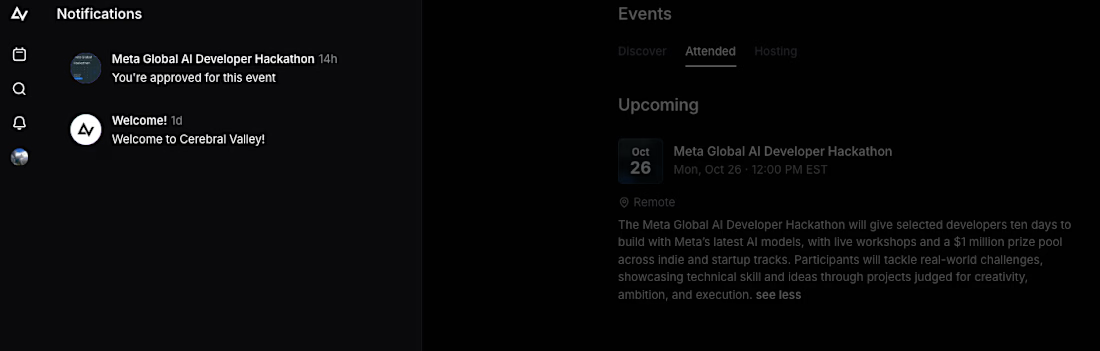
Hey everyone Excited to share that I've been accepted to participate in the Meta Global AI Developer Hackathon 2026! 🚀🤖
I'll be working alongside my husband on SEO Spy, an AI-powered tool we're developing to help small businesses improve their online visibility and simplify digital marketing.
It's going to be an exciting challenge, and I'm looking forward to learning, building, and seeing how far we can take this idea!
Wish us luck! 🍀💻


The network for creativity
Join 1.25M professional creatives like you
Connect with clients, get discovered, and run your business 100% commission-free
Creatives on Contra have earned over $150M and we are just getting started











Related posts

$15,000 from one browser game takes 1 to 15 million plays.
I did the math because my first web game, built with Claude Code, went live on CrazyGames today.
Bolt Pit is a Three.js arena shooter. It has earned $0 so far, because CrazyGames keeps ads off during the Basic Launch test, which runs until November 5.
Only games with good numbers get a Full Launch, and that's where the ad revenue share starts.
The formula:
Revenue = sessions × ads per session × eCPM ÷ 1,000 × your share
eCPM is what advertisers pay per 1,000 ads. CrazyGames allows at most one midgame ad every 3 minutes. The share isn't public, and reports range from 40% to 60%, so I used 50%. The rest are my assumptions, based on reported ad rates:
Low: 1 ad per session, $2 eCPM = $1 per 1,000 plays. You need 15 million plays.
Mid: 2 ads, $5 eCPM = $5 per 1,000 plays. You need 3 million plays.
High: 3 ads, $10 eCPM = $15 per 1,000 plays. You need 1 million plays.
One developer reported about €1.20 per 1,000 CrazyGames plays across eight older games. That's the low case, so I plan around the middle at best.
Is 3 million plays realistic?
CrazyGames reported 320 million play sessions a month this October. Poki says it has 100 million players a month. The players exist. Retention and session length decide which line you land on.
That's the bigger reason I'm here. I have Unity games in progress that were meant for the App Store. On the App Store, I'd only find out if people come back after paying for players.
So the new plan is web first, App Store later:
Launch on CrazyGames and Poki, where test players are free.
Tune retention and session length on real data.
If a game becomes a hit on the web, take it to the app stores.
Both portals' exclusivity rules cover only the web, so the app stores stay open.
I'm also skipping CrazyGames' exclusivity bonus. It pays 50% more for two months if your game stays off other web portals, and I want to test on Poki too.
Getting a Claude Code build accepted took six fixes, including a static build, relative paths, no Google Fonts and cutting the size from 20.5 MB to 12.4 MB. One known bug is still live: on landscape phones the start button sits below the fold.
I'll post the real numbers as they come in. Play it here:
https://crazygames.com/game/bolt-pit


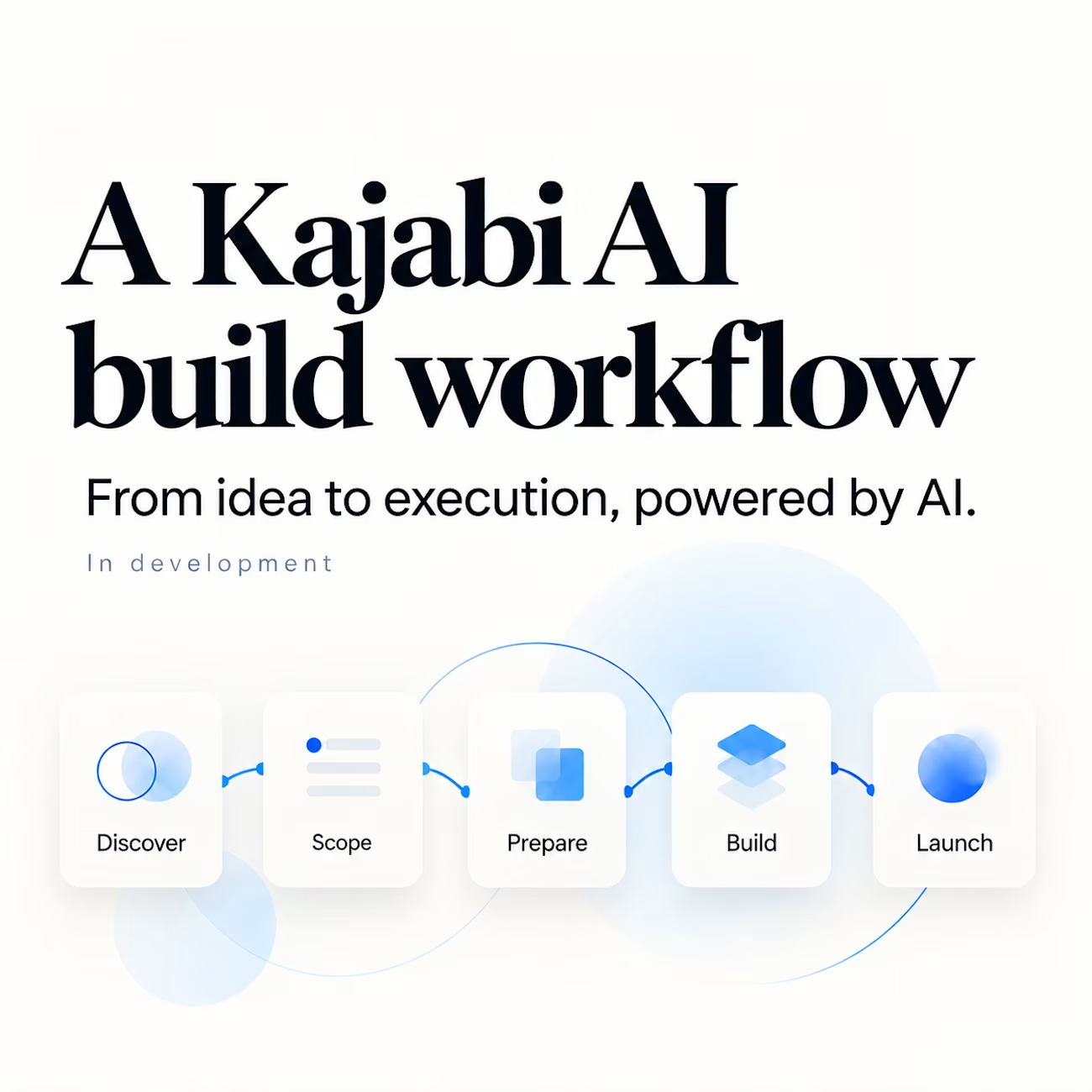
I’ve built an entire Kajabi business system, website and all, with AI in hours.
Now I’m turning that process into a workflow other people can use.
It brings together the steps, instructions, and checks that guide AI from your initial idea through the build and launch. You use your own AI tools, with a clear process to follow.
This is for anyone starting a business on Kajabi, improving an existing one, or building for clients.
I’ve already done the build. What I’m developing now is the way to put that process in your hands. I’ll be sharing more soon. Who wants first dibs on access?


Turning your own AI build process into a reusable workflow is the natural next step, Kraig. Steps, instructions and checks from idea through launch is exactly the structure people need to trust AI with a real business. Count me curious for first dibs.

An interaction study for Mare’s collection feed, exploring how to make groups legible within a dense, mixed-format archive.
The layout preserves image proportions and integrates collection labels into the packing system. On hover, image-derived gradients establish the collection boundary, while subtle displacement creates space around the active group without changing its position or scale.
The motion studies isolate assembly, packing, colour and proximity, using real collection content to examine timing, spatial continuity and hover behaviour.
