The network for creativity
Join 1.25M professional creatives like you
Connect with clients, get discovered, and run your business 100% commission-free
Creatives on Contra have earned over $150M and we are just getting started
Back to feedPost

Why Website Structure Matters for Google Rankings
Imagine entering a shop where the door takes 10 seconds to open. Most people would walk away before even seeing the products inside. That’s exactly how users react to slow websites. In 2026, website speed is no longer just a technical factor—it directly impacts visibility, traffic, conversions, and trust. Google now measures not only what your website says, but how fast it delivers the experience. A slow website loses visitors before they even interact with your content. A fast website creates instant trust, better engagement, and stronger rankings. Website Design Company Delhi
Why Speed Matters More Than Ever
Google studies how users behave after opening your site:
Do they stay?
Do they interact?
Do they leave immediately?
Does the page load smoothly?
If users bounce because pages are slow, rankings begin to drop.
Modern AI-driven search systems prioritize websites that provide instant answers and frictionless experiences. This is why every serious Google optimization strategy now begins with performance. Digital Marketing Agency in Gurgaon
How Google Measures Website Speed
Google no longer checks only “loading time.” It evaluates real user experience signals called Core Web Vitals.
These include:
Loading Performance
How quickly the main content appears.
Visual Stability
Whether elements jump around while loading.
Interactivity
How fast users can click buttons or navigate.
When these experiences are smooth, Google understands that users are satisfied.
And satisfied users usually mean better rankings.
Mobile Speed Is the Real Battlefield
Most internet traffic now comes from mobile devices.
But many websites are still designed mainly for desktop users.
Heavy images, unnecessary animations, oversized scripts, and poor hosting slow down mobile performance badly.
In 2026, mobile-first performance is critical.
A website that loads fast on desktop but slowly on mobile will still struggle in rankings.
This is why modern businesses now prioritize lightweight design and optimized mobile experiences before anything else.
Common Speed Mistakes That Hurt Rankings
Many websites unknowingly destroy their performance through small mistakes.
Oversized Images
Uploading large uncompressed images is one of the biggest causes of slow websites.
Too Many Plugins
Extra plugins increase server requests and loading complexity.
Poor Hosting
Cheap hosting often causes slow response times and downtime.
The Connection Between Speed and SEO
Website speed affects SEO in multiple ways simultaneously:
Better crawl efficiency
Improved indexing
Lower bounce rates
Higher engagement
Better user satisfaction
Stronger mobile usability
This creates a positive cycle where performance improves visibility, and visibility brings more traffic.
👉 That’s why leading agencies now treat speed optimization as a foundation—not an optional upgrade.
Practical Ways to Improve Website Speed
You don’t need to rebuild your entire website immediately.
Start with these practical improvements:
Compress all images
Remove unnecessary plugins
Use modern hosting
Minimize scripts
Enable browser caching
Optimize mobile layouts
Reduce heavy animations
Keep page design clean and focused
Small technical improvements often produce major ranking gains over time.
FAQ - Digital Marketing Agency Near Me
1. Why is website speed important for SEO in 2026?
Website speed directly affects user experience, bounce rate, and Google rankings. Faster websites keep users engaged longer and improve search visibility.
2. How does website design impact business growth?
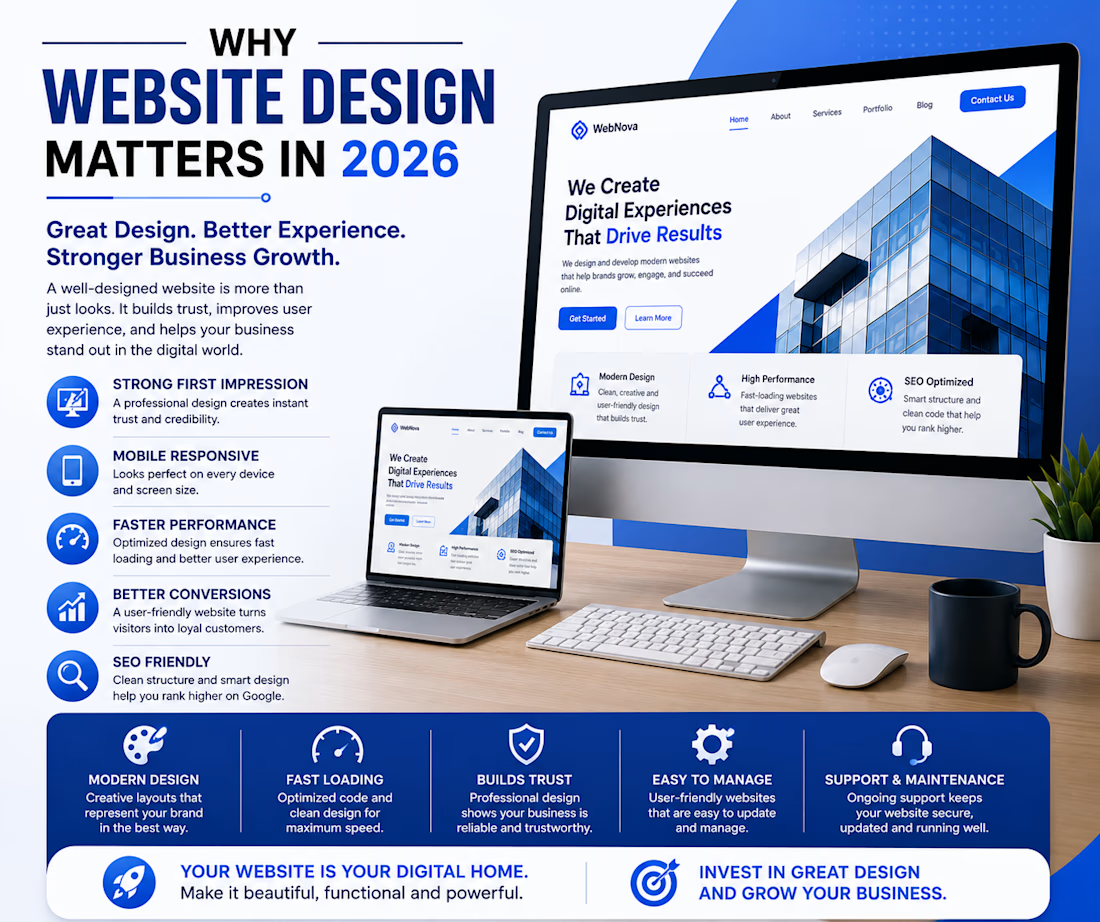
A professional website design builds trust, improves user experience, increases engagement, and helps convert visitors into customers.
3. What are the biggest reasons websites load slowly?
Large images, poor hosting, too many plugins, unoptimized code, and excessive animations are the most common causes of slow website performance.
4. Does mobile website speed affect rankings?
Yes. Google uses mobile-first indexing, which means slow mobile performance can reduce rankings and negatively impact traffic.
5. How can businesses improve website performance quickly?
Businesses can improve performance by compressing images, reducing unnecessary scripts, using better hosting, enabling caching, and optimizing mobile responsiveness


The network for creativity
Join 1.25M professional creatives like you
Connect with clients, get discovered, and run your business 100% commission-free
Creatives on Contra have earned over $150M and we are just getting started
Trending

Claude
Claude has entered the design space. How are you using it?

Contra University
Learn from expert creatives how to earn more using next-gen AI tools.
Brand Design
The best brand designers are on Contra. Scroll to see what's trending in brand design. What are you building?
creativeaiflow
Creative AI workflows are evolving. What tools do you use, and what are their strengths and weaknesses?
freelancerlife
Freelancer life is wins, pivots, and everything in between. What’s yours right now?


Related posts


Another project wrapped up! ✨
Not every website needs a complete redesign.
Sometimes the foundation is already there – it just needs a fresh perspective. An audit can uncover what's creating friction, where visitors get lost, and what small changes can make the biggest impact.
For this Kajabi project, we started with a full website audit, mapped out our recommendations, redesigned the updates in Figma, and then implemented everything on the live site. No full rebuild, just thoughtful improvements that made the website cleaner, easier to navigate, and more intuitive for new visitors.
The best part? The entire transformation was completed in just two weeks.
Sometimes, improving what you already have is exactly what's needed. 🚀


Fantastic work

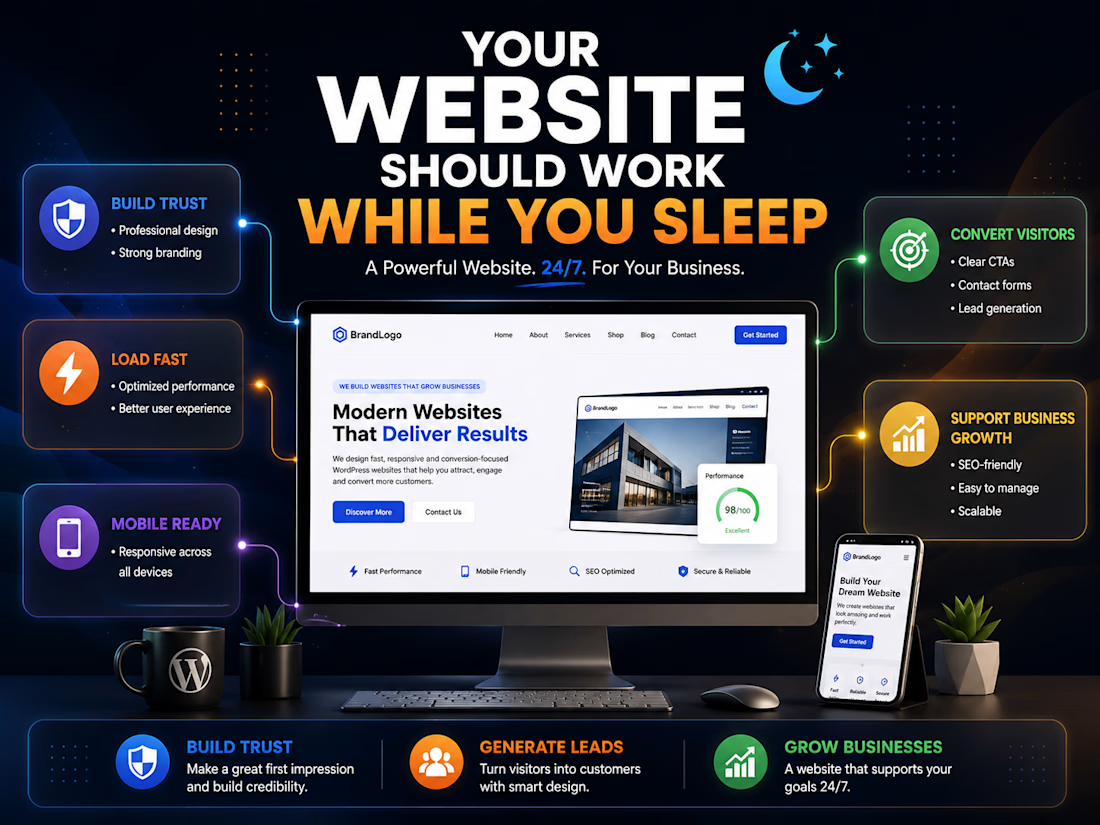
🚀 Your Website Should Work While You Sleep
A website isn't just an online brochure.
It should be your hardest-working team member—bringing in leads, answering questions, and helping customers take action 24/7.
When I build WordPress websites, I focus on more than just appearance. Every project is designed to help businesses achieve real goals.
Here are a few essentials every business website should have:
✅ A clear value proposition on the homepage
✅ Fast loading speeds for a better user experience
✅ Mobile-friendly design that works on every device
✅ Strong calls-to-action that guide visitors
✅ Contact forms that make it easy to get in touch
A well-designed website doesn't just look professional—it builds trust and supports your business around the clock.
If you could improve one thing about your current website, what would it be?


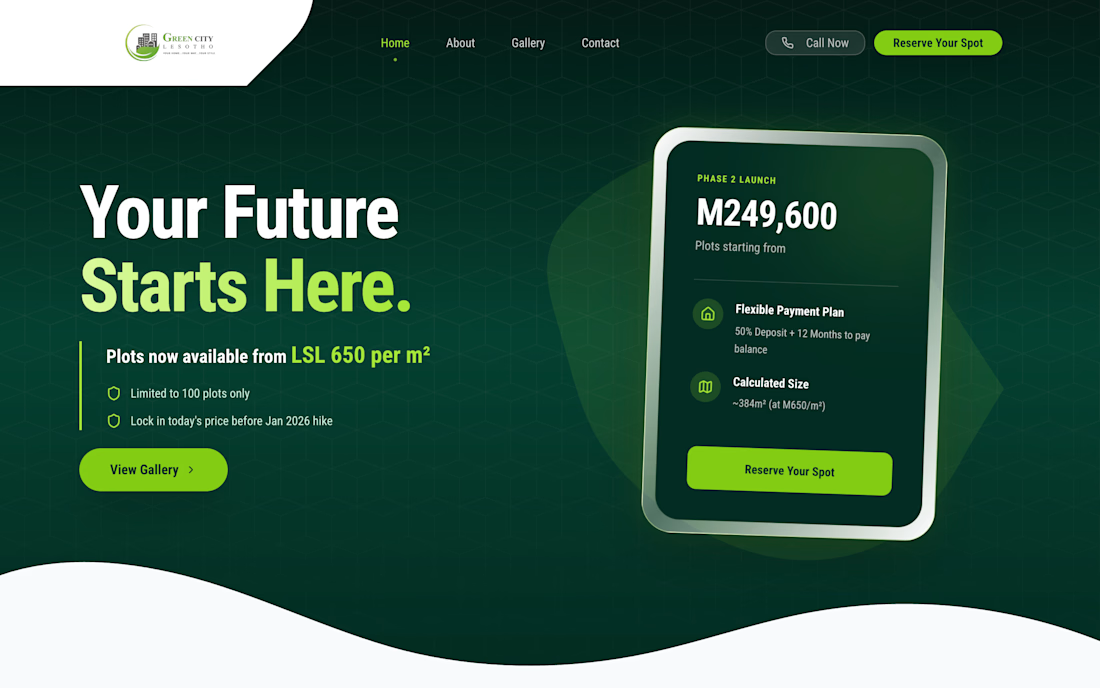
Real-estate websites need to help people make a confident next move.

Nice Design!!