The network for creativity
Join 1.25M professional creatives like you
Connect with clients, get discovered, and run your business 100% commission-free
Creatives on Contra have earned over $150M and we are just getting started
Back to feedPost
Most people don’t struggle with ideas.
They struggle with saying them.
So I built a voice-based AI conversation simulator using Figma Make.
Instead of chat bubbles, this experience is fully voice-driven:
• Choose a conversation mode
• Speak in real-time
• Get live feedback on tone, clarity & confidence
• Watch the interface react to your performance
• Get a personalized improvement summary
In “Cold Outreach” mode, the AI can interrupt — or even hang up if you lose clarity.
This project explores how interaction design can simulate real-world pressure and help introverts practice speaking, not just thinking.
Live App: https://syrup-mode-15103828.figma.site/
figmamakeathonmarch2026ElevenLabsfigmamakemadeitpossibleFigma MakeBackend DevelopmentFrontend DevelopmentPrompt WritingFigma


This is awesome defjjinlty gone try make something like this please check it out mine too https://shout-fling-18123948.figma.site/

Amazing concept brother!
The recipe part is PEAKK!! Now I can cook too!
Thanks bro your concept is awesome tooo!! will try to replicate thanks for inspiring
The network for creativity
Join 1.25M professional creatives like you
Connect with clients, get discovered, and run your business 100% commission-free
Creatives on Contra have earned over $150M and we are just getting started



Related posts


The dotted 3D rendering gives the headphones such an interesting visual treatment.

One pixel grid. A whole brand.
For Appy, a London product studio for impact-driven startups, the wordmark, icons, 3D smile and Appy Pixel, its custom typeface, all come from the same grid.
Appy Pixel won Typography at the Online Design Awards.
Type first or symbol first: where do you start a rebrand?

thats so nice, i loveee

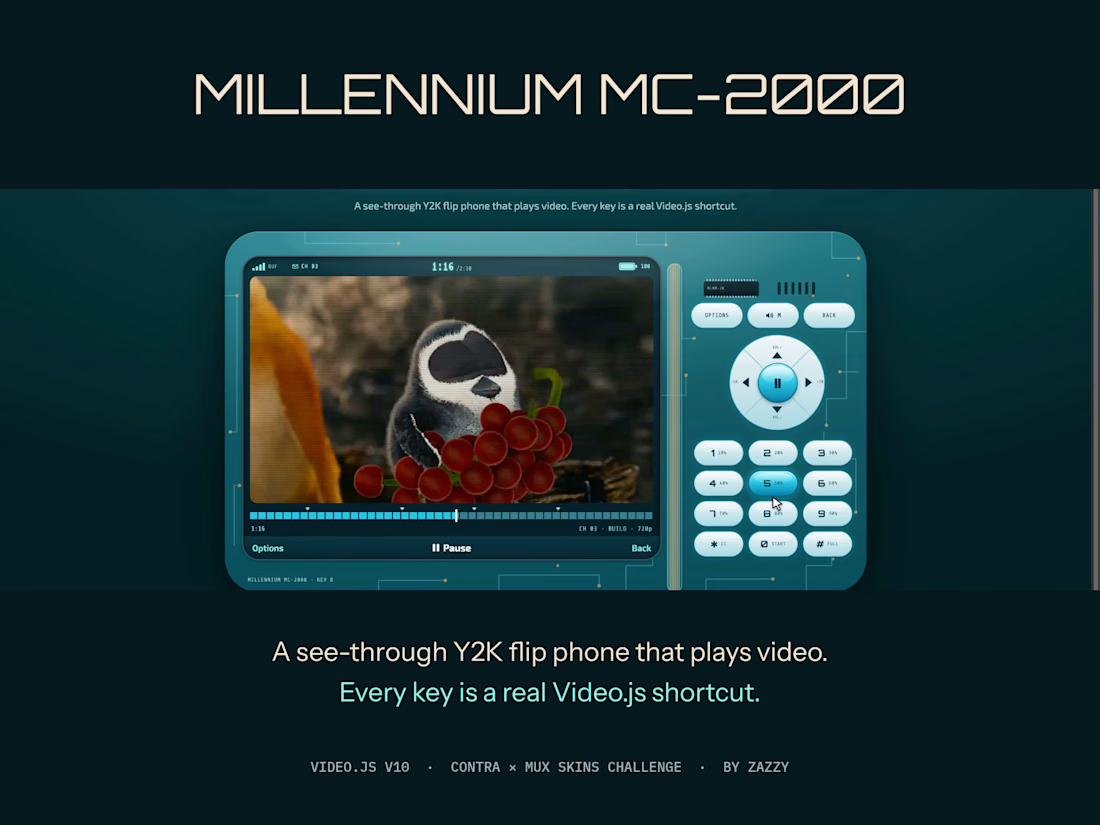
Millennium MC-2000 is a see-through Y2K flip phone that plays video. The keypad isn't decoration: every key is a real Video.js shortcut. 1–9 jump to 10–90%, OK plays, the D-pad seeks and sets volume, ✱ is captions, # is fullscreen.
The status bar is live player data: signal bars show the buffer, the battery shows volume, the clock shows time, and a ✉ arrives with each new chapter. Under 480px the lid closes and flips open on demand.
Every key is 44px and keyboard-reachable, and with reduced motion or transparency the shell turns solid and still.
It works with any video: millennium-mc2000.netlify.app/?media=plain
More explorations: two more skins I designed, switchable live on the same film, at zazzy-skins.netlify.app (House, built from videojs.org's own brand, and Darkroom, a film-developing player).
Film: "Caminandes 3: Llamigos" by Blender Foundation, CC BY 3.0.



Lovely work Zazzy