The network for creativity
Join 1.25M professional creatives like you
Connect with clients, get discovered, and run your business 100% commission-free
Creatives on Contra have earned over $150M and we are just getting started
Back to feedPost

Everyone wants quick answers. Good research rarely provides them. It replaces certainty with nuance and that's usually where the truth begins.
The network for creativity
Join 1.25M professional creatives like you
Connect with clients, get discovered, and run your business 100% commission-free
Creatives on Contra have earned over $150M and we are just getting started





Related posts


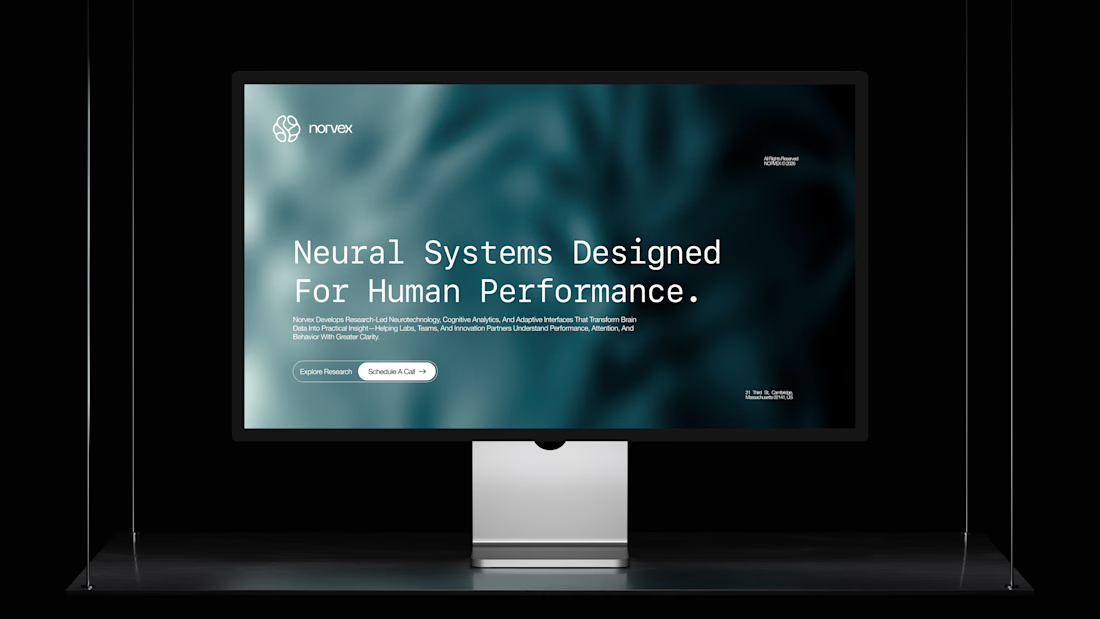
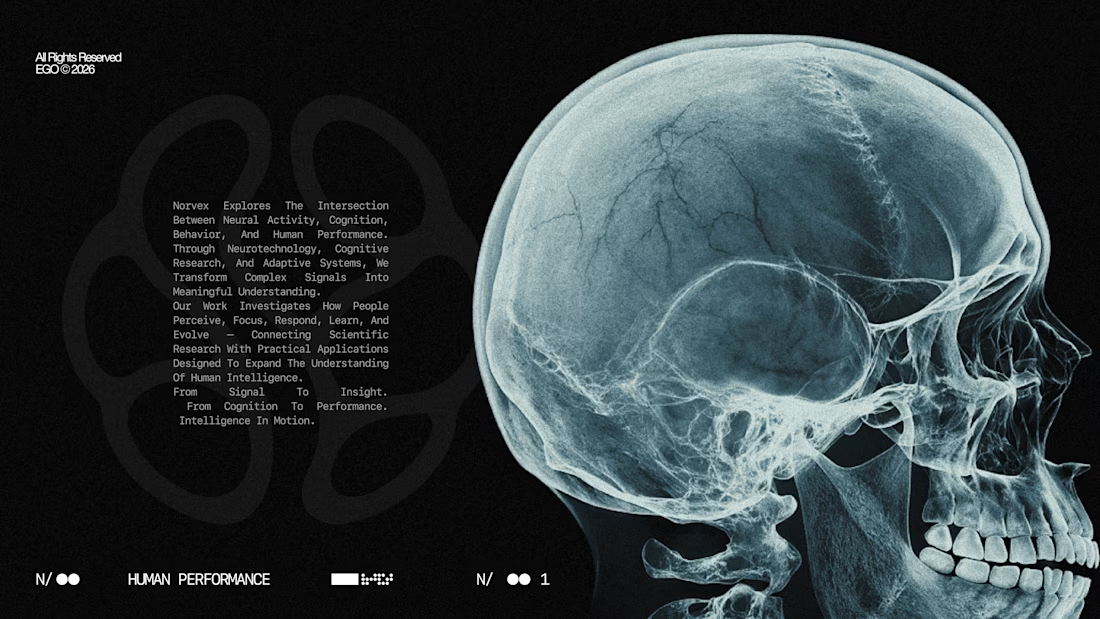
[NORVEX]
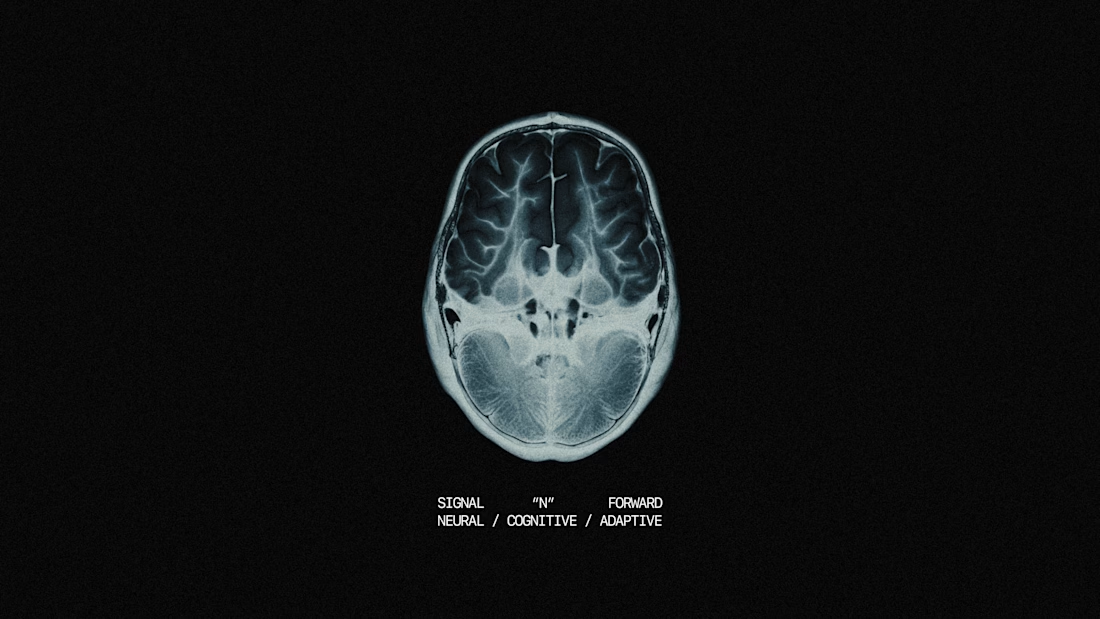
NORVEX is a neurotechnology and cognitive research laboratory based in Cambridge, Massachusetts.
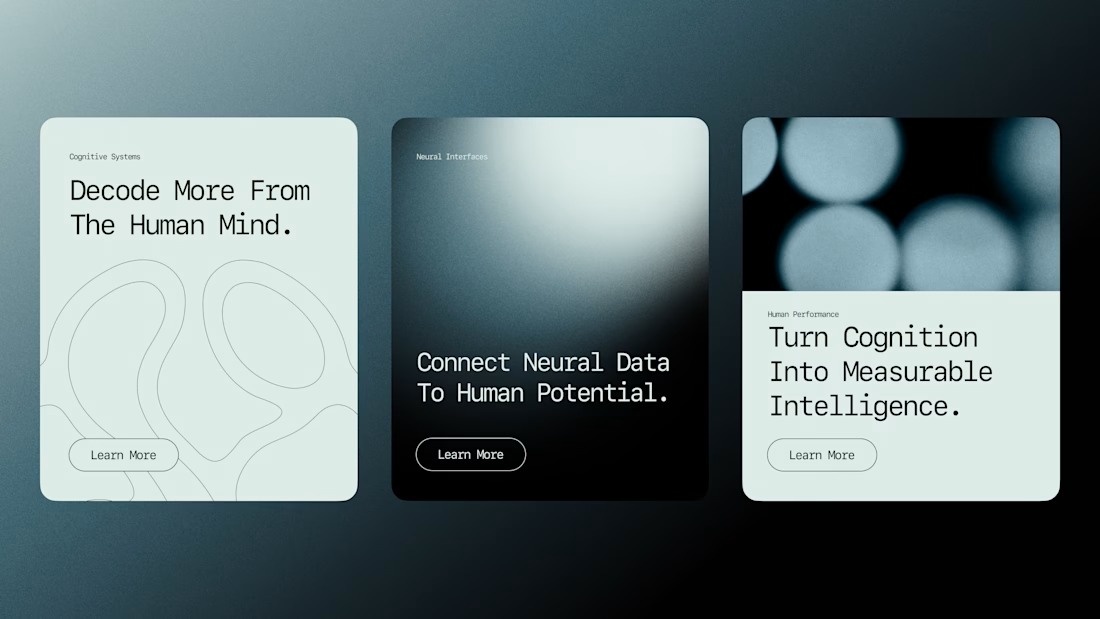
Operating at the intersection of neuroscience, cognitive analytics, technology and human performance, Norvex transforms complex data into research, intelligent systems and meaningful insights.
Its new identity reflects this vision through a precise and dynamic visual system, built around intelligence, connectivity and movement.



The hardest part of building an AI agent trained on my case studies wasn't really the wiring. It was deciding what it should refuse to say.
Ask it where I live and it tells you to ask me.
Ask for a metric it doesn't have and it says so, instead of inventing a number that sounds about right. That one took the longest. A model will happily produce "40% lift in task completion" because that is the shape of a sentence that belongs in a case study. Getting it to say "I don't have that" meant deciding, claim by claim, what it was allowed to assert.
Every AI feature has a version of this problem. The model is rarely the hard part. The hard part is the boundary: what it does when it doesn't know, and whether the person on the other side can tell the difference.
That's a design problem, not an engineering one.
Live on my portfolio if you want to try it: chrisjmartini.com/ask-ai-about-my-work


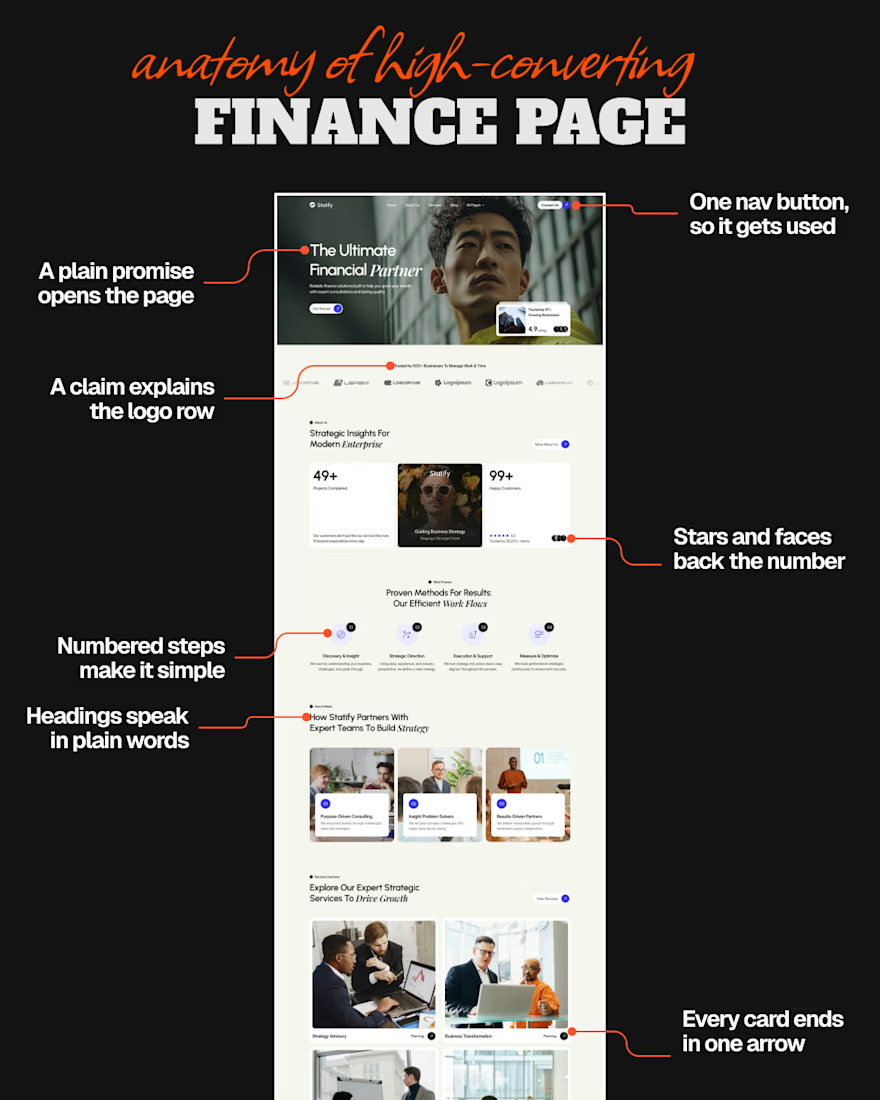
Statify, the home page for a finance and business consultancy.
Three decisions worth stealing.
1. The proof sits inside the hero. A small card with a 4.9 rating and a handful of faces, next to the headline instead of in a testimonials block at the bottom. The doubt happens at the top of the page, so the answer belongs there too.
2. The work process is four numbered steps, each with one line of explanation. Discovery, direction, execution, measurement. A buyer who cannot picture how the work happens does not enquire, and four short steps is the cheapest way to show it.
3. Every service card ends in the same arrow button. One exit per card, in the same place, so the page never asks the visitor to choose between two ways out of the same block.