The network for creativity
Join 1.25M professional creatives like you
Connect with clients, get discovered, and run your business 100% commission-free
Creatives on Contra have earned over $150M and we are just getting started
Back to feedPost

Taming the QuickBooks API: Architecting a Bulletproof Financial Sync
Grab a cup of coffee. Let’s talk about one of the most notoriously unforgiving tasks in software architecture: integrating a custom SaaS platform with enterprise accounting software like QuickBooks Online (QBO).
If you’ve ever integrated Stripe or PayPal, you know it’s relatively straightforward. Money moves, a webhook fires, the status changes. But accounting software is different. It’s not just about moving money; it’s about Audit Trails, Chart of Accounts, and Tax Compliance. One wrong API call, and you can ruin a company's annual tax return.
Recently, I led the architecture and integration of QuickBooks Online for Sound Equine Pro — a specialized CRM and financial management app for equine professionals (farriers, veterinarians).
Here are the critical architectural challenges I faced and the solutions that turned a potential data nightmare into a seamless, invisible assistant for our users.
Challenge 1: The "Source of Truth" Trap (Why Two-Way Sync is a Bad Idea)
When clients ask for a QuickBooks integration, they usually say: "I want everything to sync both ways instantly." As an architect, my first job was to push back against this.
If a bookkeeper changes an invoice amount inside QuickBooks to balance the books, should that change propagate back to the mobile app and overwrite the original invoice the farrier created in the barn? Absolutely not.
The Architectural Rule:
We established a strict boundary of responsibility.
Sound Equine Pro is the Source of Truth for Operations (Clients, Horses, Services, Invoice generation).
QuickBooks is the System of Record for Taxes.
Data flows strictly One-Way (App ➔ QBO) for all master data and invoices. The only exception is Payments. If a client pays an invoice via a QuickBooks payment link, QBO sends a webhook to our app to close the balance. This separation prevents data mutation loops and protects the operational integrity of the app.
Challenge 2: Domain Mapping (How do you put a Horse in QuickBooks?)
QuickBooks doesn't have a "Horse" category. It has Customers, Vendors, and Items. But for a veterinarian, tracking profitability per horse is a killer feature.
The Solution:
Instead of flat mapping, we utilized QuickBooks' Sub-customer (Jobs) architecture.
The human owner becomes the Customer.
The horse becomes the Sub-customer (e.g., Larissa Maslow : Gunner's Hotrod).
To make this work asynchronously, I designed a specialized SQL View (qbo_unified_horses_view) in PostgreSQL. This view intelligently combined both native application horses and "shadow" (offline) horses, retrieved their parent’s qbo_id, and fed a clean, flat data structure to our Edge Functions. The result? Flawless P&L reports for the CPA without the user doing any extra manual data entry.
Challenge 3: Surviving the "Webhook Storm" and Race Conditions
Modern apps use database triggers to keep data consistent. In our Supabase architecture, creating an invoice involves multiple steps: inserting the invoice, inserting items, calculating totals via triggers, and adding notes.
Initially, this caused a massive Webhook Storm. Saving one invoice in the app fired 4-5 simultaneous UPDATE webhooks to our Edge Function.
The Resulting Bug: Five parallel Serverless Functions raced to QuickBooks, trying to create the same invoice. QBO allowed it, creating duplicates. When we tried to update the invoice later, QBO threw a Stale Object Error (SyncToken collision).
The Engineering Fix (Idempotency & Debouncing):
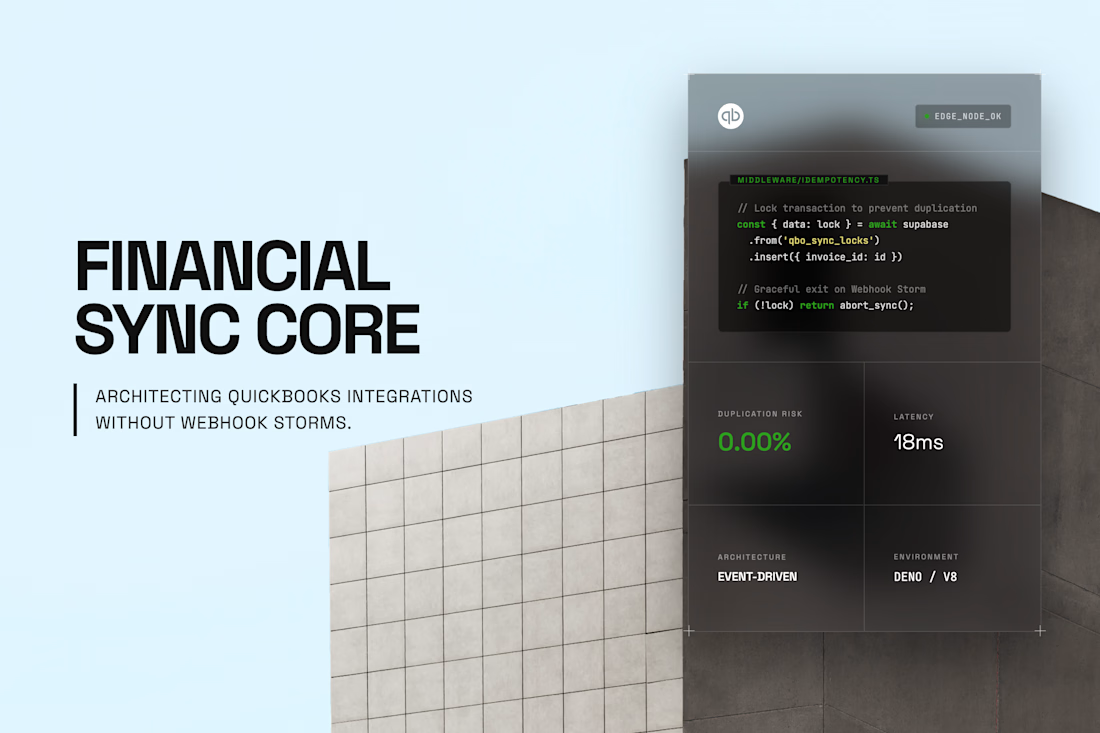
I re-architected the qbo-sync-worker Edge Function into a robust Dispatcher.
Locking Mechanism: The first webhook to arrive instantly writes a processing status to the database. The subsequent webhooks see this lock and gracefully terminate.
Smart Filtering: The function compares old_record and new_record payloads from the Supabase webhook. If only technical fields changed, it aborts.
Retry Logic with Backoff: If QuickBooks still throws a Stale Object Error due to rapid user edits, the function catches the error, waits for 2 seconds, fetches the latest SyncToken from QBO, and retries the operation.
Challenge 4: The "Uncategorized" Grace
To create an Item or Expense in QBO via API, you must provide an Income/Expense Account ID. But asking a farrier to map Chart of Accounts in a mobile app is terrible UX.
The Automation:
During the initial OAuth 2.0 handshake, a background worker silently queries the user's QuickBooks account for default accounts like "Uncategorized Expense". It saves these IDs to our database. When the user logs a $50 expense for horseshoes in the app, the worker routes it to the Uncategorized bucket. The CPA can easily review and reassign these at the end of the month.
The Tech Stack
Backend & Database: Supabase, PostgreSQL (with heavy use of Views and Row Level Security).
Compute: Deno-based Edge Functions (Serverless).
Integration: QuickBooks Online API (OAuth 2.0, Batch API for performance, Webhooks).
***
Integrating with enterprise accounting software requires moving beyond basic CRUD operations. It demands defensive programming, strict data governance, and an understanding of how accountants actually work. By leveraging Event-Driven architecture and intelligent Edge Functions, we built a silent, powerful bridge that handles the financial heavy lifting, allowing equine professionals to do what they do best: care for the horses.
Are you looking to integrate complex third-party APIs (ERPs, Accounting, Payment Gateways) into your SaaS without compromising performance or data integrity? Let's connect and discuss your architecture.


The network for creativity
Join 1.25M professional creatives like you
Connect with clients, get discovered, and run your business 100% commission-free
Creatives on Contra have earned over $150M and we are just getting started
Trending
retrofuturism
Share your favorite designs from the past exploring the distant future. Or your own take on the aesthetic 🚀
halftone
Dots. Texture. Grain. Let's see your designs using the halftone technique.

Midjourney
Creatives are showing off what they're making with Midjourney.
colorgrade
Video editors sound off: How do you enhance the mood of your video in color grading?
Related posts

My recent client is an Australian printing firm.
They already had clients coming in.
The problem was what happened after the agreement.
When a client agrees to payment terms, every delay matters.
A payment process that sits waiting for someone to follow up can slow down the entire client journey. And when clients experience unnecessary delays, it can affect more than cash flow. It can affect their confidence in the business.
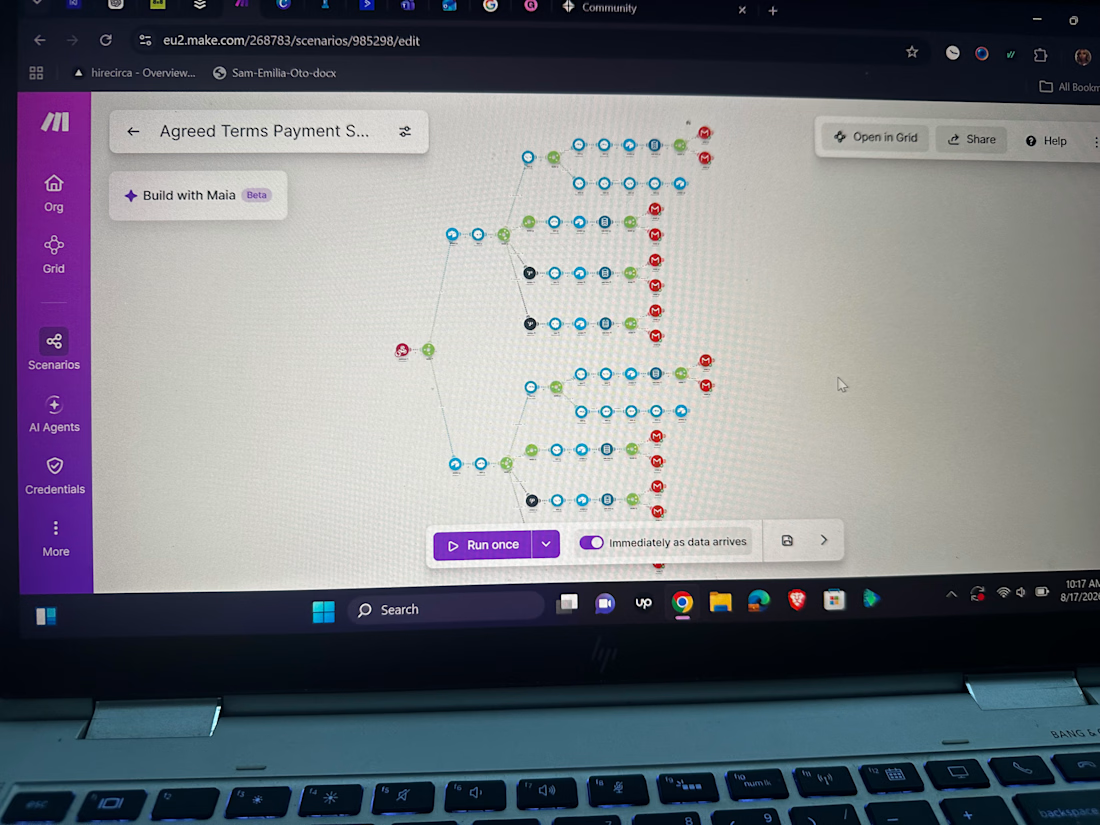
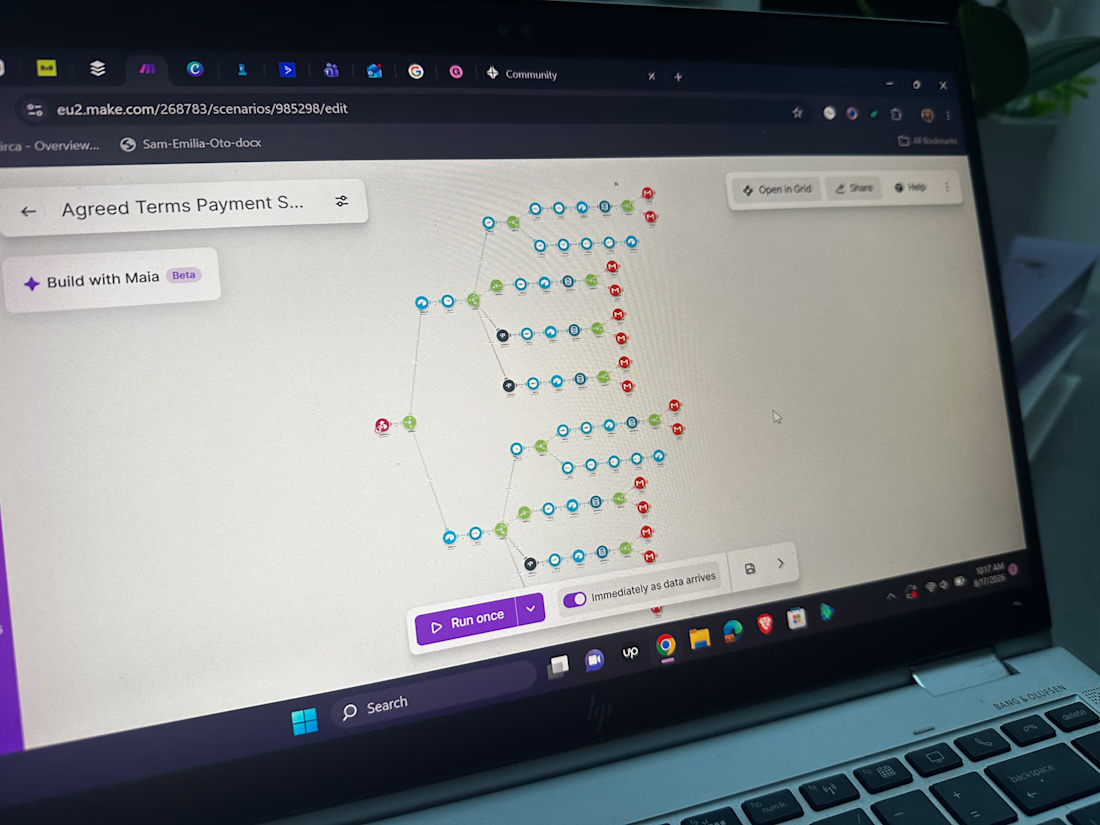
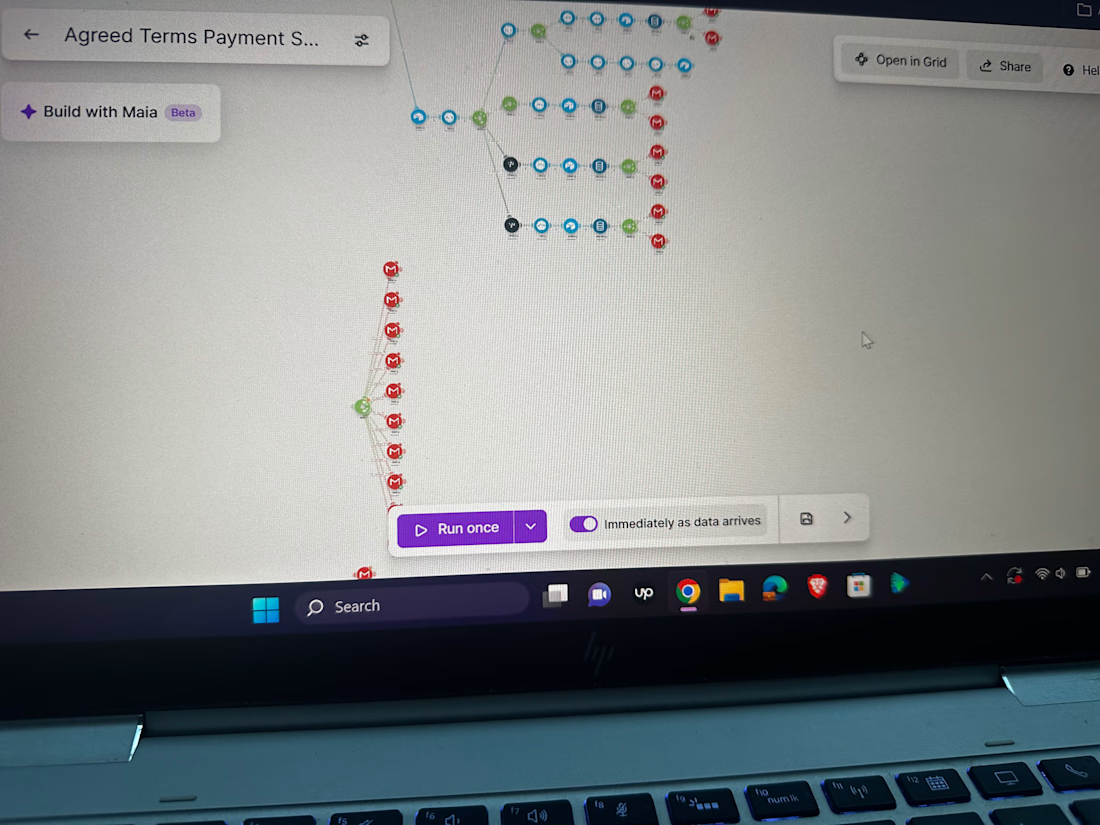
So I built an Agreed Payment System in Make.com designed around the client journey.
The goal wasn’t simply to automate emails.
It was to create a process that keeps agreed payments moving, keeps communication consistent, and reduces the amount of manual follow-up required from the team.
The workflow takes the agreed payment process and routes it through the appropriate steps, conditions, and Gmail communications.
The system helps keep the process moving.
And this is where my background in sales development and client retention comes into the automation work.
I don’t look at automation as:
Trigger → Action → Done.
I look at it as:
Lead → Sale → Client → Experience → Retention → Repeat business.
Because getting a client is only part of the job.
You also need systems that make it easy for that client to keep doing business with you.
Sales development + client retention + workflow automation.
That’s the intersection I build around.


The handoff after a client agrees to terms is where many service businesses leak cash flow. Automating follow-up there is a practical B2B wedge because it ties the workflow directly to revenue.

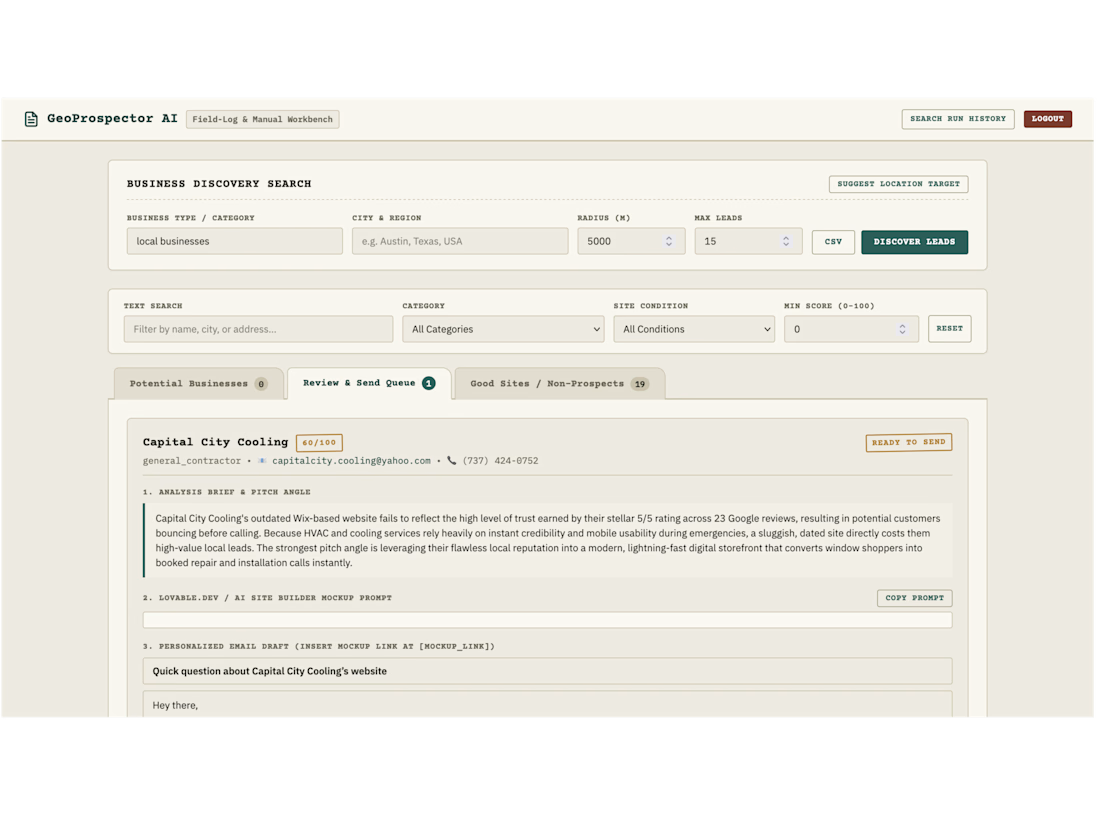
A production-ready LangGraph agent that discovers, audits, scores, enriches, and qualifies B2B prospects automatically.



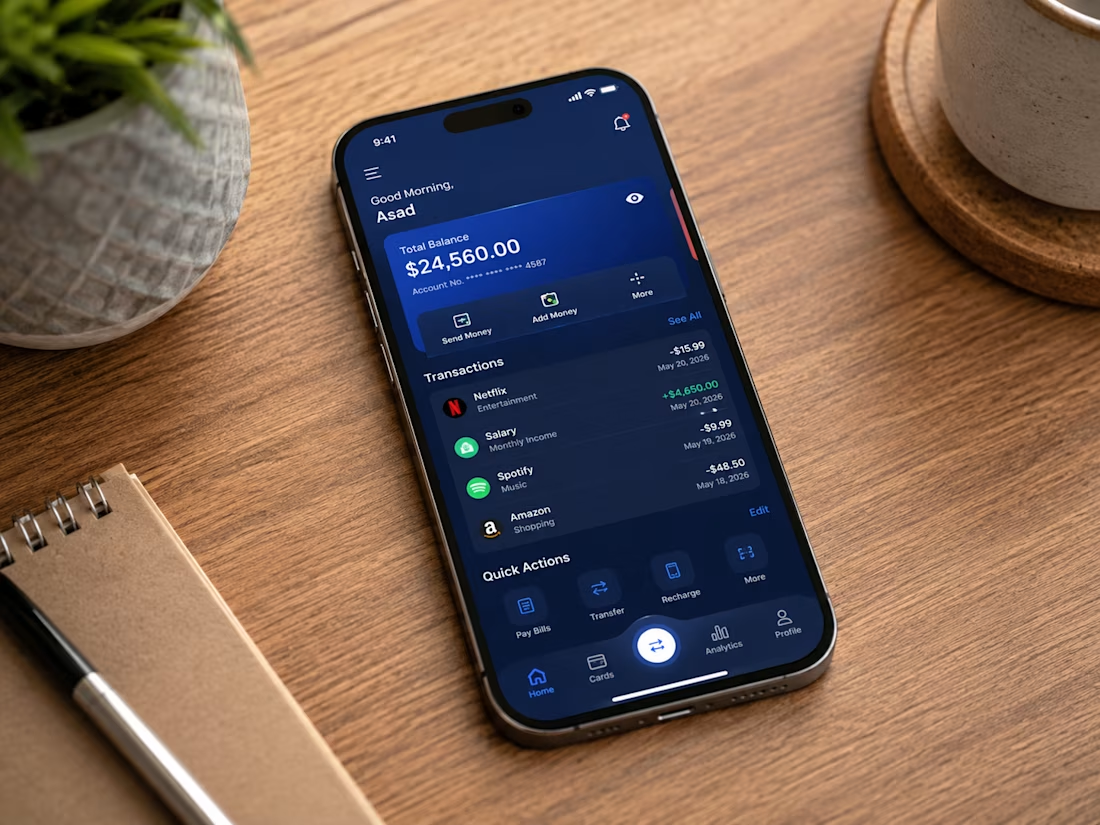
Modern Banking App UI
Designed a modern mobile banking dashboard focused on simplicity, clarity, and easy access to everyday financial actions.
The interface includes:
• Balance overview
• Recent transactions
• Send & receive money
• Bill payments
• Mobile recharge
• Transfer & quick actions
• Financial analytics
• Profile management
The goal was to create a professional fintech experience with strong visual hierarchy and an intuitive navigation system.



It's really modern execution specially the navbar effect is top-notch