The network for creativity
Join 1.25M professional creatives like you
Connect with clients, get discovered, and run your business 100% commission-free
Creatives on Contra have earned over $150M and we are just getting started
Back to feedPost


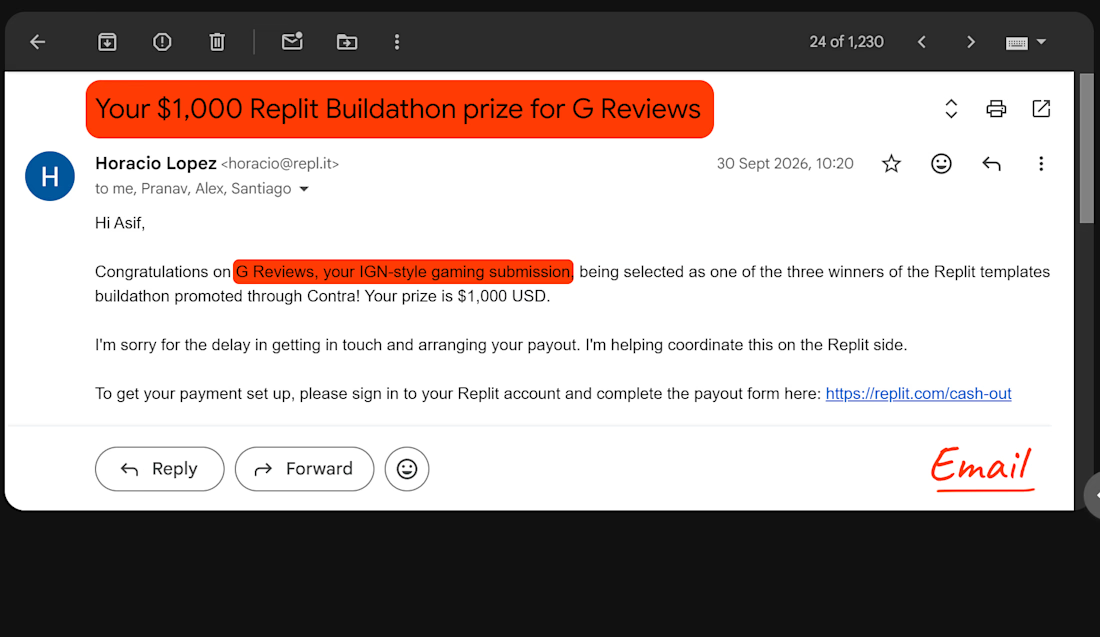
Mentioned on Contra
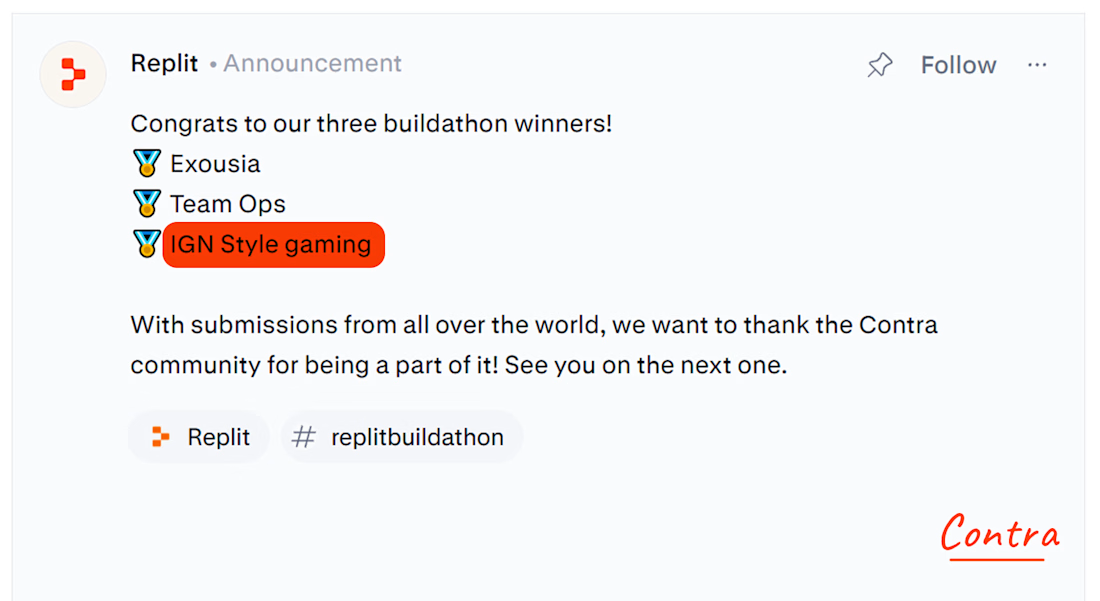

congrats Asif
Thanks

Congrats Asif. Templates are an underrated product, since the real test is whether a stranger can fork it and ship something without reading the code first.
Thank you Shoaib!
The network for creativity
Join 1.25M professional creatives like you
Connect with clients, get discovered, and run your business 100% commission-free
Creatives on Contra have earned over $150M and we are just getting started








Related posts

$15,000 from one browser game takes 1 to 15 million plays.
I did the math because my first web game, built with Claude Code, went live on CrazyGames today.
Bolt Pit is a Three.js arena shooter. It has earned $0 so far, because CrazyGames keeps ads off during the Basic Launch test, which runs until November 5.
Only games with good numbers get a Full Launch, and that's where the ad revenue share starts.
The formula:
Revenue = sessions × ads per session × eCPM ÷ 1,000 × your share
eCPM is what advertisers pay per 1,000 ads. CrazyGames allows at most one midgame ad every 3 minutes. The share isn't public, and reports range from 40% to 60%, so I used 50%. The rest are my assumptions, based on reported ad rates:
Low: 1 ad per session, $2 eCPM = $1 per 1,000 plays. You need 15 million plays.
Mid: 2 ads, $5 eCPM = $5 per 1,000 plays. You need 3 million plays.
High: 3 ads, $10 eCPM = $15 per 1,000 plays. You need 1 million plays.
One developer reported about €1.20 per 1,000 CrazyGames plays across eight older games. That's the low case, so I plan around the middle at best.
Is 3 million plays realistic?
CrazyGames reported 320 million play sessions a month this October. Poki says it has 100 million players a month. The players exist. Retention and session length decide which line you land on.
That's the bigger reason I'm here. I have Unity games in progress that were meant for the App Store. On the App Store, I'd only find out if people come back after paying for players.
So the new plan is web first, App Store later:
Launch on CrazyGames and Poki, where test players are free.
Tune retention and session length on real data.
If a game becomes a hit on the web, take it to the app stores.
Both portals' exclusivity rules cover only the web, so the app stores stay open.
I'm also skipping CrazyGames' exclusivity bonus. It pays 50% more for two months if your game stays off other web portals, and I want to test on Poki too.
Getting a Claude Code build accepted took six fixes, including a static build, relative paths, no Google Fonts and cutting the size from 20.5 MB to 12.4 MB. One known bug is still live: on landscape phones the start button sits below the fold.
I'll post the real numbers as they come in. Play it here:
https://crazygames.com/game/bolt-pit


Hey Contra and SVGator team, thank you so much for this challenge. 🙏 It was a lot of fun to work on.
I'm Amine, a motion designer, and this is my entry: "The Milestone Deck". It's a counter and card-line template for brands and creators who want to celebrate a win, like hitting a follower, subscriber or sales number, and share it in a way that looks good.
I followed the brief and checked the gallery to make what's missing. When I scrolled through it, I saw lots of logo reveals, icon hovers and product-promo cards, but nothing for the moment you hit a milestone and want to share it. So I made that. I wanted something different from the usual product previews, and I think a lot of brands and creators will actually use it.
What's inside:
Real, editable text for the brand name, the caption and the counter
Clearly named layers, with notes in the names about what to change
Every card image in its own element, so swapping one is easy
A counter that counts up, and a line of cards that moves like a worm
Proof it can be changed: the video shows the same template with two sets of content, a gray version and a purple one, with a different number and color and the same animation. The walkthrough shows how to rebrand it step by step.
About the tools: as a motion designer, I really like how effective SVGator is. The idea and the designs are mine. I used the SVGator MCP with Claude only to replicate animations, the repetitive keyframe work that would have taken me ages by hand, and it saved me a lot of time there.
Thanks again, SVGator and Contra. 😍

Such a great work!

Built Reveal in
@SVGatorApp, an expandable portfolio card with smooth motion and editable content.
The demo shows the same template with two content sets.


I love it. Its so modern!