The network for creativity
Join 1.25M professional creatives like you
Connect with clients, get discovered, and run your business 100% commission-free
Creatives on Contra have earned over $150M and we are just getting started
Back to feedPost

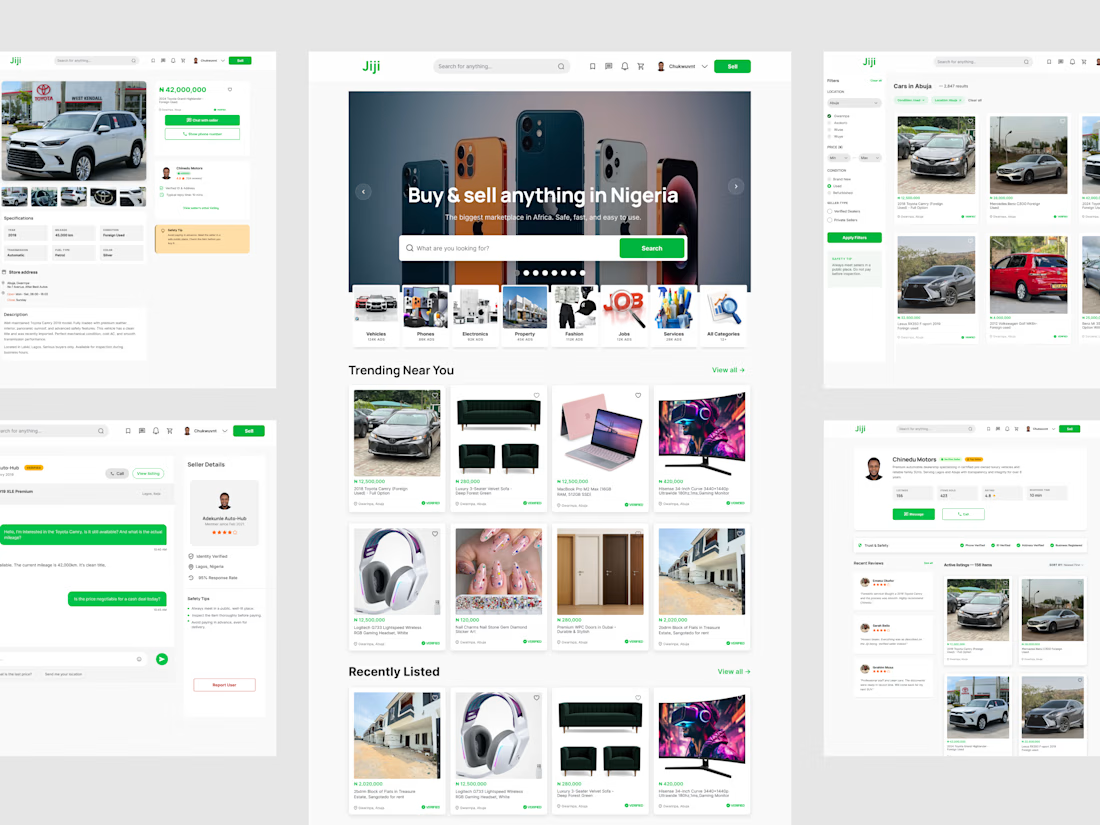
I just completed a full UX/UI redesign of Jiji.ng, Nigeria's largest online marketplace.
Jiji serves millions of users, but the web app experience has significant usability gaps. I took on the challenge of redesigning 5 core screens to address real problems users face every day.
Here's what I found and how I solved it:
Problem 1: The homepage had no visual hierarchy. Ads, banners, and listings were all competing for attention with no clear structure.
Solution: Introduced labeled content sections ("Trending Near You", "Recently Listed", "Recommended For You") with a clean 4-column product grid.
Problem 2: Search results had no filtering. Users scrolled endlessly through irrelevant results.
Solution: Added a structured sidebar with Location, Price Range, Condition, and Seller Type filters, plus breadcrumb navigation and a results count.
Problem 3: No seller trust signals. The #1 complaint in Jiji's app store reviews is scam concerns.
Solution: Designed a trust-first product page with verified seller badges, star ratings, response time indicators, store hours, and safety tips.
Problem 4: Seller profiles lacked credibility. Just a name and listing count.
Solution: Built a comprehensive profile with verification status (Phone, ID, Address, Business), customer reviews, and seller statistics.
Problem 5: The chat was basic with no context. Users couldn't tell which product a conversation was about.
Solution: Created a split-panel messaging experience with the product embedded in the chat header, quick-reply chips, and a seller details sidebar.
Every decision was informed by actual user feedback from Google Play and App Store reviews.
Tools: Figma
Screens: Homepage, Search Results, Product Detail, Seller Profile, Messages
I'd love to hear your thoughts. What would you have done differently?
The network for creativity
Join 1.25M professional creatives like you
Connect with clients, get discovered, and run your business 100% commission-free
Creatives on Contra have earned over $150M and we are just getting started
Trending
retrofuturism
Share your favorite designs from the past exploring the distant future. Or your own take on the aesthetic 🚀
halftone
Dots. Texture. Grain. Let's see your designs using the halftone technique.

Midjourney
Creatives are showing off what they're making with Midjourney.
colorgrade
Video editors sound off: How do you enhance the mood of your video in color grading?
Related posts

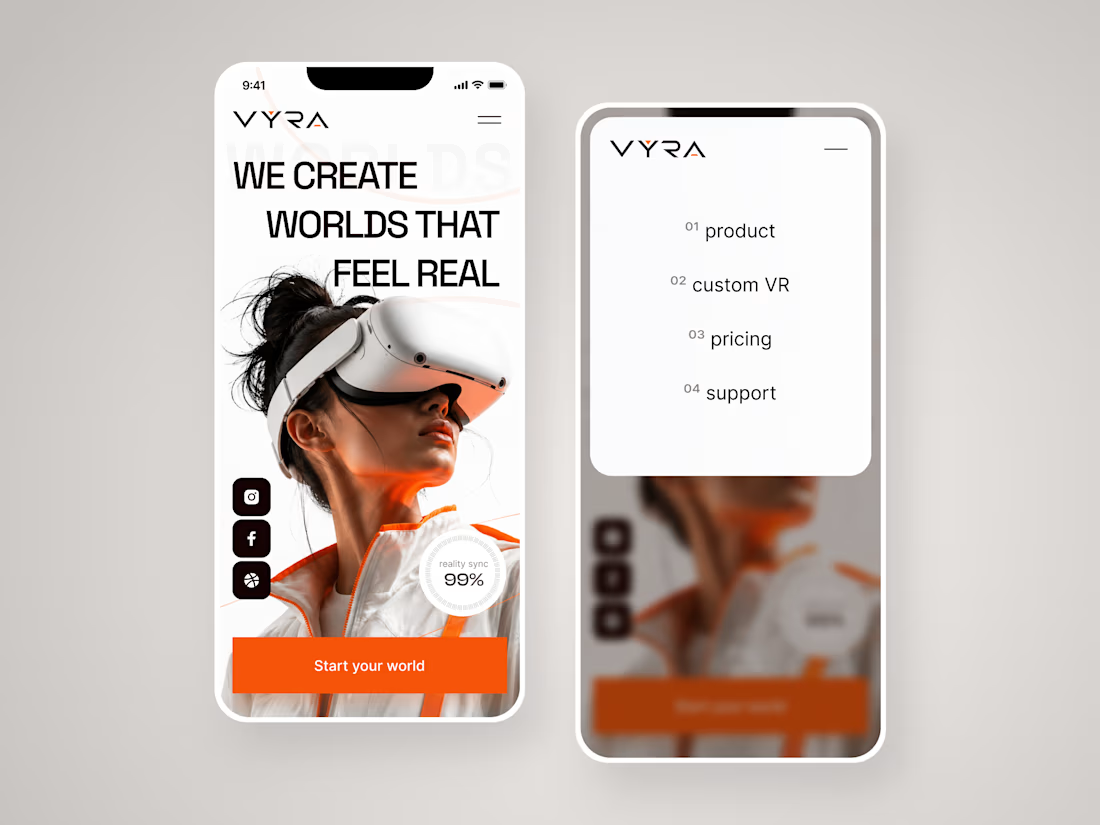
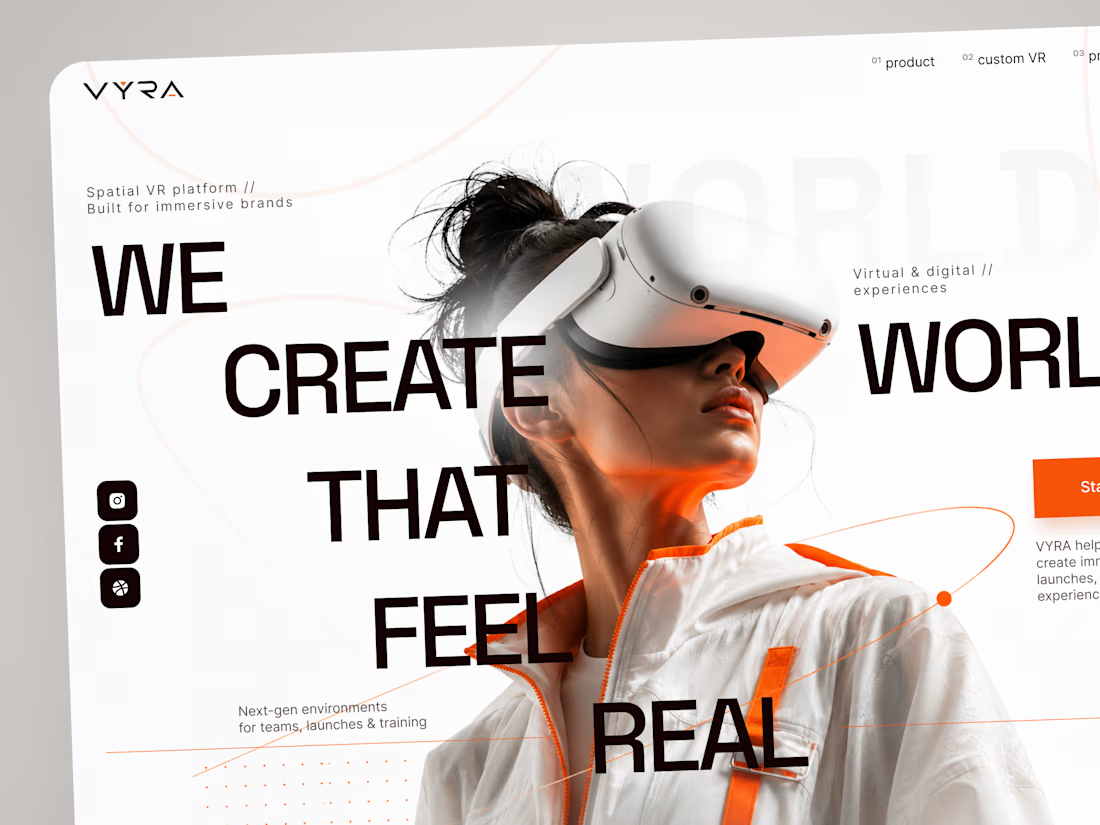
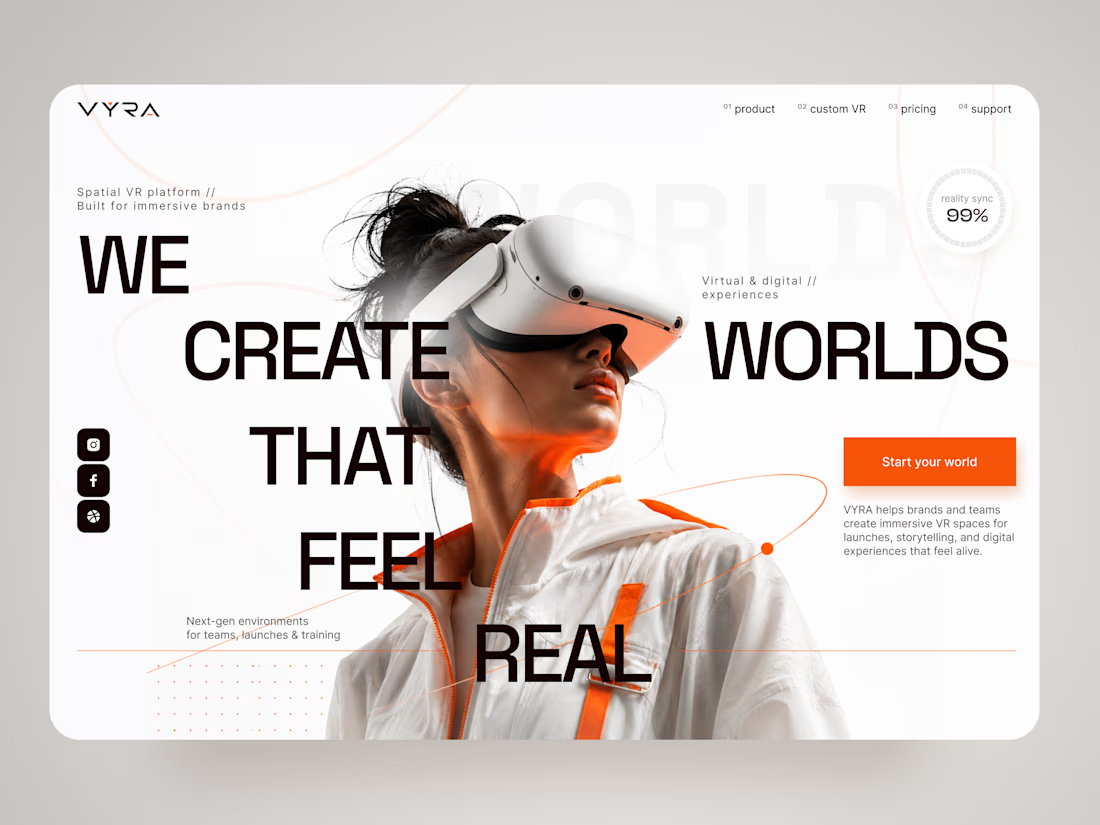
VYRA — Immersive VR Experience Landing Page 🥽✨
VYRA is a futuristic landing page concept for a spatial VR platform that helps brands and teams create immersive digital environments for launches, storytelling, training, and interactive experiences.
The goal was to translate the feeling of entering another world into a clean, premium digital interface. The visual direction combines oversized typography, immersive photography, minimal UI, and vibrant orange accents to create a strong sense of technology and motion.
Special attention was given to:
• a cinematic hero composition that immediately introduces the VR experience;
• oversized typography integrated with the main visual to create depth and movement;
• a minimal black, white, and orange palette that keeps the interface futuristic without feeling overly technical 🟠;
• subtle orbital graphics and supporting details that reinforce the idea of spatial environments;
• a clear “Start your world” CTA that connects naturally with the brand message;
• supporting metrics and micro-elements that add a sense of technology and precision;
• responsive mobile layouts that preserve the visual impact while simplifying the composition 📱;
• a clean mobile navigation experience that keeps product, custom VR, pricing, and support easy to access;
• a flexible visual system suitable for VR products, immersive platforms, and emerging technology brands.
The result is a bold digital experience that makes spatial technology feel premium, accessible, and exciting — turning the website itself into the first step toward an immersive world.
Looking to create a memorable website for your VR, AR, AI, or emerging technology product?
Let’s build a digital experience that feels like the future 🚀



Amazing

Attention is your strongest currency.
Most people never ask what they’ve been funding with it. Tithe is the first app built for the people who finally set the price.
Onboarding isn't for instructions it's for setting the tone.
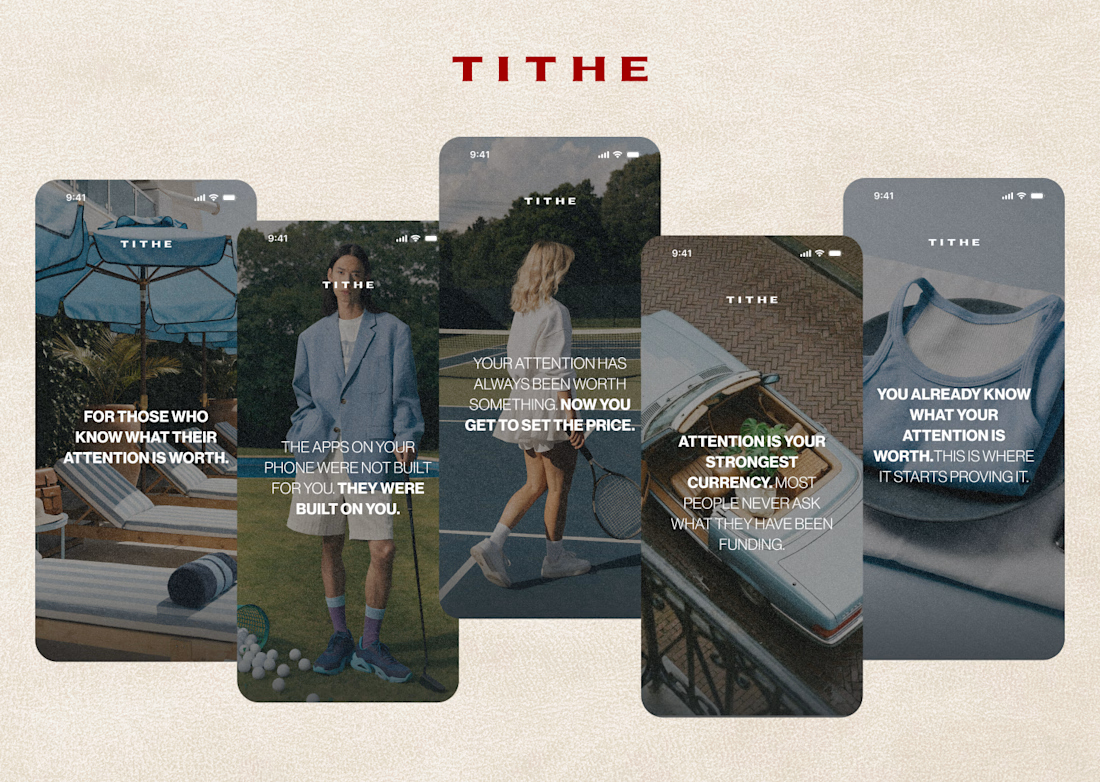

This is a really strong approach to onboarding. The raw imagery combined with that bold copy makes it feel much more like a manifesto than a standard app tutorial.

I’m experimenting with two different approaches to bento-style dashboards. Which one would you choose for the UI & animations? 👀
.......
A — CSS Animations → minimal purple UI
B — Framer Motion → purple + pink gradient
Which feels better for a real product — A or B?
Curious to hear your thoughts on both the UI style and animation.
6 voted
60%
4 voted
40%
10 votes
Closed

Sorry, I mistakenly tapped the gradient one. Purple UI for me. It feels more balanced and easier to use for a real product. The other has more visual punch but the gradients pull a lot of attention.