The network for creativity
Join 1.25M professional creatives like you
Connect with clients, get discovered, and run your business 100% commission-free
Creatives on Contra have earned over $150M and we are just getting started
Back to feedPost

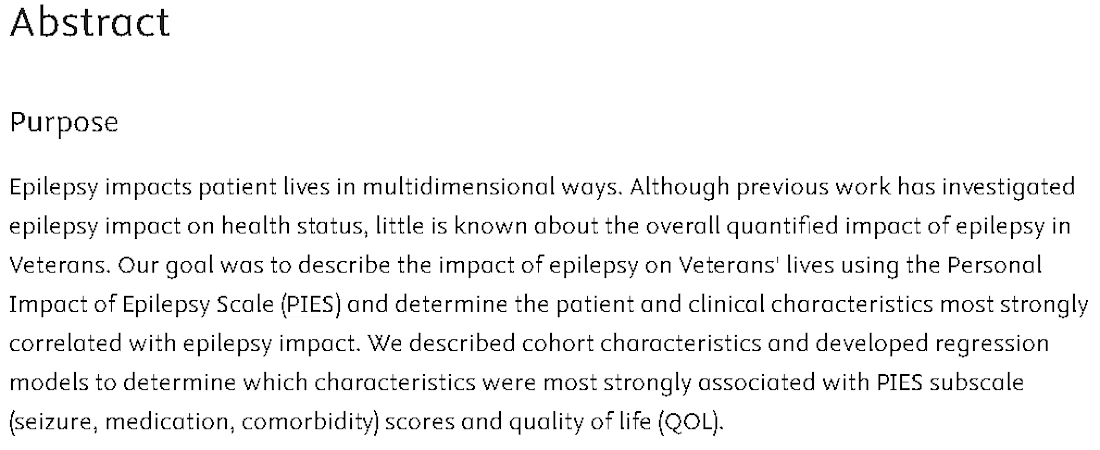
First Author & Data Scientist | Presented at the American Epilepsy Society Annual Meeting
Led the quantitative analysis of epilepsy's multidimensional impact on Veterans' lives using the Personal Impact of Epilepsy Scale (PIES). Built regression models to identify patient and clinical characteristics most strongly associated with seizure, medication, and comorbidity burden and quality of life outcomes. Developed all data visualizations in R and ggplot2. Key findings included a consistent association between seizure frequency and negative epilepsy impact, and age effects aligned with broader quality-of-life literature.


The network for creativity
Join 1.25M professional creatives like you
Connect with clients, get discovered, and run your business 100% commission-free
Creatives on Contra have earned over $150M and we are just getting started





Related posts




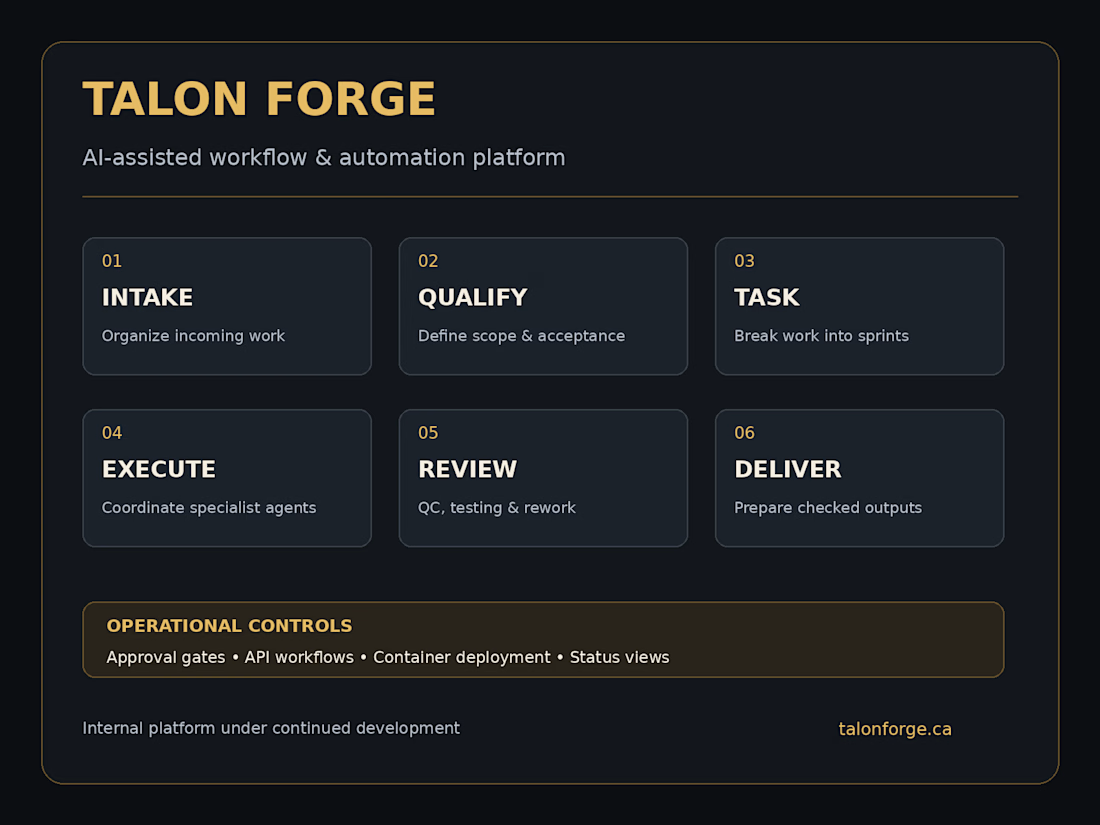
Introducing Talon Forge — AI automation and practical digital systems.
I’m Jason Peters, founder and technical lead. Talon Forge is both our micro-agency and the ongoing internal platform where we develop and review our workflows. It shows how we approach a build: clear outcomes, focused sprints, specialist work, testing, quality review, and human approval for sensitive actions.
What we can help build:
• AI-assisted workflows and business automation
• API integrations, Python tools, and backend systems
• Business websites and hosted storefronts
• Dashboards, data processing, and reporting
• Technical QA, troubleshooting, and documentation
My background includes 19+ years in Bell Canada network service and service as a Canadian Armed Forces LCIS technician. That experience shapes our emphasis on reliability, disciplined troubleshooting, and clear handover.
We welcome conversations with businesses, agencies, and public-sector or healthcare teams. Sensitive systems and health-record workflows require client-approved access, appropriate screening, and agreed privacy controls.
See our Talon Forge case studies and service listings on this profile, or explore https://talonforge.ca/
Have a process to automate, systems to connect, or a digital product to build? Message me on Contra with the goal, current tools, and biggest bottleneck. We’ll agree the scope, milestones, pricing, and delivery criteria before work begins.


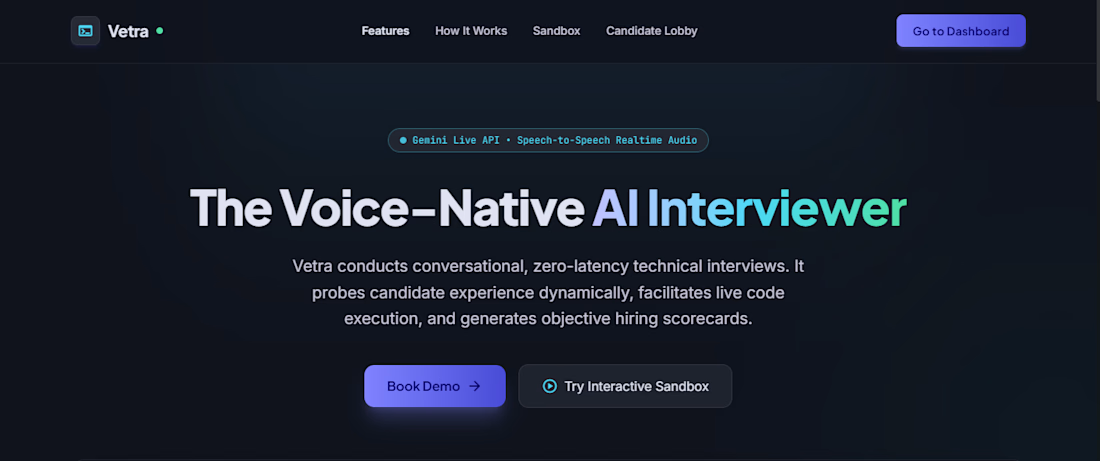
I built Vetra, an AI technical interviewer that makes interviews more structured, adaptive, and realistic.
Vetra conducts real-time voice interviews, explores a candidate’s experience, adapts its questions based on their responses, evaluates performance, and generates structured assessments.
I built the interview orchestration with LangGraph, added real-time voice interaction using Gemini Live, and created a separate evaluation layer for evidence-based scoring.
The goal was to create an AI interview experience that feels more like a real technical conversation than a chatbot.

Jonathan, keeping the evaluation layer separate from the interviewer is a smart choice. When the same model asks and scores, it tends to grade its own questions kindly. How are you handling silence and long pauses on the voice side? That was the hardest part for us on a voice AI build.