The network for creativity
Join 1.25M professional creatives like you
Connect with clients, get discovered, and run your business 100% commission-free
Creatives on Contra have earned over $150M and we are just getting started
Back to feedPost

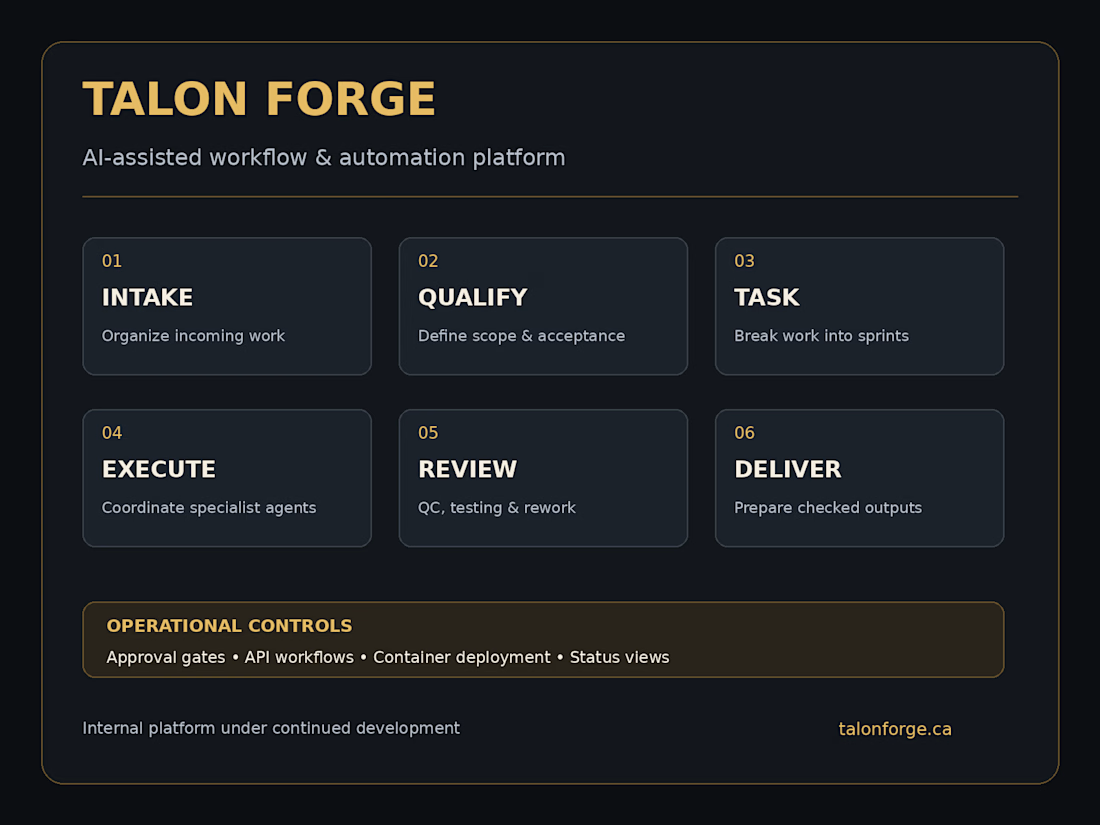
Introducing Talon Forge — AI automation and practical digital systems.
I’m Jason Peters, founder and technical lead. Talon Forge is both our micro-agency and the ongoing internal platform where we develop and review our workflows. It shows how we approach a build: clear outcomes, focused sprints, specialist work, testing, quality review, and human approval for sensitive actions.
What we can help build:
• AI-assisted workflows and business automation
• API integrations, Python tools, and backend systems
• Business websites and hosted storefronts
• Dashboards, data processing, and reporting
• Technical QA, troubleshooting, and documentation
My background includes 19+ years in Bell Canada network service and service as a Canadian Armed Forces LCIS technician. That experience shapes our emphasis on reliability, disciplined troubleshooting, and clear handover.
We welcome conversations with businesses, agencies, and public-sector or healthcare teams. Sensitive systems and health-record workflows require client-approved access, appropriate screening, and agreed privacy controls.
See our Talon Forge case studies and service listings on this profile, or explore https://talonforge.ca/
Have a process to automate, systems to connect, or a digital product to build? Message me on Contra with the goal, current tools, and biggest bottleneck. We’ll agree the scope, milestones, pricing, and delivery criteria before work begins.

The network for creativity
Join 1.25M professional creatives like you
Connect with clients, get discovered, and run your business 100% commission-free
Creatives on Contra have earned over $150M and we are just getting started



Related posts

A purchase order lands in your inbox. Everything looks right until one part number doesn’t match your catalog. What should your automation do next?
In TechFoundry IMS, we built that exception into the workflow. The system reads the emailed PO and checks each line against the catalog. When a part doesn’t match, it flags that line so someone on the order desk can inspect it, find the right item, and link it before fulfillment moves forward.
If you’re considering automating a workflow, start with the last order that got stuck. What did someone have to check, and what information did they need to make the call? That’s a good place to decide where automation helps and where your team needs a review step.
What sends your team back to the inbox most often: a part mismatch, a missing approval, or an invoice discrepancy? If you’re trying to fix one of those, message me here on Contra with an example. I’d be happy to talk through where to start.

The part I'd add: log every mismatch with what the human did next. After a month you usually see the same few supplier aliases behind most of them, map those and the exception queue shrinks on its own. Do you let the system suggest the closest catalog match, or always hold the line?


I prefer Option B, as it is more balanced. Option A is good, but the empty area feels a bit underdeveloped. What do you think?

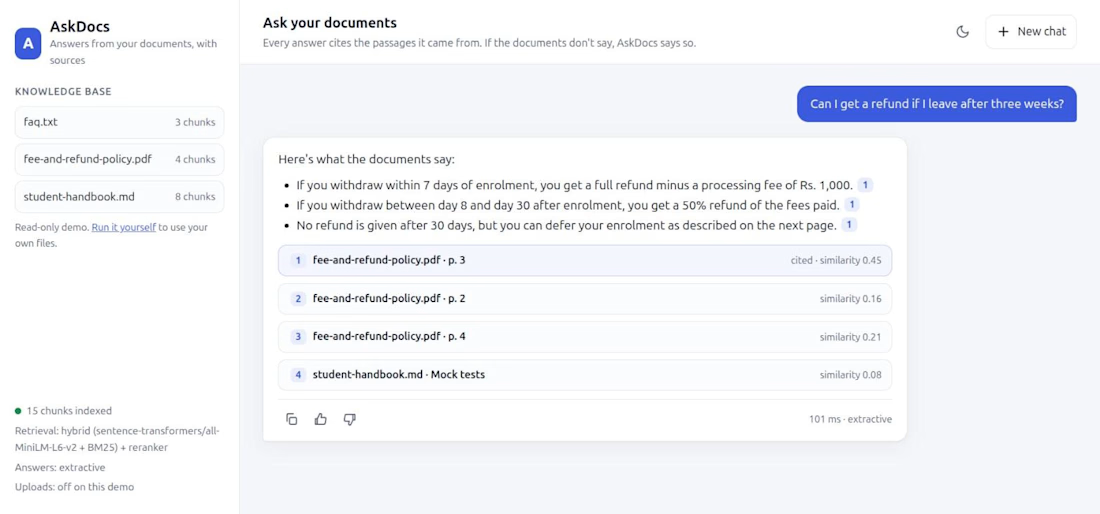
I built AskDocs: a chatbot that answers questions from your documents and cites the exact page each answer came from. If the documents don't cover a question, it says so instead of guessing.
Under the hood: hybrid search (MiniLM embeddings + BM25) with a cross-encoder reranker, streaming answers and a FastAPI backend. Feedback welcome!
Live demo: https://huggingface.co/spaces/24f2006816/askdocs
Code: https://github.com/24f2006816/askdocs