The network for creativity
Join 1.25M professional creatives like you
Connect with clients, get discovered, and run your business 100% commission-free
Creatives on Contra have earned over $150M and we are just getting started
Back to feedPost

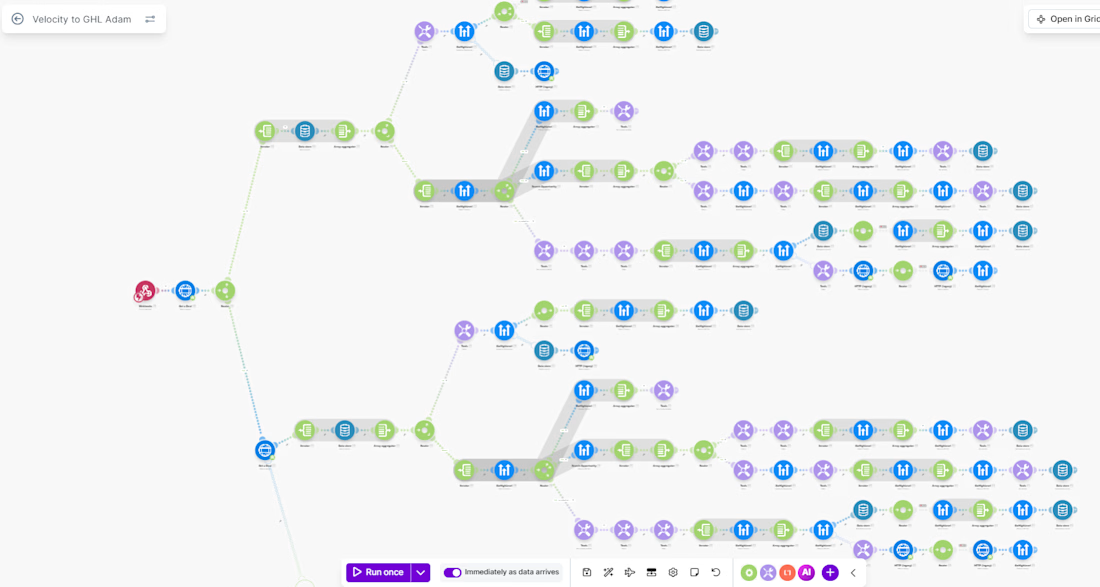
Velocity CRM to GoHighLevel (GHL) Real-time Syncing


The network for creativity
Join 1.25M professional creatives like you
Connect with clients, get discovered, and run your business 100% commission-free
Creatives on Contra have earned over $150M and we are just getting started





Related posts

Normal work disappears. Genuine judgment surfaces.
I built Northline Flow for @Lovable’s #lovablechallenge — a fictional owner-operated home-services business in Surrey, BC.
I didn’t want to build another prettier scheduler. The problem I wanted to attack was the handling around the booking.
Routine requests can continue toward booking. Genuine ambiguity reaches the owner as one framed decision. Unsafe or wrong-fit requests stop instead of being forced into the normal booking path.
I also built a deterministic test harness and a playable Morning Shift proof mode: three fictional requests enter the same routing rules, but only one requires a human decision.
The part I’m most excited about is that the challenge itself became reusable. We captured the process from brief → working flow → adversarial testing → cinematic donor → bounded visual integration → playable proof → final freeze.
Built in Lovable.
AI AutomationBusiness Workflow AutomationProduct DesignChatGPTGoogle AntigravityLovablelovablechallenge


Most teams don’t have a lead problem—they have an efficiency problem.
When you rely on manual follow-ups, qualification delays, and scattered inbox management, high-intent leads slip through the cracks.
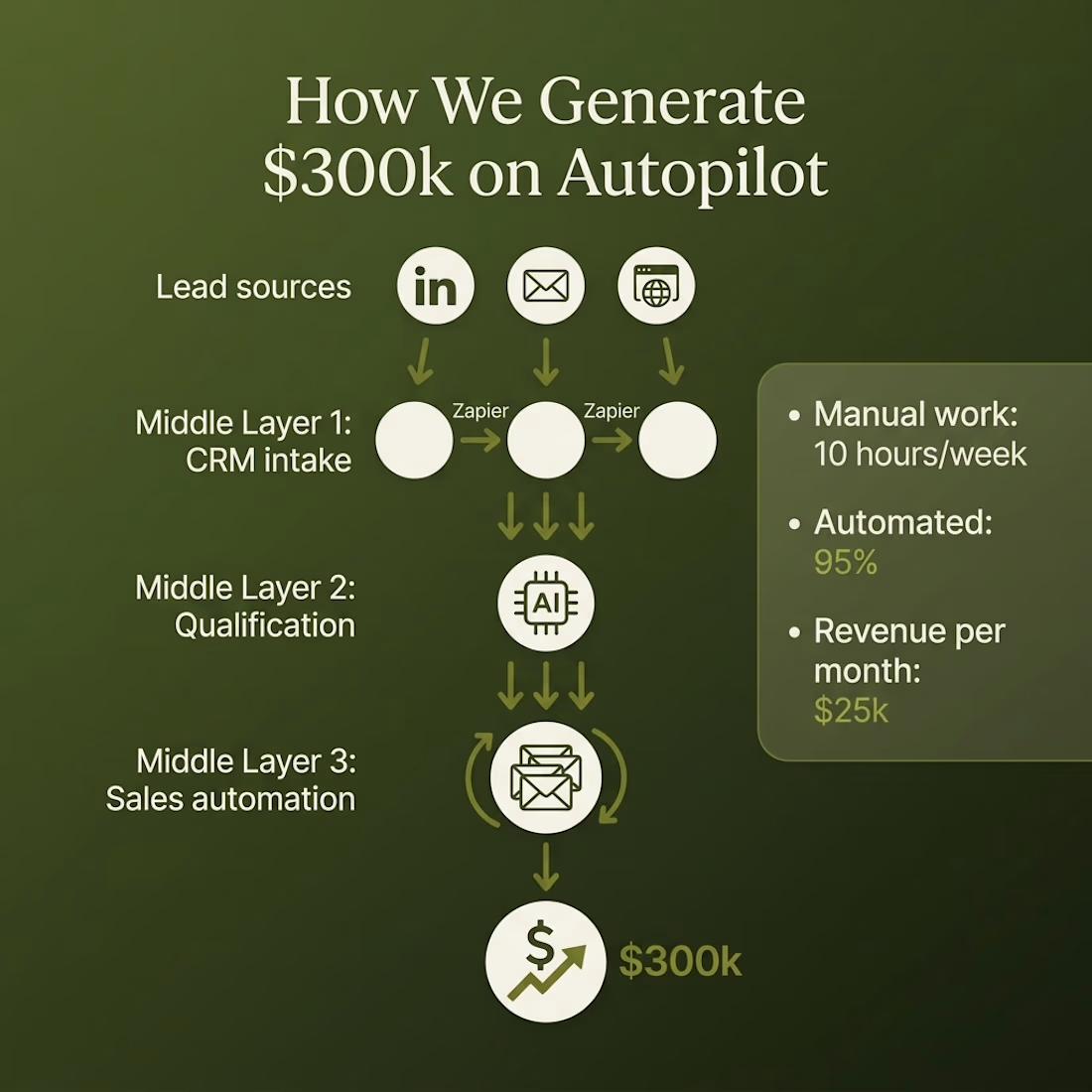
Here is the exact revenue automation stack we built to generate $300k on autopilot while keeping manual effort to under 10 hours a week:
1️⃣ Unified Lead Capture
Inbound leads from LinkedIn, cold/warm email campaigns, and website forms flow directly into our central intake system.
2️⃣ Automated CRM Routing
Zapier handles instant data synchronization, enriching lead profiles and creating CRM records without human intervention.
3️⃣ AI Qualification & Scoring
An AI evaluation layer analyzes prospect data instantly, categorizing leads by intent, deal size, and priority.
4️⃣ Smart Email Sequences
High-intent leads trigger immediate sales rep outreach, while warm leads automatically enter tailored nurture tracks.
Key Results
⚡ 95% Process Automation
⏱️ 10 hours/week total manual oversight
📈 $25k/month consistent predictable pipeline ($300k/year)
Stop letting manual workflows bottleneck your growth. Build systems that scale while you sleep.
Suggested Hashtags


Building a 4-role real-time SaaS taught me one uncomfortable lesson: the hard part was never the code.
I've been building RestaurantOS — one platform connecting Owner, Kitchen, Waiter, and Cashier in a single live workflow (Table → Order → Kitchen → Serve → Billing → Reports).
The tech stack was the easy part. The real challenge: keeping 4 different roles in sync in real time without any of them stepping on each other's data — a waiter updating a table while the kitchen marks an item ready while the cashier is mid-billing.
That forced decisions most tutorials never cover:
⚡ How much state should live client-side vs. source-of-truth server-side
⚡ What "real-time" actually needs to mean per role (a kitchen screen needs sub-second updates, a report dashboard doesn't)
⚡ Designing failure states — what happens when the waiter's app loses connection mid-order
Currently redesigning the UI/UX layer too (motion, better visual hierarchy) while keeping this real-time core intact.
If you've built multi-role or real-time systems — curious what broke first for you. And if you're a founder who needs something like this built, my DMs are open.


the role based flow is easy to follow. what part was hardest to keep real time?