The network for creativity
Join 1.25M professional creatives like you
Connect with clients, get discovered, and run your business 100% commission-free
Creatives on Contra have earned over $150M and we are just getting started
Back to feedPost

Most founders don’t have a personal branding problem. They have a “how do I actually do this?” problem.
As someone who works with founders on their personal brands, I see the same challenge repeatedly. They know they should be creating content. They have experiences, opinions and stories worth sharing. But turning all of that into a consistent, useful piece of content feels like another job they don't have time for.
For the Descript Challenge, I wanted to teach something I’m already trying to solve with my clients: how founders can turn what they’re already experiencing into personal branding content.
So I turned the approach I use into a simple Do → Think → Share framework.
Do: What happened?
Think: What did it teach you?
Share: What can someone else learn from it?
But teaching the framework felt incomplete. I also wanted to show founders how they can actually make the content.
That's where Descript came in.
This challenge gave me the opportunity to combine both things I care about, Teaching the strategy and giving people a practical tool to execute it. Because personal branding shouldn't be about constantly finding something to say.
Build something. Learn something. Teach something.
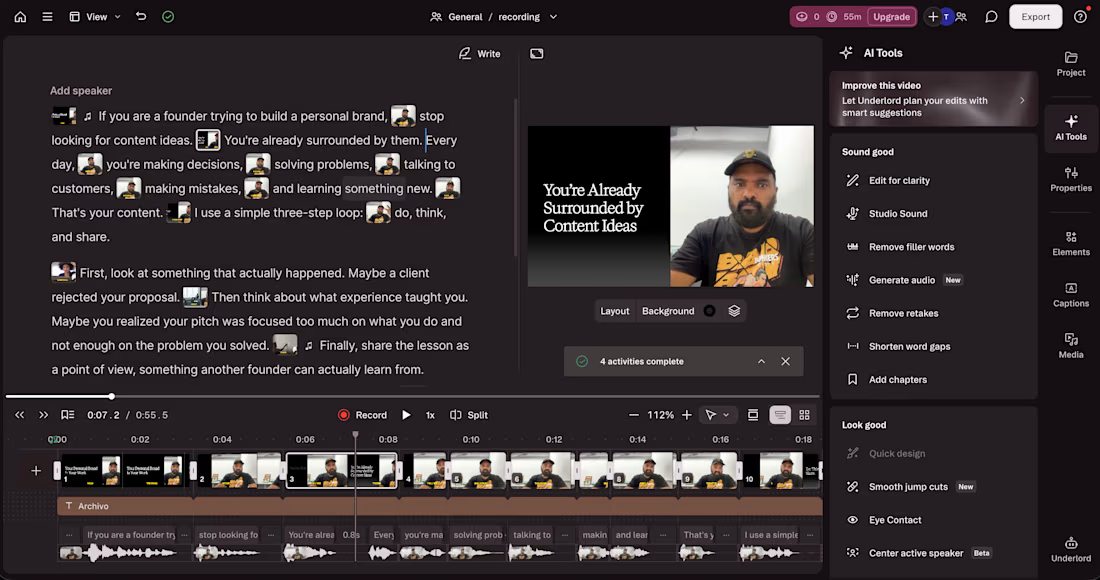

Do, Think, Share is simple enough that a founder could actually stick to it, which is rare for content frameworks. Pairing the strategy with a Descript walkthrough instead of just explaining it makes the challenge feel useful rather than theoretical.
Thanks a lot, MD Rafee. This comment genuinely means a lot to us.
Honestly, I approached this more as a use case than just a challenge video. I wanted to create something I could actually share with clients who tend to overcomplicate personal branding videos and content, and show...
The network for creativity
Join 1.25M professional creatives like you
Connect with clients, get discovered, and run your business 100% commission-free
Creatives on Contra have earned over $150M and we are just getting started











Related posts

STAYING RELEVANT IN A FAST-CHANGING DIGITAL WORLD
One of the key ways to stay relevant in today's digital world is by building your personal brand.
This digital era is fast-paced, to maintain your relevancy, it's important to build your unique personal brand.
I'm building one...
...what about you?
You can effectively build your personal brand by:
Stay active on platforms like Twitter (X), LinkedIn, and other platforms that align with your interest.
Share insights, case studies, and lessons to establish authority.
Engage with your audience consistently. Samson Augustine #PersonalBranding


which one has actually moved the needle more for you so far, x or linkedin?

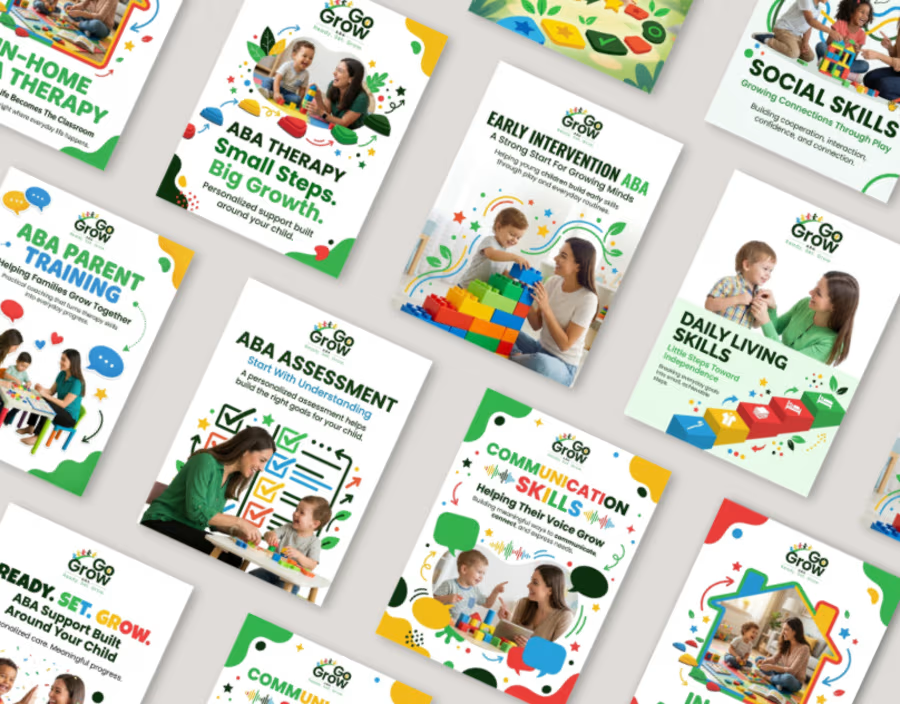
Created a vibrant and educational social media content series for Grow Grow ABA, focused on ABA therapy, early intervention, communication skills, social skills training, daily living skills, and parent support.
The designs combine child-friendly visuals, playful illustrations, consistent green branding, and clear messaging to help families understand therapy services while building trust and brand awareness.
This project showcases my approach to social media management, content strategy, educational content creation, and brand consistency for child development and family-focused organizations.
#SocialMediaManager #SocialMediaMarketing #ContentStrategy #ContentCreation #ABATherapy #AutismSupport #ChildDevelopment #EarlyIntervention #BehaviorTherapy #CommunicationSkills #SocialSkillsTraining #DailyLivingSkills #ParentTraining #FamilySupport #ChildTherapy #HealthcareMarketing #EducationalContent #InstagramMarketing #SocialMediaDesign #BrandIdentity #ContentMarketing #DigitalMarketing #VisualStorytelling #GrowGrowABA #ContraCreator



How to Build Your Best Portfolio for 2027: Which Format Works Better?
Clients don't have time to dig.
Here's how to make your work easy to trust.
A potential client opens your link. You have about 10 seconds before they decide to stay or leave.
So the real question isn't ...should I have a portfolio?. It's ...which kind gets read, and which gets skipped?
Here's the breakdown.
1. PDF portfolio
Best for: sending directly to a client in a DM or email.
Strength: fast, controlled, looks exactly how you designed it.
Weakness: it's not searchable, it doesn't update itself, and it feels static.
Use it as a companion, not your main home.
2. Platform portfolio (Contra, Behance, Dribbble)
Best for: being found by clients already looking to hire.
Strength: built-in audience, reviews, and a clear way to contact you.
Weakness: you're on someone else's platform, with their layout and their rules.
This is where freelancers should start, because it puts you in front of buyers with no website to build.
3. Your own website
Best for: long-term trust and search.
Strength: you own it, control the story, and can show services, samples, and results in one place.
Weakness: it takes longer to build, and it needs traffic from somewhere else.
This is where serious clients end up after they've found you elsewhere.
4. LinkedIn profile + Featured section
Best for: B2B work, since buyers check it before they message you.
Strength: your portfolio sits next to your posts, so proof and personality are together.
Weakness: limited design space.
For B2B services, this is often the first place a client looks.
So which one wins?
None of them alone. What works best is a simple chain:
LinkedIn (get found) → Contra or your site (see the work) → PDF (close the deal).
Each one does a different job. LinkedIn brings the visitor, the portfolio page proves your skill, and the PDF makes it easy for them to forward you to their team.
What to put in any portfolio
Whatever format you choose, include these 5 things:
A one-line promise: who you help and what changes
3 strong samples, not 15 average ones
A short caption for each: the problem, what you did, why it works
One real result or testimonial, as soon as you have one
One clear next step: book a call, DM, or email
If you don't have client work yet, create sample projects and label them clearly as samples. That's honest, and buyers respect it more than a padded portfolio.
In 2027, a portfolio isn't a gallery. It's a trust tool. Keep it clean, specific, and easy to scan, and make the next step obvious.
I'm Maryam, and I ghost-write LinkedIn content for SaaS founders and help design clear, clean profiles. If you'd like help with your LinkedIn, profile, or website writing, message me on Contra or LinkedIn.

Love this! A portfolio should not just show what you do, but help potential clients understand how you can solve their problems. Trust and clarity make all the difference. 👏