The network for creativity
Join 1.25M professional creatives like you
Connect with clients, get discovered, and run your business 100% commission-free
Creatives on Contra have earned over $150M and we are just getting started
Back to feedPost

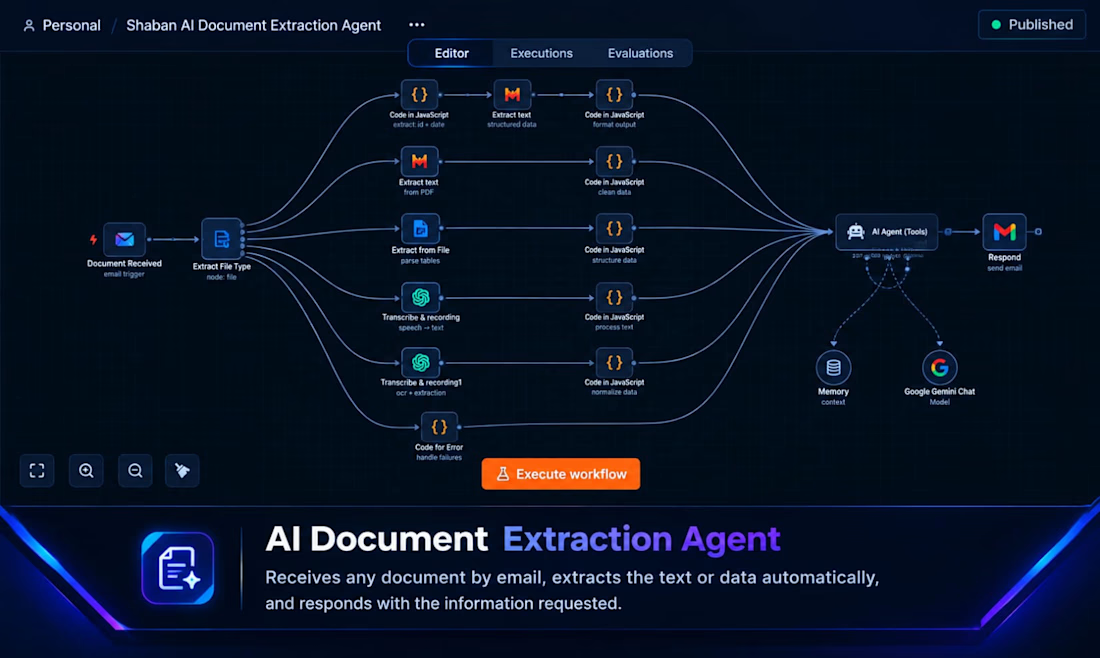
Manually sifting through documents and emails is a time killer. I built this AI Document Extraction Agent to kill it.
You email it a file—a PDF, an image, an audio recording, a spreadsheet. It detects the file type, routes it to the right parser (OCR, speech-to-text, table extraction), cleans up the data, and uses an AI Agent with memory to process it.
Then it just emails you back exactly what you asked for. No manual copy-pasting. It’s an end-to-end pipeline from inbox to answer.


The network for creativity
Join 1.25M professional creatives like you
Connect with clients, get discovered, and run your business 100% commission-free
Creatives on Contra have earned over $150M and we are just getting started





Related posts

Just finished building a Salon Booking Management System!
The goal was simple: make appointment management easier for salon owners and reduce the manual work involved in handling bookings and reminders.
The system connects the complete workflow in one place:
1 Customer makes a booking
2 Booking gets confirmed
3 Owner sees it on the dashboard
4 Upcoming appointments are organized clearly
5 Reminders help the owner stay on top of appointments
One of the key things I focused on was making the experience simple, clean, and easy to understand, while keeping the workflow practical for a real business.
This project helped me think beyond just building screens — and focus more on the actual business problem, user flow, and overall product experience.
Excited to keep improving it and turn it into an even more polished product.
#BuildInPublic #SaaS #WebApp #BookingSystem #SalonManagement #ProductDesign #MVP #NoCode #Entrepreneurship


Good work

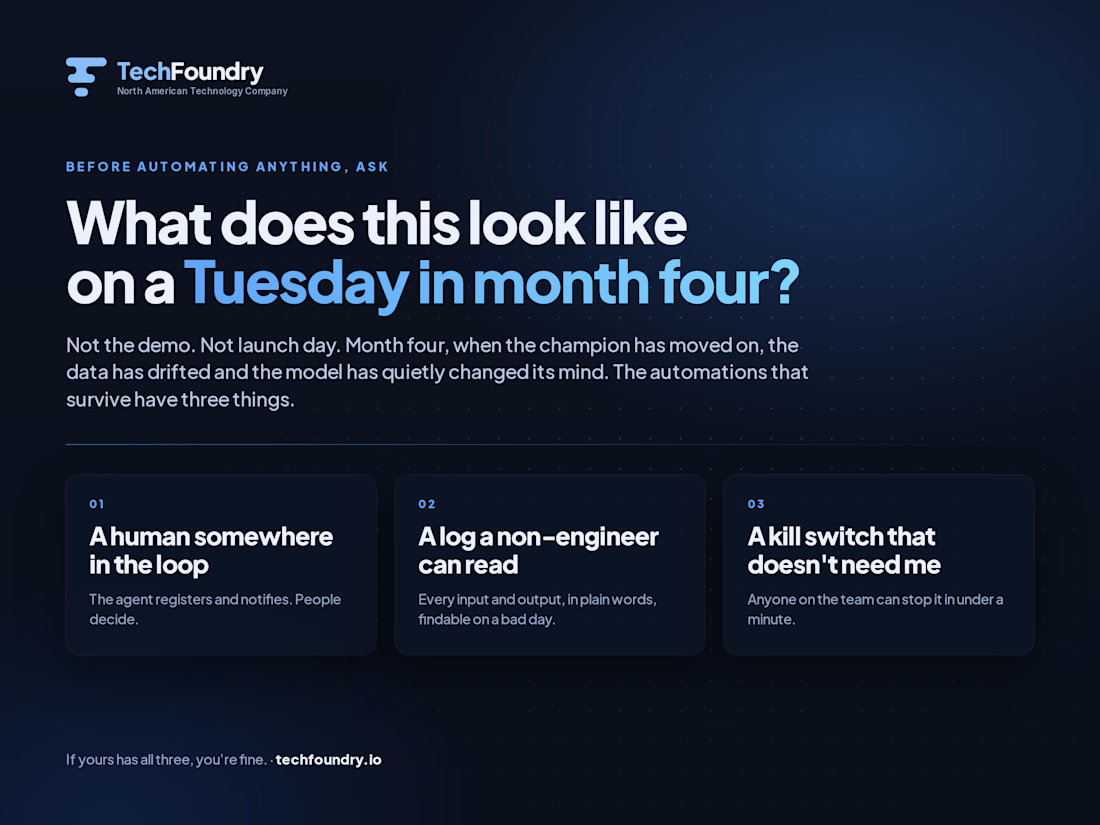
The question I ask before automating anything: "What does this look like on a Tuesday in month four?"
Not the demo. Not launch day. Month four, when the person who championed it has moved on, the data has drifted, and the model has quietly started doing something slightly different.
The automations that survive month four have three things: a human somewhere in the loop, a log a non-engineer can read, and a kill switch that doesn't need me. The PO intake agent I posted last week is built that way on purpose. It registers and notifies, people decide, and every email in and out is logged.
If yours has all three, you're fine. If it has none, I'd love to hear how it's going. I collect these stories.



the month four test is so spot on zahid. everyone designs for the launch demo, but silent prompt drift kills more workflows than actual broken APIS.

At Procys, I design the exception path alongside document extraction.
Invoices and identity documents arrive in different layouts. OCR and LLM reasoning produce candidate fields. Deterministic checks validate headers, line items, and tax values. When confidence or record comparisons leave a field uncertain, the workflow sends it to a reviewer with the source context.
A good document AI system should make uncertainty visible before data moves into business systems.
If your team processes invoices or identity documents, which exceptions still take the most manual time?

edge cases are where doc AI earns trust, love that you design for them 👌