The network for creativity
Join 1.25M professional creatives like you
Connect with clients, get discovered, and run your business 100% commission-free
Creatives on Contra have earned over $150M and we are just getting started
Back to feedPost

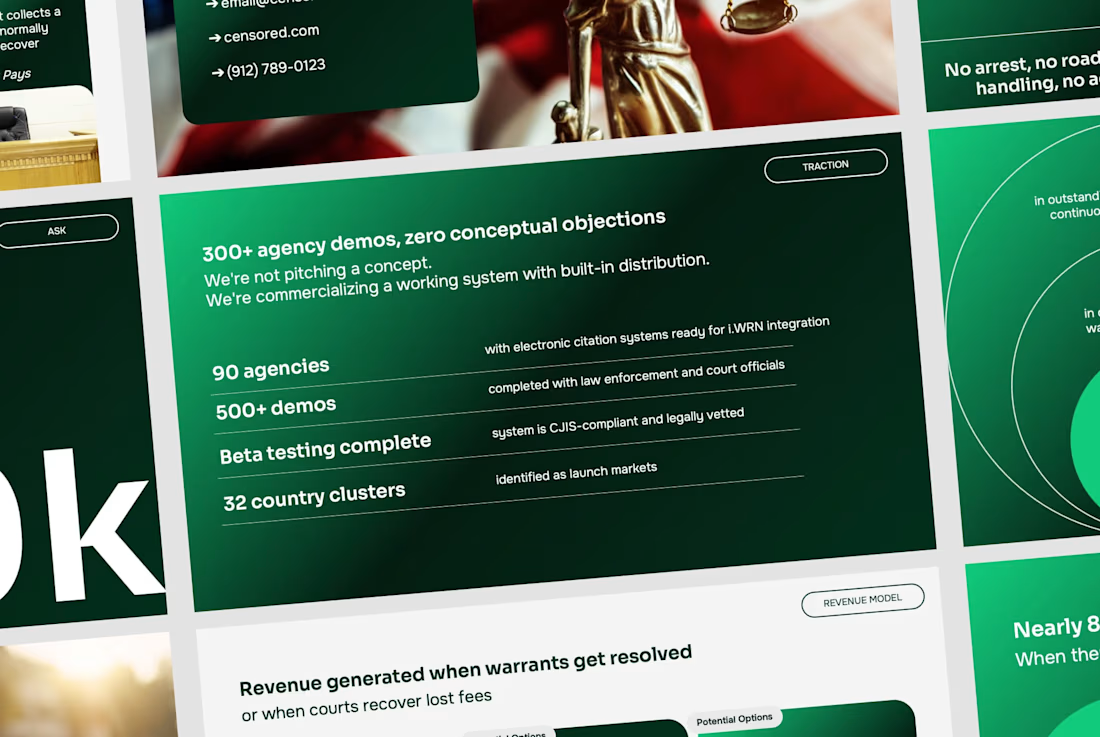
iConnectGov — GovTech Pitch Deck
The Challenge
i.WRN connects 2,800+ isolated court databases to patrol vehicles. It has a payment layer, government-grade security requirements, and multiple stakeholders -courts, agencies, officers, and citizens- all with different needs.
The founders understood their product inside out. But they couldn't explain it to investors.
My Approach
Strip out the complexity. Build a story investors can follow.
One problem. One system. One path to revenue. Each slide answers the question the last one raised.
The Result
A narrative that goes from "fragmented government databases" to "proven market opportunity" in 15 slides.
The hardest decks to write are the ones where the product is genuinely complex. This was one of them.


The network for creativity
Join 1.25M professional creatives like you
Connect with clients, get discovered, and run your business 100% commission-free
Creatives on Contra have earned over $150M and we are just getting started



Related posts


Really clean UI. That gradient card against the dark mockup scene looks sharp, makes a finance app feel a lot less boring.

Halden - Landing Page Concepts
Halden sells to grid operators, and there were two good ways to pitch it: tell them what's coming, or show them everything happening now. Rather than pick one on instinct, I designed the landing page as an A/B test so real traffic decides.
The two pages share one 12-column grid, the same section order, type system and components. Each variant changes only its message, its hero visual and its light color, so any difference in demo requests comes from the pitch and not the layout.
The work was building a system flexible enough to carry two different stories without either one feeling like the backup version.
Forecasting (act before demand spikes) vs metering (see and bill every kilowatt)
Primary metric: Demo requests from the hero CTA
4 voted
57%
3 voted
43%
7 votes
Closed

I'd pick Forecasting. "From meter reading to early action" tells a grid operator what they get in one line. Did you write both hero lines before designing the visuals?

Rebuilt my portfolio with AI and added new case studies.
Brand, web, and product UI. All custom coded, all in one page.

One page with brand, web and product UI together is a strong move. Clients see the range without clicking around. Rebuilding mine with AI coding tools taught me the same thing: the speed lets you spend the saved time on the case study writing, which is what actually wins work.