The network for creativity
Join 1.25M professional creatives like you
Connect with clients, get discovered, and run your business 100% commission-free
Creatives on Contra have earned over $150M and we are just getting started
Back to feedPost

A stalled software project usually does not need more activity first. It needs a decision.
My Failed Project Recovery Plan separates symptoms from root causes, maps ownership and access gaps, identifies the first 72 hours, and ends with a clear stop, stabilize, rebuild, or continue recommendation.
The sample shows the decision system before implementation begins.
The network for creativity
Join 1.25M professional creatives like you
Connect with clients, get discovered, and run your business 100% commission-free
Creatives on Contra have earned over $150M and we are just getting started





Related posts

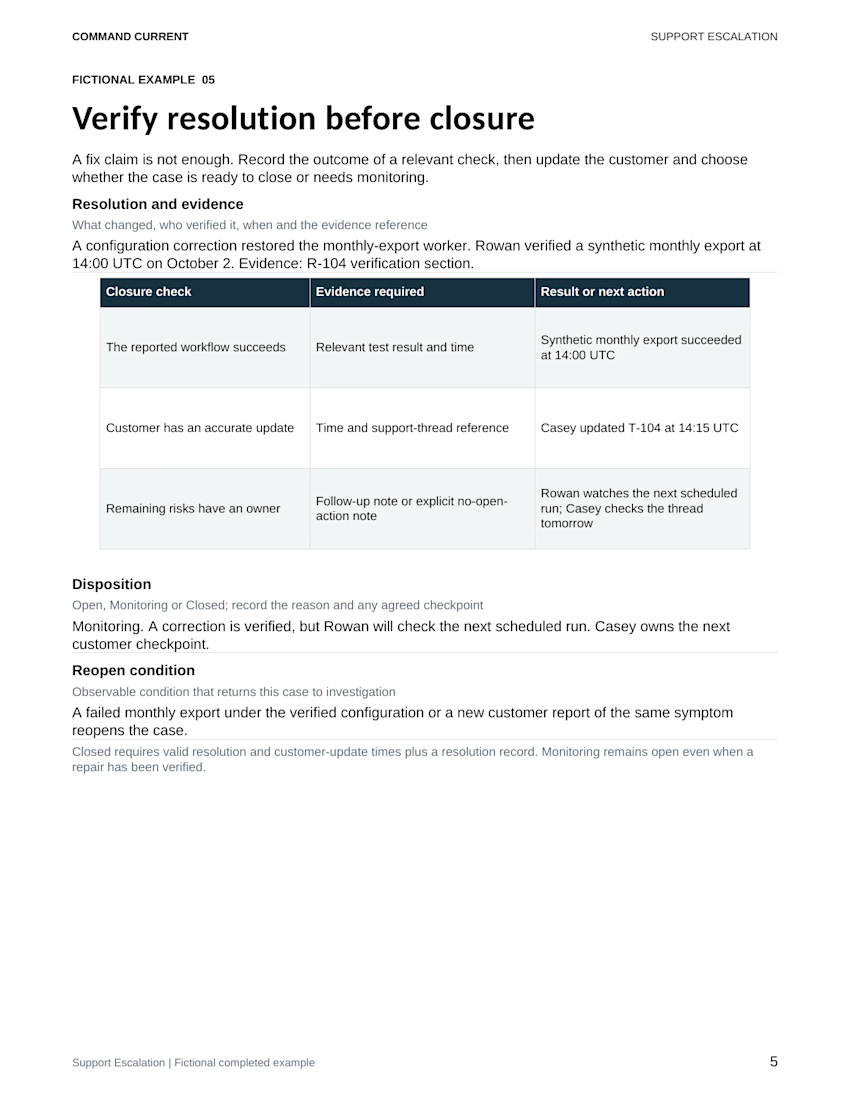
A support fix can pass its test while the case still needs monitoring.
In the Support Ticket Escalation Kit's fictional example, Rowan verifies a synthetic monthly export at 14:00 UTC. Casey updates the customer at 14:15. The case remains Monitoring because the next scheduled run still needs checking.
That final stretch deserves its own record:
• Verification: what succeeded, when, and where the evidence lives
• Customer update: who sent it, with a timestamp and thread reference
• Follow-through: who checks the next run and the next customer reply
• Reopen condition: the observable failure that sends the case back to investigation
Here, a failed monthly export under the verified configuration, or a new customer report of the same symptom, reopens the case. A successful test does not erase the remaining checkpoint.
Shown: the actual resolution-and-closure page from Command Current's completed fictional example. The people, ticket and outcome are invented teaching examples.
The digital kit includes a six-page editable Word packet, matching print PDF, Excel workbook with 40 blank ticket rows, six-page worked example and two-page Quick Start. Designed for desktop Microsoft Word and Excel; PDFs are static copies.
Use it alongside your approved support system. People verify the evidence and send updates; the templates do not connect to a help desk.

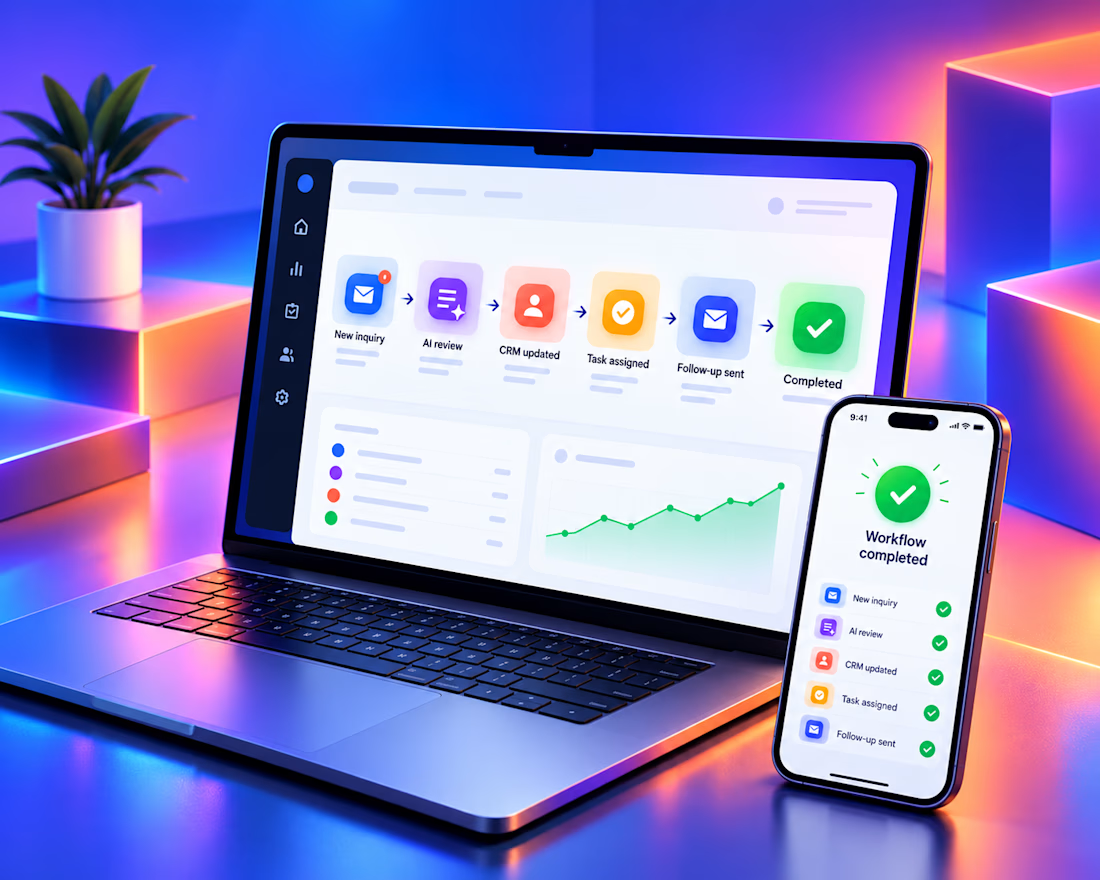
Business owners: if your team copies information between email, spreadsheets and your CRM every day, that work can be automated.I build AI workflows that:• Read and qualify new enquiries• Update your CRM automatically• Assign tasks to the right person• Send personalized follow-ups• Hand unusual cases back to your teamThe outcome: fewer missed leads, faster responses and more time for work that grows the business.I bring 6+ years of engineering experience, including work for United Airlines and SS&C Technologies. My production systems have reached 99.99% uptime, while deployments fell from around 2 hours to under 20 minutes and cloud spend dropped by around 30%.Comment “AUTOMATE” and tell me the repetitive task costing your team the most time. I’ll reply with the first workflow I would build.


For the CRM update and follow-up steps, I'd test a retry after the CRM write succeeds but before the workflow records completion. Do you carry the same enquiry ID through both steps to prevent a duplicate contact or second follow-up?
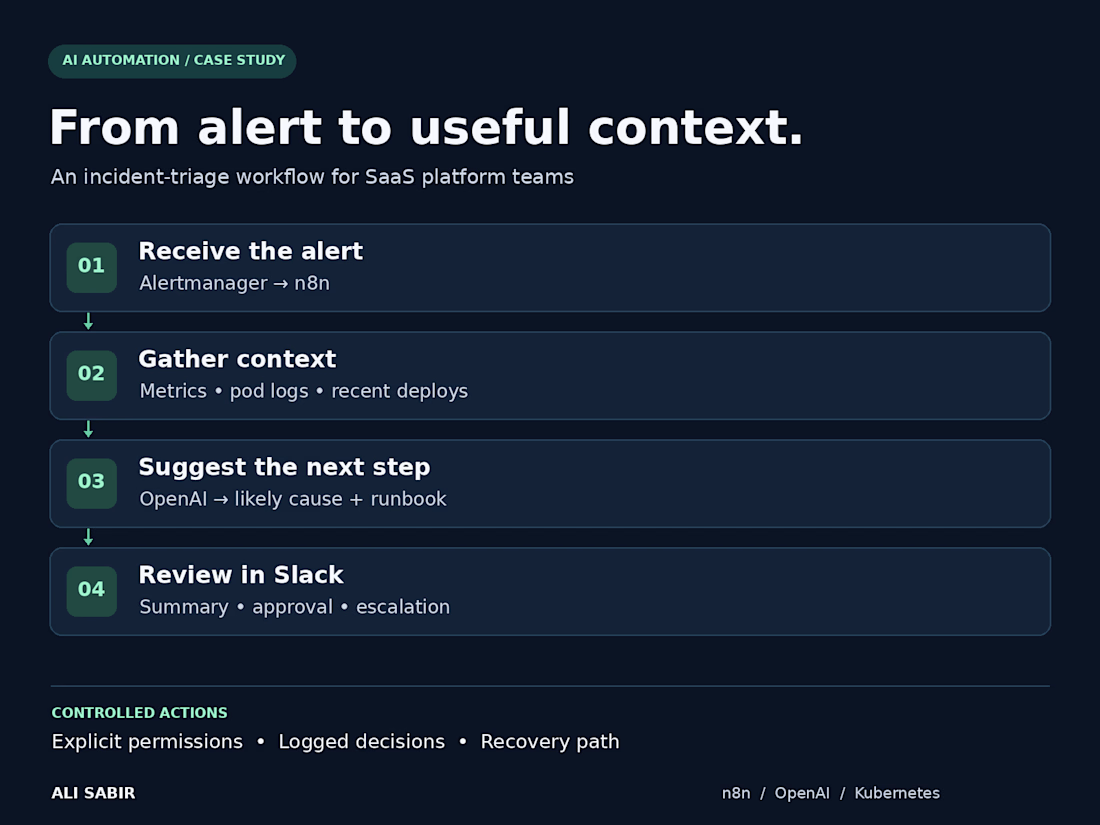
The alert fires. Your engineer still has to open four tools before deciding what to do.
That context-gathering step is where I focused an n8n + OpenAI incident-triage workflow for a SaaS platform team.
Here’s how it works:
• Receive the Alertmanager alert.
• Collect relevant metrics, pod logs and recent deployments.
• Suggest a likely cause and matching runbook step.
• Bring the summary into Slack for review and escalation.
The important boundary: a model’s suggestion is not permission to change production. Actions need explicit controls, logging and a recovery path.
I’ve shared the workflow, guardrails and project details here:
https://contra.com/p/rvFWbkqZ-ai-incident-triage-agent-for-a-saa-s-platform-team-n8n-open-ai
If your SaaS team spends too much time investigating recurring alerts, message me with your monitoring stack and the step that slows you down. We can scope a focused automation project.