The network for creativity
Join 1.25M professional creatives like you
Connect with clients, get discovered, and run your business 100% commission-free
Creatives on Contra have earned over $150M and we are just getting started
Back to feedPost
Building MoodifySDK taught me something I didn't expect.
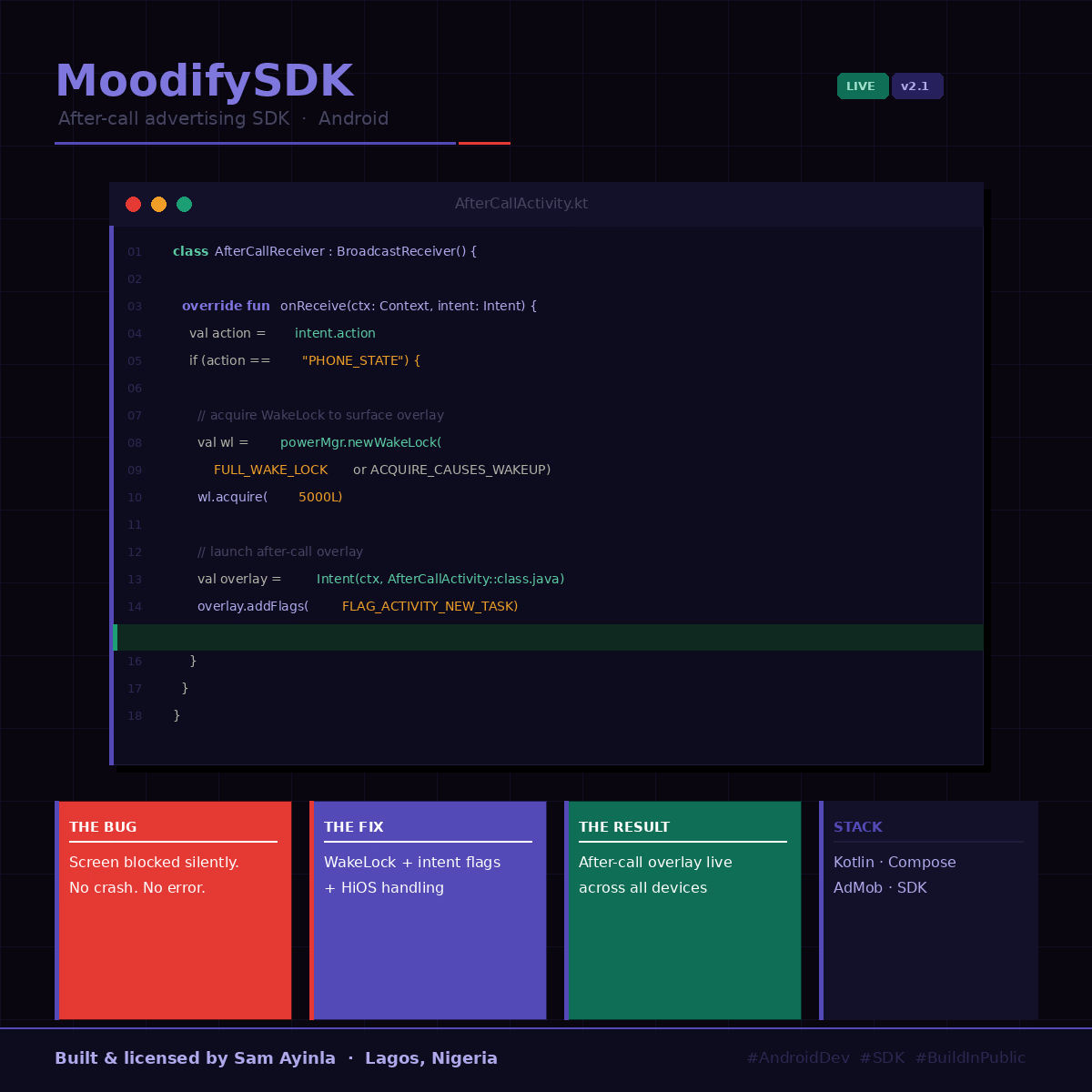
The hardest part wasn't the ad integration or the UI. It was getting the after-call screen to actually show up.
Android's permission model is strict, and on newer versions, launching an activity from a background service after a call ends isn't straightforward. The screen kept getting blocked silently. No crash, no error. Just… nothing.
Turned out the fix was a combination of WakeLock, the right intent flags, and handling HiOS-specific quirks on TECNO devices that don't behave like stock Android.
Once I cracked it, the SDK worked across devices. It's now live in a production app, aftercall overlay, AdMob mediation, caller info, countdown, the whole thing.
I licensed it instead of just delivering it. Still own the IP.
That decision alone changed how I think about the work I build.
The network for creativity
Join 1.25M professional creatives like you
Connect with clients, get discovered, and run your business 100% commission-free
Creatives on Contra have earned over $150M and we are just getting started
Related posts

I'm building something I deeply needed myself
And I guess it's time to make it official:
meet aftrglo.app ✨
It started from my own design frustration, curiosity, and a crazy amount of tiny motion experiments. Then I asked other designers about it and turned out this wasn't only my weird little need. This thing actually makes sense
So now it's slowly becoming an actual product
I don't know how to do a perfect launch
I'm not ready
I'm afraid af
But I'm building it anyway
And I'll be sharing the process here 🙌

Interesting. Would love to use try it!🙌

Most agencies sell you a website.
PARAGON architects digital systems that
make your brand impossible to ignore.
New portfolio live. Built in React + Vite.
Every pixel intentional. Every millisecond
optimized.
If you're building something that needs to
be the best looking thing in your industry —
this is where you start.
Slots are limited. Bond below.



A social app built around the idea that connection goes beyond scrolling; it's about capturing real moments and sharing them live.
Using proximity, moods, and real-time experiences, we translated an entire social world into a clean, immersive visual interface.
Capture Best Moments. Share Them Live. That wasn't just the headline; it was the entire design brief in four words.
Still one of my favorite social experiences I've had the chance to build.
Curious, what's one app feature that made you actually want to put your phone down and go live something worth sharing?












Trending

Claude
Claude has entered the design space. How are you using Claude Design?

Contra University
Learn from expert creatives how to earn more using next-gen AI tools.
creativeaiflow
Creative AI workflows are evolving. What tools do you use, and what are their strengths and weaknesses?
portfolioreview
The best portfolios tell a story, not just show a grid. Share yours for feedback.
freelancerlife
Freelancer life is wins, pivots, and everything in between. What’s yours right now?