The network for creativity
Join 1.25M professional creatives like you
Connect with clients, get discovered, and run your business 100% commission-free
Creatives on Contra have earned over $150M and we are just getting started
Back to feedPost

When should a Zapier workflow move to Make.com, and what does a clean migration look like? Five signals say move, and one 198-module rebuild shows the shape.
Zapier is the right start for most businesses: fast to build, hard to break, for simple links between apps. It stops being right when one of these shows up.
1. The Zap has no error path. Zapier stops the run and emails you. If a launch, an invoice or an order depends on it, that email arrives after the customer noticed.
2. You are paying per task for loops. Iterating over 50 products or 500 rows costs 50 or 500 tasks. Make.com charges per operation too, but iterators, aggregators and routers let one scenario do what took a chain of Zaps.
3. Logic lives in six places. A rule change means editing six Zaps and hoping you found them all.
4. You need branching by case. Filters and Paths get you part way; routers inside one canvas get you the whole way, with every branch visible.
5. Nobody can explain it. If the person who built the chain of Zaps left, you are renting a mystery.
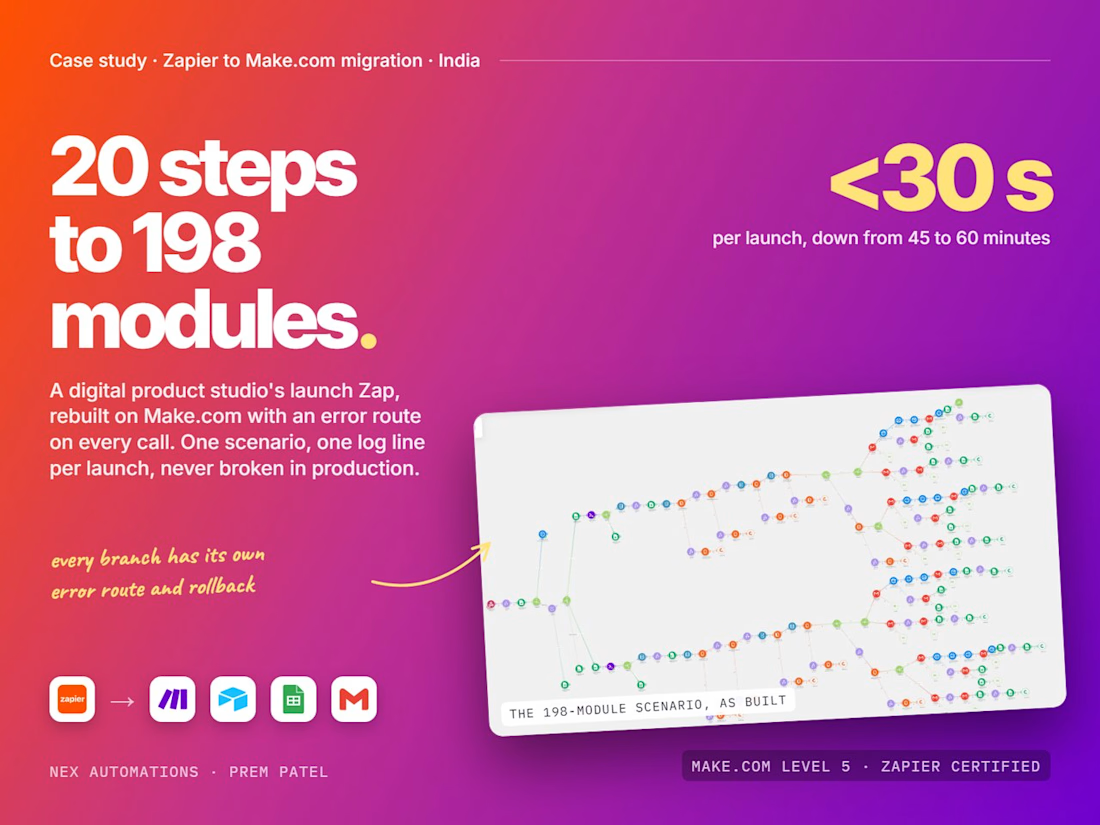
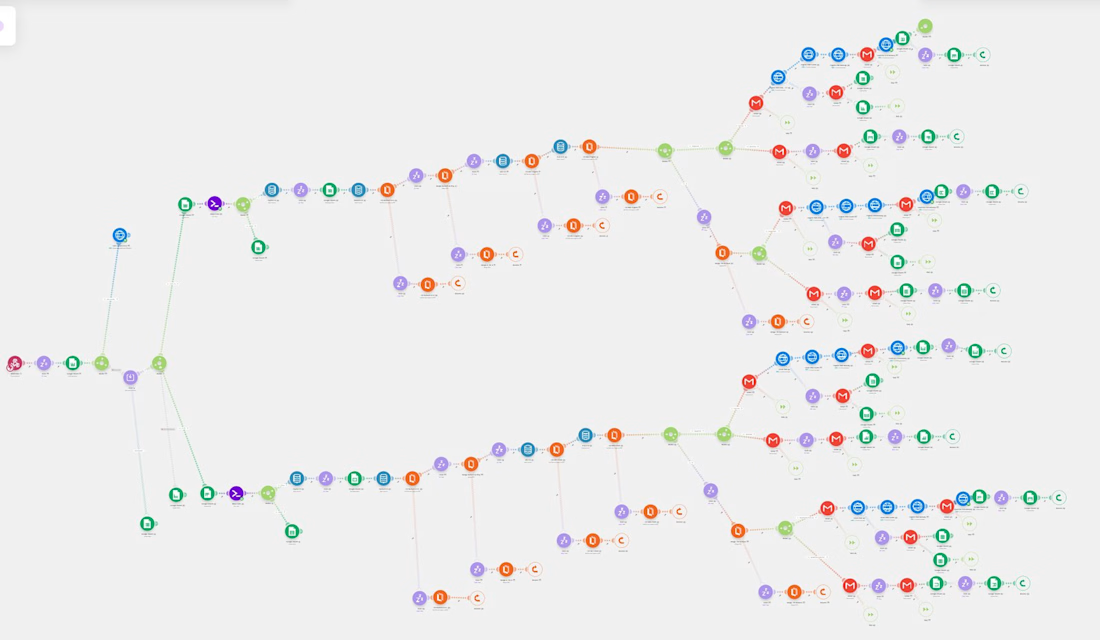
The rebuild in the image: a digital product studio's launch ran through a 20-step Zap with no error handling. Every launch took 45 to 60 minutes of babysitting. It became one 198-module Make.com scenario. Launches now complete in under 30 seconds and the scenario has held 99.9% uptime.
How a migration like that is done, in order. First, map every Zap, including the ones nobody remembers; the map is the spec. Second, group by trigger, not by app: one trigger becomes one scenario with routers by case. Third, put an error route on every external call: retry with backoff, then park the record with the reason and alert a human. Fourth, run both in parallel for a week, compare outputs, then switch the trigger off in Zapier. Fifth, hand over documentation of every path and every failure mode, on an account the client owns.
The full case study, with the canvas at full size, is on my profile. If your Zapier account has one of the five signals above, the 5-day audit and migration on my services page starts with the map.
Prem Patel, Nex Automations. Make.com Level 5 certified, official Make partner, Zapier Certified Expert.


The network for creativity
Join 1.25M professional creatives like you
Connect with clients, get discovered, and run your business 100% commission-free
Creatives on Contra have earned over $150M and we are just getting started


Trending
retrofuturism
Share your favorite designs from the past exploring the distant future. Or your own take on the aesthetic 🚀
halftone
Dots. Texture. Grain. Let's see your designs using the halftone technique.

Midjourney
Creatives are showing off what they're making with Midjourney.
colorgrade
Video editors sound off: How do you enhance the mood of your video in color grading?
Related posts




20 mins is kinda wild. The message is simple and gets the point across fast.

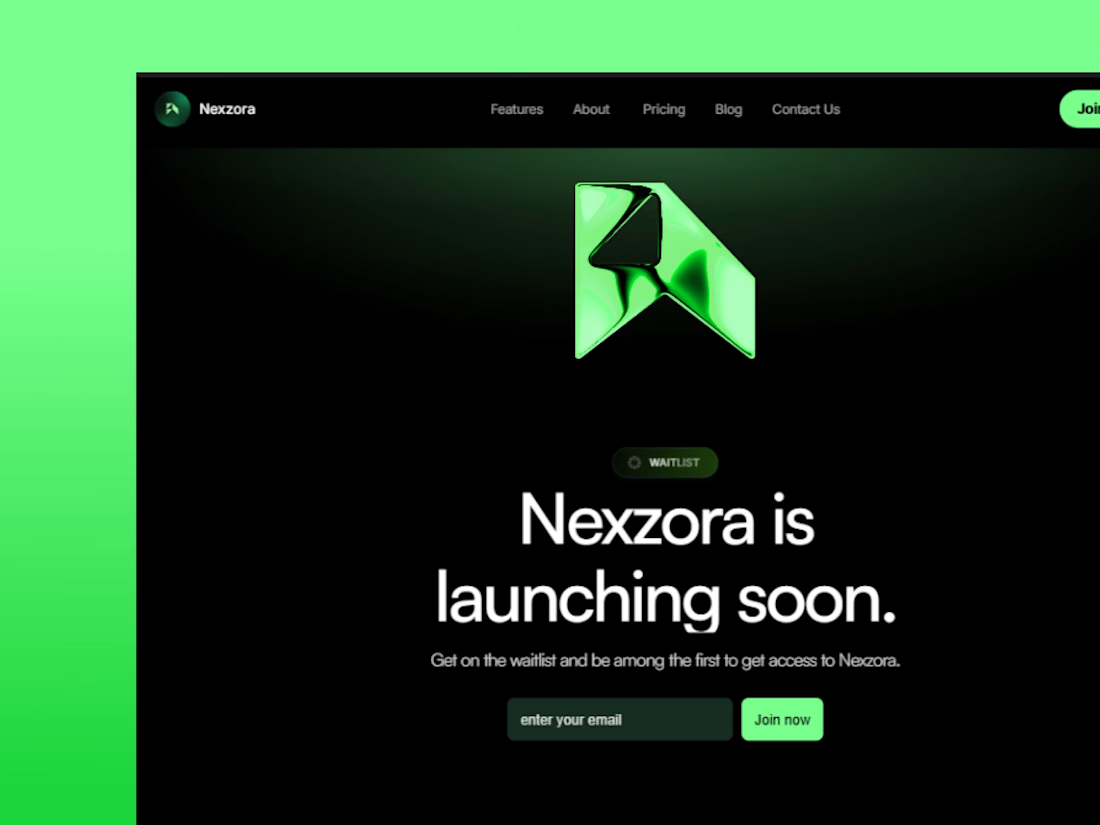
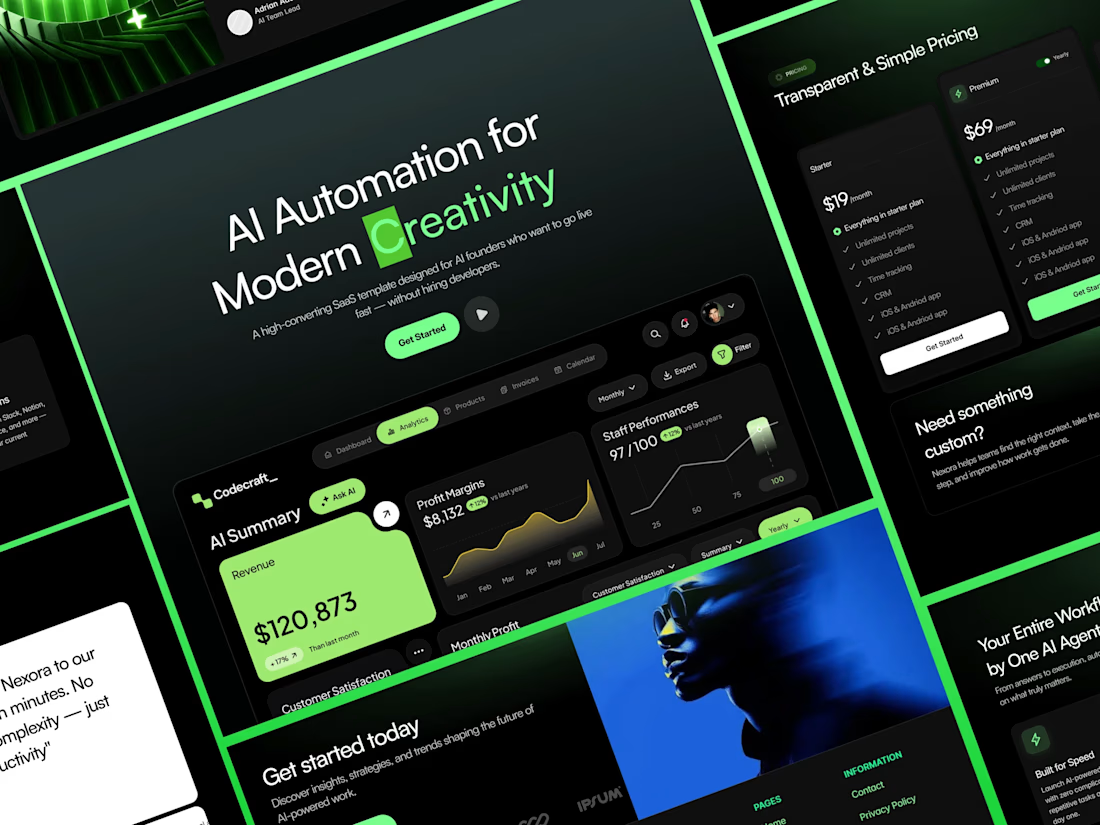
Nexzora is a premium AI startup and SaaS website template built for founders, creators, and businesses that want to launch a professional online presence quickly without compromising on quality. Designed with modern layouts, conversion-focused sections, and a clean visual system, Nexzora helps transform visitors into customers while maintaining a polished and credible brand experience.
Whether you're launching an AI product, SaaS platform, automation tool, productivity solution, agency, or digital product, Nexzora provides everything needed to create a high-converting website in hours rather than weeks.
The template includes an optional waitlist page for founders preparing for launch. If your product is already live, the waitlist can easily be replaced with call-to-action buttons such as “Get Started,” “Book a Demo,” or “Start Free Trial.”
Nexzora is built with a conversion-first approach, ensuring every section communicates value, builds trust, and encourages user action. Its fully customizable structure allows you to update content, colors, images, and branding while preserving design consistency.
Performance and SEO best practices are integrated throughout the template, helping websites load quickly, rank better in search engines, and deliver an excellent user experience. The Framer-friendly structure includes organized layers, reusable components, and CMS collections, making customization simple even for non-technical users.
Core Pages
Landing Page
Pricing Page
About Page
Contact Page
Content Hub (CMS)
Blog Index
Blog Detail Page
Growth Pages
Waitlist Page
FAQs Page
Legal Pages
Privacy Policy
Terms & Conditions
Essential Pages
404 Page
Perfect For
AI Startups
SaaS Products
Automation Platforms
Productivity Tools
Tech Founders
Software Companies
Agencies
Digital Products


Just wrapped up another AI automation workflow 🚀
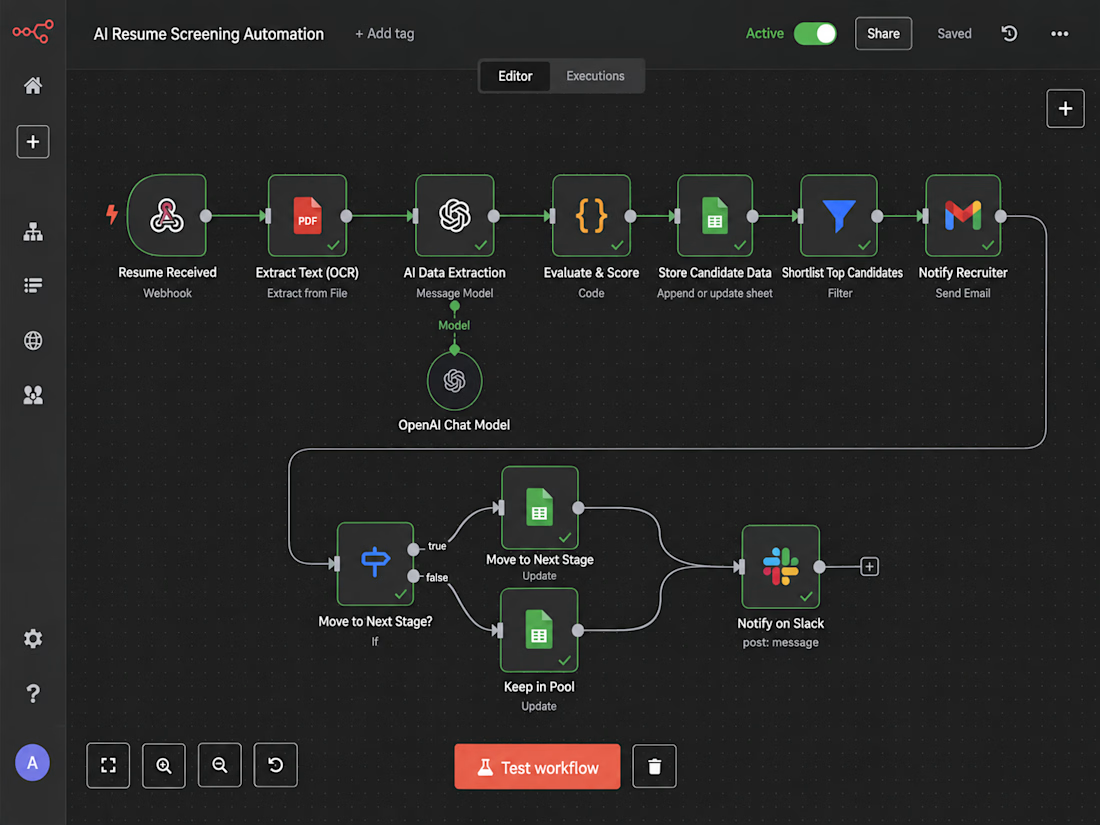
This one is an AI-powered Resume Screening Automation built to streamline the recruitment process.
The workflow:
📄 Receive resume via webhook
→ Extract text from the PDF
→ Use AI to extract candidate data
→ Evaluate and score the candidate
→ Store candidate data
→ Automatically shortlist top candidates
→ Notify the recruiter via email
→ Move qualified candidates to the next stage or keep them in the talent pool
→ Send updates to Slack
The goal was simple: reduce manual screening and help recruiters focus on the best candidates faster.
I enjoy building practical AI automations that connect AI models with real business workflows, APIs, databases, email, and communication tools.
If you're looking to automate repetitive processes using AI, n8n, APIs, OpenAI, or custom workflows, feel free to connect with me.
#AI #AIAutomation #Automation #n8n #OpenAI #ArtificialIntelligence #RecruitmentAutomation #HRTech #WorkflowAutomation #BusinessAutomation #NoCode #AITools