The network for creativity
Join 1.25M professional creatives like you
Connect with clients, get discovered, and run your business 100% commission-free
Creatives on Contra have earned over $150M and we are just getting started
Back to feedPost

I’m currently working as a Full-Stack Developer, building web applications using Java and Node.js on the backend and HTML5, CSS, JavaScript, and Tailwind CSS on the frontend.
I work with MySQL and MongoDB for data handling and use AWS for deployment and scalability.
Open to freelance or contract opportunities where clean code, performance, and reliability matter.
The network for creativity
Join 1.25M professional creatives like you
Connect with clients, get discovered, and run your business 100% commission-free
Creatives on Contra have earned over $150M and we are just getting started



Related posts

🚀 I’m now available as a Freelance Full-Stack Developer!
I help businesses, startups, and individuals turn ideas into fast, modern, and responsive web applications.
💻 What I can help with:
• React.js / JavaScript / TypeScript
• Node.js / Express.js
• MongoDB & REST APIs
• Full-stack MERN applications
• Admin dashboards & business websites
• Authentication & payment integration
• Bug fixing, improvements & deployment
I’ve worked on real-world projects including e-commerce, mentorship platforms, employee management systems, and business websites.
If you have a website or web-app idea, need improvements to an existing project, or need a developer to bring your idea to life — feel free to hire me or send me a message.
📩 Open to freelance projects, collaborations, and long-term work.
#Freelancer #FullStackDeveloper #MERN #ReactJS #NodeJS #WebDevelopment #Contra #FreelanceDeveloper

Resolve: an AI support agent that answers from a company’s own policies, looks up orders, and escalates weak matches to a human instead of guessing. A human approves replies before they go out.
Live demo: support-resolver.vercel.app


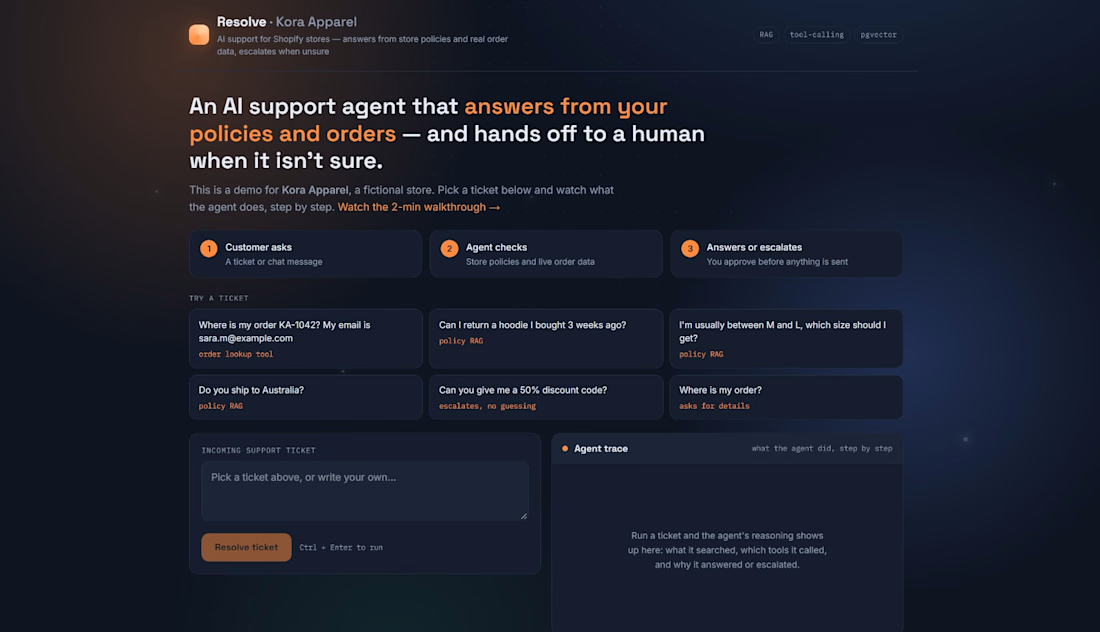

For the human approval step, I'd show the exact policy passage and its effective date beside the draft. Does Resolve flag a reply for re-review if the policy changes while it waits for approval?

Allergen Info UK: from “ask your server” to a 2-second scan
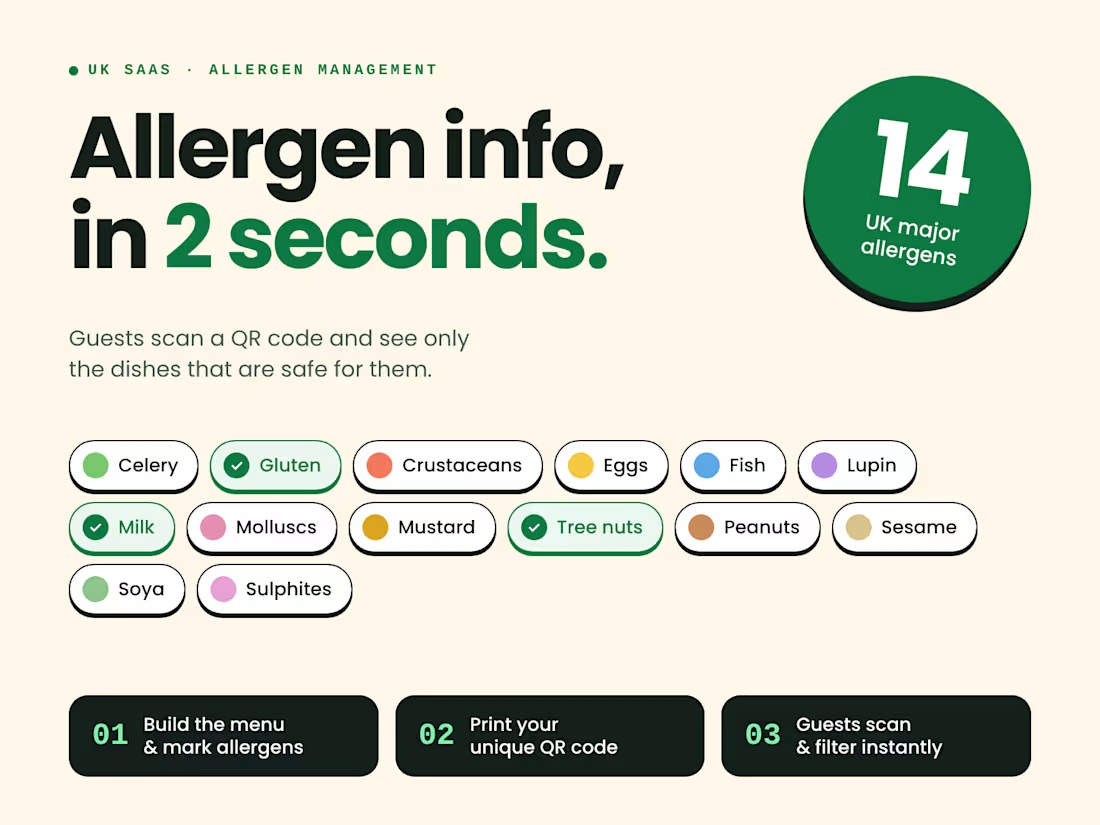
Every restaurant and hotel has to tell guests which of the 14 major allergens are in each dish. Paper folders and outdated PDFs make that slow and risky.
I built a UK-based SaaS that fixes it. The restaurant builds its menu and marks allergens once. The platform generates a unique QR code. Guests scan it and instantly see their menu filtered to safe dishes. There is no app to download and no tech setup for the restaurant.
Design choices I’m proud of:
1. Guests filter by allergen first, and the menu updates instantly.
2. Restaurant setup is three steps: build the menu, mark allergens, print the QR code.
3. Allergens use clear, color-coded labels, so a guest can read a dish at a glance instead of decoding small print.
Result: Restaurants swap paper folders and out-of-date PDFs for one always-current menu and guests get their answer in seconds instead of waiting for staff.
Question for you: How did the last restaurant you visited handle allergen info? Paper menu, QR code or just “ask the server”?


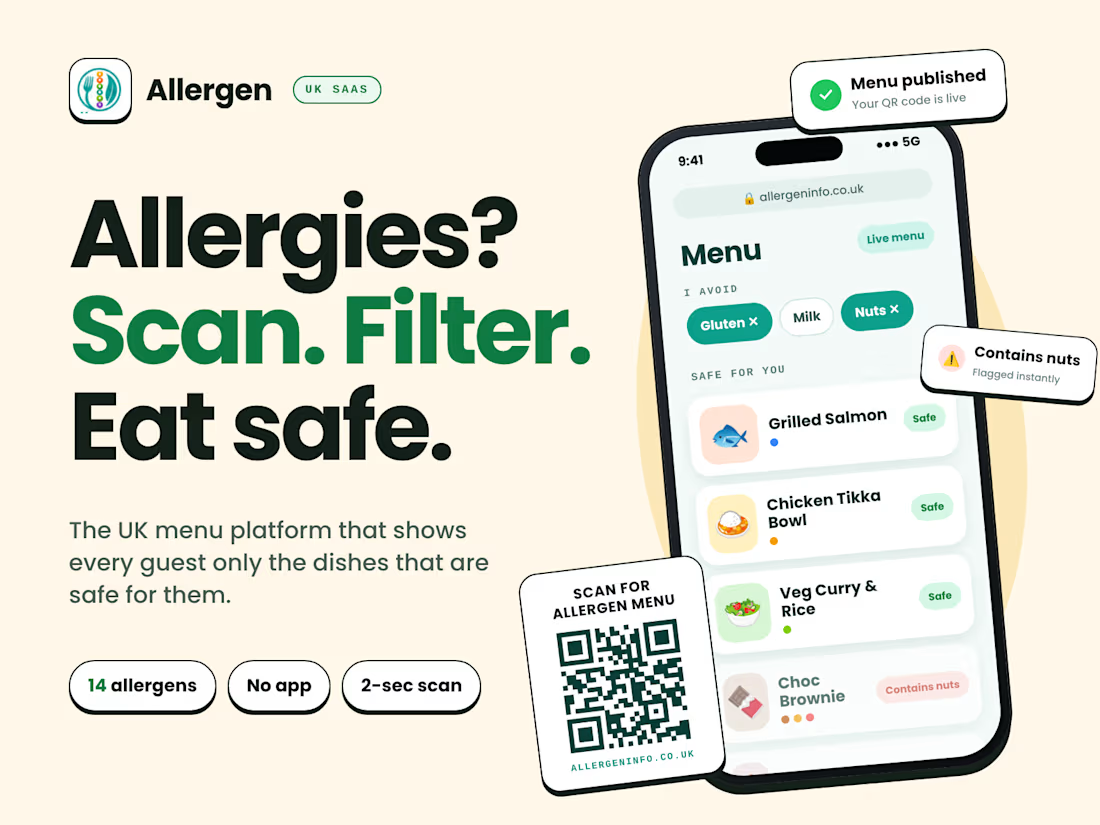

Allergen filters right up front. Love that.