The network for creativity
Join 1.25M professional creatives like you
Connect with clients, get discovered, and run your business 100% commission-free
Creatives on Contra have earned over $150M and we are just getting started
Back to feedPost

Just had the best conversation with a copywriter of 20+ years exp that I will never forget.
We were talking about how to stand out as a writer today, given that AI has made everything noisier.
Her answer was simple and a little uncomfortable:
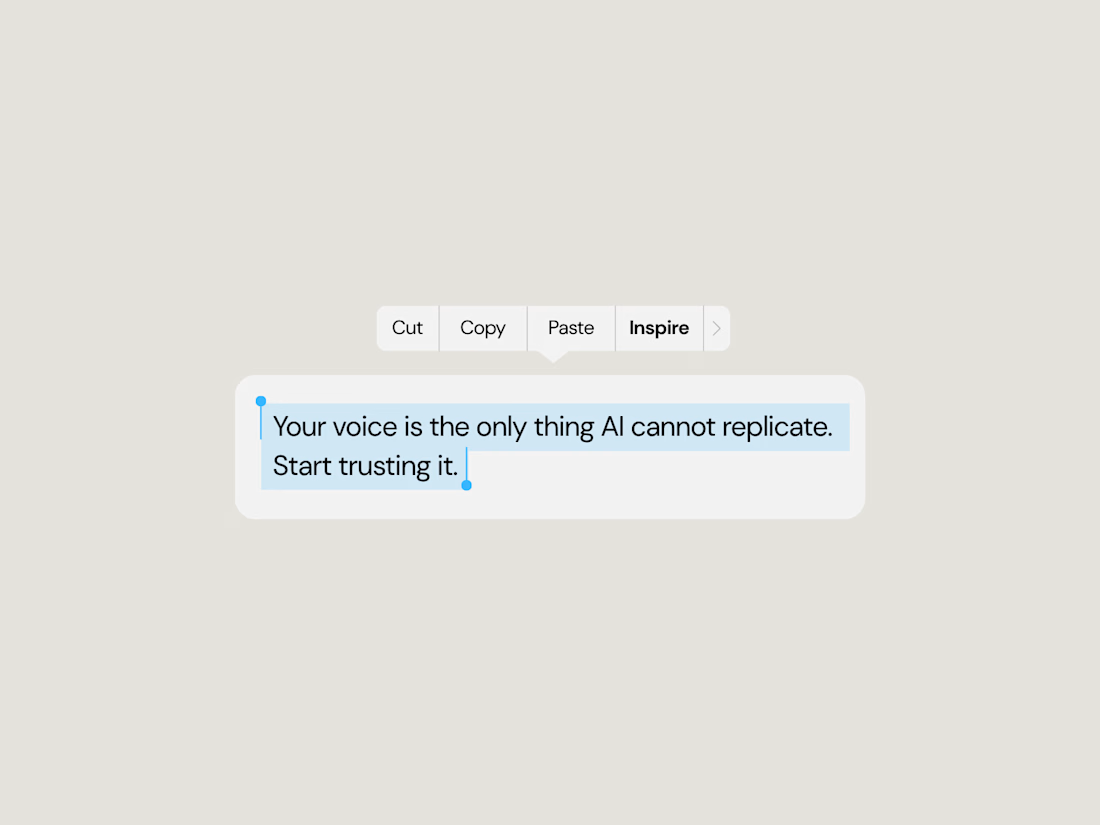
Find your voice. Then trust it enough to say the thing nobody else is saying.
She put it this way: the ones who find their voices and speak up are the ones who make a real difference. It is hard and it is scary and it does not always lead to success. But it is necessary.
Then she said something worth sitting with: if you do not trust your own voice, AI or other, more risk-taking writers will beat you out.
I know what brave copy looks like. I have written it. But the real question is where do we draw the line between bold and reckless, between saying what needs to be said and saying what gets attention for the wrong reasons?
Her answer to that was simpler than I expected: start by saying only what needs to be said. Write fluff and filler and you will fade out.
That distinction matters more now than it ever did.
What is the best piece of writing advice you have received that took time to actually land? 👇
The network for creativity
Join 1.25M professional creatives like you
Connect with clients, get discovered, and run your business 100% commission-free
Creatives on Contra have earned over $150M and we are just getting started





Related posts


AI isn’t replacing designers.
but ignoring AI is a mistake.
in our latest UnContrad interview, @pizzaboy and @LukeADesign
break down what actually protects a creative business:
- strong standards
- better systems
- client-ready brands
the courage to reject “good enough”
this conversation is for every independent creative building something real ↓

Have you ever felt like being a “real” writer means you should be good at every part of writing?
Some writers love building worlds and figuring out how everything fits together. Others come alive when they’re developing characters, chasing a new idea, or finding the deeper meaning in a scene. You can learn from what challenges you without overlooking the strengths you already bring to the page.
My latest article is about giving yourself room to write the way you write best—and recognizing when another writer’s perspective could help your story grow.
What part of writing pulls you in most?


amandaleewrites.substack.com
You Don’t Have to Be Good at Every Part of Writing
What if our different creative strengths gave writers a reason to collaborate instead of compete?

Focus On What You Say, Not How You Say It
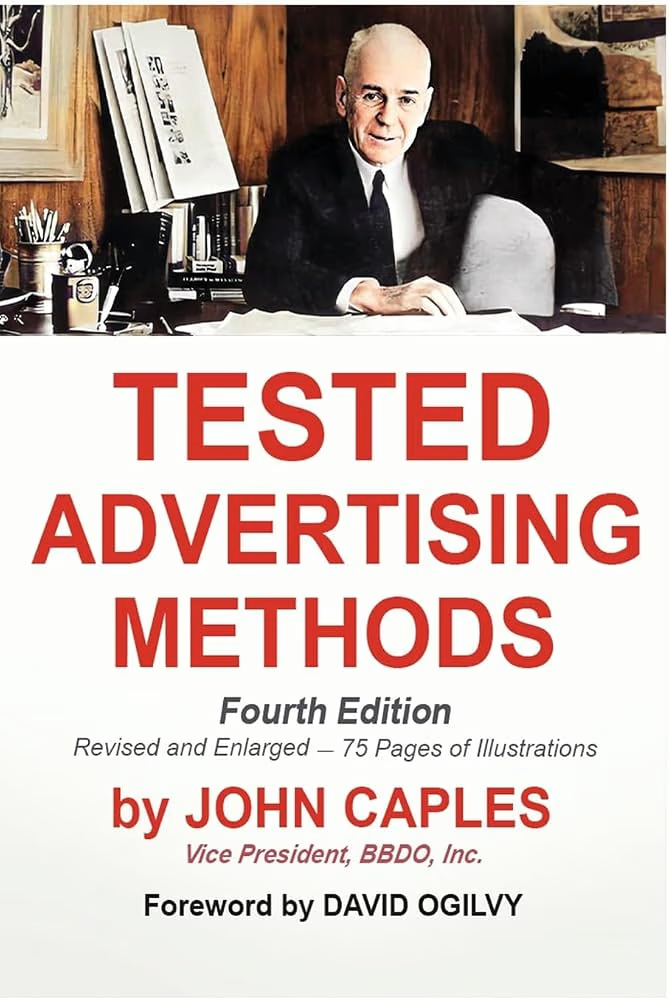
In his book Proven Advertising Methods, Fred S. Chapels argues that what you say is more important than how you say it.
And, yes, he was talking explicitly about copywriting, since the book is a well-crafted manual of this art.
What was he basing his claims on? No, it wasn't sheer speculation nor wishful thinking.
What matters in copywriting is what you say rather than how you say it. This comes from decades of experience in trying to persuade prospects to purchase certain goods or to perform certain actions.
Focusing only on how we write a marketing text often leads to a well-ornamented text but without much substance. If your message doesn't reflect the prospect's self-interest, then you have failed in writing good copy.
Why What You Say Matters More
The simple answer is that good copy sells.
You can be a fantastic writer. Your knowledge of the English language can be way above average. However, if your words fail to reach the goal, i.e., making a conversion, it doesn't matter what a fantastic writer you are. You are not a skilled copywriter.
That's why it is important to keep the benefits of your product in mind, always. Besides that, never start researching and writing copy without knowing who your exact target audience is.
If you know to whom you are writing, you will confidently know what to say to them, i.e., what to write about in your copy.
Copywriting isn't creative writing; it's salesmanship on paper. As a copywriter, you should never write to impress, but to make a sale.