The network for creativity
Join 1.25M professional creatives like you
Connect with clients, get discovered, and run your business 100% commission-free
Creatives on Contra have earned over $150M and we are just getting started
Back to feedPost

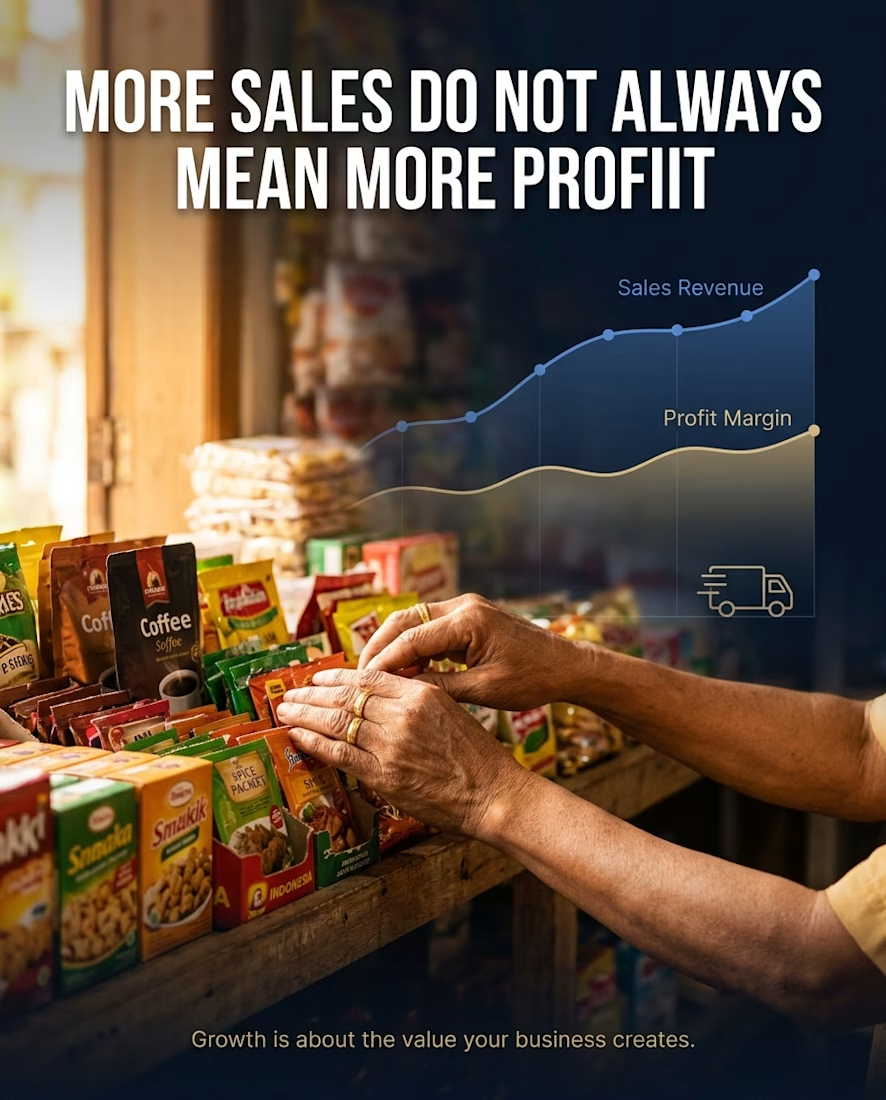
More Sales Do Not Always Mean More Profit.
It is easy to get excited when the sales number goes up. I have seen many businesses celebrate higher volume, only to realize later that the profit did not follow.
That is why, as a sales leader, I always pause and ask three questions:
1️⃣ Are we growing sales profitably?
2️⃣ Are our distributors and sales channels creating real value?
3️⃣ Are we winning productive customers, or just adding more outlets to the list?
In FMCG, sustainable growth takes more than selling more products. It takes:
▪️ The right distribution strategy
▪️ Healthy margins
▪️ Productive outlets
▪️ Disciplined execution
▪️ Strong commercial decisions
Because growth is not just about how much you sell. It is about how much value your business creates.
I help FMCG businesses assess sales performance, strengthen distribution, and improve route-to-market execution, so that growth is not only bigger, but also healthier.
💬 When you look at your own business, which one gets more attention: sales volume or profit quality?
#FMCG #SalesLeadership #RouteToMarket #CommercialExcellence #BusinessGrowth
The network for creativity
Join 1.25M professional creatives like you
Connect with clients, get discovered, and run your business 100% commission-free
Creatives on Contra have earned over $150M and we are just getting started






Related posts

Your prospect replied.
The meeting went well.
Then everything went quiet.
Who else needed to say yes?
The latest Edelman–LinkedIn research highlights “hidden buyers”: people in finance, procurement, legal, and other functions who influence a purchase without joining your sales conversation.
In staffing, IT services, and professional services, your contact may understand the need but still need internal agreement.
My view: a good sales conversation should help that person explain the decision to colleagues.
Can they defend the cost? Explain the risks? Show what happens next?
A relevant case example, a clear scope, and a practical explanation of the business value give them something useful to take into that discussion.
One question I would bring into discovery:
“Who else will evaluate this, and what will they need to feel confident moving forward?”
Sometimes the next step is helping someone have a better internal conversation.
Explore my resource here:
https://navking.gumroad.com/l/hbedhz
What most often holds up your deals: budget, timing, or internal agreement?
#B2BSales #BusinessDevelopment #BuyingGroups #ConsultativeSelling #SalesStrategy


A sales pipeline as a grid: every deal with company, rep, stage, close date, value, probability and last contact, plus hide fields, filter, group, sort and colour.

Presenting the pipeline as a grid instead of kanban makes stage, rep and value scannable in one pass, and the colour-coded stage pills — green Closed won, red Closed lost, yellow Negotiation — tell the story instantly. The Hide fields / Filter / Group / Sort toolbar is the cherry on top.

Your brand deserves words that speak louder. Let your story sell. ✍️”