The network for creativity
Join 1.25M professional creatives like you
Connect with clients, get discovered, and run your business 100% commission-free
Creatives on Contra have earned over $150M and we are just getting started
Back to feedPost

Top 7 White Label Live Shopping Solutions for Modern Ecommerce
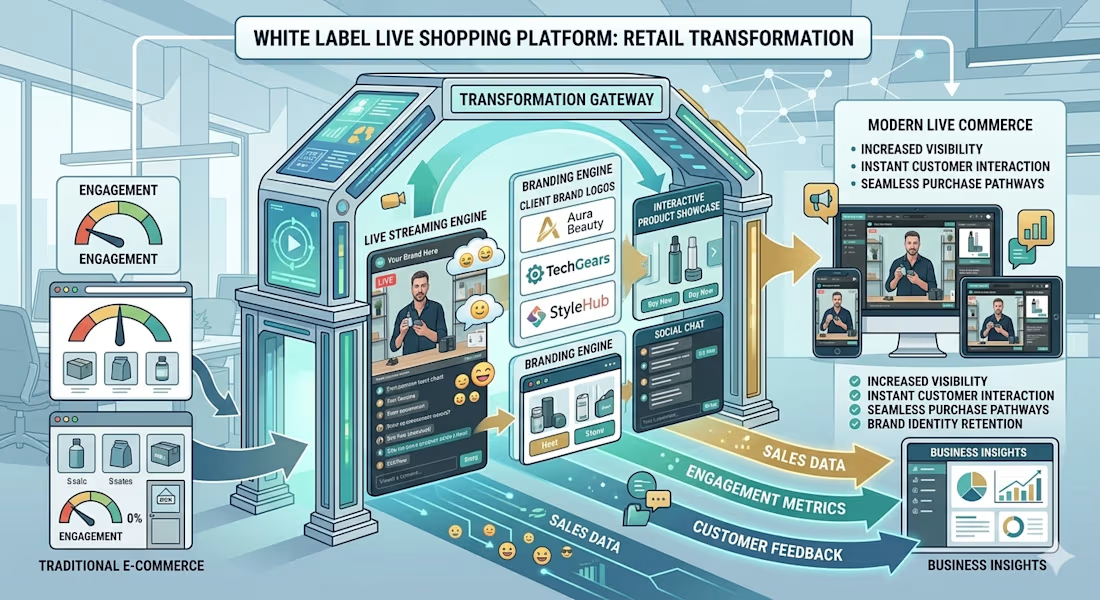
Live shopping is changing the way ecommerce businesses connect products with customers. Instead of relying only on product pages, images, and written descriptions, brands can use live video to demonstrate products, answer questions, interact with audiences, and guide customers toward purchases in real time.
This model combines the convenience of ecommerce with the engagement of livestreaming. Customers can discover products while watching a live event, interact with hosts or creators, ask questions, and complete purchases without leaving the shopping experience.
For businesses that want to enter this market quickly, a white label live shopping solution can be an attractive option. Rather than developing every component from the ground up, businesses can start with an existing technology foundation and customize it with their own branding, workflows, products, and business requirements.
White-label technology can be especially useful for ecommerce companies, retailers, marketplaces, creators, and entrepreneurs that want to launch a branded live commerce experience without spending excessive time building standard infrastructure.
However, not every solution provides the same level of flexibility. Businesses need to evaluate capabilities such as live streaming, multi-vendor functionality, in-stream checkout, seller management, payments, analytics, integrations, customization, and scalability.
In this list, we explore eight white label live shopping solutions that businesses can consider when building a modern ecommerce experience.
What Is a White Label Live Shopping Solution?
A white label live shopping solution is a pre-developed technology platform that businesses can brand, customize, and launch as their own live commerce product.
Instead of building streaming infrastructure, ecommerce functionality, seller tools, payment workflows, and administrative systems independently, a business can use an existing technology foundation and focus on adapting it to its market.
Live Video Commerce
The core of the platform is live video. Brands, retailers, sellers, and creators can host shopping events where products are demonstrated and discussed in real time.
Customers can watch the presentation while exploring products and interacting with the host.
In-Stream Shopping
A modern live shopping platform can connect products directly to the livestream.
Customers can view product information, select products, add items to their cart, and complete purchases while watching the event.
This reduces the distance between product discovery and checkout.
Multi-Vendor Functionality
White-label live shopping platforms can also be used to create multi-vendor marketplaces.
Independent sellers can receive their own profiles and dashboards for managing products, live sessions, orders, inventory, and sales performance.
The marketplace owner can manage sellers, commissions, transactions, product approvals, and platform policies.
Customer Interaction
Live chat, reactions, questions, follows, notifications, and other engagement tools can turn a shopping event into an interactive experience.
This interaction can help sellers understand customer preferences and answer questions that might otherwise prevent a purchase.
Payments and Ecommerce
Live commerce needs to connect with the existing ecommerce workflow.
Payment gateways, shopping carts, checkout, inventory management, order processing, shipping integrations, and customer accounts can help create a complete purchasing experience.
Analytics and AI
Businesses can track viewers, watch time, product interactions, conversions, sales, and customer behavior.
AI can add capabilities such as personalized product recommendations, intelligent search, automated customer assistance, behavioral analysis, and personalized live-event discovery.
1. Triple Minds
Triple Minds combines Consulting, Development, and Marketing to help businesses create digital products around their commercial objectives. For ecommerce businesses exploring live commerce, the company can approach the project as a complete technology and business ecosystem rather than simply providing a streaming application.
Its white label live shopping platform provides a technology foundation that businesses can customize and launch under their own brand. This can be useful for companies that want to establish a branded live commerce channel or create a multi-vendor marketplace without developing every standard component from scratch.
The platform can bring together live streaming, product showcases, customer interaction, ecommerce functionality, and in-stream purchasing. Businesses can use live sessions for product demonstrations, launches, promotions, creator-led shopping, or other interactive commerce experiences.
Multi-vendor capabilities can allow independent sellers to participate in the marketplace. Sellers can manage products, host live sessions, interact with customers, and monitor sales, while marketplace administrators can oversee seller onboarding, product listings, commissions, transactions, and platform operations.
The platform can also support features designed to make live commerce more engaging. AI-powered hosts and shopping assistance can help businesses create more interactive experiences, while personalization capabilities can help customers discover products that are more relevant to their interests.
Interactive shopping features can also extend beyond conventional livestreaming. Depending on the business requirements, capabilities such as AR-based product experiences, shoppable replays, product discovery, and personalized recommendations can help businesses create a richer shopping journey.
Another advantage is the ability to connect the live shopping environment with other business systems. Payment services, ecommerce platforms, inventory systems, CRM tools, analytics platforms, and other integrations can help businesses maintain a connected operational workflow.
Customization and scalability are also important for businesses planning a long-term live commerce strategy. Rather than treating the initial launch as the final version of the product, businesses can continue introducing new features, integrations, seller tools, and customer experiences as their audience grows.
Triple Minds also brings consulting and marketing capabilities into the broader engagement. This can help businesses consider not only how the technology should work but also how the live shopping platform should be positioned, launched, monetized, and developed over time.
Best For: Ecommerce businesses, retailers, startups, enterprises, creators, and entrepreneurs looking for a branded white-label live shopping platform with live streaming, multi-vendor functionality, in-stream commerce, AI capabilities, integrations, customization, and scalable architecture.
2. Sell My Code
Sell My Code provides technology solutions that can help businesses launch digital products using established technology foundations and customization. For companies exploring white-label live shopping platforms, this approach can provide a practical starting point for bringing livestreaming, ecommerce, and customer interaction together.
A live shopping solution needs to connect several parts of the customer journey. Customers should be able to discover live events, watch product demonstrations, interact with sellers, explore featured products, and complete purchases within a connected environment.
The platform can be adapted for different ecommerce models. A retailer could use live sessions to launch new products, while a marketplace could allow multiple sellers to host their own shopping events. Creator-led commerce can also use the same foundation to connect audiences with products through interactive content.
Product management is an important part of the experience. Sellers can require tools for creating product listings, managing inventory, updating pricing, and connecting products with specific live sessions.
Customer engagement features such as live chat, reactions, questions, follows, and notifications can help businesses create more interactive events. These features can encourage customers to participate instead of passively watching a product presentation.
Payment and ecommerce integrations can connect the live shopping experience with checkout, order management, inventory, shipping, and other operational workflows.
Analytics can provide businesses with insights into viewer engagement, product interactions, watch time, conversions, and sales performance. These insights can help sellers understand which products and live events generate stronger customer interest.
As the business grows, additional capabilities can be introduced, including personalized recommendations, advanced analytics, loyalty programs, creator tools, and AI-powered customer assistance.
For businesses evaluating a white-label approach, customization and scalability should also be considered. The technology foundation should allow the company to develop a distinct customer experience rather than simply reproducing a generic live shopping interface.
Best For: Startups, ecommerce businesses, retailers, creators, entrepreneurs, and marketplace operators looking for a customizable technology foundation for launching a branded live shopping experience.
3. Burj Code
Burj Code provides web, mobile, and custom software development services for businesses building digital products around specific requirements. For ecommerce companies exploring white-label live shopping, its development capabilities can be considered for creating an interactive commerce platform that combines video, products, customer engagement, and purchasing.
A live shopping platform needs to connect the viewing and shopping experiences. Customers should be able to join a live session, watch a product demonstration, ask questions, explore featured products, and complete purchases without being redirected through disconnected experiences.
Live streaming can support product launches, demonstrations, promotional events, creator-led shopping, and other interactive commerce formats. Businesses can customize the experience according to their industry, audience, and product category.
The platform can also support multi-vendor operations. Independent sellers can have profiles and dashboards for managing products, inventory, live sessions, orders, and sales activity. Marketplace administrators can oversee seller onboarding, product listings, commissions, transactions, and platform policies.
Real-time customer interaction is another important component. Live chat, reactions, questions, follows, and notifications can help sellers communicate directly with their audiences and create a stronger connection around each shopping event.
Ecommerce functionality can connect the live experience with product catalogs, shopping carts, checkout, payment gateways, order management, inventory systems, and shipping services. These integrations can help businesses maintain a consistent flow from live product discovery to fulfillment.
Businesses can also use analytics to understand how customers behave during live sessions. Metrics such as viewers, watch time, product interactions, engagement, conversions, and sales can help sellers and marketplace operators improve future events.
As the platform develops, businesses can introduce additional capabilities such as personalized product recommendations, AI-powered customer assistance, intelligent search, loyalty programs, and advanced seller analytics.
For companies choosing a white-label approach, customization is particularly important. The solution should be capable of supporting the company's own branding, customer journey, product categories, monetization model, and marketplace rules.
Best For: Ecommerce brands, retailers, startups, entrepreneurs, creators, and marketplace operators looking for customizable live shopping technology with streaming, multi-vendor functionality, ecommerce integrations, customer engagement, and scalable architecture.
4. Make An App Like
Make An App Like focuses on application development around established digital business models. For businesses planning a branded live shopping application, its approach can provide a starting point for combining livestreaming with ecommerce and interactive customer experiences.
A white-label live shopping platform can allow brands and sellers to host live events where products are demonstrated, explained, and promoted directly to customers. Customers can interact with hosts, ask questions, explore featured products, and move toward checkout during the same session.
The technology can be adapted to different ecommerce use cases. Fashion businesses can use live sessions for product demonstrations and styling, beauty brands can demonstrate products, retailers can conduct product launches, and marketplaces can allow independent sellers to host their own events.
Product management capabilities can help sellers create listings, manage pricing, update inventory, and associate products with specific live sessions.
For multi-vendor businesses, seller dashboards can provide tools for managing products, live events, orders, customers, and performance. Administrators can manage seller accounts, product approvals, commissions, transactions, and marketplace operations.
Customer engagement features can include live chat, reactions, follows, questions, notifications, and other interactive elements. These tools can help create a more community-oriented shopping experience.
Payment gateways and ecommerce integrations can connect live sessions with checkout, order processing, inventory, and fulfillment. This helps businesses move customers from product discovery to transaction without unnecessary friction.
Analytics can provide information about audience size, watch time, product interactions, engagement, conversions, and sales. Businesses can use these insights to identify successful products and improve future live shopping events.
AI capabilities can also be introduced as the platform evolves. Personalized recommendations, intelligent search, automated customer support, product discovery, and behavioral analysis can help businesses create more relevant experiences for customers.
A key consideration for any white-label solution is customization. Businesses should be able to establish their own branding and adapt the workflows, product categories, monetization model, and customer journey around their commercial requirements.
Best For: Entrepreneurs, startups, ecommerce brands, retailers, creators, and marketplace businesses looking for a branded live shopping application with streaming, product discovery, customer engagement, ecommerce functionality, and customization options.
5. Pre Built Apps
Pre Built Apps provides ready-made technology foundations that businesses can adapt for different ecommerce and live commerce requirements. For businesses that want to launch a branded shopping experience without developing every standard component from the ground up, this approach can help reduce development effort and accelerate deployment.
A live shopping platform typically requires several connected capabilities, including livestreaming, product management, seller functionality, customer interaction, payments, checkout, order management, and administration.
Starting with an established technology foundation can allow businesses to concentrate their resources on customization and the features that differentiate their shopping experience.
For businesses looking for a faster starting point, ready-made ecommerce applications can provide a foundation that can be adapted around the company's branding, product catalog, target audience, and live commerce model.
The solution can support different business structures. A company can create a branded live shopping channel for its own products, while a marketplace can allow multiple sellers to conduct live sessions and interact with customers.
Seller functionality can include product management, inventory controls, live-event management, order processing, and sales tracking. Administrators can maintain centralized control over sellers, products, transactions, commissions, and marketplace operations.
Customer-facing functionality can connect live video with product discovery and purchasing. Customers can watch live sessions, explore featured products, communicate with sellers, and proceed to checkout within the same shopping environment.
Payment integrations can connect the platform with secure checkout and transaction processing, while integrations with inventory, logistics, CRM, ecommerce, and marketing systems can help businesses connect live commerce with their existing operations.
Analytics can help businesses monitor viewers, engagement, product interactions, conversions, sales, and seller performance. This information can be used to optimize live events and understand which products generate stronger customer interest.
Businesses can also expand the platform after launch by adding capabilities such as AI-powered recommendations, personalized product feeds, loyalty programs, creator tools, advanced analytics, and additional integrations.
The ability to customize a ready-made foundation is particularly useful for businesses that want faster deployment without giving up their own brand identity. Instead of treating the initial version as the final product, companies can continue developing the platform as their live commerce strategy grows.
Best For: Startups, entrepreneurs, retailers, ecommerce businesses, and marketplace operators seeking a faster-to-market white-label live shopping solution with ready-made ecommerce functionality and opportunities for customization.
6. Techugo
Techugo is a digital product development company offering web and mobile application development services. For businesses planning a branded live shopping experience, its development capabilities can be considered for building applications that connect livestreaming with ecommerce and customer interaction.
A white-label live shopping platform can help brands create live product demonstrations, launches, promotional events, creator-led sessions, and other interactive shopping experiences.
Customers can watch hosts present products, ask questions, participate in conversations, explore featured products, and proceed toward checkout without leaving the live shopping environment.
The platform can also be structured for multi-vendor commerce. Sellers can manage their profiles, products, inventory, live events, orders, and performance, while administrators can control seller onboarding, product listings, commissions, transactions, and marketplace rules.
Product discovery is another important part of the experience. Customers can find products through live events, categories, featured products, seller profiles, personalized recommendations, and other discovery mechanisms.
Live engagement tools such as chat, reactions, follows, questions, and notifications can encourage customers to participate actively during shopping events.
Payment and ecommerce integrations can connect the platform with checkout, order management, inventory, shipping, and other business systems. This can help businesses create a connected workflow from live product presentation through fulfillment.
Analytics can provide insights into audience engagement, watch time, product interactions, conversion rates, sales, and seller performance. Businesses can use these insights to refine their live shopping strategy and improve future events.
The platform can also be extended with AI capabilities. Personalized recommendations, intelligent search, automated customer assistance, behavioral analysis, and personalized product feeds can help businesses create more relevant shopping experiences.
Businesses considering a white-label approach should also evaluate how easily the solution can be customized. Branding, user journeys, product categories, monetization models, seller workflows, and integrations may all need to be adapted to the company's requirements.
Best For: Ecommerce brands, retailers, startups, creators, entrepreneurs, and marketplace operators looking for a customizable live shopping application with streaming, product discovery, customer engagement, ecommerce integrations, and scalable functionality.
7. Appetiser
Appetiser is a digital product development company that works with businesses on web and mobile applications. For companies exploring live shopping, a development partner with broader product engineering capabilities can help translate the business model into a branded digital commerce experience.
A live shopping platform can combine livestreaming with product catalogs, customer interaction, shopping carts, checkout, and order management. This creates a more engaging environment where customers can discover products through content rather than relying exclusively on traditional ecommerce browsing.
Businesses can use live sessions for product launches, demonstrations, limited-time promotions, creator collaborations, and interactive shopping events.
For marketplace models, seller functionality is important. Vendors can require tools to manage profiles, products, inventory, live sessions, orders, and performance. Platform administrators can oversee seller approvals, commissions, products, transactions, and marketplace policies.
Customer engagement can be supported through live chat, reactions, follows, questions, and notifications. These capabilities can help turn individual shopping events into ongoing communities around brands, products, or creators.
The platform can also connect with external systems such as payment gateways, ecommerce platforms, inventory management software, CRM solutions, shipping services, and analytics tools.
Data and analytics can help businesses understand which live sessions attract viewers, which products generate engagement, and how effectively live events convert audiences into customers.
As the business grows, advanced capabilities such as AI-powered recommendations, personalized discovery, intelligent search, automated customer support, and loyalty features can be added to improve the customer experience.
For businesses considering a white-label or branded solution, the development partner should also be evaluated based on its ability to customize the product around the company's brand, audience, workflows, integrations, and long-term roadmap.
Best For: Businesses, retailers, ecommerce brands, startups, and entrepreneurs looking for a digital product development partner to create a branded live shopping experience with ecommerce, engagement, integrations, and future customization opportunities.
Conclusion
Live shopping is giving ecommerce businesses another way to connect product discovery with customer interaction and purchasing. Instead of simply presenting products through static pages, businesses can create experiences where customers watch, communicate, discover, and buy in real time.
A white label live shopping solution can make this transition more practical by providing an established technology foundation that businesses can customize around their own brand and commercial strategy.
The right platform should go beyond livestreaming. Features such as in-stream shopping, multi-vendor management, payments, analytics, AI, integrations, customer engagement, and scalability all contribute to a complete live commerce experience.
Businesses should also think about their long-term objectives. The platform they choose today should provide enough flexibility to support new sellers, products, customers, integrations, and technologies as the business grows.
Ultimately, white-label technology can provide a balance between speed and customization. Businesses can avoid building every standard component from scratch while still creating a branded live shopping experience designed around their own audience and market.
FAQs
1. What is a white label live shopping solution?
A white-label live shopping solution is a pre-developed platform that businesses can customize and launch under their own brand. It typically combines livestreaming, ecommerce, customer engagement, payments, and marketplace functionality.
2. What features should a white label live shopping platform include?
Important features can include live streaming, in-stream shopping, product management, multi-vendor support, live chat, payments, checkout, analytics, notifications, integrations, and administration.
3. Can a white label live shopping platform support multiple sellers?
Yes. Many platforms can be configured as multi-vendor marketplaces where sellers manage products, host live sessions, interact with customers, and process orders.
4. Can I customize the branding?
Yes. Depending on the provider, businesses can customize elements such as logos, colors, domain, interface, product categories, workflows, and customer experience.
5. Can AI be integrated into a white label live shopping solution?
Yes. AI can support personalized recommendations, intelligent search, automated customer assistance, behavioral analysis, product discovery, and personalized shopping experiences.
The network for creativity
Join 1.25M professional creatives like you
Connect with clients, get discovered, and run your business 100% commission-free
Creatives on Contra have earned over $150M and we are just getting started
Trending
retrofuturism
Share your favorite designs from the past exploring the distant future. Or your own take on the aesthetic 🚀
halftone
Dots. Texture. Grain. Let's see your designs using the halftone technique.

Midjourney
Creatives are showing off what they're making with Midjourney.
colorgrade
Video editors sound off: How do you enhance the mood of your video in color grading?


Related posts

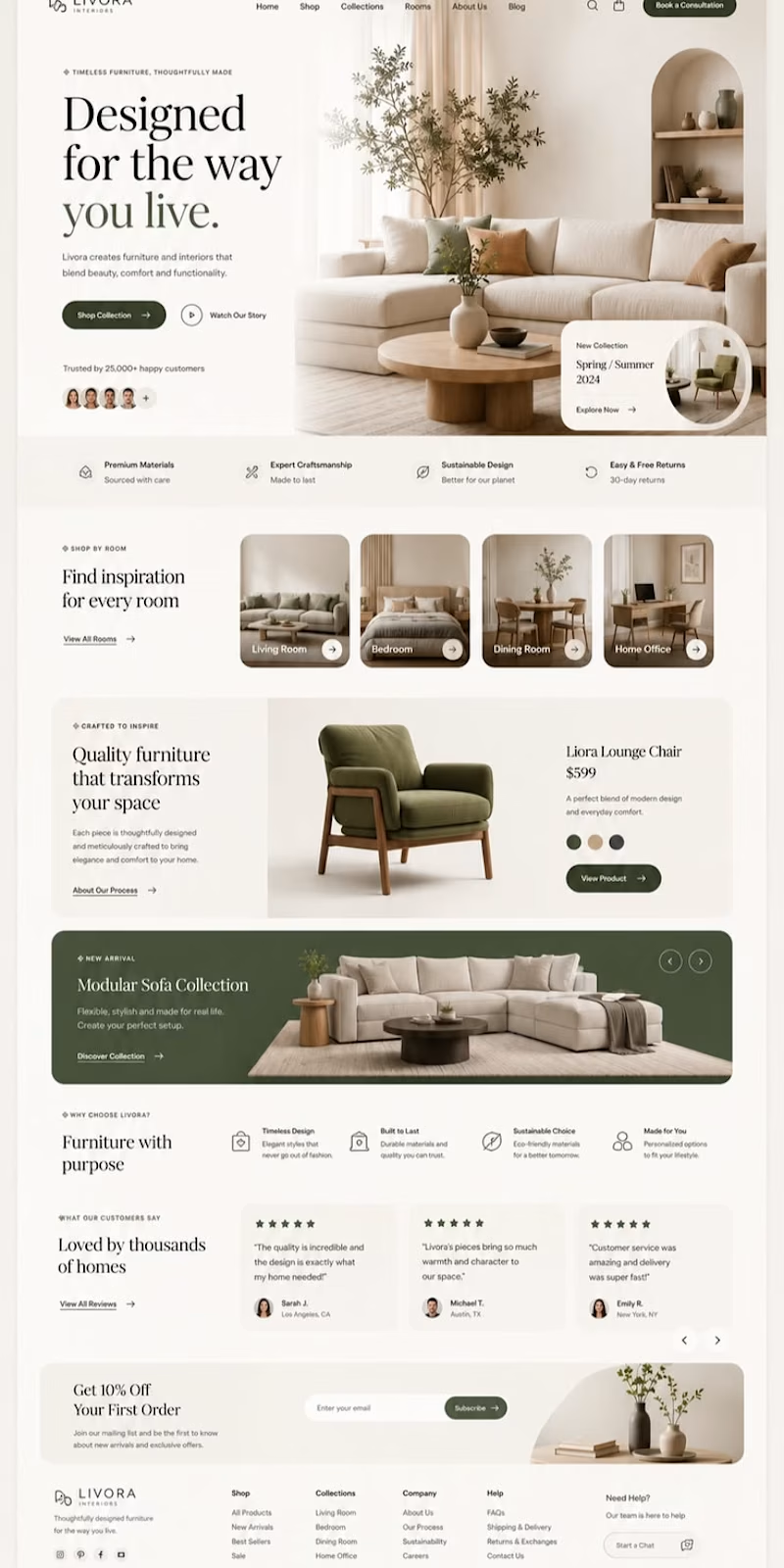
Modern furniture e-commerce website design focused on elegant product presentation and seamless shopping experience.
Clean layout, high-quality visuals, and clear calls-to-action designed to showcase furniture collections and drive online sales.
1 voted
33%
2 voted
67%
3 votes
Closed


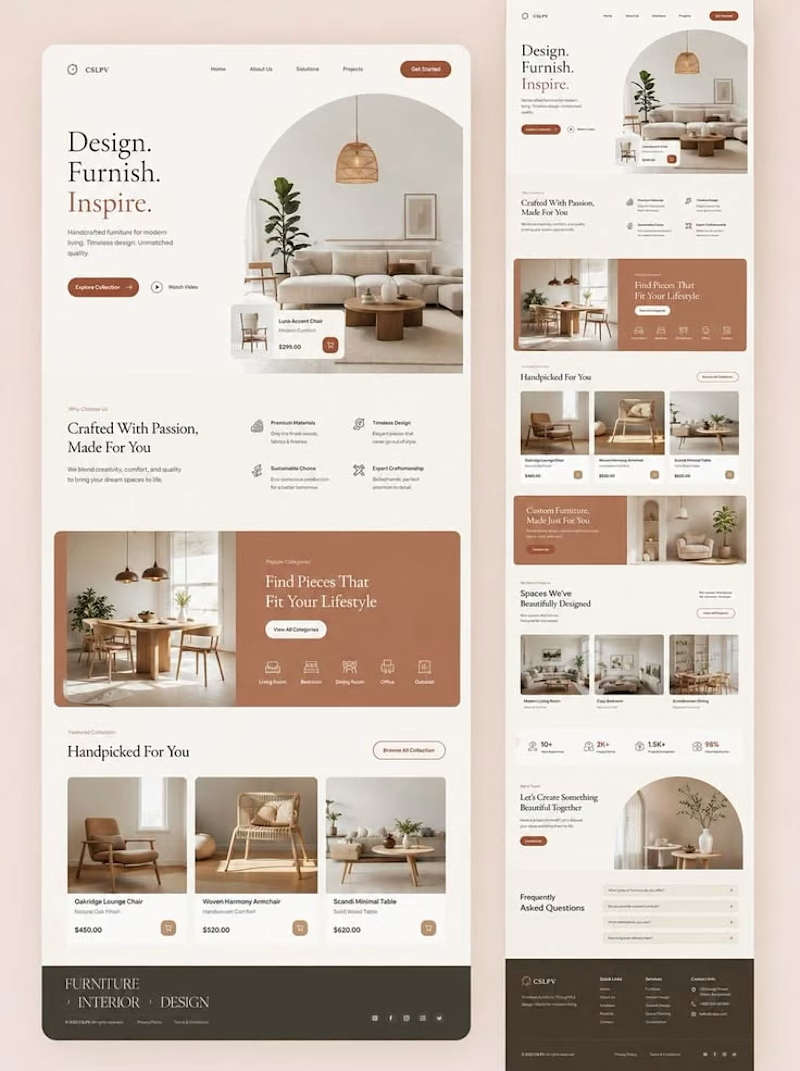
Option 2 for me. The warm tones and arched hero feel more premium for furniture.


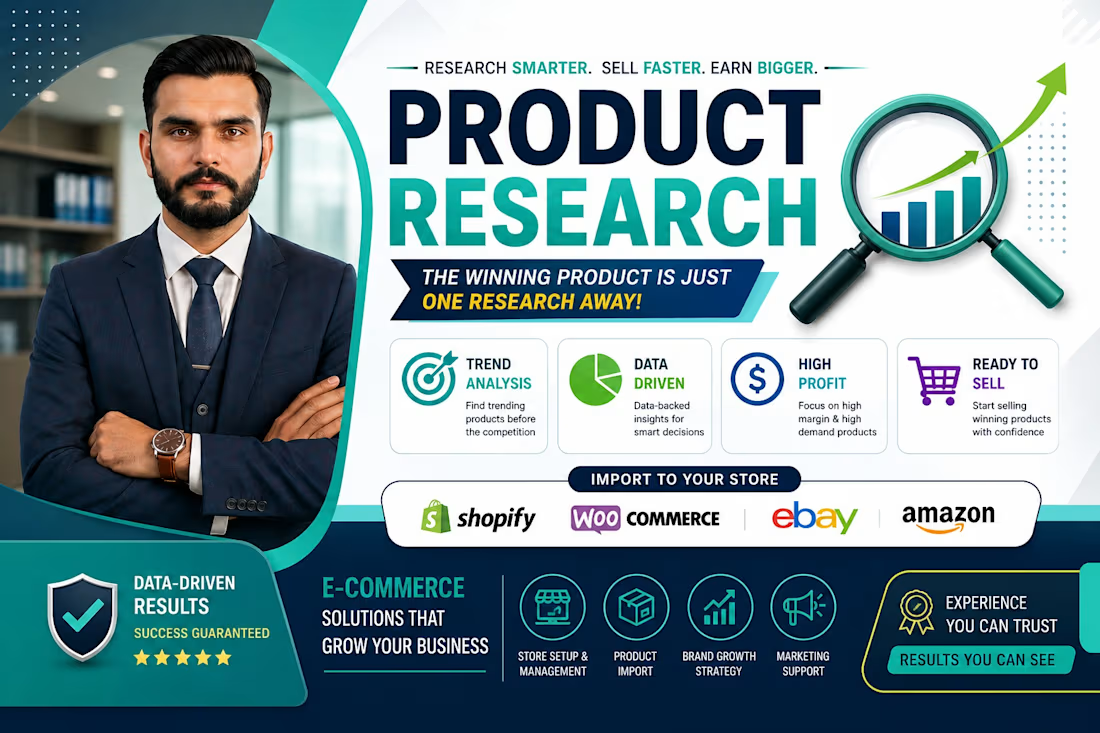
360 E-commerce expert Tiktokshop Ebay Shopify Amazon Etsy..
if you want to grow you E-commerce business, let's contact..
Live result's are available..



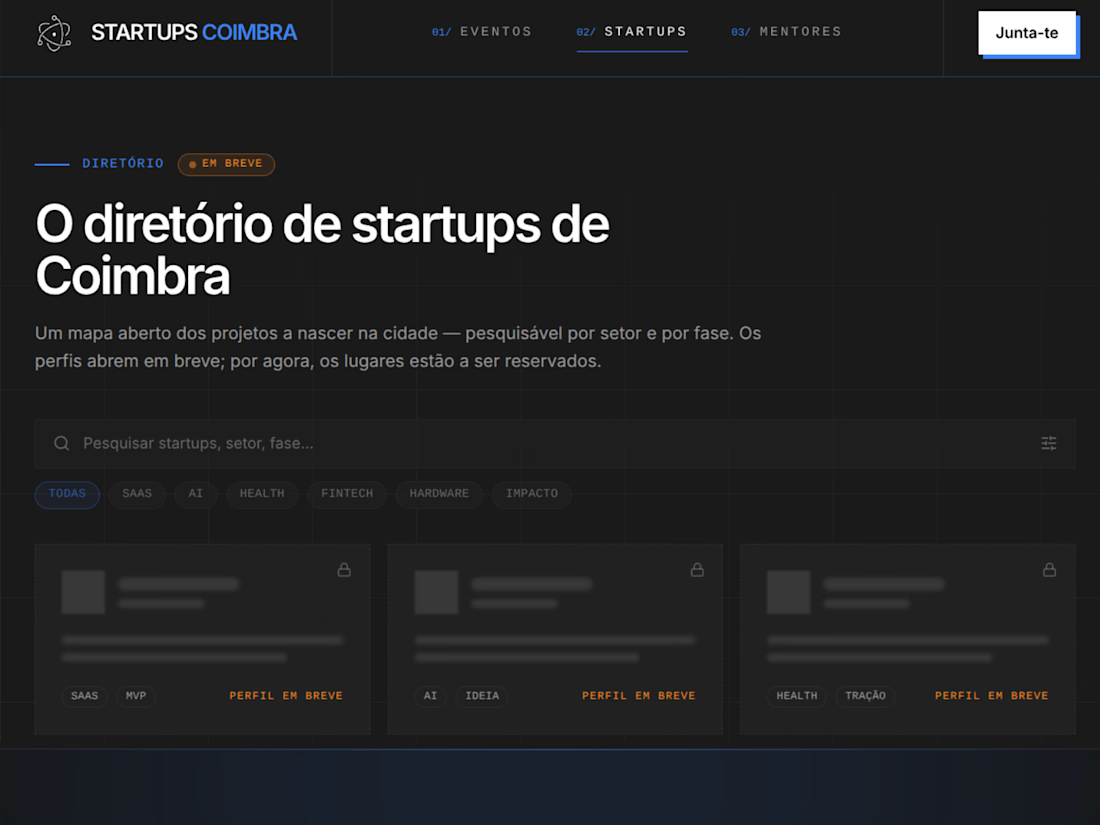
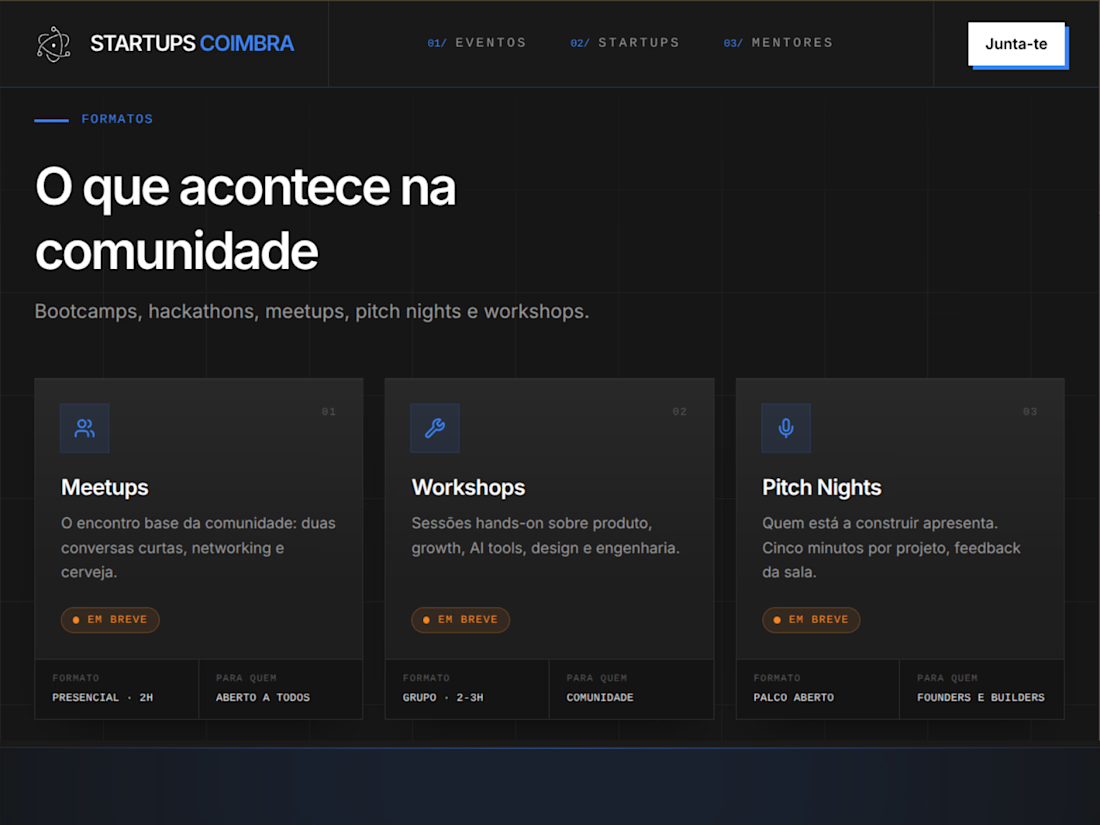
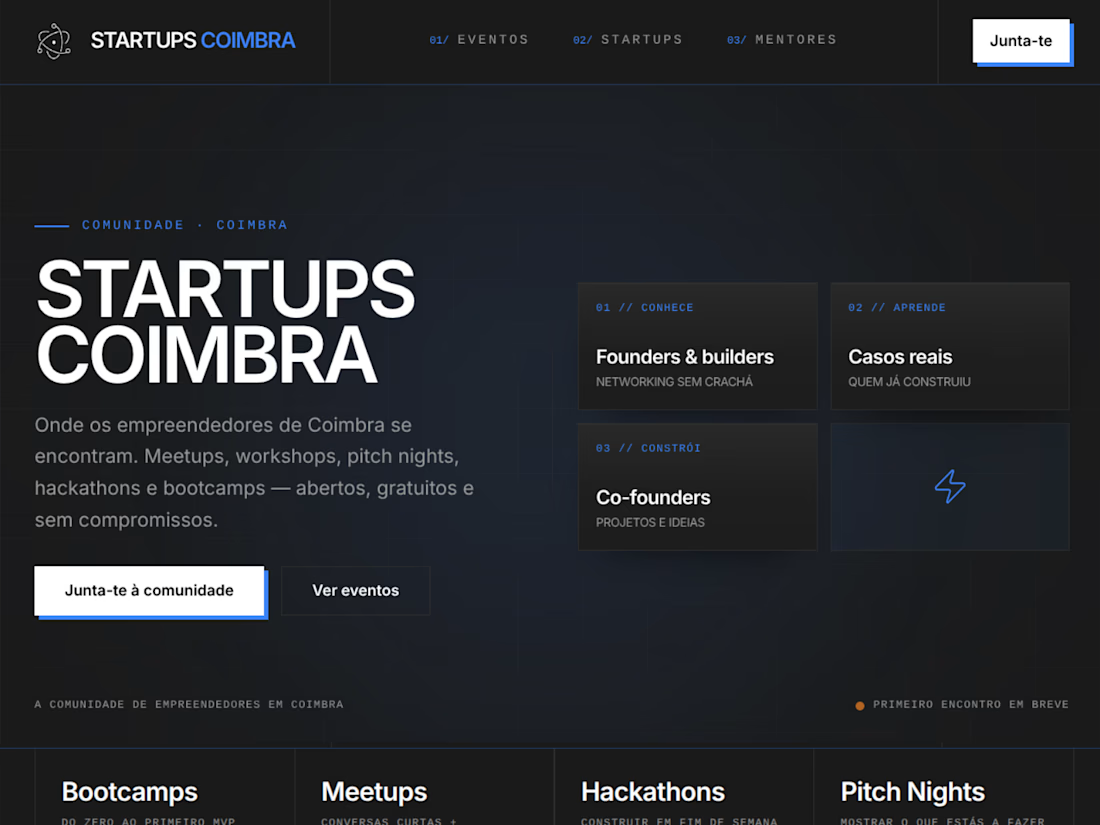
Designed and built Startups Coimbra, the website and community platform for an open startup community in Coimbra, Portugal — a React + TanStack Start SSR app with a custom dark, technical design system.
It includes a server-side waitlist that feeds signups straight into Attio CRM with Startup/Mentor segmentation, plus full Portuguese content and technical SEO (per-route metadata, canonicals, OG cards, sitemap).
Live at startupscoimbra.pt.