The network for creativity
Join 1.25M professional creatives like you
Connect with clients, get discovered, and run your business 100% commission-free
Creatives on Contra have earned over $150M and we are just getting started
Back to feedPost

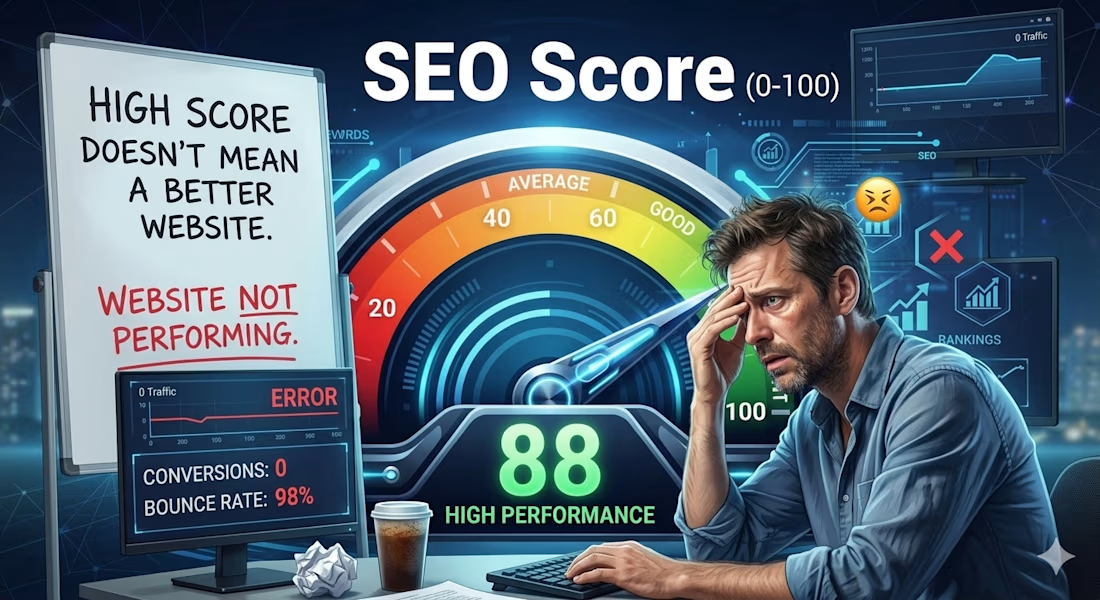
SEO Score (0–100): An Observation That Changed My Perspective
For a long time, I believed that a higher SEO score automatically meant better search rankings. It seemed logical—a website with a score above 90 should outperform one sitting at 70. But after reviewing and auditing multiple websites across different industries, I noticed a pattern that completely changed my perspective.
The websites with the highest SEO scores weren't always the ones attracting the most organic traffic.
By the way I written a good article on Medium for this , have a look
An SEO score is still an incredibly useful metric. It reflects the technical health of a website by evaluating factors such as page speed, mobile responsiveness, crawlability, internal linking, broken links, metadata, and other optimization signals. These are all essential because they make it easier for search engines to discover, understand, and index your pages.
However, technical health is only one part of the equation.
What I consistently observed was that websites with an average SEO score often outperformed technically perfect websites because they answered users' questions more effectively. Their content was more relevant, their pages matched search intent, and they offered genuine value instead of simply being well optimized.
In other words, improving an SEO score creates opportunities—but it doesn't guarantee rankings.
The best-performing websites usually had a balanced strategy. They fixed technical issues, but they also invested time in creating useful content, building topical authority, improving internal linking, and earning trustworthy backlinks. They focused on solving real problems for their audience instead of chasing a perfect score.
Another realization came as AI-powered search became more common. Today, visibility isn't limited to traditional search results. Platforms like ChatGPT, Google AI Overviews, Perplexity, and Gemini are changing how people discover information. That means website owners should think beyond rankings and pay attention to how their brand and content appear in AI-generated responses as well.
My biggest takeaway is simple: treat your SEO score as a health indicator, not a finish line. A score of 100 may look impressive, but sustainable growth comes from combining strong technical SEO with valuable content, authority, and a user-first approach.
A great SEO score tells search engines your website is well built. Great content gives them a reason to rank it.
Have you ever improved your SEO score and expected a ranking boost, only to see little change? I'd love to hear what you discovered.

The network for creativity
Join 1.25M professional creatives like you
Connect with clients, get discovered, and run your business 100% commission-free
Creatives on Contra have earned over $150M and we are just getting started
Related posts

How do you improve a website's performance by 17 points with a single prompt? Just use Base44 🚀
I've been genuinely impressed by this product throughout the entire process of building a real client project.
You can support my submission here: https://on.contra.com/cGfrMR
It started with Base44 recreating my Figma design with surprisingly high accuracy.
Then it translated the entire website — including the AI assistant's knowledge base — with a single prompt.
A few prompts later, I had a working admin panel.
And today, I asked it to review and improve the site's performance.
Result: +17 performance points.
Over the last few months I've tested several AI website builders and AI development tools, but I can confidently say that Base44 has become my favorite so far.
What impressed me most isn't just the speed — it's how quickly you can go from an idea to a production-ready solution that solves real business problems.
Live working website for customer here: https://woodcraftsua.base44.app
Looking forward to building more with it.



Great case study! I really like how you walked through the entire process from recreating the Figma design to improving performance with measurable results. Wishing you the best in the challenge!
😍😍😍😍😍😍😍


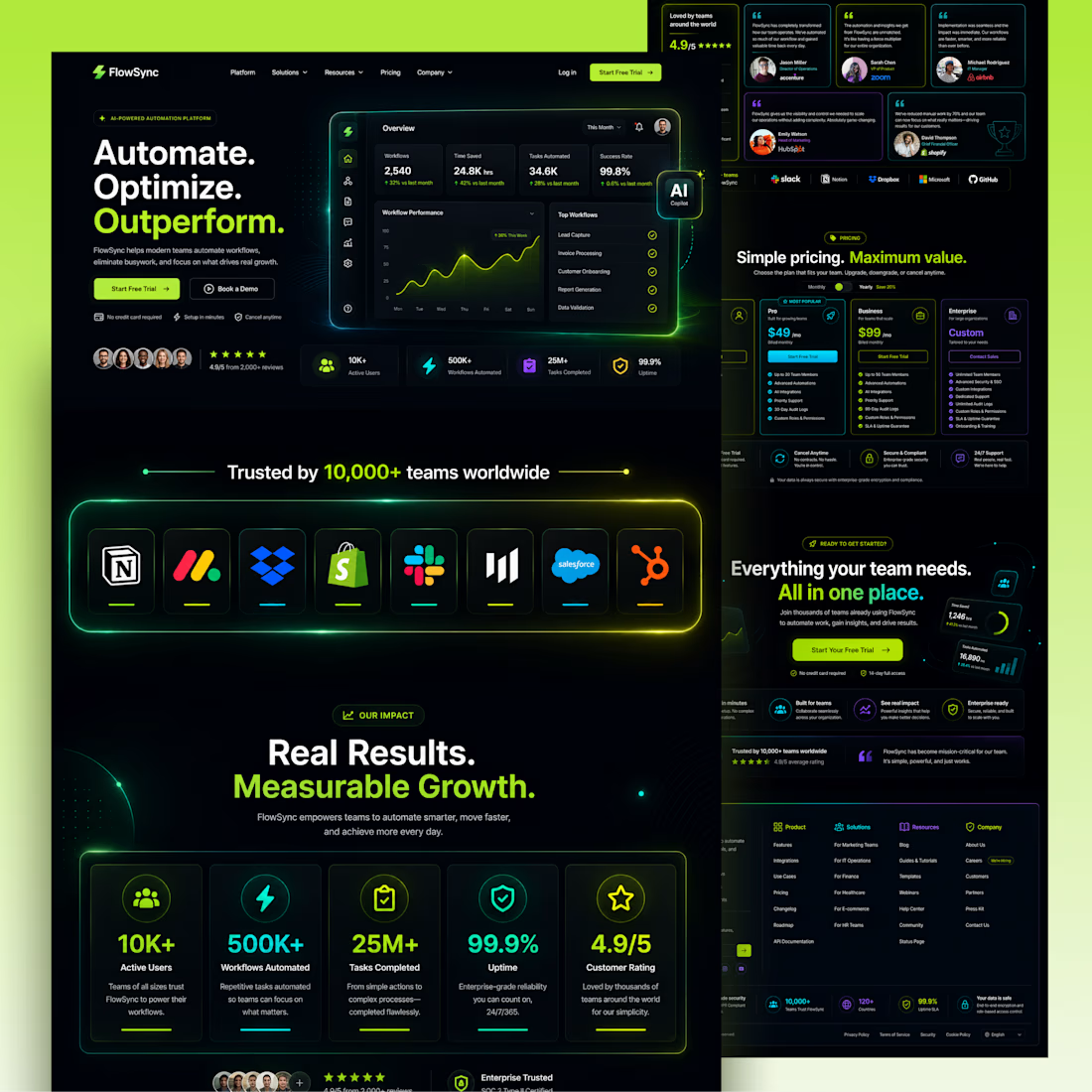
FlowSync – AI Workflow Automation SaaS is a modern landing page designed for businesses looking to simplify operations through intelligent automation.
Crafteddots.agency info@crafteddots.agency


Amazing work!














Trending

Claude
Claude has entered the design space. How are you using Claude Design?

Contra University
Learn from expert creatives how to earn more using next-gen AI tools.
creativeaiflow
Creative AI workflows are evolving. What tools do you use, and what are their strengths and weaknesses?
freelancerlife
Freelancer life is wins, pivots, and everything in between. What’s yours right now?