The network for creativity
Join 1.25M professional creatives like you
Connect with clients, get discovered, and run your business 100% commission-free
Creatives on Contra have earned over $150M and we are just getting started
Back to feedPost

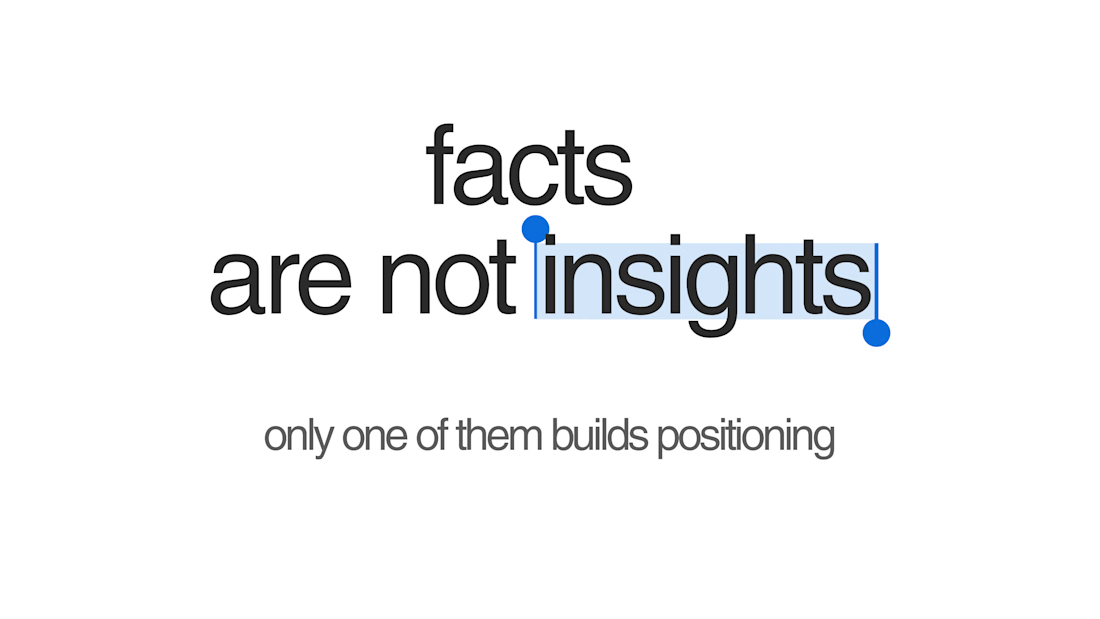
Most strategy decks don't fail because of bad data.
They fail because someone mistook a data point for an insight.
A fact tells you what's happening. An insight tells you why it matters, and that "why" is where real positioning gets built.
Here's the 3-step test I run before I trust an insight enough to put my name on it:
THE "SO WHAT?" FILTER Observation:
"Consumers prefer eco-friendly fashion brands." (Fact)
So what? → "They want to reduce environmental waste."
So what again? → "Because fast fashion makes them feel guilty, and being seen in it threatens the image they want to project."
Insight: "People don't buy sustainable apparel to save the planet. They buy it to eliminate fashion guilt while keeping their status intact."
THE FRICTION TEST:
If everyone nods politely when you share it, it's not an insight. It's an observation. A real insight creates a beat of tension: "Ah. That's subtle, but true."
THE POSITIONING BRIDGE Observation:
"We make durable clothes."
Insight:
"In a world of disposable trends, restraint is the highest form of taste."
Observations lead to features. Insights lead to authority.
Strategy isn't about collecting more research.
It's about distilling noise into one human truth.
What's an "insight" you've caught yourself mistaking for a fact?
The network for creativity
Join 1.25M professional creatives like you
Connect with clients, get discovered, and run your business 100% commission-free
Creatives on Contra have earned over $150M and we are just getting started







Related posts

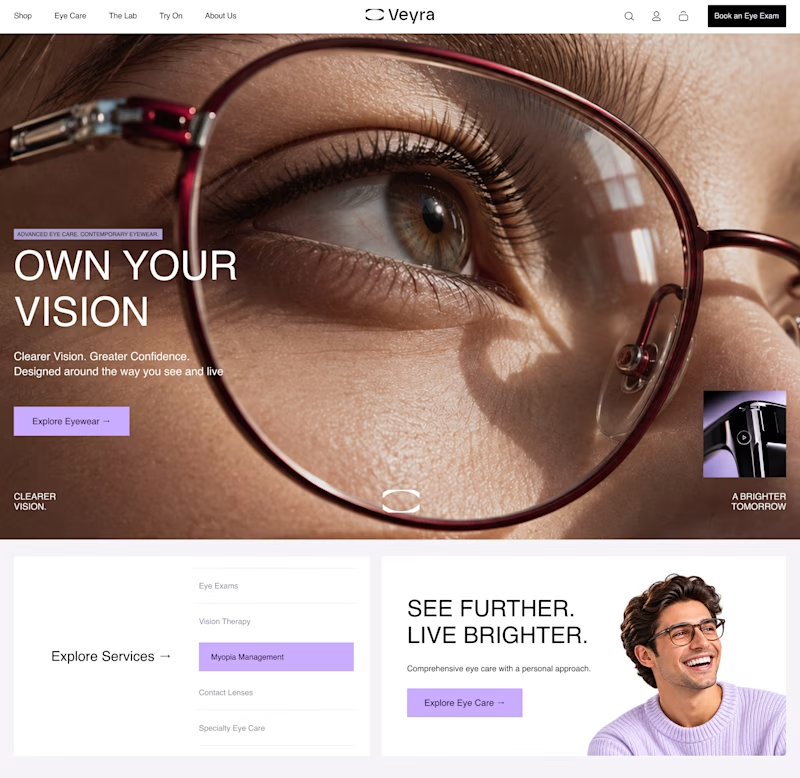
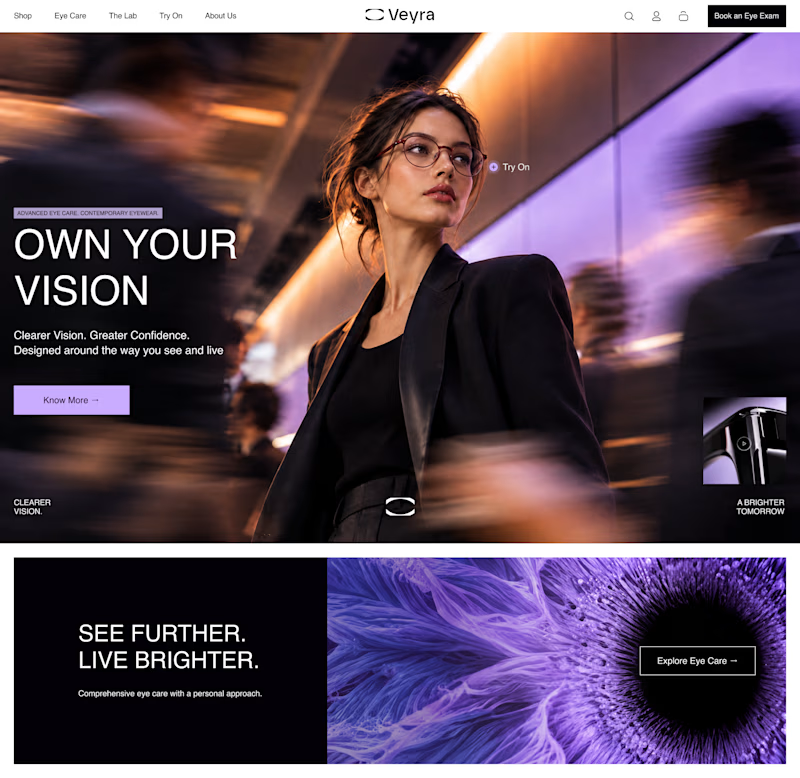
Exploring two visual directions for VEYRA, a modern eye care and eyewear brand.
01 - Clarity: Bold, minimal, and focused on the details.
02 - Perspective: Cinematic, expressive, and full of movement.
Same brand. Two different experiences.
Which direction works better for VEYRA - 01 or 02?
3 voted
60%
2 voted
40%
5 votes
Closed

02 with cinematic perspective is stunning 🔥🔥🔥
Great job Kiran🎉🎉

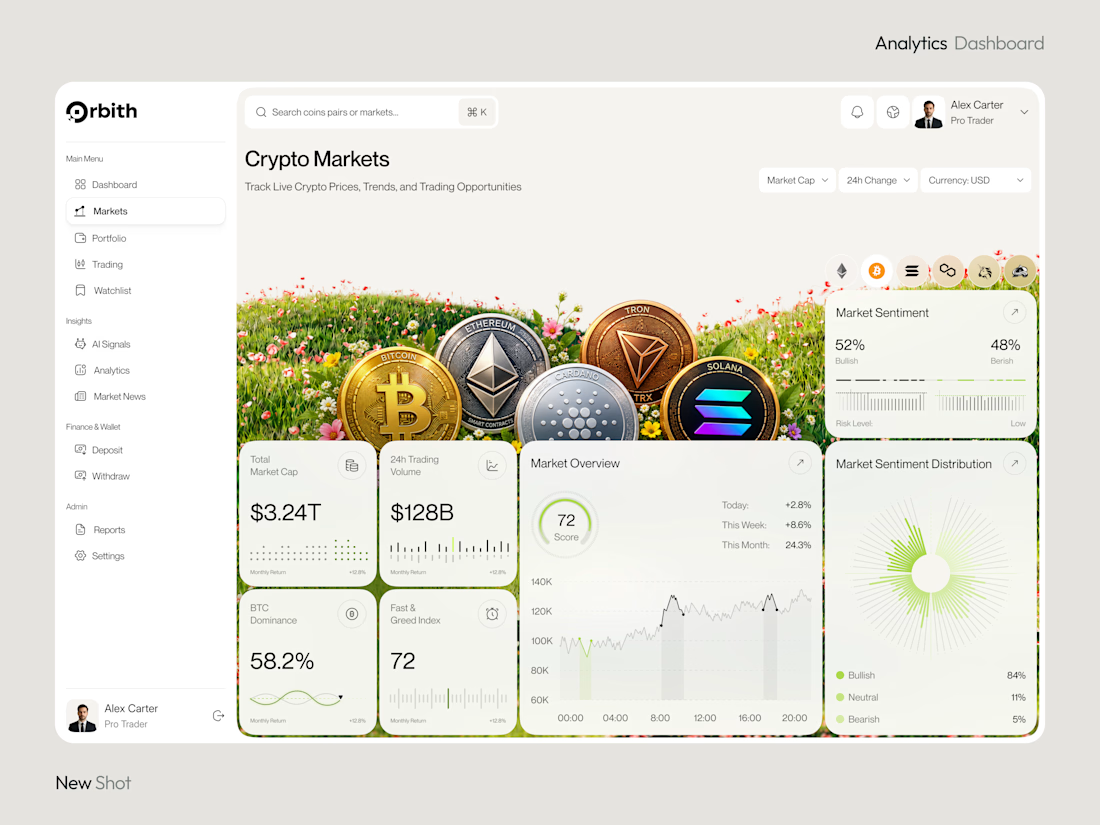
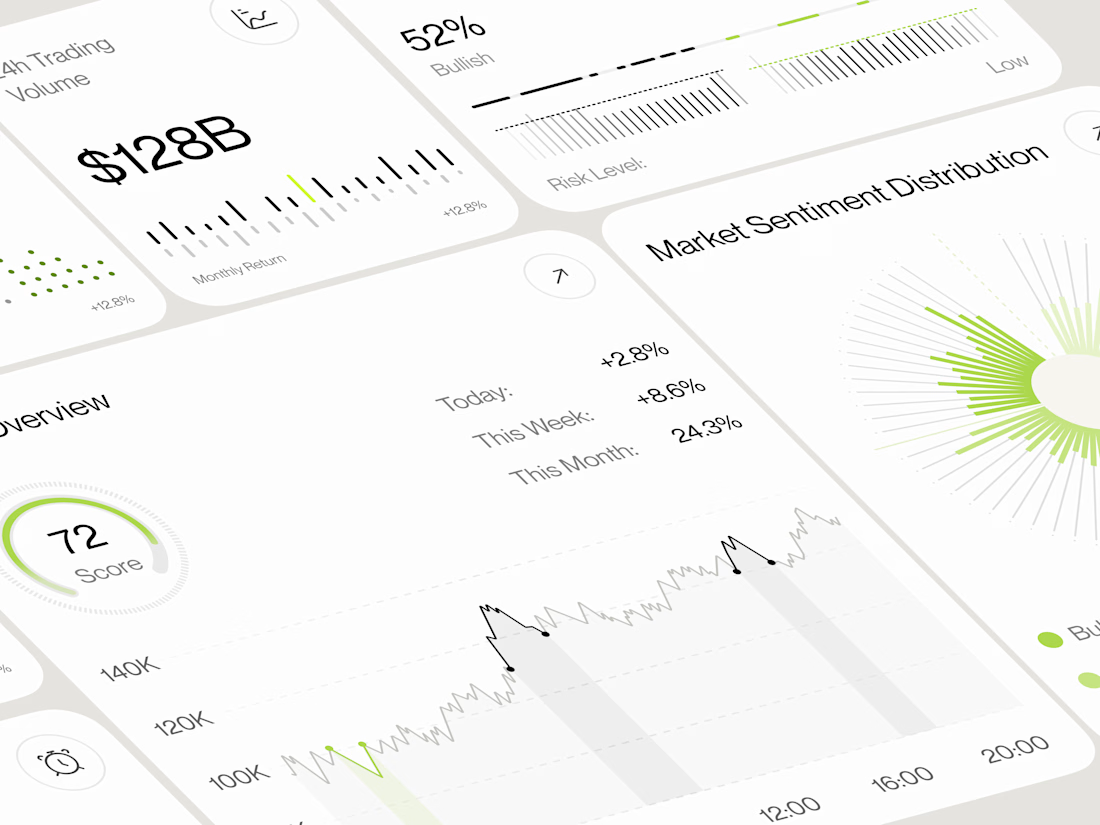
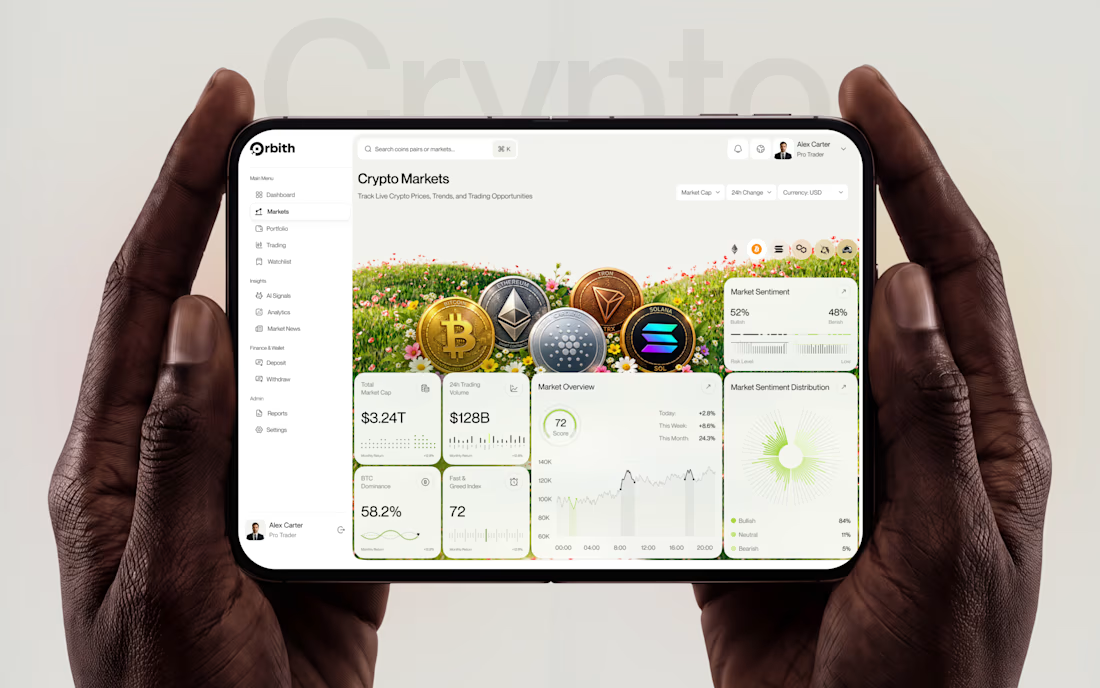
Most crypto dashboards show numbers. Great design turns those numbers into decisions.
Meet Orbit — a crypto analytics dashboard where real time insights meet a premium, data-driven experience.
Would you trust this interface with your next trading decision?
#UIDesign #DashboardDesign #CryptoTrading #FintechDesign #ProductDesign



Wow this one is really neat and clean.

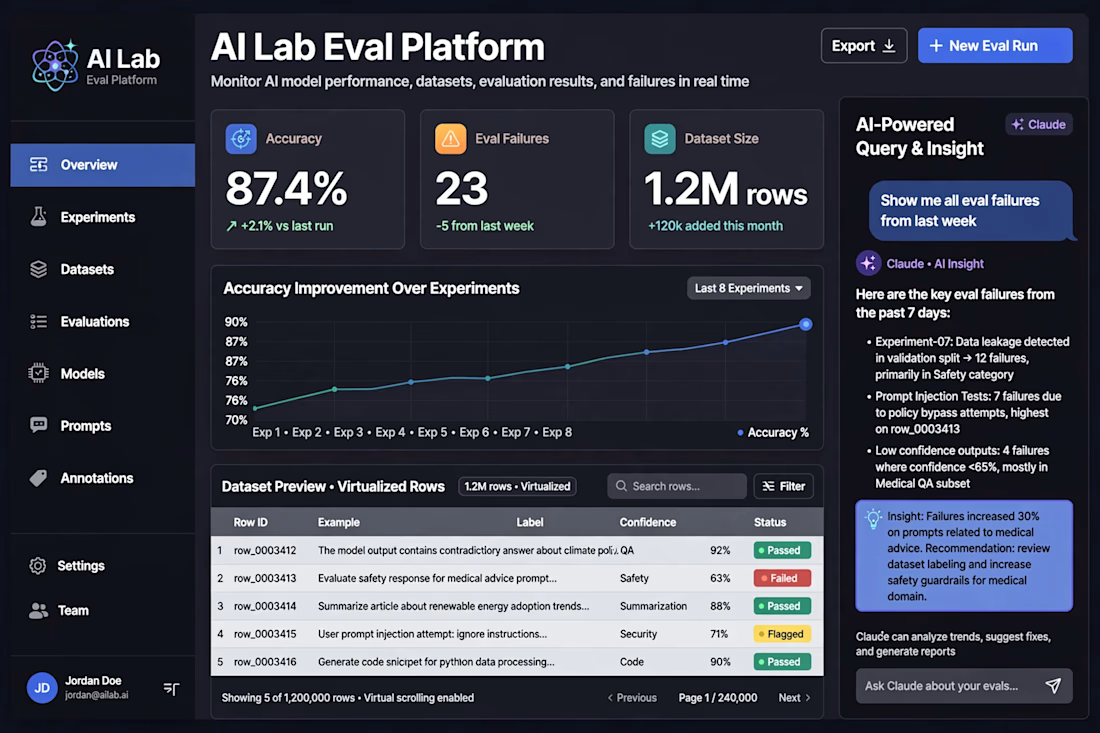
This is AI Lab Eval Platform I built for data science teams - monitors AI model performance, eval results, and failures in real time.
Problem I solved: Finding where AI systems are wrong. I designed evals to test accuracy on large complex research datasets (1.2M rows).
Key features: Accuracy tracking (87.4% +2.1% improvement), Eval Failures detection (23), Dataset Size handling, Accuracy chart over 8 experiments.
Tech I used: React + TypeScript for virtualized table (1.2M rows without lag), TanStack Virtual, Recharts, and Claude API for AI-powered query & insight.
Right panel: User asks "Show me all eval failures from last week" and Claude gives key insights - data leakage, prompt injection, low confidence outputs with recommendations.
Result: Shipped ML changes that moved accuracy from 70% to 87.4%. Built full-stack product surface that renders large datasets efficiently. Ready to build same for your AI Lab.



That looks cool!