The network for creativity
Join 1.25M professional creatives like you
Connect with clients, get discovered, and run your business 100% commission-free
Creatives on Contra have earned over $150M and we are just getting started
Back to feedPost

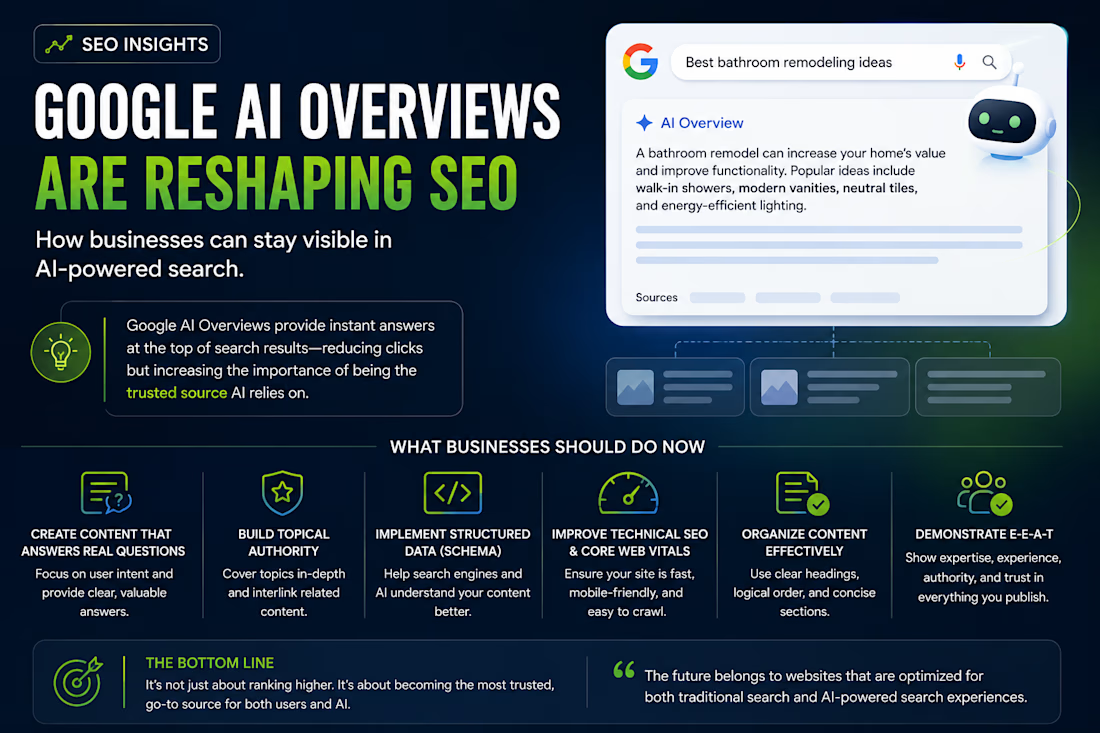
Google AI Overviews Are Changing SEO. Is Your Website Ready?
For years, SEO was all about ranking #1 on Google.
Today, that's no longer the whole picture.
With Google AI Overviews, users often get answers directly in search results—before they even click on a website.
This doesn't mean SEO is dead. It means SEO is evolving.
What businesses should focus on now:
✅ Create content that answers real user questions.
✅ Build topical authority instead of targeting isolated keywords.
✅ Implement structured data (Schema Markup).
✅ Improve Technical SEO and Core Web Vitals.
✅ Organize content with clear headings and logical structure.
✅ Demonstrate expertise, experience, authority, and trust (E-E-A-T).
The biggest mistake?
Many businesses are still optimizing for Google's algorithm from five years ago.
The future belongs to websites that are optimized for both traditional search and AI-powered search experiences.
At the end of the day, your goal shouldn't just be to rank higher—it should be to become the most trusted source for your industry.
How are you adapting your SEO strategy for AI Overviews?
#SEO #AISEO #GoogleAIOverviews #TechnicalSEO #SearchEngineOptimization #DigitalMarketing #LocalSEO #AEO #GEO
The network for creativity
Join 1.25M professional creatives like you
Connect with clients, get discovered, and run your business 100% commission-free
Creatives on Contra have earned over $150M and we are just getting started











Related posts




Seo feels futuristic that's really great 🔥🔥🔥
Great job Aqeel🎉🎉🎉

What if you could step into your own creation? ✨🌌
For the CapCut World LA challenge, I imagined a journey from my creative desk through a digital portal into a whole new world of creativity.
Created with AI visuals and cinematic effects in CapCut. 🚀
#CapCutWorld #CapCutWorldLA @capcutapp


Thanks for joining the CapCut World LA Challenge! 🌟 Just flagging: the submission requirements ask for your social post link along with the final video and project link. This helps us verify and feature your post — could you add it to your submission or share it in the comments below? Appreciate it!

Onsen combines AI conversations, journaling, and mood tracking to help people better understand their thoughts, emotions, and daily patterns. 🧠
What I find interesting is how AI can go beyond answering questions and create more personal, meaningful experiences.
🔗 Check it out: https://www.onsenapp.com/
What do you think makes an AI app feel truly personal? 👇
#ProductDesign #AI #UXDesign #MobileAppDesign #MentalWellbeing #Contra