The network for creativity
Join 1.25M professional creatives like you
Connect with clients, get discovered, and run your business 100% commission-free
Creatives on Contra have earned over $150M and we are just getting started
Back to feedPost

📸 Self-Hosted Visual AI Search (Snap & Find) for 50,000+ SKU E-Commerce Catalog
🎯 Executive Summary
Transformed catalog navigation for a massive e-commerce business (50,000+ SKUs, including archive & sold items) by architecting and deploying a Self-Hosted Computer Vision AI Search. Users and internal managers can now upload a photo of any item/part to instantly find exact catalog matches with 99.8% precision in under 50 milliseconds— with $0 ongoing third-party API token costs.
❌ The Business Problem & Pain Points
Text Search Failure: Customers frequently didn't know exact technical names, serial numbers, or SKUs for specific parts/items, leading to abandoned shopping carts.
Operational Bottleneck: Sales managers spent 15–20 minutes per inquiry manually searching through 50,000+ historical items to identify parts sent by clients via chat screenshots.
SaaS API Cost Risk: Standard cloud AI solutions (OpenAI, Anthropic) introduced prohibitive per-query token expenses, high latency, and data privacy concerns.
💡 The Solution: Private Self-Hosted Computer Vision System
We engineered an end-to-end Visual AI ecosystem running directly on the client's private GPU server infrastructure:
Sub-50ms On-Premise Inference Engine
Deployed a custom vision model locally.
Zero third-party API dependencies (100% data privacy + zero recurring token costs).
AI Image Segmentation & Multi-Angle Recognition
Automatically detects, segments, and highlights individual objects within a single uploaded photo.
Accurately recognizes parts regardless of angle, lighting, or background noise (99.8% accuracy rate).
Cross-Platform Integration (Web + iOS / Android)
Built clean REST/gRPC API endpoints linking the AI backend to the client’s web store and native mobile apps.
Bonus Feature: "Find Similar" E-Commerce Engine
Integrated a vector embedding similarity match directly into product cards on the website, increasing user engagement and catalog exploration depth.
📊 Measurable Business Impact
⚡️ 2x Search-to-Cart Conversion: Instant visual match eliminated customer drop-off.
⏱ 95% Manager Time Saved: Internal item lookup time dropped from 15 minutes to under 1 second.
💰 $0 Recurring Token Costs: The client owns 100% of the AI technology stack on their own servers without monthly API bills.
📲 Seamless Store Publication: Flawlessly passed Apple App Store & Google Play compliance for mobile AI search features.
🛠 My Scope as Product Lead & Tech Integrator
Product Architecture: Designed end-to-end data flow, vector database matching, and backend-to-mobile API schemas.
Team Leadership: Directed Computer Vision AI engineers, backend developers, and UI/UX teams.
Infrastructure & Deployment: Supervised GPU server setup, model optimization, and load testing.
Store Publishing: Managed complete release lifecycles on App Store & Google Play.
📩 Need a Similar Custom AI Asset Built for Your Business?
I help companies turn raw code and complex AI technologies into high-converting, revenue-generating business assets.
Services: Custom Visual AI Search, LLM / RAG Integrations, Self-Hosted AI Infrastructure, Mobile & Web Product Engineering.
👉 Send a message to discuss your product architecture and timeline.


The network for creativity
Join 1.25M professional creatives like you
Connect with clients, get discovered, and run your business 100% commission-free
Creatives on Contra have earned over $150M and we are just getting started



Related posts

How can you tell it’s AI? 👀
I use Claude as an essential part of my work as a designer. But you can tell when a designer just hands the whole job over to AI.
After going through the Frontier Design Benchmark by Contra Labs, these are a few tells I keep spotting:
1. The factory hero: a pill, a headline, two buttons, a screenshot and a glow. It could belong to any brand.
2. Colorful pills everywhere: badges and tags on every element. When everything is a pill, nothing stands out.
3. Glow on everything: gradient title, glowing button, neon cards, a lit background. None of it leads.
What AI tells have you spotted?


The factory hero is so real, I see that pill, headline, two buttons and glow combo everywhere now. AI is great for speeding up the build, but the direction still has to come from a person.

hey there 👋 I'm working on an AI startup that matches you with people who dress like you.
I made two intros for the site and honestly, I'm not sure which one to use. I have a slight favourite, but I want to see what everyone thinks first.
which one would you keep?
7 voted
44%
9 voted
56%
16 votes
Closed

For a 'people who dress like you' product I'd lean fast cuts, quick outfit flashes sell the matching idea before anyone reads a word. The grid could make a great second section once people want to browse. What's your slight favourite?

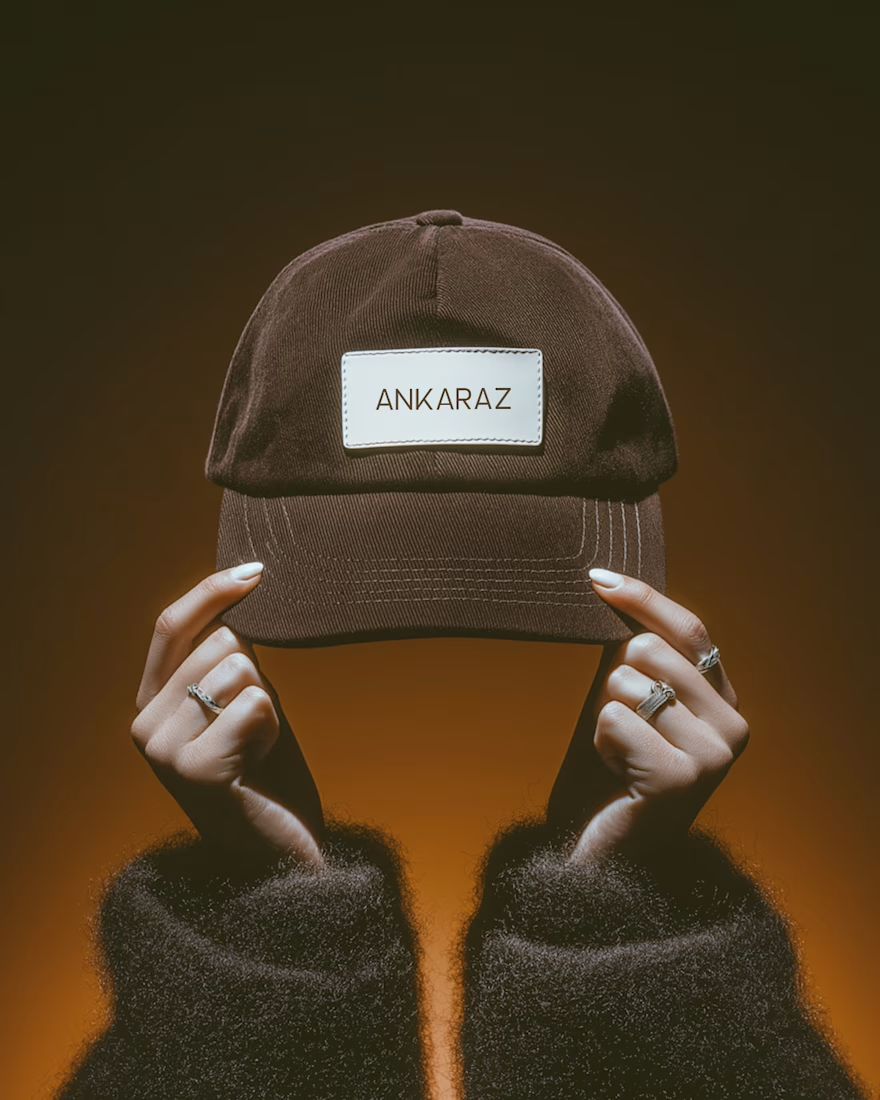
ANKARAZ
Simple, sharp, and made to be worn. A logo for an e-commerce brand, designed to look good everywhere. 🫶🏻

So cool!!