The network for creativity
Join 1.25M professional creatives like you
Connect with clients, get discovered, and run your business 100% commission-free
Creatives on Contra have earned over $150M and we are just getting started
Back to feedPost

Sample business writing piece demonstrating ability to communicate complex topics concisely and clearly.

The network for creativity
Join 1.25M professional creatives like you
Connect with clients, get discovered, and run your business 100% commission-free
Creatives on Contra have earned over $150M and we are just getting started



Related posts

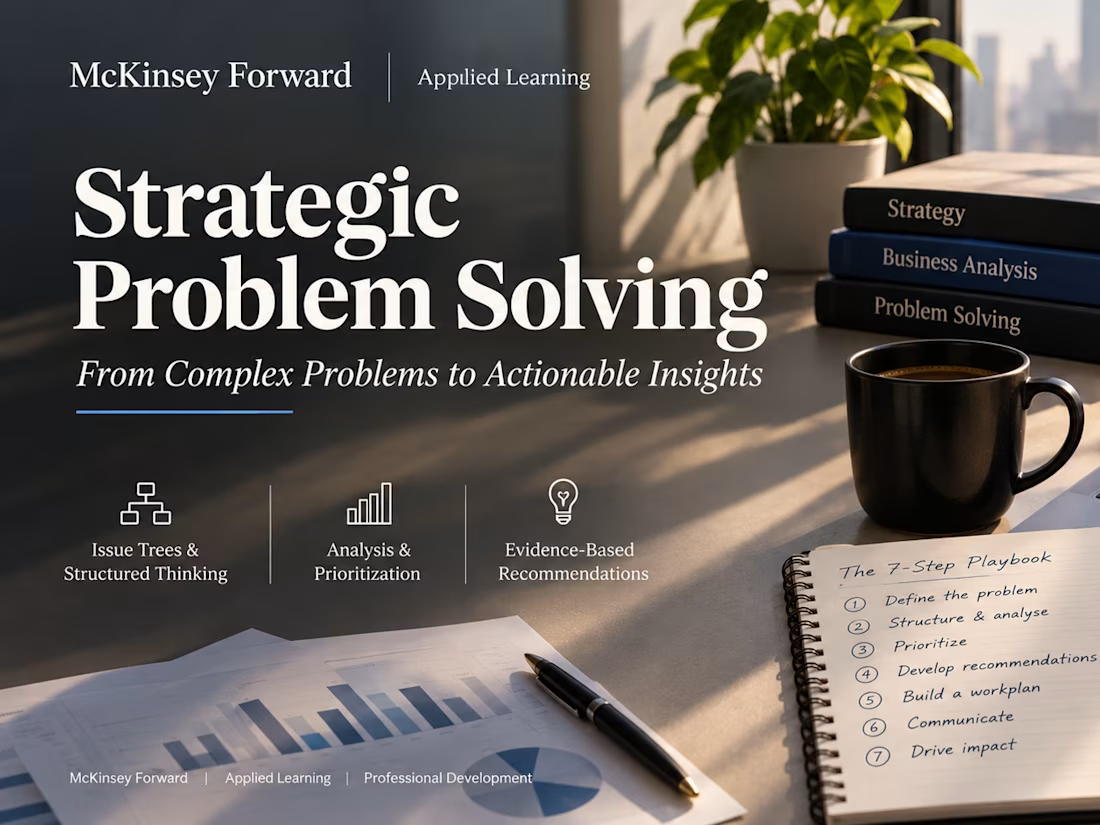
I've been investing in strengthening a skill that goes beyond any single industry: structured problem-solving.
Through the McKinsey Forward learning experience, I worked through three simulated business scenarios covering product innovation, supply chain investigation and urban mobility strategy.
The experience helped me practise breaking complex problems into smaller questions, building MECE issue trees, evaluating evidence and translating insights into actionable recommendations.
I've documented this learning journey and its case studies in my Contra portfolio.
Always learning. Always building. Always questioning better.
#McKinseyForward #ProblemSolving #BusinessStrategy #ContinuousLearning #ProfessionalDevelopment

Great Teju!

It's one of those projects that reminds me how much psychology goes into the decisions we make as designers.
One of the things I enjoyed most about working on Charsev was realizing that selling executive transportation isn't really about showing beautiful vehicles.
Imagine arriving in a country you've never visited before. What would make you feel comfortable trusting a transportation company you found online?
That question shaped much of my approach to this project, from the communication strategy and art direction to the UX/UI design, video editing, and WordPress development.
I wanted the website to feel elegant and professional, but more importantly, to communicate a sense of safety, reliability, and confidence before the passenger even begins their journey.
I'm curious, fellow designers: when you're designing a website where trust is essential, what do you prioritize most — visual design, messaging, or the overall user experience?


Nice deisgns

An existing employee interview, reworked into a vertical social video.
The original was a straightforward introduction created to the client's brief. For the re-edit, I removed the interviewer questions, rebuilt the sequence around a stronger opening hook and added kinetic typography, contextual B-roll and sound design.
Same interview. A different approach to storytelling.
Work: Vertical Brand Storytelling | Talking Head Editing | Social Content


Smart re-edit — cutting the interviewer questions and rebuilding the sequence around a stronger opening hook is exactly what makes a talking head hold up vertically. The kinetic typography and contextual B-roll do a lot of heavy lifting here. Same interview, much stronger story.