The network for creativity
Join 1.25M professional creatives like you
Connect with clients, get discovered, and run your business 100% commission-free
Creatives on Contra have earned over $150M and we are just getting started
Back to feedPost

Beautiful UI No Longer Guarantees a Job. Especially for Junior Designers. Where Is Our Profession Heading?
📌 The main point of this article: AI will take over more routine execution, so designers need to know how to identify problems, make decisions and demonstrate results for the business.
The market is becoming more selective. Companies increasingly want designers who can solve product and business problems. In an interview, showing polished screens and explaining that you can work with a design system is no longer enough.
AI can already create reasonably good UI. Given clear rules, it can follow a consistent spacing system, use shared styles and components, and help with layer naming and file organization. Many tasks that previously required careful manual work can now be accelerated or automated.
I think one experienced designer using AI will be able to handle the volume of routine tasks that previously required three designers. They will assign tasks to AI agents, evaluate the results and take responsibility for quality.
This will make it harder for junior UI/UX designers to find work, especially if their value is limited to creating mockups. But experience alone is no guarantee either. A junior designer can think strategically, while an experienced designer may still spend most of their time on routine execution.
At the same time, experience, skills and product understanding become even more important. To guide AI, you need to recognize quality and judge whether the result actually meets the task.
🧭 What Companies Expect from Designers Today
I increasingly see job posts expecting one designer to deliver HTML and CSS, animation, video and branding. The range of results a specialist is expected to produce is expanding.
At the same time, expectations around independence and business understanding are growing. Companies want designers to help define problems, explain their decisions and evaluate the results.
Product thinking has always been important. There simply used to be more demand for specialists who could create good UI. Now I increasingly see requirements such as:
Connect interface problems to business losses. Explain why a company is losing, for example, 20% of customers during checkout and propose changes to the architecture that could address the problem.
Understand complex products and their economics. Connect technical concepts, including those in crypto products, with user behavior and business profitability.
Help define the task. Contribute to the brief, run research sessions, define KPIs and build a UX strategy around specific business goals.
Work with data and architecture. Identify the causes of problems through analytics and heatmaps, turn observations into solutions and structure the product with conversion in mind.
Explain decisions and build alignment. Work with client teams and leadership, clearly explain the reasons behind changes and speak the language of ROI, churn and LTV.
Use AI to accelerate work. Analyze research and test ideas faster while focusing personal effort on strategy.
From what I observe, this broader set of requirements is no longer always accompanied by a comparable increase in pay. I saw vacancies asking for coding, animation and other additional skills before AI became widely available. Back then, I saw offers paying three or four times as much as work focused only on UI. Now I increasingly see these skills listed without that difference in compensation.
I see this as a change in the standard of the profession itself. Companies expect more from designers, and meeting those expectations may become necessary primarily to remain in demand.
📊 How I Apply This in My Work
My expectations about the future of the profession come primarily from what clients already pay me for today.
Most of my long term clients stay with me and recommend me to others because of my product approach and the specific business problems I help solve.
Quality UX remains essential. But making an interface clear and easy to use is not enough. You need to understand which problem you are solving, why it matters to the business and how to verify that your changes actually helped.
The following projects show how I apply these principles: working with data, helping define the task, understanding business processes and validating decisions.
1. An Online Document Preparation Service
The goal was to help more users complete the questionnaire and pay for the company’s services. This required understanding where users struggled and connecting those problems to the company’s conversion goals.
I investigated user problems through Hotjar, Google Analytics, support inquiries and an NPS bot connected to Slack.
In Hotjar, I watched session recordings and identified moments when people got stuck and did not know how to continue. I analyzed heatmaps, pages and stages where users left the website.
I tested redesign hypotheses through interactive prototypes with existing users, as well as potential users recruited through UserTesting.
Annual growth in paying clients increased from around 8% to 17%. Users completed tasks 37% faster, and 86% of existing clients rated usability 8.5 out of 10.
2. An Operations Platform for Glazing Contractors
Slow estimate preparation and lost project information caused costly rework. Most processes relied on paper documents and phone calls between managers and the staff taking measurements on site. Customers left for competitors who responded faster.
Before designing the screens, I needed to understand how the company actually worked and what the product needed to support.
I analyzed the company’s processes, spoke with employees and studied their work in the office and on site. I created a digital map of the existing workflows. This helped identify problems and determine how a CRM could address them.
I then designed connected workflows for estimating, scheduling and field measurements. I tested the design with technical staff and corrected navigation and button wording issues before development.
I used Tailwind as the foundation to focus time and budget on business workflows rather than creating every component from scratch.
A supplier pricing database and inline editing made estimate preparation approximately 45% faster. This helped companies respond to customers sooner and contributed to higher conversion and profit.
These examples show the product approach clients value. AI changes the tools I use, while understanding the problem, choosing a solution and evaluating its impact remain central to my work.
🤖 How AI Is Changing My Work
Claude has already become my main tool. When I need to create a quick concept, I start there and then transfer the designs to Figma. I think Figma will play a smaller role in my work over the coming year.
I already deliver more than static mockups. I also give clients HTML and CSS pages built with AI. Eventually, Claude or similar tools may help me deliver the backend as well, but it is too early to talk about that. I have already shared how AI helps me today in a separate article.
These tools are changing very quickly. Each new model can significantly change an established workflow. Designers need to know how to use AI to strengthen their skills and improve productivity.
Responsibility for decisions still belongs to the designer. They need to understand users, business goals, product logic and the quality of the result.
🎯 What This Means for Designers
My advice to junior and intermediate designers who still spend most of their time on routine work: learn to understand the business, work with strategy and solve problems beyond individual screens. At the same time, learn to use AI and apply it in your work.
Experienced designers should show the results they have achieved for businesses more often and explain how they make decisions. Polished shots reveal less and less about the value of a particular specialist.
Product thinking helps you define the task, choose a solution and evaluate the result. Knowing how to work with AI helps accelerate research, idea validation and execution. The ability to generate interfaces alone does not explain why a business needs that particular designer.
🏁 My main conclusion: develop a product approach and learn to strengthen it with AI. Understand the value you create for the business and use modern tools to deliver it more effectively.
The network for creativity
Join 1.25M professional creatives like you
Connect with clients, get discovered, and run your business 100% commission-free
Creatives on Contra have earned over $150M and we are just getting started

Challenges
View all


Related posts

Shielda is a mobile cybersecurity app that helps small businesses detect and respond to digital threats in real time.
The experience makes security easier to manage for non-technical users. Clear threat statuses, high-contrast visuals, and actionable alerts help business owners understand what needs attention and decide what to do next.
See the design: https://dribbble.com/shots/27792730-Mobile-App-Cybersecurity


Your votes are in! Here's the final TutorIQ website ☀️
Thank you to all 20 of you who voted on the two concepts 🏄🏼♀️ It was close: 55% chose light and playful and 45% chose softer and calmer.
The final version mixes the two moods. Its bright colors are from the playful first concept. From the second one, it took the serif headline and the product preview on the first screen.
Quick context: TutorIQ is an AI tutoring platform for UK families. It matches each child with a tutor based on how they learn. Our task was a website that attracts parents and tutors before the platform launches.
Every parent comes with one question: 'Is this the right place for my child?' So the first screen answers it with the product itself. Parents see the lesson schedule and the AI summary they get after each lesson.
Now it's your turn 👇🏻 What would you keep from this version? And what would you change?

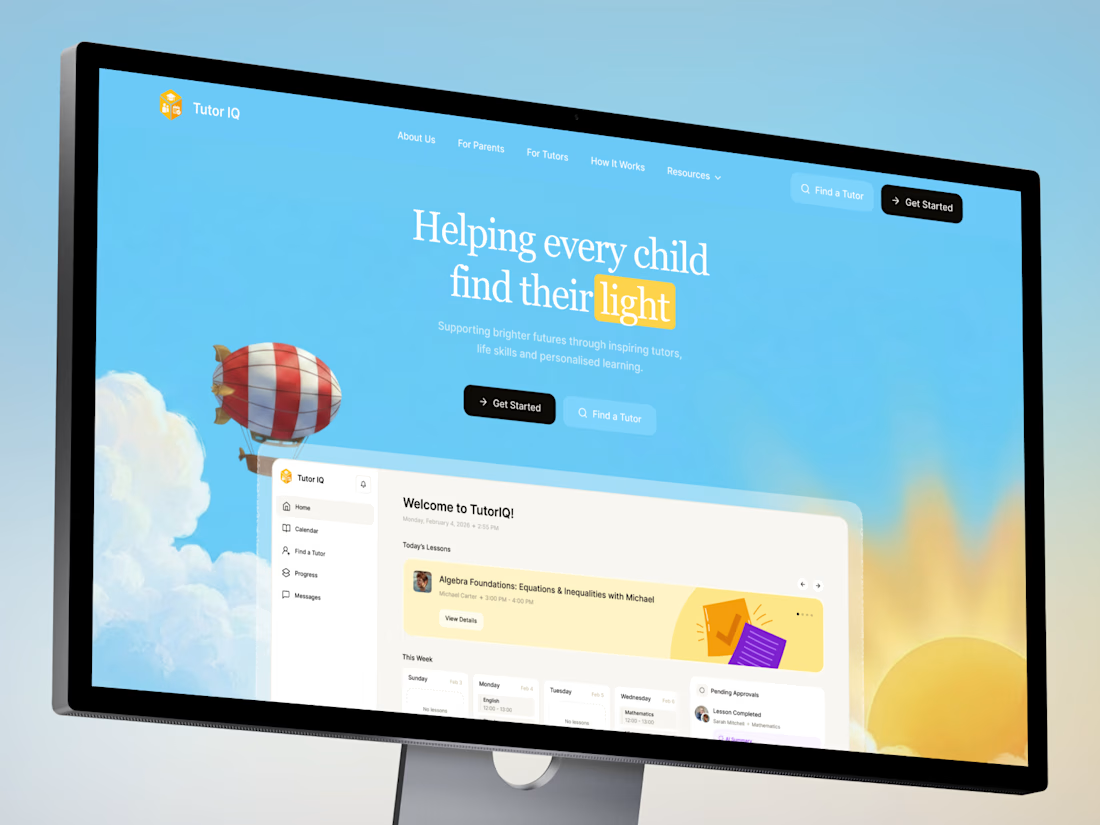
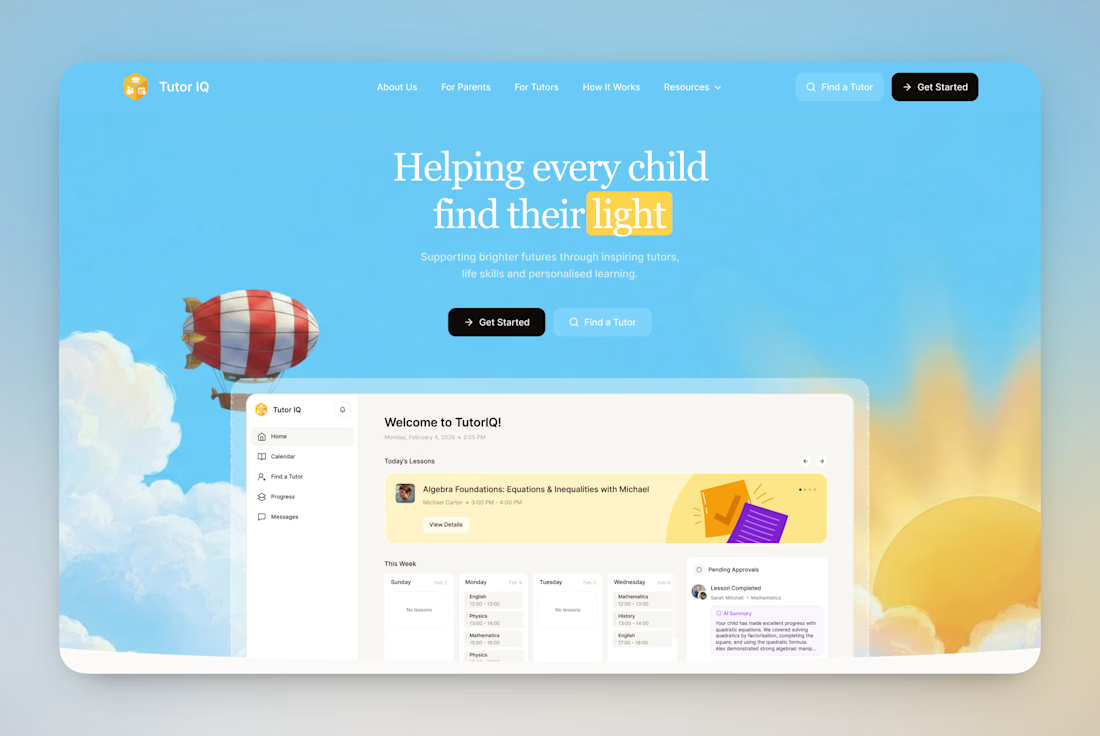

Keep: the “light” metaphor, a single idea that earns trust before the product appears. Change: contrast.

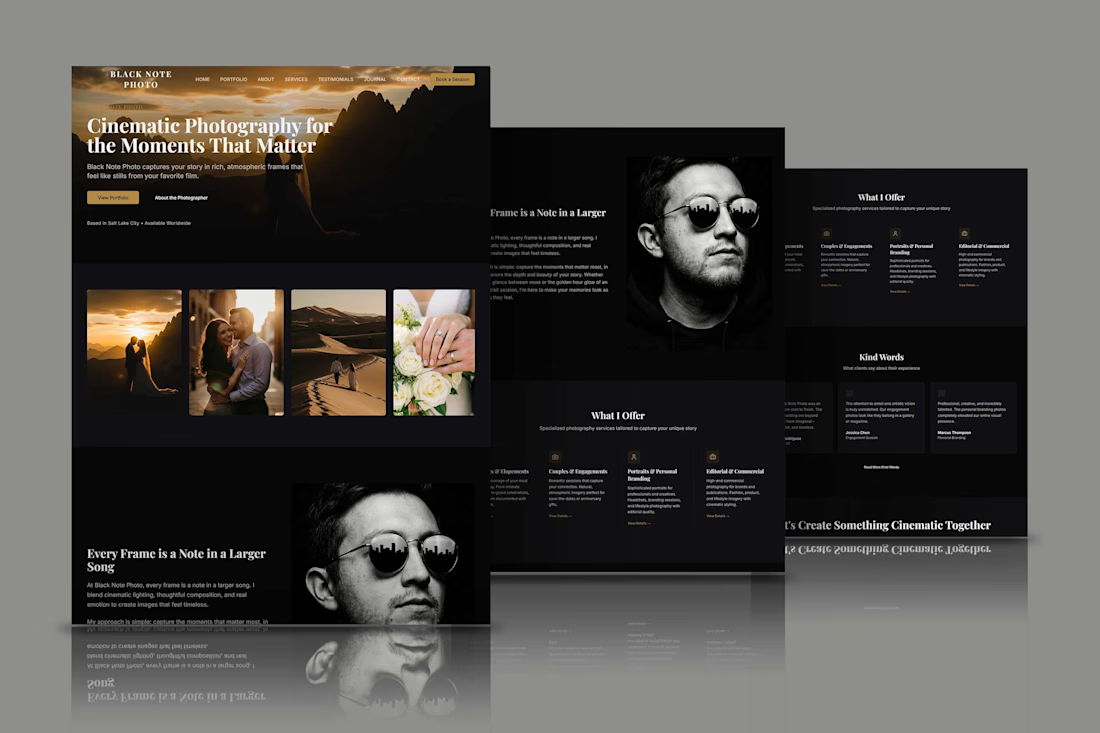
Designed a photography website focused on portfolio presentation, visual storytelling, and client conversion. The project combines photographer website design, photography portfolio, wedding photography, couples photography, personal branding, responsive web design, UX/UI design, and booking website functionality. The cinematic layout uses calls-to-action, service sections, testimonials, and image led content to build trust and guide visitors from exploring the photographer’s work to making an inquiry. The structure supports mobile friendly browsing and a polished creative brand experience.