The network for creativity
Join 1.25M professional creatives like you
Connect with clients, get discovered, and run your business 100% commission-free
Creatives on Contra have earned over $150M and we are just getting started
Back to feedPost

A one-way sync has a clear story: system A changes, system B follows. A two-way sync has a failure mode one-way syncs literally cannot have. The two directions can trigger each other.
Picture Zendesk tickets linked to Salesforce cases. An agent escalates, which writes a case in Salesforce. Engineering updates the case, which writes status back to the ticket. But that write to the ticket looks like any normal ticket change, so it can fire the escalation sync again, which updates the case, which syncs back to the ticket. Now both records are updating in a tight cycle. A runaway loop is worse than no integration at all.
Two controls stop it.
Actor exclusion: the integration writes through a dedicated user, and each side ignores changes made by that user. When the sync-back updates the ticket, the Zendesk trigger sees its own integration user and does nothing. You're telling each system not to react to itself.
Skip-unchanged guard: before propagating a change, compare the incoming value to what's already there. If nothing actually changed, stop. This catches the echoes that slip past actor exclusion, like a re-save that touches no real field.
The second hard problem is source of truth, and in a two-way sync it usually isn't one system. It's per field. Here, Zendesk owns the customer conversation and original context; Salesforce owns the engineering status and resolution. Neither owns the whole record. You decide ownership field by field, or the two directions quietly overwrite each other and call it a sync.
I wrote up the full design, including the status-mapping decisions between two systems that model status differently, as a spec and runbook below.
github.com
public-portfolio/03-salesforce-zendesk-case-escalation/case-escalation-spec.md at main · nodrel-dev/public-portfolio
Integration and systems documentation samples for SaaS ops teams — runbooks, specs, and architecture decision records, written from the codebase. - nodrel-dev/public-portfolio
The network for creativity
Join 1.25M professional creatives like you
Connect with clients, get discovered, and run your business 100% commission-free
Creatives on Contra have earned over $150M and we are just getting started





Related posts


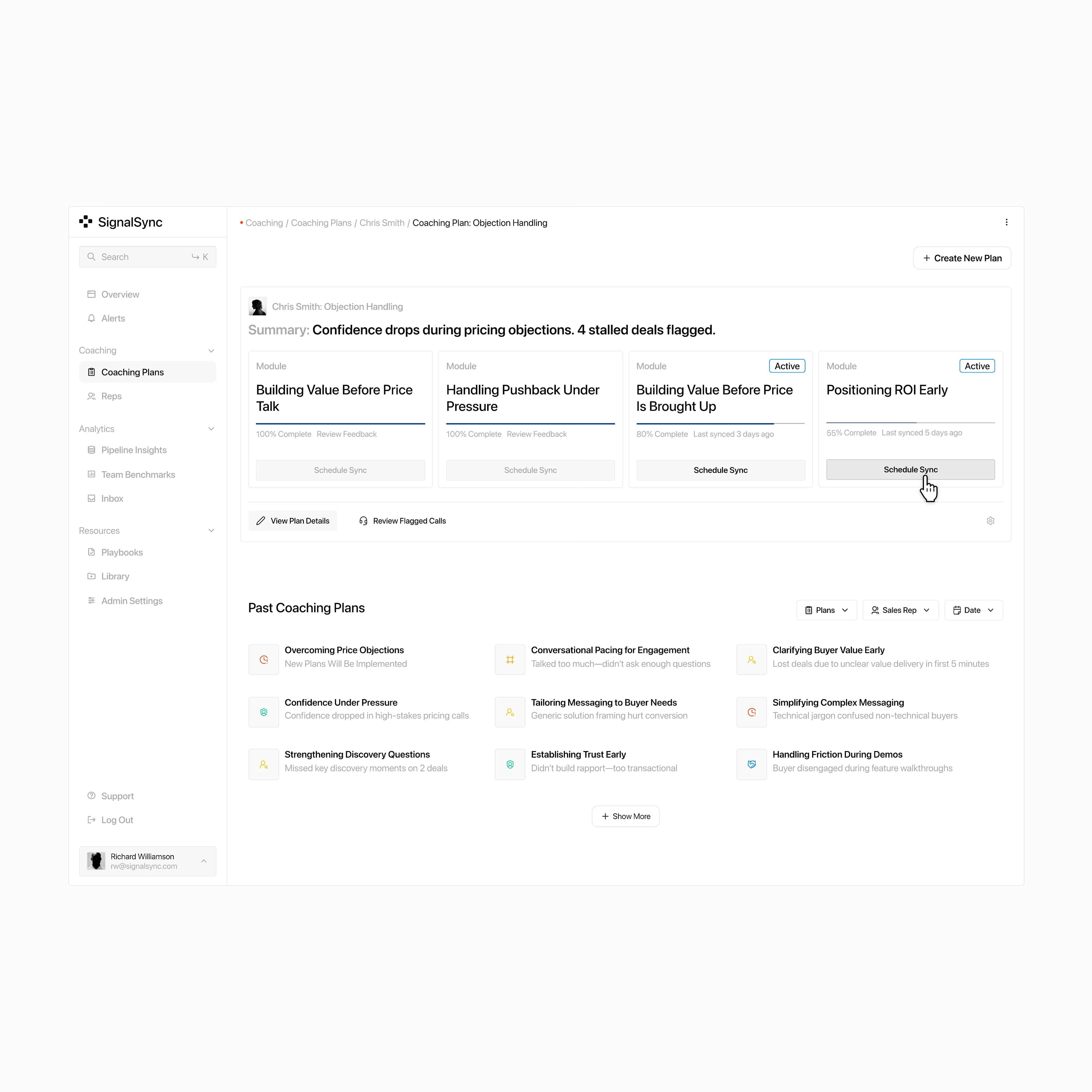

super clean product detail page. love how you broke down the confidence drops, that summary section is really smart

A complex product can lose users every time they switch screens.
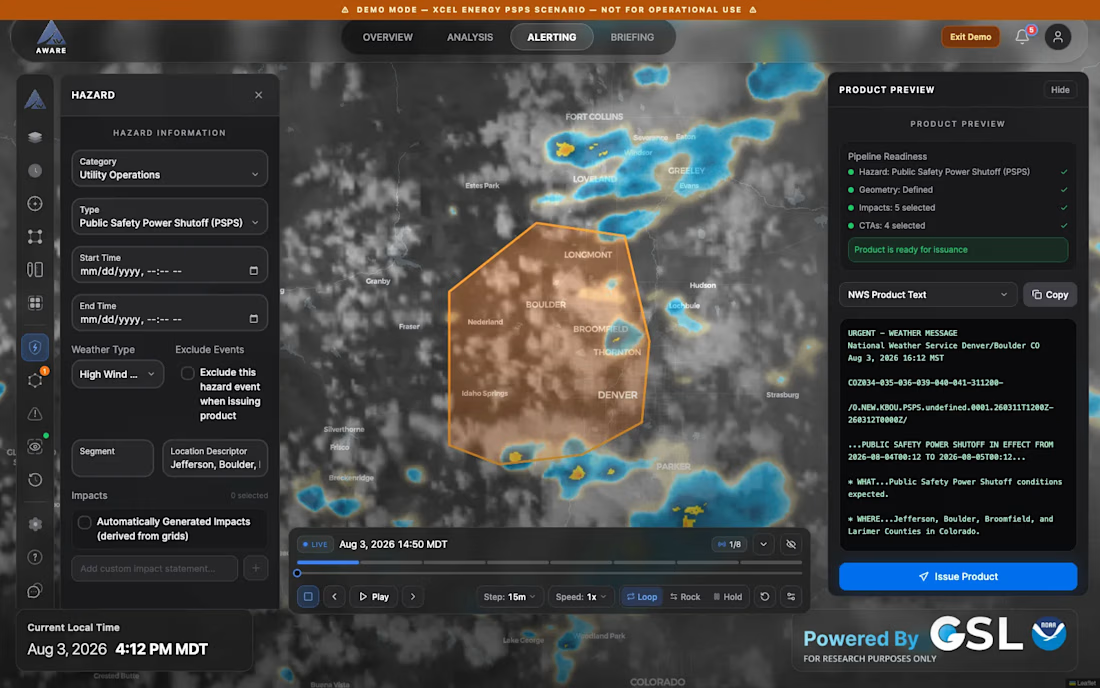
For AWARE, a weather decision-support research workspace, I designed around keeping forecasters oriented as they moved from live conditions to a hazard product and partner briefing.
The map stayed central. Different working modes shared that context. A persistent time control helped make the forecast period clear.
The design question was practical: what should stay visible while someone makes the next decision?
That’s the kind of problem I help teams solve—dense data, demanding workflows, and interfaces where clarity matters.
See the case study:
https://contra.com/p/cWPmOb66-aware-decision-support-for-nws-forecasters
If your team is redesigning a complex web app or struggling with a core workflow, message me here on Contra.

E-commerce Revenue Recovery & Retention Automation System
I designed an e-commerce revenue recovery and retention system to show how online stores can recover abandoned sales and bring more customers back to purchase again.
The system automates key customer journeys including abandoned-cart recovery, post-purchase follow-up, win-back campaigns, repeat-purchase reminders, and customer segmentation.
Instead of relying on manual follow-ups, the workflow uses customer behavior and purchase data to trigger the right action at the right time.
The system follows a simple journey:
Customer Visits → Adds to Cart → Abandons → Automated Follow-up → Purchase → Retention Workflow → Repeat Purchase
I also structured the system to track how customers move through each stage, so the business can see where revenue is being recovered and where customers are dropping off.
The project demonstrates how automation can help an e-commerce brand:
Recover lost sales • Increase repeat purchases • Improve retention • Reduce manual follow-up • Increase customer lifetime value
Tools & technologies: Shopify, Klaviyo/Zoho Marketing Automation, n8n, Make, Zapier, CRM systems, email/SMS automation, and customer-data workflows.


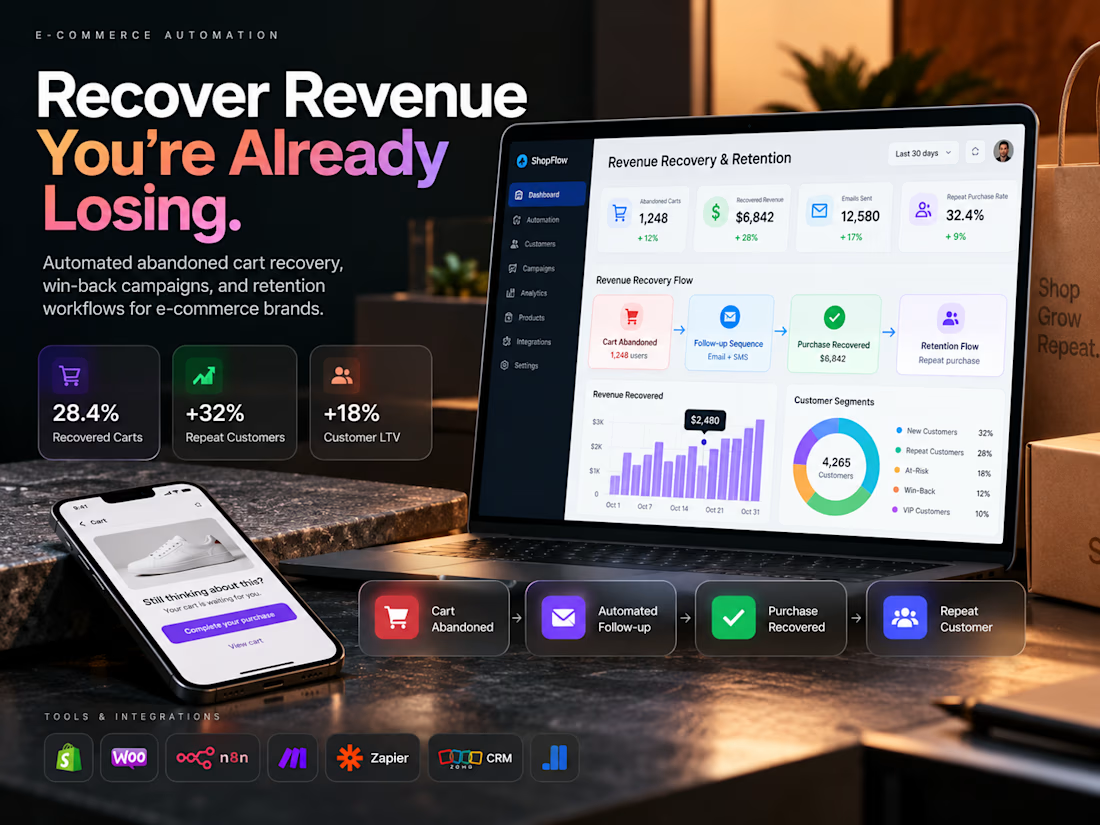

What caught my attention was the stage by stage tracking you built, it should pinpoint exactly where the drop offs happen and where the recovered revenue comes from