The network for creativity
Join 1.25M professional creatives like you
Connect with clients, get discovered, and run your business 100% commission-free
Creatives on Contra have earned over $150M and we are just getting started
Back to feedPost


The network for creativity
Join 1.25M professional creatives like you
Connect with clients, get discovered, and run your business 100% commission-free
Creatives on Contra have earned over $150M and we are just getting started





Related posts

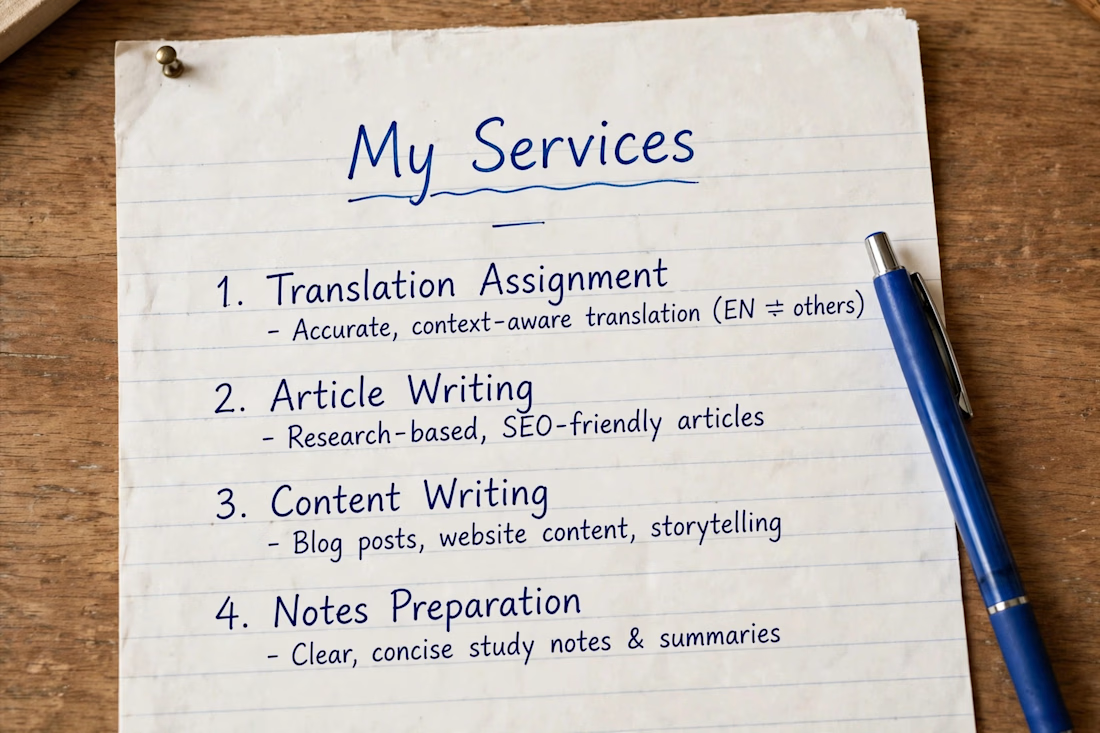
content writing Translation assignment article writing hand written YouTube channel script and story



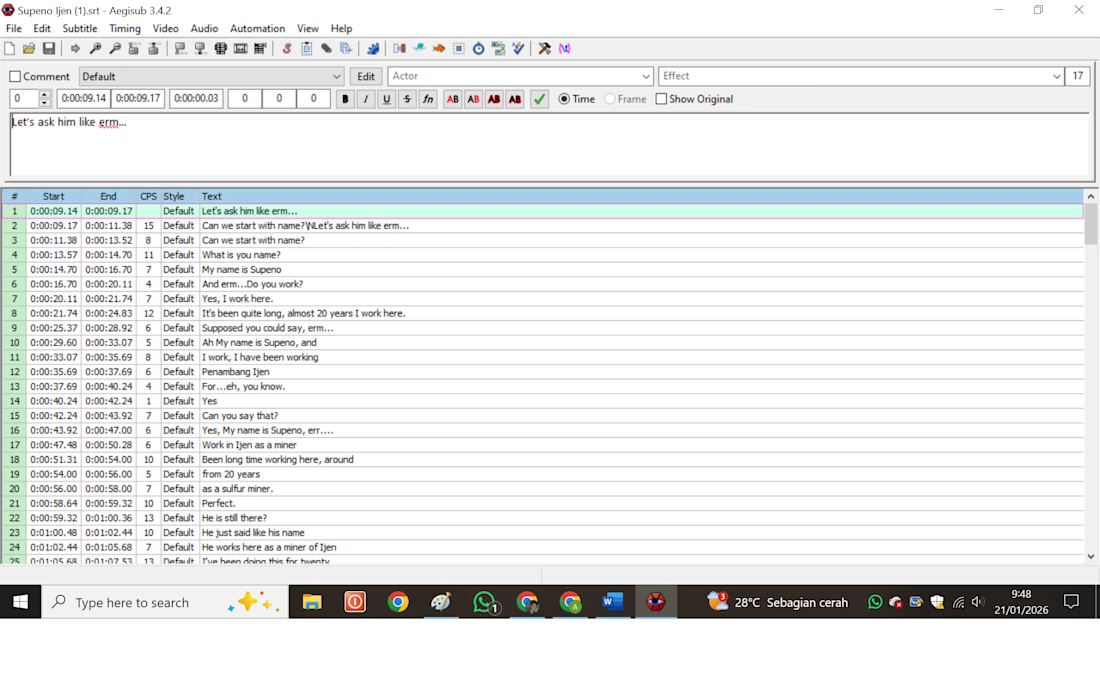
Can you please tell me the details of the work I'm interested in typing work

Title:
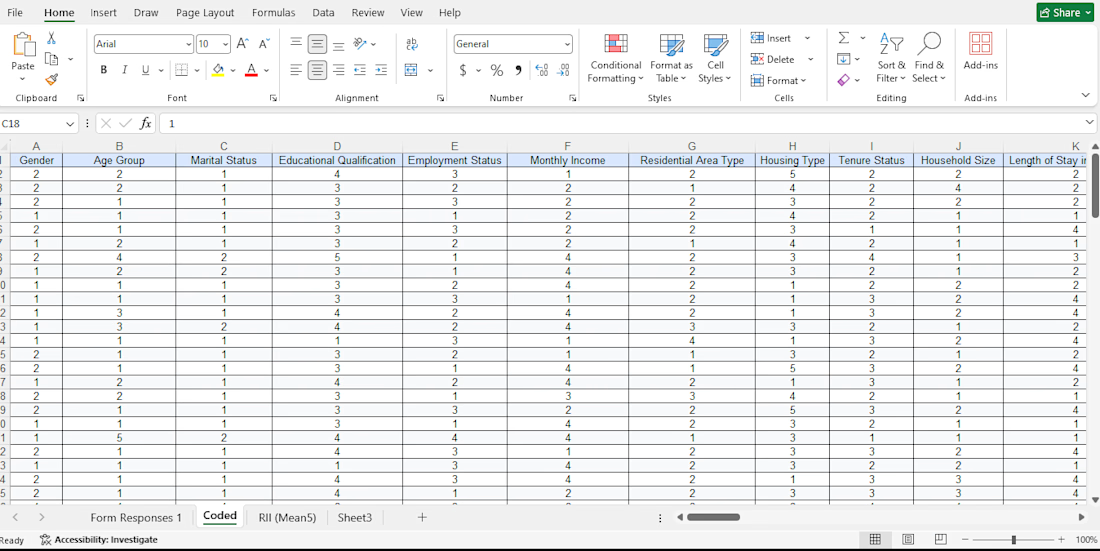
Research Data Coding & Analysis Preparation for SPSS – Survey Data
Description:
Challenge: Client had raw survey responses (Form Responses 1) that needed to be coded numerically for SPSS analysis.
What I did:
Transformed raw qualitative survey responses into coded quantitative data (1,2,3,4)
Coded variables: Gender, Age Group, Marital Status, Education, Employment, Income, Housing, etc.
Created structured sheets: Form Responses 1 (raw) → Coded (clean) → RII Mean Calculation
Ensured consistency, no missing values, and SPSS-ready format
Prepared data for statistical analysis (Relative Importance Index)
Result: Delivered a clean, coded dataset ready for immediate SPSS import and analysis. Client was able to run their project analysis without extra cleaning.
Note: Sample structure shown only. Actual survey content and respondent details are confidential.



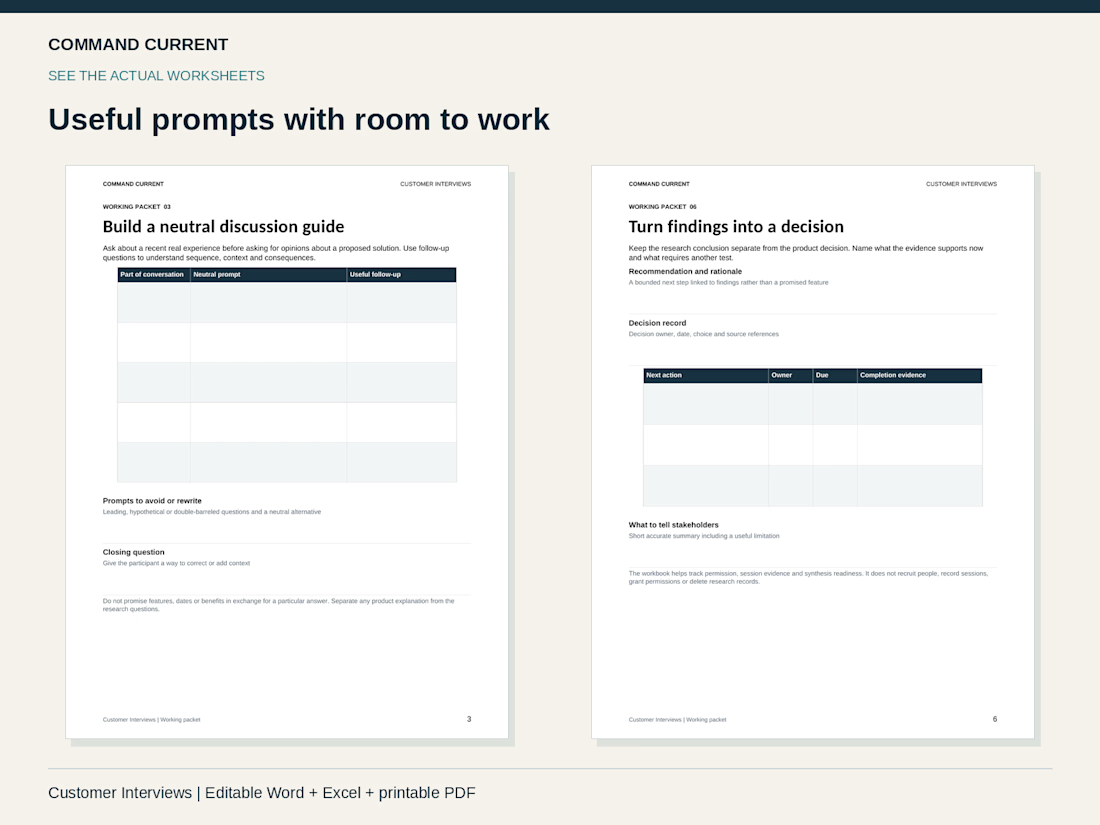
A useful customer interview question asks for a story you can examine.
Try opening with: “Tell me about the last time you handed a project over to someone else.”
Then follow the sequence:
• What triggered the handoff?
• What did you do next, and what did you use?
• Where did you pause or need help?
• How did you know the handoff was finished?
Keep your proposed solution out of those questions. When reviewing the notes, separate what happened from your interpretation, and keep a source reference for each finding. Use quotation marks only for wording captured accurately.
Before recommending a change, look for a counterexample and write down what still needs testing. A few interviews can explain experiences; they don't establish how common a behavior is across all customers.
These are actual discussion-guide and decision-record pages from the Customer Interview Research Kit. The digital kit includes a six-page editable Word packet, a 40-session Excel register, printable PDFs, a fictional completed example and a Quick Start.
For research with adult customers, using your organization's approved participation and recording process.
Explore the kit: https://contra.com/products/6GFUQTe7-customer-interview-research-kit