The network for creativity
Join 1.25M professional creatives like you
Connect with clients, get discovered, and run your business 100% commission-free
Creatives on Contra have earned over $150M and we are just getting started
Back to feedPost

Design-to-code handoff becomes fragile when the mapping disappears between the component and the browser.
For this concept workflow, I kept the implementation evidence connected from source to output:
— the component anatomy stays tied to semantic HTML
— the 24 px spacing token becomes --space-6: 24px
— the primary CTA remains a real <a href="#scope"> link
— the same structure is checked at 1440, 1024, and 390 px
The signature element is the mapping spine. It links each Figma decision to its DOM, CSS, and responsive proof, making the handoff inspectable instead of presenting a generic “design turns into code” montage.
This is self-initiated concept work using synthetic content, not a client result. It demonstrates the evidence trail I use when translating a supplied Figma landing page into responsive HTML and CSS.


The network for creativity
Join 1.25M professional creatives like you
Connect with clients, get discovered, and run your business 100% commission-free
Creatives on Contra have earned over $150M and we are just getting started
Trending
retrofuturism
Share your favorite designs from the past exploring the distant future. Or your own take on the aesthetic 🚀
halftone
Dots. Texture. Grain. Let's see your designs using the halftone technique.

Midjourney
Creatives are showing off what they're making with Midjourney.
colorgrade
Video editors sound off: How do you enhance the mood of your video in color grading?


Related posts

A recent project we shipped for Arcway, Inc — a real estate software company in the US. Check it out
We partnered on the Framer implementation, turning the design into a fast, polished, and scalable website.
What we focused on:
💫 Custom animations & interactions
▶️ Media & performance optimization
💻 Scalable component system for easy editing
Built in Framer · March–April 2026
Live site: https://arcway.ai/


Congrats on shipping, the final build looks super polished! What was the most challenging part of the project to bring across the finish line?

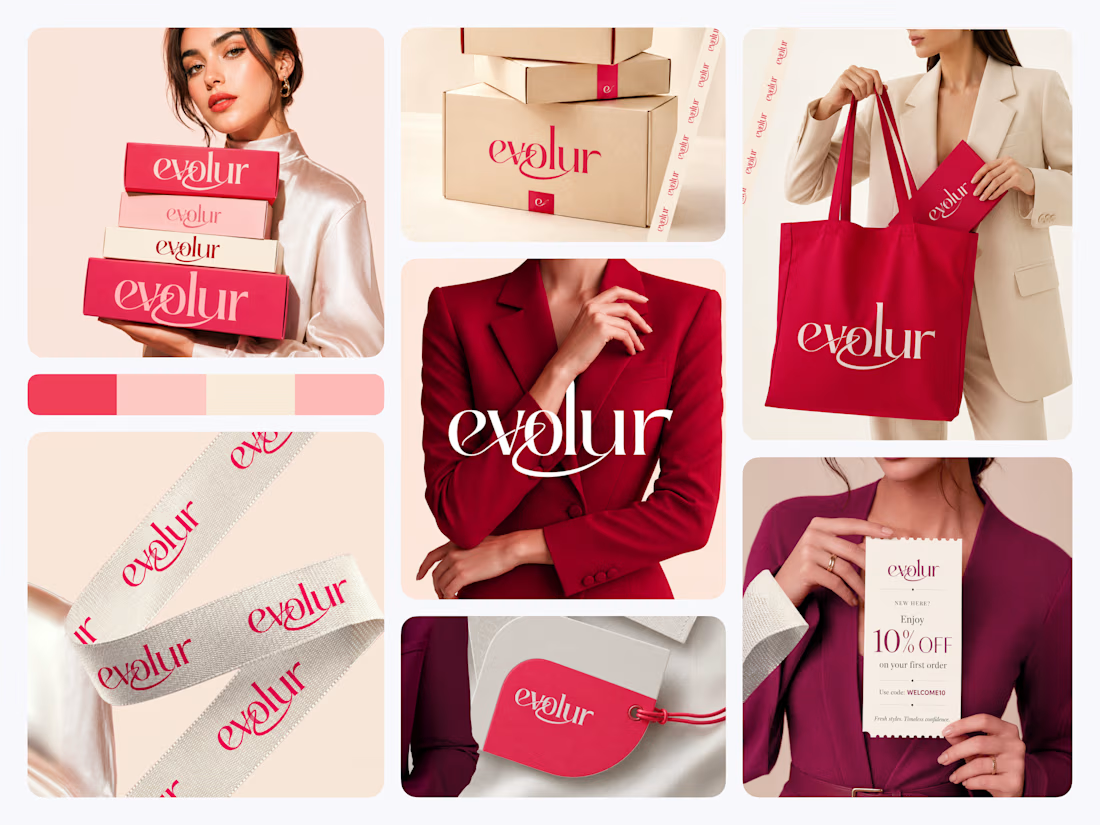
When building a fashion brand identity, most designers start with the logo.
We usually do too. It feels like the natural anchor point.
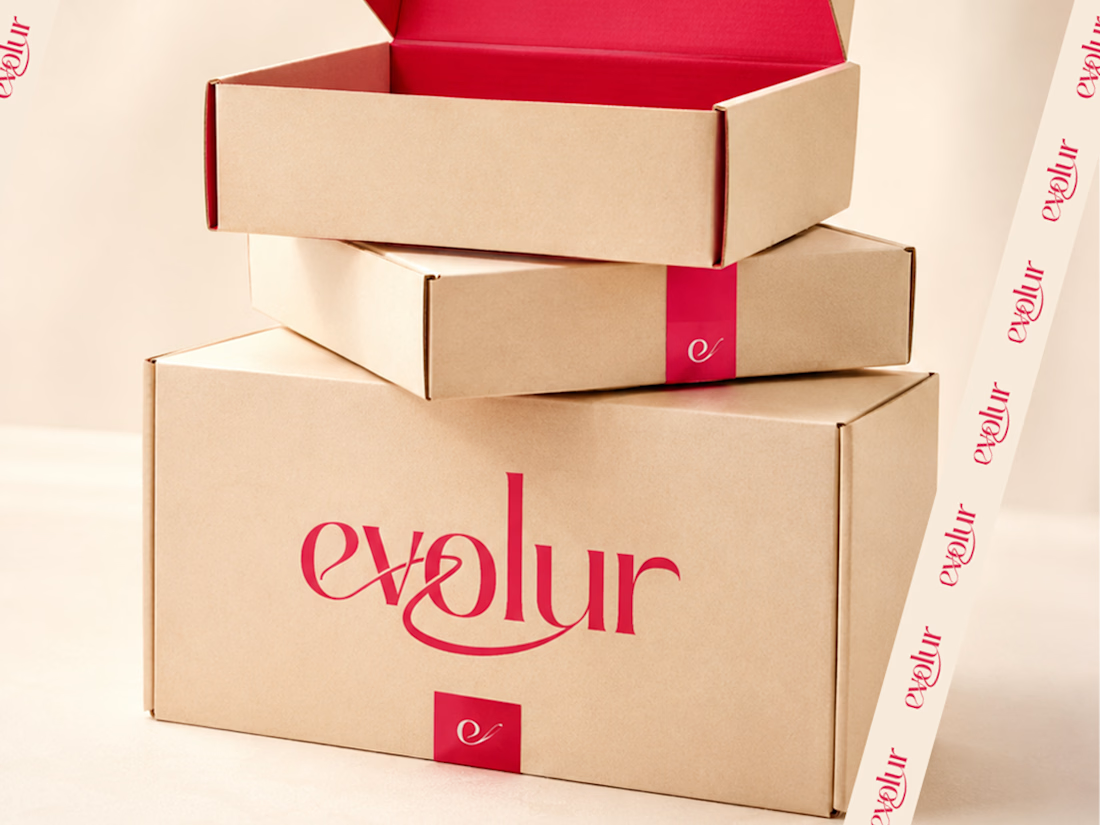
But when we worked on Evolur, we started with the touchpoint that gets touched last the packaging.
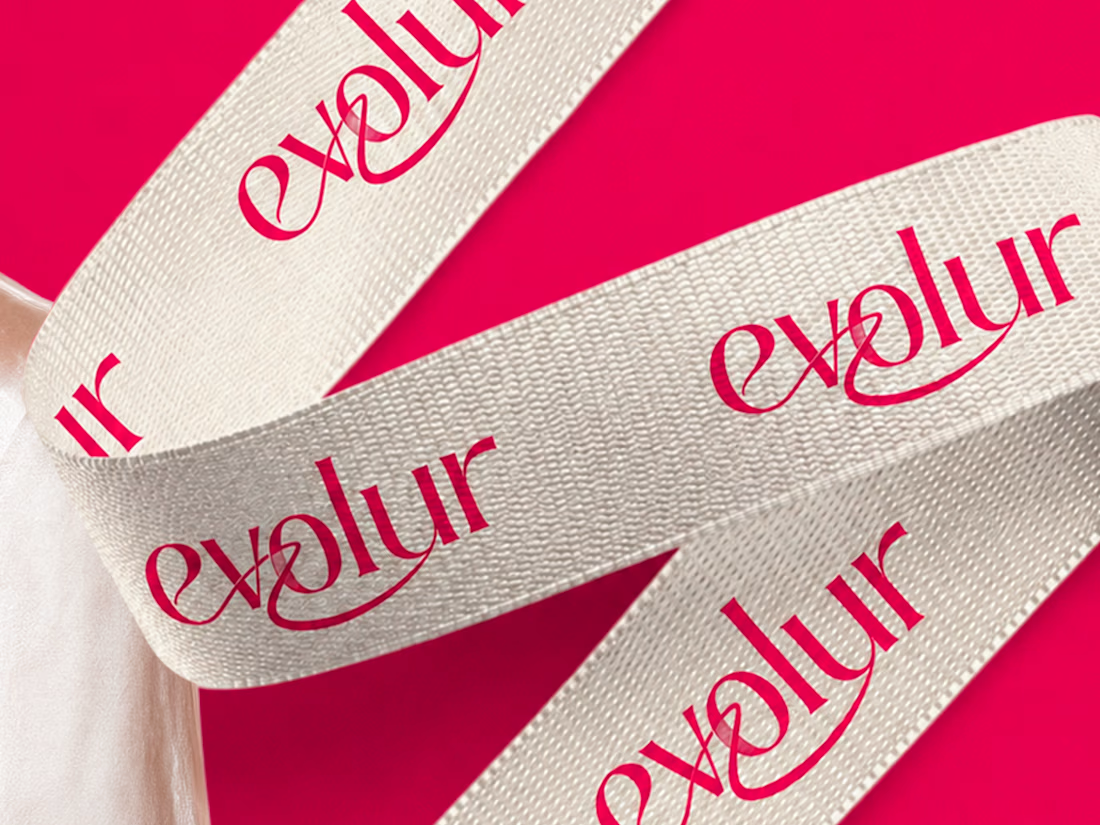
Because for a fashion label, the unboxing moment is the brand. The first impression doesn't happen on Instagram. It happens when someone pulls a ribbon-wrapped box out of a delivery bag.
So we built the identity outward from there. The wordmark came from asking what needed to look right on a swing tag at 2cm and on a tote bag at full size simultaneously. The crimson and blush palette came from asking what felt confident on kraft shipping boxes without needing a campaign photo around it.
This is what fashion branding looks like when every detail is treated like the hero shot.
What we noticed was that designing for physical touchpoints first made every digital decision easier. The hierarchy was already solved. The personality was already clear.
"Fresh styles. Timeless confidence." The brand found its own tagline by the end.
Does this feel like a brand worth wearing? 👇


Amazing branding

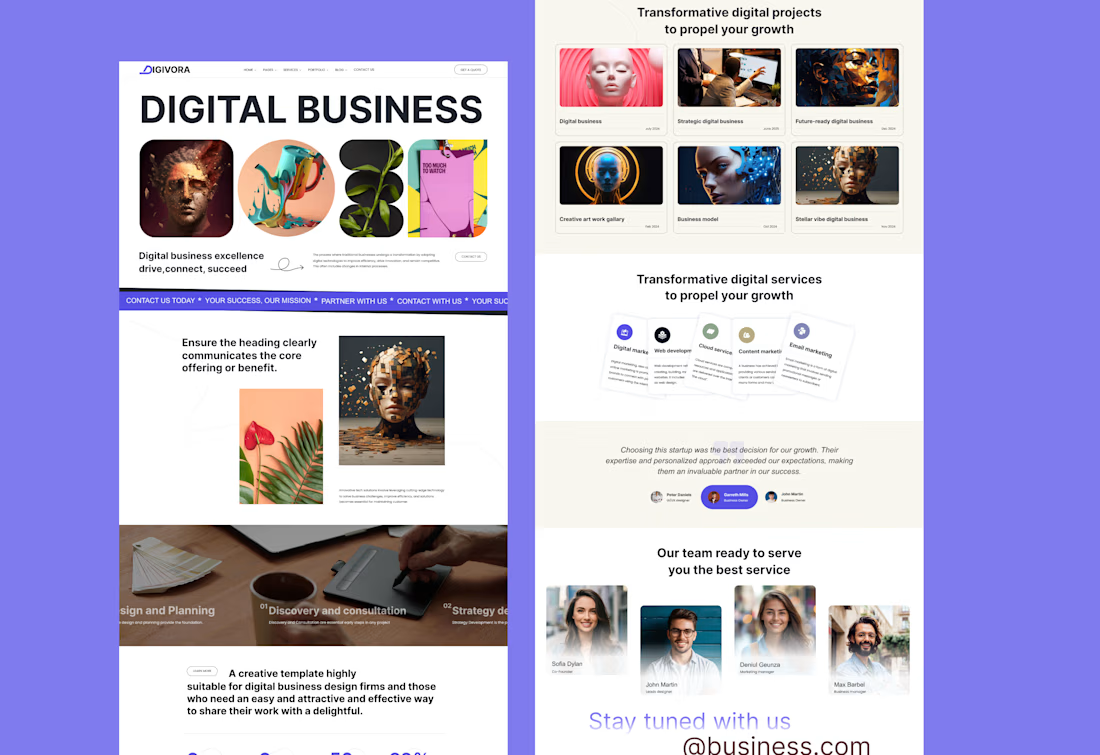
Digital Business Website UI/UX Design. 👇
A modern, bold, and visually engaging website concept designed for a digital business. The layout combines strong typography, creative visuals, structured content sections, service highlights, project showcases, team profiles, testimonials, and clear CTAs to create a professional and conversion-focused experience.
The design focuses on clean UI, visual storytelling, strong hierarchy, and a contemporary digital aesthetic—making the website both engaging and easy to navigate.