The network for creativity
Join 1.25M professional creatives like you
Connect with clients, get discovered, and run your business 100% commission-free
Creatives on Contra have earned over $150M and we are just getting started
Back to feedPost
SEO Dissidence: Is H1 really that important? 🧐
After 17+ years in maintenance, I've seen countless SEO briefs demanding a visible H1 on every homepage. But is it a law or just a myth?
I decided to check how the "big players" handle it. The results might surprise you:
🚫 Amazon & Bloomberg: H1 is completely missing.
🕵️ Apple & NYT: H1 is hidden in a 1px element.
🏗️ eBay: The logo is wrapped in H1 (hello, 2008!).
🌐 Google's Blog: H1 is nowhere to be found.
The Lesson? 💡
Optimization isn't about blindly following rules. If the world’s biggest platforms ignore "established" SEO beliefs for the sake of UX, maybe we should too.
Read my full investigation on Medium https://tovstonos.medium.com/...
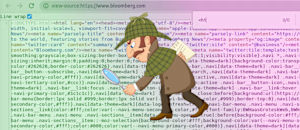
tovstonos.medium.com
SEO Dissidence. Is H1 really that important on the Homepage?
Over the past 12 years freelancing as a website maintenance specialist, I’ve collaborated with various SEO teams. Working with them always…

I'm curious: if you’re a designer, how often do you have to fight for your UI because of rigid SEO briefs? 🥊 And if you're an SEO, do you think UX should ever take a back seat for the sake of a perfect H1 hierarchy? Let’s find a middle ground!
The network for creativity
Join 1.25M professional creatives like you
Connect with clients, get discovered, and run your business 100% commission-free
Creatives on Contra have earned over $150M and we are just getting started





Related posts


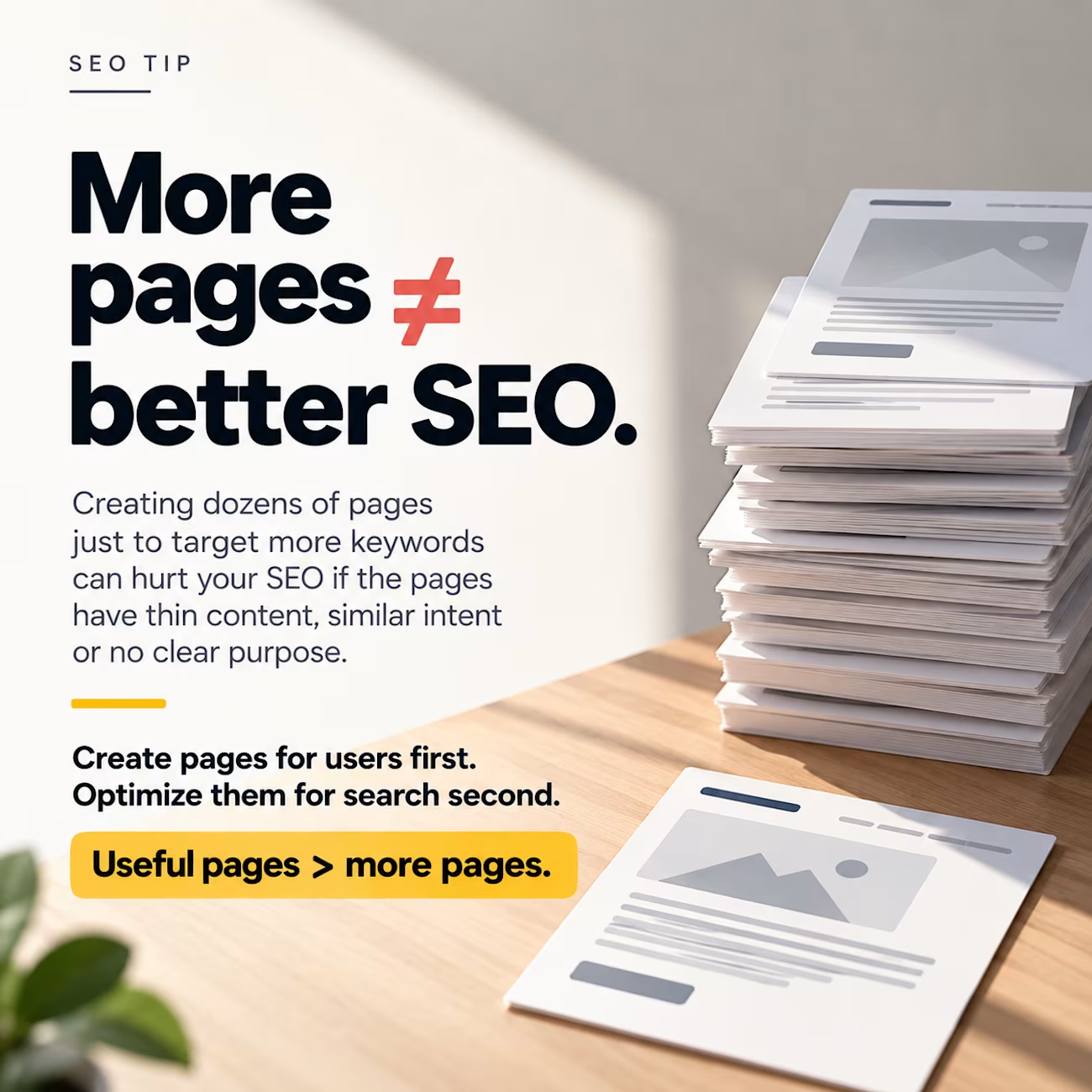
More pages ≠ better SEO.
A common mistake is creating dozens of pages just to target more keywords.
But if those pages have:
– Thin content
– Similar intent
– Little unique value
– No clear purpose
They can make your site harder to manage and harder for search engines to understand.
Before creating a new page, ask:
“Does this deserve its own page?”
Create pages for users first.
Optimize them for search second.
Useful pages > more pages.
#seo #seotips #technicalseo #wordpress #webdevelopment #contra


Absolutely agree. SEO isn’t about publishing more pages—it’s about creating genuinely useful pages that satisfy search intent and provide unique value. Quality and purpose should always come before quantity.

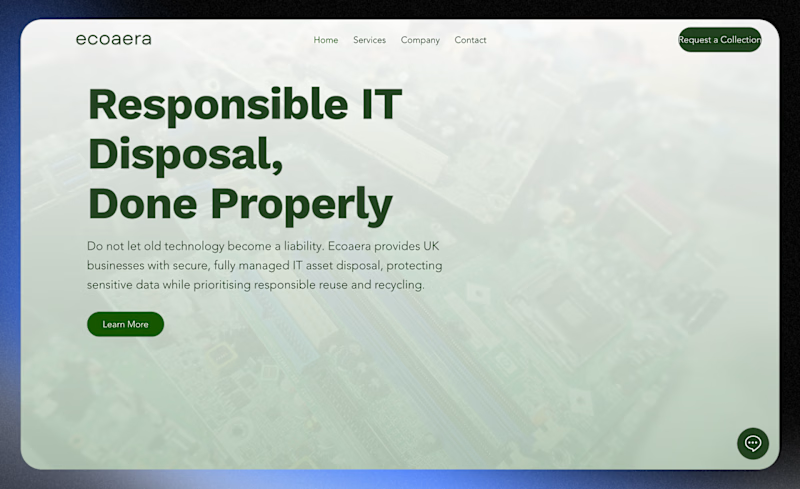
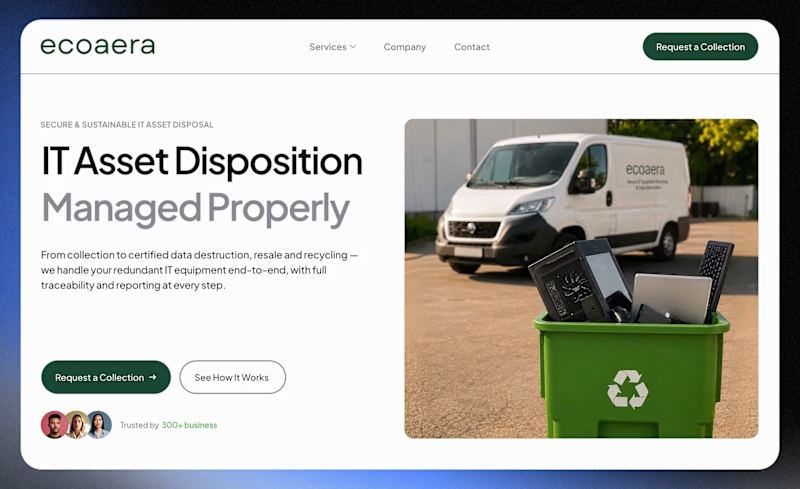
Which design feels more professional and trustworthy for a B2B company?
A recent website redesign for Ecoaera, a UK-based IT asset disposal company. We transformed their existing site into a modern B2B website with improved UX, stronger service pages, and SEO + AI optimisation.

1 voted
9%
10 voted
91%
11 votes
Closed


Looks great !


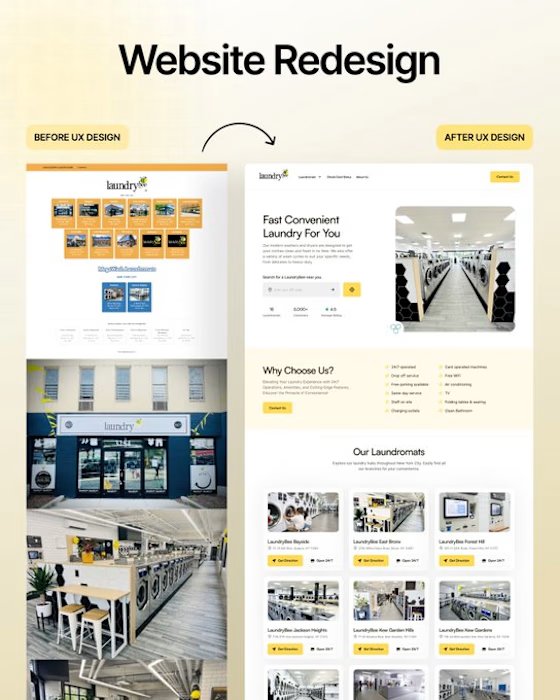
People don't read the homepage.
They scan it for 3 seconds and leave.
So we deleted 70% of Laundrybee’s homepage content.
• Less copy.
• Conversion-focused headline.
• Visible hero section.
• One clear CTA.
• Double the white space.
• Showcased their offers and USP.
Result?
Visitors don't leave confused.
They get what they want and come back.
What's the one thing you fix first on a homepage redesign?



❤️❤️❤️❤️