The network for creativity
Join 1.25M professional creatives like you
Connect with clients, get discovered, and run your business 100% commission-free
Creatives on Contra have earned over $150M and we are just getting started
Back to feedPost

SIM Continuity Guard - AI-powered pre-issuance risk check
The problem: When a telecom operator reassigns a phone number, the digital world doesn't always deactivate in sync - banking apps, government ID platforms, messaging apps, and other services often stay linked to the previous owner long after the line changes hands. The new subscriber can end up receiving someone else's one-time passcodes and notifications, while the previous owner is left exposed to account-takeover risk. This is a documented, quantified problem industry-wide (a Princeton University study found 66% of recycled numbers retain active third-party links), and it's sharper in markets where a phone number doubles as an identity anchor for banking and government services.
What I did: I picked stc, Saudi Arabia's largest telecom operator, as a grounding case and worked it end-to-end the way an AI PM would scope a real initiative:
Sized the opportunity using stc's public subscriber figures (30.3M) combined with industry benchmark rates, explicitly labeling every assumption since real reassignment data isn't public
Mapped the affected users - new subscriber, previous owner, retail agent, and the trust & safety team - and what each needs from a fix
Designed an AI solution: a real-time "SIM Continuity Risk Score" that combines dormancy window, mobile number portability status, identity-match confidence, and request velocity into an explainable 0–100 score, routing each request to auto-approval, step-up verification, or manual review
Defined the data and modeling approach (rules-based MVP → gradient-boosted classifier), with explainability treated as a hard requirement rather than a nice-to-have, since a false positive here delays a real customer's access to connectivity
Named the trade-offs an AI PM actually owns on this kind of problem: fraud reduction vs. added friction, model accuracy vs. fairness across customer segments, and how to design feedback loops so the system improves over time
What I built: Beyond the written case study, I built a working interactive prototype of the risk-scoring logic - adjust the input signals and watch the score, risk band, and recommended action update live with explainable reason codes, the same way the model's output would need to justify itself to a retail agent and a customer.
This is a self-directed portfolio case study, not a commissioned stc engagement - built to demonstrate how I'd approach a real AI product problem from problem framing through to a tangible prototype.
The network for creativity
Join 1.25M professional creatives like you
Connect with clients, get discovered, and run your business 100% commission-free
Creatives on Contra have earned over $150M and we are just getting started
Trending
retrofuturism
Share your favorite designs from the past exploring the distant future. Or your own take on the aesthetic 🚀
halftone
Dots. Texture. Grain. Let's see your designs using the halftone technique.

Midjourney
Creatives are showing off what they're making with Midjourney.
colorgrade
Video editors sound off: How do you enhance the mood of your video in color grading?





Related posts

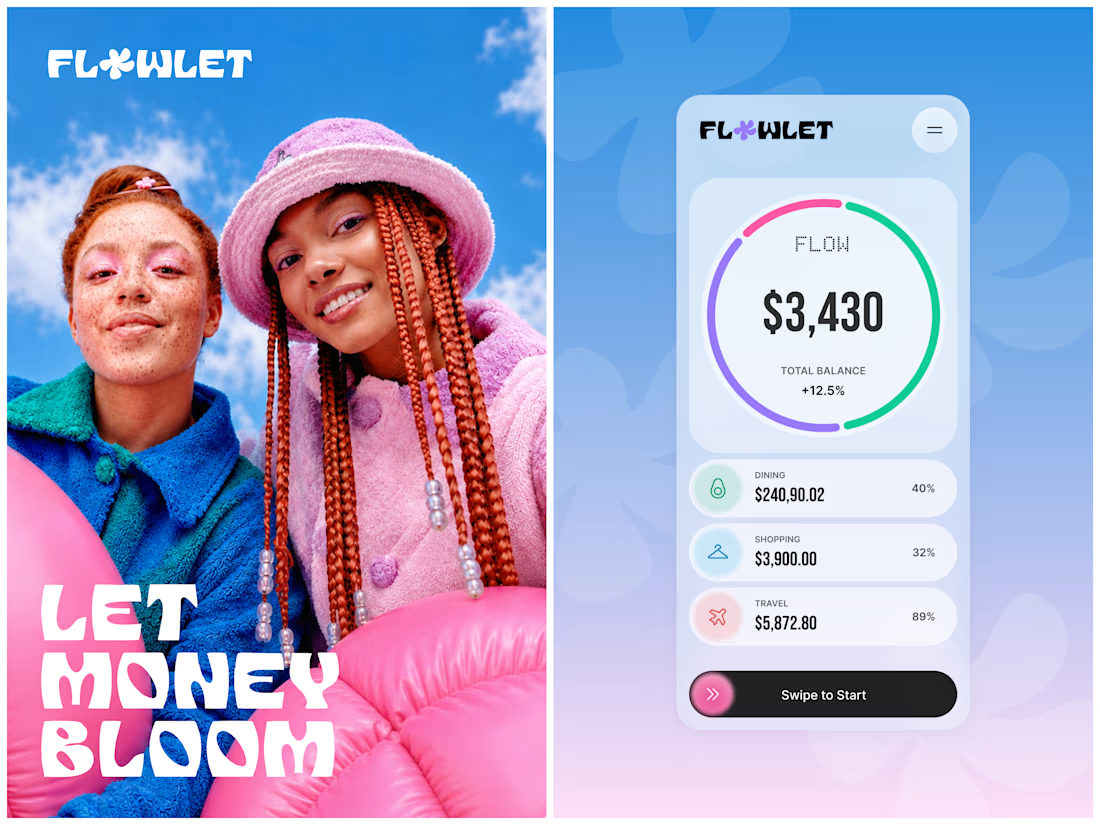
Flowlet is a real-time AI finance assistant mobile app designed to make financial management feel less complex and more actionable.
The product combines everyday banking, expense tracking, smart budgeting guidance, transfers, and financial insights in one mobile experience. The goal was to create a beginner-friendly neobank product that communicates trust and clarity while feeling more energetic and approachable than traditional banking apps.
The UX uses a dashboard-first structure, clear financial hierarchy, modular cards, visual charts, and simplified transfer flows. AI Coach adds conversational guidance, helping users understand spending, plan ahead, and make better financial decisions.
The visual system combines bold typography, soft gradients, vibrant photography, playful UI details, and colorful financial indicators to create a distinctive fintech identity.


Looks sick 🔥


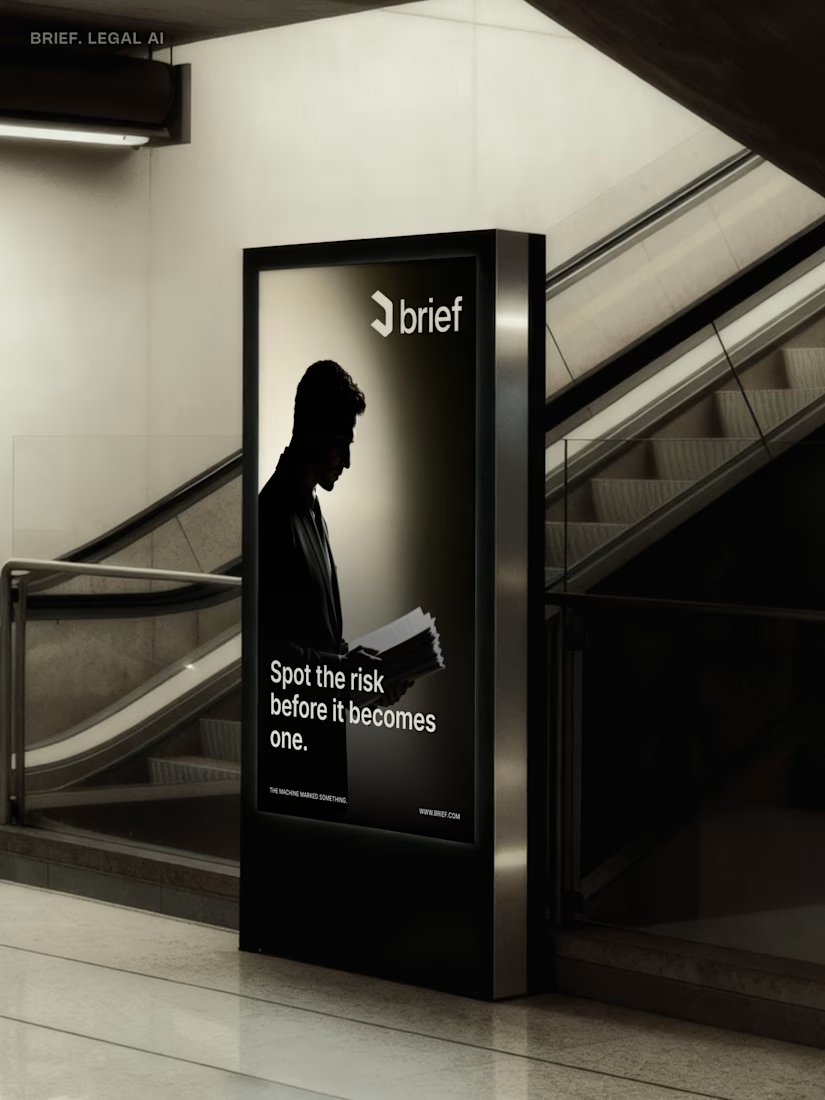
Brief - Legal AI branding.
Started with one idea: trust before excitement.
A folded document as the symbol, everything else follows from there.



Clean work!

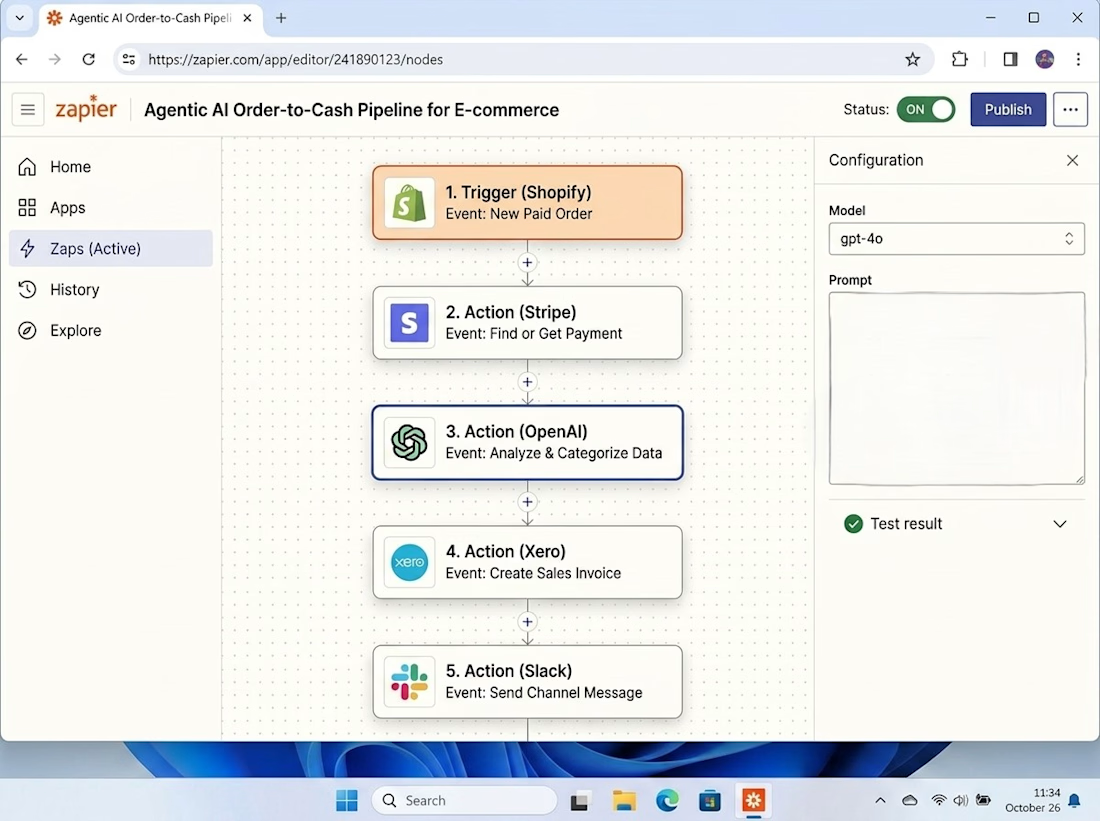
Agentic AI Order-to-Cash Pipeline for E-Commerce
An end-to-end intelligent automation architecture designed to bridge e-commerce sales, payment processing, cognitive AI data enrichment, automated bookkeeping, and team notifications. This workflow transforms rigid, manual financial operations into a self-managing, responsive pipeline.
Trigger (Shopify): Captures incoming e-commerce orders instantly upon successful customer payment.
Data Enrichment (Stripe): Retrieves detailed payment gateway metadata, customer risk scores, and transaction status for enhanced security validation.
AI Reasoning Engine (OpenAI): Acts as the cognitive core to analyze unstructured order data, dynamically categorize products into appropriate accounting ledger codes, and flag anomalies.
Financial Settlement (Xero): Automatically provisions customer profiles and generates structured sales invoices within the accounting platform.
Operational Loop (Slack): Dispatches real-time, context-rich notifications and alerts directly to internal finance and operations channels.
'Prompt configuration hidden for client confidentiality



Amazing work