The network for creativity
Join 1.25M professional creatives like you
Connect with clients, get discovered, and run your business 100% commission-free
Creatives on Contra have earned over $150M and we are just getting started
Back to feedPost

What I built
Dunbar Home Works — a booking site for a one-man handyman business in Portland, Maine, Marcus Dunbar. It has two sides:
1. Customer side (the public site)
A visitor lands on the homepage, sees Marcus's services and prices, and books a real open time slot in four steps: service → time → details → done.
The slots aren't fake — they're calculated from his actual working hours (7:30–4 weekdays, Fridays end at 2, Saturday mornings are estimate-only visits), drive-time buffers between jobs, and days off. Storm callouts can even be booked same-day.
Right after booking, the customer gets their own private link where they can confirm, reschedule, or cancel — no phone call needed.
Not ready to book? A simple form captures their name and number as a lead, and the system queues a friendly follow-up text automatically.
2. Owner side (Marcus's dashboard, sign-in required)
One screen shows today's route, upcoming jobs, an outbox of every text queued or sent, and all leads.
A "check before you drive" panel flags risky bookings — like the customer with two prior no-shows who hasn't confirmed — before Marcus loads the truck. One tap sends a nudge with a confirm link.
Confirmations, 24-hour and 2-hour reminders, and post-job follow-ups are queued automatically the instant a booking is created. Rescheduling a job slides all its reminders onto the new date by itself.
Marking someone a no-show bumps their strike count and queues a friendly re-booking text; cancelling a job kills its queued reminders.
Why
The brief was to turn "can I book with you?" into "you're booked" with as little owner effort as possible — so I attacked both places a solo tradesman loses work:
The front door: most competitors make customers call and leave a voicemail. Here, customers self-book into real openings, which kills the phone tag entirely.
The follow-through: no-shows and silent leads are lost money. The system confirms, reminds, flags repeat no-shows before he drives, and chases leads on its own — so Marcus's daily effort is a 60-second glance and a couple of taps.
Everything runs on Lovable Cloud (database + auth), and the quirky details — the no-show strikes, Saturday estimate-only mornings, drive-time gaps — are there to make it feel like a real client's business, not a template.
The network for creativity
Join 1.25M professional creatives like you
Connect with clients, get discovered, and run your business 100% commission-free
Creatives on Contra have earned over $150M and we are just getting started




Related posts

🚀 Joining the #LovableChallenge
I’m building something to solve a real small-business problem: turning customer inquiries into confirmed bookings with less manual work.
Let’s build. 🔥

We're so excited to announce the Lovable Challenge is going live with $25k in prizes!
Check out the guidelines here to get started ✨


Quick question regarding the challenge setup and partner verification:
Promo Code Delivery: I joined the challenge earlier today, but I haven't received the confirmation email containing the unique Lovable Pro discount code yet (checked Spam/Promotions as well). Is there an automated delay, or can this be verified on my account?
Partner Program Approval Timeline: The Lovable Partner Program application mentions a review period of up to ~5 business days. Can we proceed with building and submitting the project while the partner application is pending, with certification confirmed prior to final judging? Looking forward to diving into the build. Thanks for the clarification!
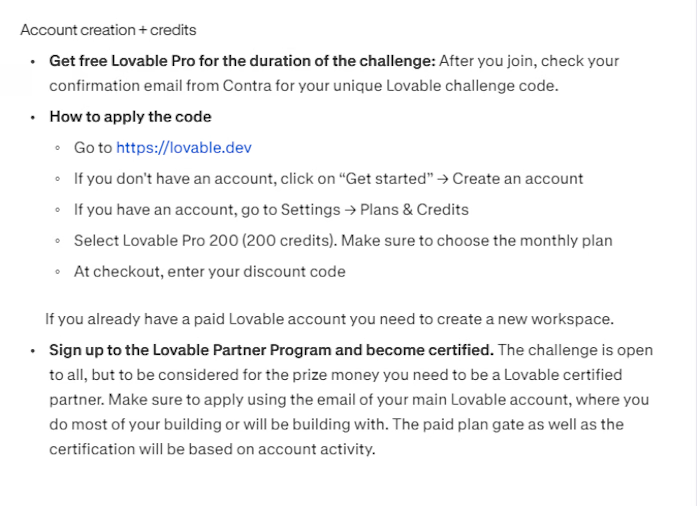


Hey all - Dylan from the Contra team here. @Štefan Bohumel it looks like on our end the email was sent and was opened. I'll also be looking into the confirmation emails for the remaining folks here. It may take up to 24 hours to receive your confirmation email