The network for creativity
Join 1.25M professional creatives like you
Connect with clients, get discovered, and run your business 100% commission-free
Creatives on Contra have earned over $150M and we are just getting started
Back to feedPost

Nobody has ever left a website thinking:
“You know what that needed?”
“Another paragraph.”
Yet that’s usually the first thing founders add when enquiries slow down.
Not because they’re bad at marketing.
Because they’re trying to help.
“If I explain it better…”
“If I tell them more…”
“Maybe I need to mention this certification as well.”
Seems logical.
Then another section appears.
A new framework gets squeezed in.
Somewhere a second call to action pops up.
Nothing disappears.
Everything survives.
Eventually the homepage turns into a storage unit.
The strange part?
Visitors aren’t leaving because they don’t have enough information.
Most of the time they’re leaving because they haven’t found a reason to care yet.
Those are completely different problems.
I’ve finished reading websites that explained absolutely everything.
Couldn’t tell you what the business actually wanted me to do.
Funny how that works.
More information feels like confidence to the founder.
Less confusion feels like confidence to the visitor.
That’s usually where I start when I’m auditing a website.
The network for creativity
Join 1.25M professional creatives like you
Connect with clients, get discovered, and run your business 100% commission-free
Creatives on Contra have earned over $150M and we are just getting started

Challenges
View all


Related posts


Imagine two businesses offering the same service.
Both have websites.
Both look professional.
But one gives visitors a reason to trust the business, while the other simply lists its services.
What makes the difference?
Sometimes, it comes down to the details.
Clear information about the business.
Real project examples.
Testimonials from satisfied clients.
A simple explanation of how the service works.
And an easy way to get in touch.
These details may seem small, but they help potential customers feel more confident about who they're dealing with.
Think about it.
When someone discovers your business for the first time, they don't have the experience of working with you yet.
They're looking for reasons to believe you can deliver what you promise.
Your website can help provide that reassurance.
A professional design may create a good first impression, but trust gives people a reason to take the next step.
So here's a question for business owners, startups, and organizations:
If a potential customer visited your website today, what would they find that helps them trust you?
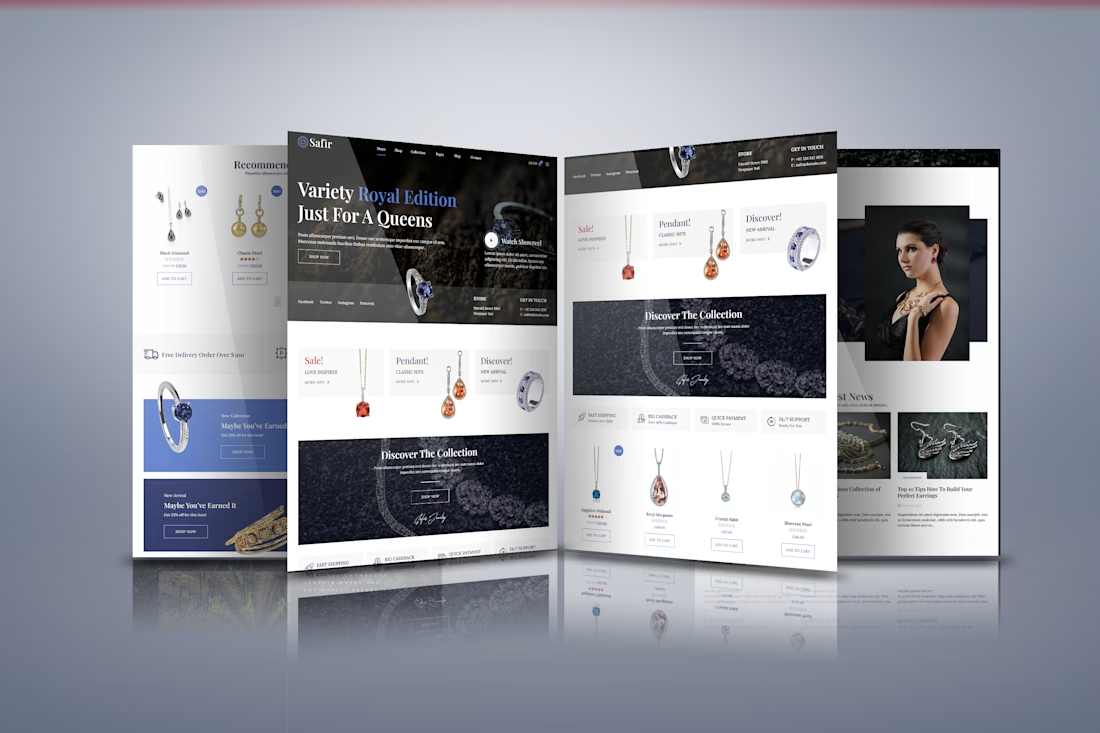
I am Michael Adetayo, a WordPress Website Designer and Elementor Expert who helps startups, organizations, and service-based businesses build and strengthen their online presence through website design, redesign, development, and optimization.
I create clear, responsive, and user-friendly websites that communicate what a business does, build credibility, improve the user experience, and guide visitors to take action. My goal is to help businesses turn their websites into valuable tools that support growth.

Here's something I wish more business owners knew:
Your website is part of your sales team.
It works when you're asleep.
It works when you're busy.
It works when you're on another call.
It answers questions.
It builds trust.
It explains your offer.
It directs people toward the next step.
So if your website is confusing...
You're essentially asking a bad salesperson to represent your business 24/7.

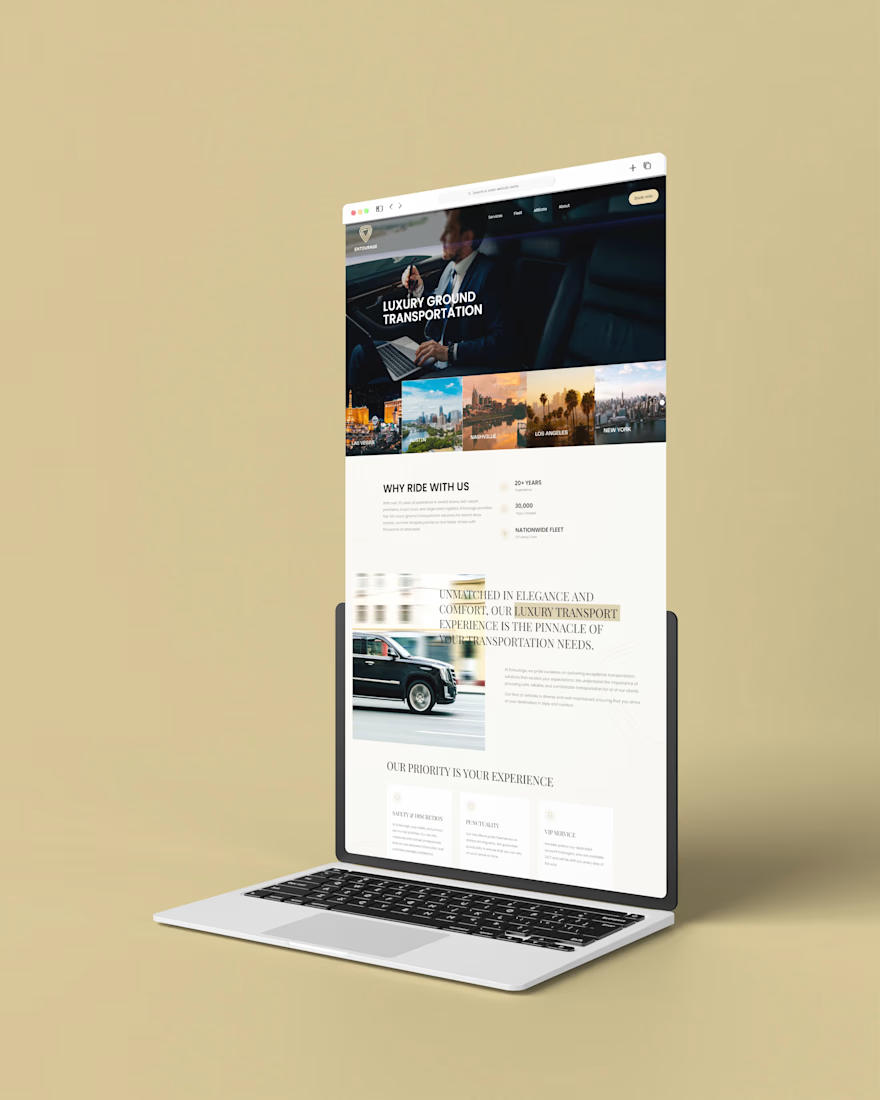

🚀 Your next big idea deserves a better website.