The network for creativity
Join 1.25M professional creatives like you
Connect with clients, get discovered, and run your business 100% commission-free
Creatives on Contra have earned over $150M and we are just getting started
Back to feedPost

Cypress had the title expertise. The challenge was turning investor interest into booked opportunities without creating more administrative work for the team.
We built Close With Cypress, an end-to-end customer acquisition and closing workflow for Cypress Ascendant Services.
Instead of another generic contact form or scheduler, we created three purpose-built customer journeys: Explore Cypress for prospects, Onboard My Business for new clients, and Start a Title Request for existing clients ready to close.
The experience qualifies prospects before they book, routes them to the appropriate team member, and works around the calendars Cypress already uses. We connected Jeremy's real Google Calendar so existing commitments automatically remove unavailable appointment times, while confirmed Cypress appointments are written directly back to his calendar.
At the same time, qualified prospect information enters the Cypress Admin dashboard, creating visibility across the full journey:
Inquiry → Qualified → Booked → Met → Onboarded → Title Request
We also built outcome tracking and no-show recovery, team-level availability controls, automation history, analytics, and a guided Demo Mode so the Cypress team can understand the system without maintaining another operational tool manually.
Google Calendar and transactional email are live. SMS is prepared and awaiting Twilio A2P activation.
The result: a better front door for Cypress, less administrative work for the team, and fewer opportunities falling through the cracks.
Close With Cypress. Close more deals. Chase fewer emails.
The network for creativity
Join 1.25M professional creatives like you
Connect with clients, get discovered, and run your business 100% commission-free
Creatives on Contra have earned over $150M and we are just getting started



Related posts

Most small businesses lose clients in the gap between "new request" and "someone replies".
This year I shipped 5 projects that close that gap.
→ n8n AI agents that score every lead and reply with a personalised email in seconds
→ MedAssist AI, a SaaS that lets patients book and get answers 24/7
→ Kaizen Kyoto Capital, a crypto SaaS live with Paddle billing, 2FA and 43 automated tests
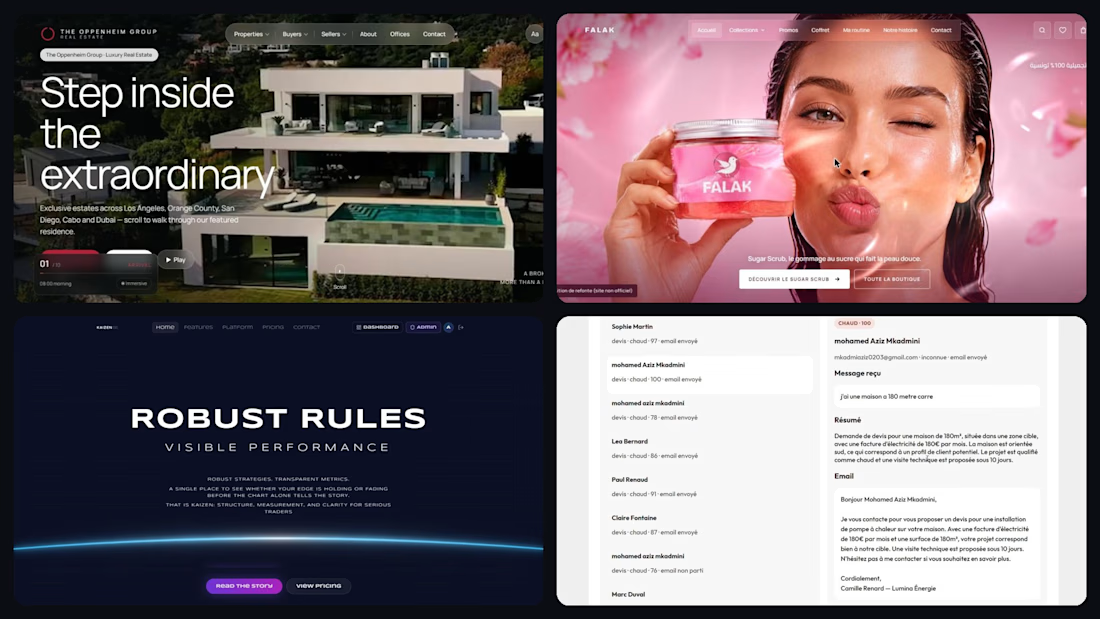
→ Two premium redesigns (luxury real estate in 3D, a cosmetics brand) with before/after
I'm a full-stack & AI automation developer, available now for websites, SaaS MVPs and n8n automations. French, English, Arabic. I reply within 24h.
Got a process that eats your team's time? Send me a message and I'll map your first automation for free.

Good work, keep going

Building a Voice AI Assistant That Turns Phone Calls Into Thoughtful Follow‑Through
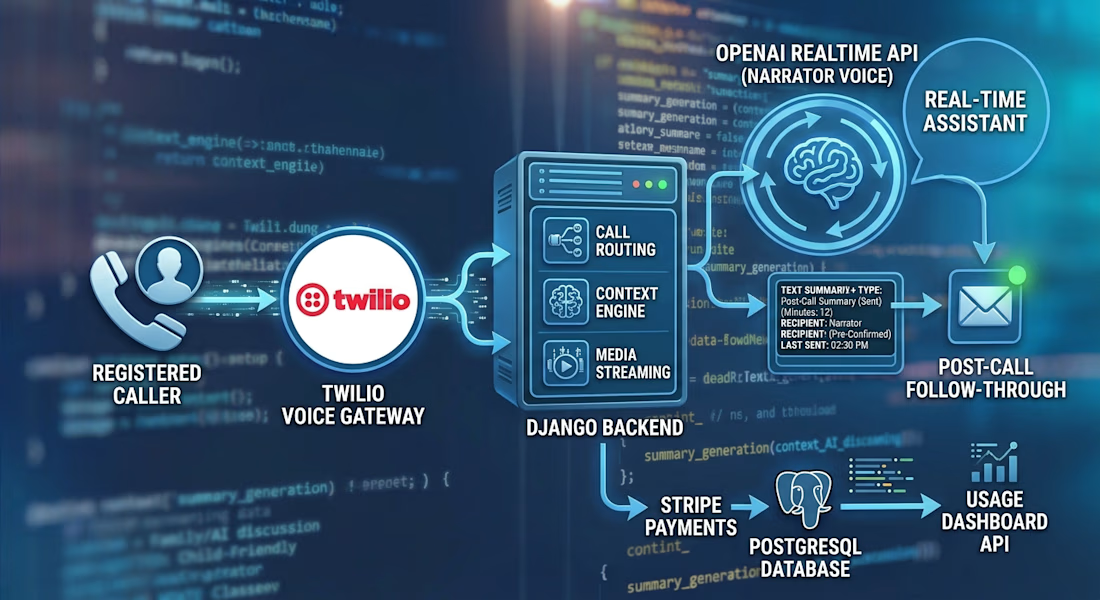
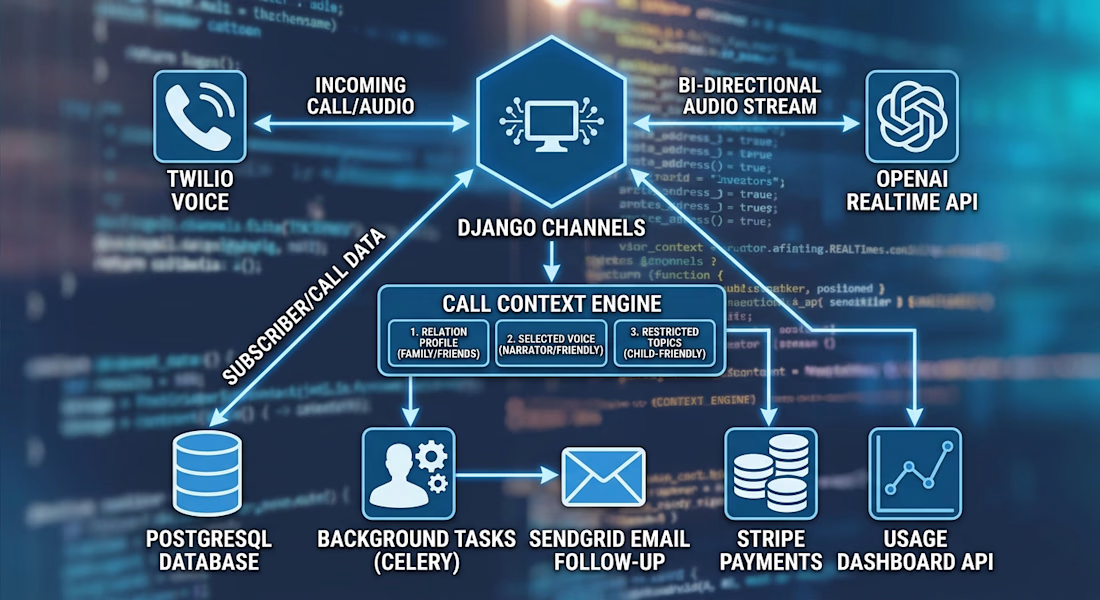
I built a Django backend for a family-focused AI phone assistant. A registered caller connects through Twilio, and Django Channels streams the call to an OpenAI Realtime session for a natural, two-way conversation.
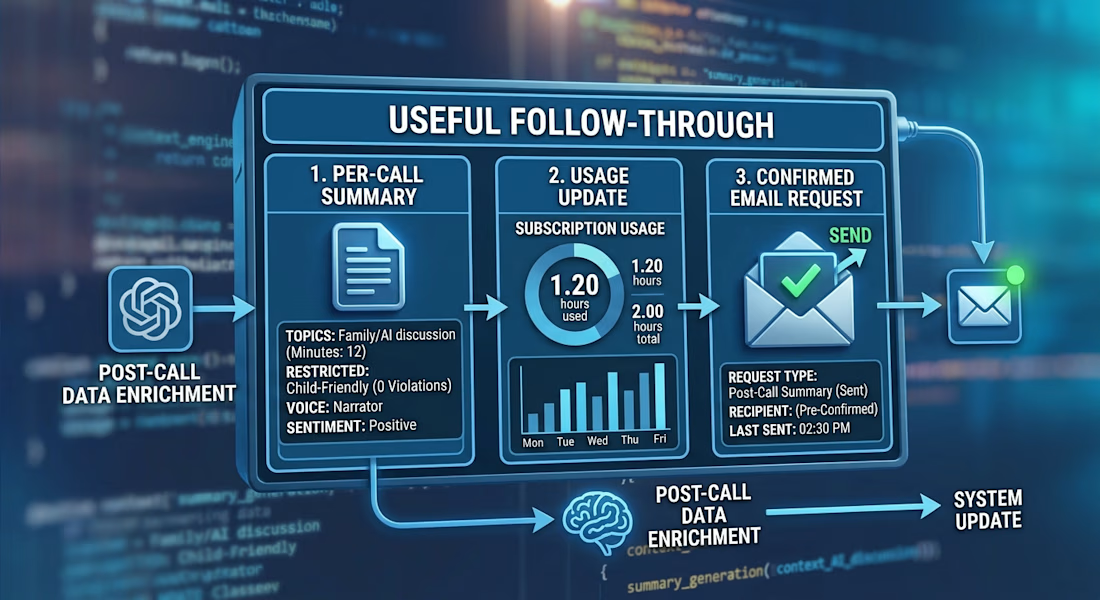
The backend adds caller-specific context, selected voices, subscription minute limits, and interruption handling. After the call, background tasks generate a separate summary. A follow-up email is sent only when requested and the recipient is confirmed.
I also built APIs for managing relations, subscriptions, and dashboard usage data. One of the most interesting parts was connecting the whole lifecycle: incoming call, real-time conversation, usage tracking, and post-call follow-through.
#Django #VoiceAI #RealtimeAI #Twilio #OpenAI #BackendDevelopment




Some designers are waiting for flashy visuals to shine in their portfolio, but keep forgetting that the process is far more important.
Recently, I had a good opportunity
To focus on what matters for a client
The process.
The thing they can't find even with AI.
What AI can’t give a founder ↓
↳ Context: it hasn’t heard their last three customer calls
↳ A decision trail: why this positioning, and who signed off
↳ Consistency: the deck, the site and the outbound each get a different prompt, so each tells a different story
↳ One final version: nobody is sure which file is the real one
Most AI-built brands don’t fail on speed or creativity.
They fail on the structure around the output.
So I built that structure before the project starts.
Every client gets a private portal on day one ↓
→ A Loom walkthrough from me
→ About 20 onboarding questions on their business and customers
→ A brief drafted from their answers: AI drafts, they approve, then it locks
→ One page per phase, with its own comments
→ 3 revision rounds on the logo and the landing page
→ Start and end dates they can see
The point?
Visuals get you noticed.
Process gets you hired.
What does your portfolio show: the final visuals, or how you got there?