The network for creativity
Join 1.25M professional creatives like you
Connect with clients, get discovered, and run your business 100% commission-free
Creatives on Contra have earned over $150M and we are just getting started
Back to feedPost

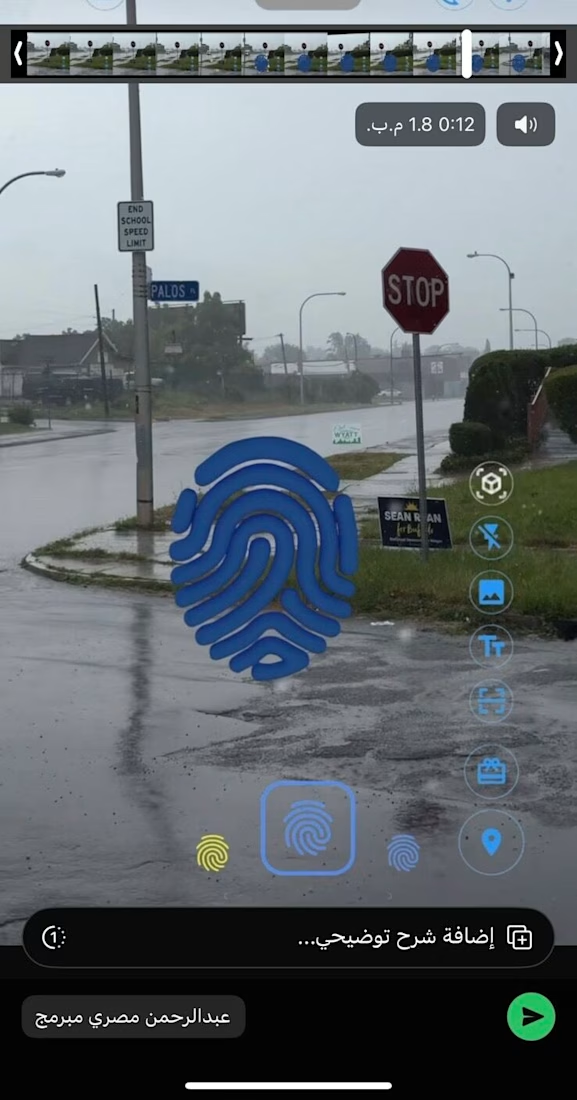
Imagine walking down the street, raising your phone, and finding a message someone left hanging in mid-air right where you're standing—a photo, a song, a text post—like they left a piece of themselves behind in the real world.
That was the client’s request. I said, "On it."
—
I built the feature in just two days. Open the camera, and the object appeared perfectly in the air. I sent it to the client, feeling pretty proud.
His response came back: "I don't see anything."
—
I kept wondering—how is this even possible? I could see it clearly on my screen. Then, it hit me.
The AR object was being positioned using GPS. When I dropped it, my device calculated its position based on mycoordinates. When the client opened the app in the same spot, his device calculated it from his side—and the error margin between the two devices reached up to 5 meters.
This meant the message I left right in front of the door appeared for him in the middle of the street.
—
I searched through every available Flutter package to find a solution. Nothing.
—
That’s where things got complicated, because the only way out was to go Native.
I opened Google's ARCore documentation and started digging through the examples. At first, I barely understood a thing. But I kept reading.
Slowly, the picture became clearer. I began to understand how anchors are formed—how the device scans the visual features of the physical environment (the angles, the lighting, the precise details) and uploads them to the cloud, instead of relying solely on GPS.
It’s called Google Cloud Anchors. And that was the missing piece.
I built the method channel between Flutter and Native code by hand. Line by line. Until it finally worked.
—
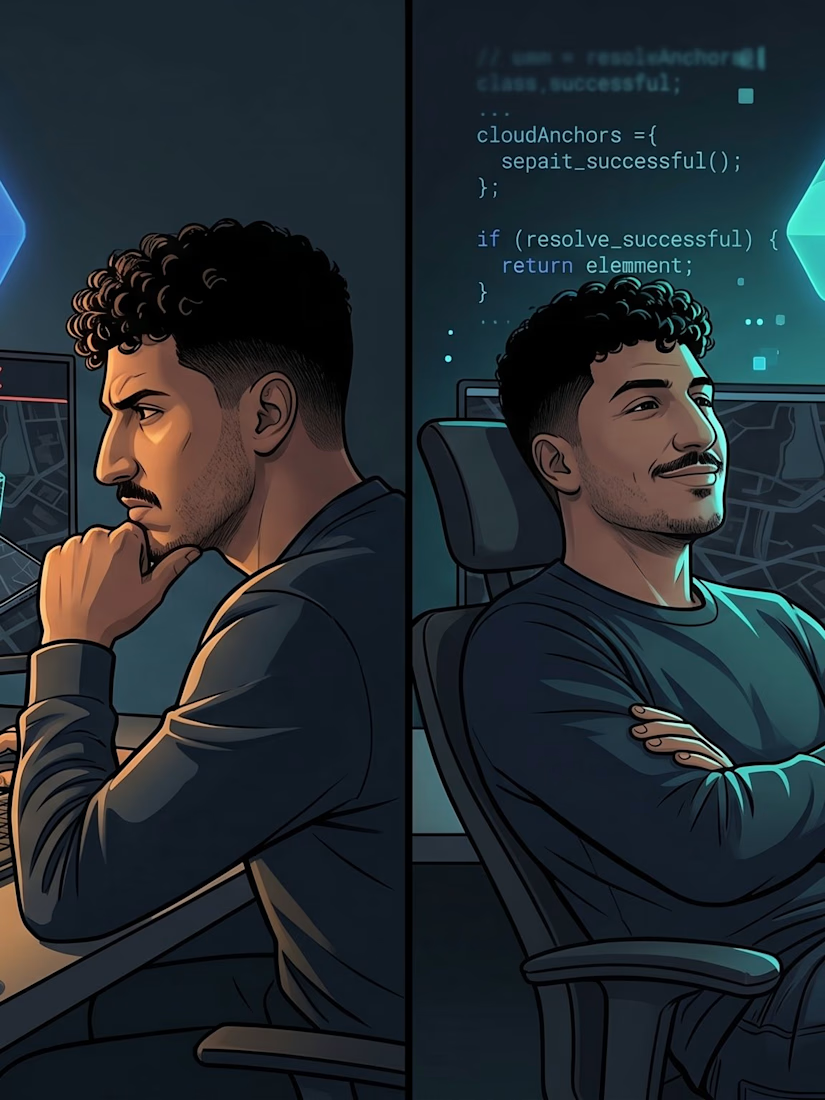
The first time I hosted an object, had someone else open the app in the same exact spot, and they saw it precisely where it was meant to be—I felt something hard to put into words.
Not just because the code worked. But because I stepped into a territory that terrified me, and I walked out of it with a brand-new skill.
—
When there isn't a package ready for you, it’s not the end of the road. It’s the beginning of a journey to learn something no one else in your immediate circle is talking about.
What’s the toughest technical challenge you've dived into, even when it terrified you? 👇
#Flutter #ARCore #NativeDevelopment #MobileDevelopment #SoftwareEngineering

The network for creativity
Join 1.25M professional creatives like you
Connect with clients, get discovered, and run your business 100% commission-free
Creatives on Contra have earned over $150M and we are just getting started





Related posts


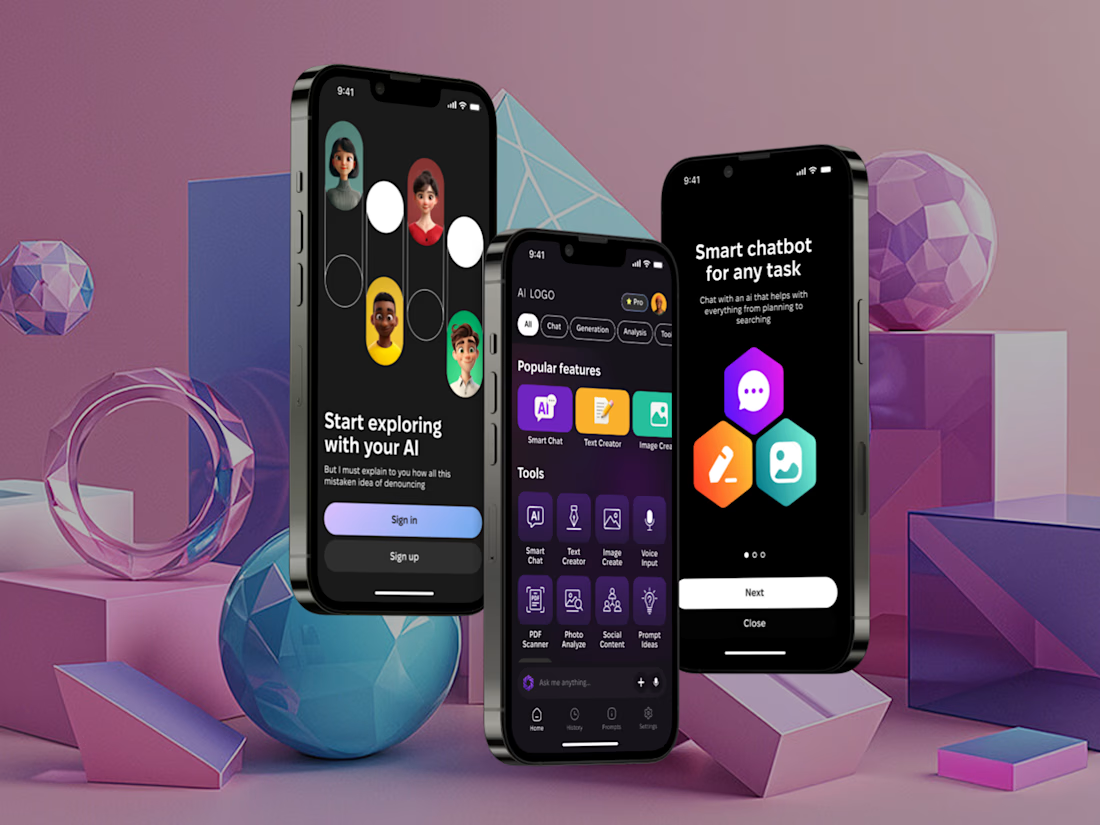
I've built a new mobile AI assistant that brings chat, text and image generation, voice input and document analysis into one app.
It have Smart Chat, Text Creator, Image Create, Voice Input, plus PDF Scanner, Photo Analyze, Social Content and Prompt Ideas, filtered by category.
Almost everything AI can do, just in one place.


Such an amazing tool! Keep going!

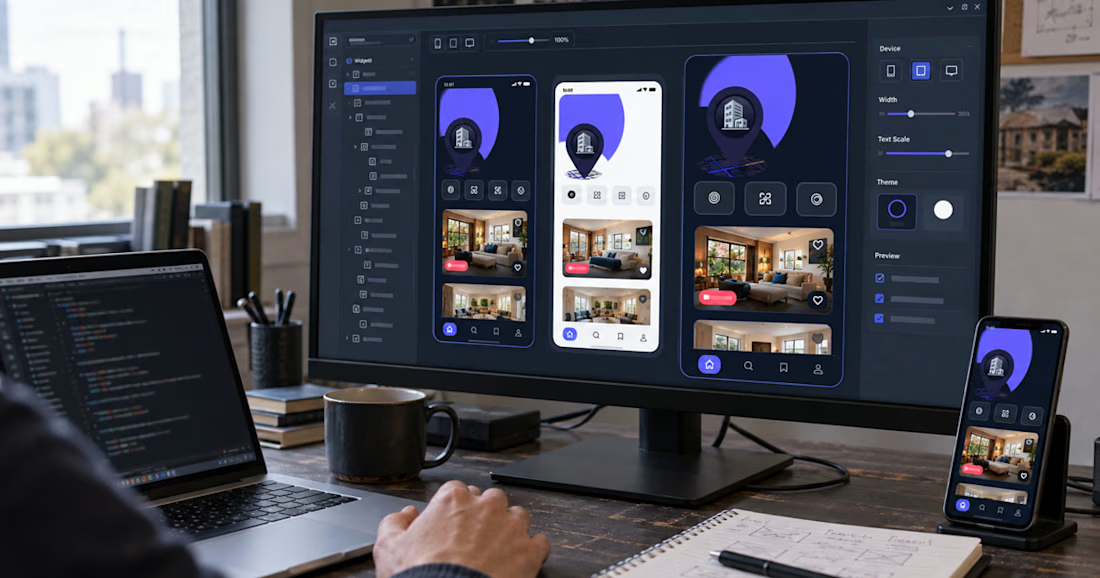
Flutter 3.47 made the Widget Previewer stable, and the first thing most teams will do is point it at a screen that boots the app. That one renders an error, not a component.
⚠️ 𝐖𝐡𝐲 𝐢𝐭 𝐟𝐚𝐢𝐥𝐬: the previewer runs browser-backed. Native plugins, dart:io and dart:ffi are unsupported, and changing global state needs a full restart.
I've stopped reading those errors as tooling gaps. A widget that reads an injected value previews fine, because you can put a hand-written fake above it. One that builds its own dependency cannot.
🔍 𝐓𝐡𝐫𝐞𝐞 𝐜𝐡𝐞𝐜𝐤𝐬 before you annotate anything
Does it initialize a service on the way to the first frame? Move that to the composition root.
Does the constructor require arguments? Annotate a top-level factory function instead.
Does it have an intrinsic size? If not it auto-constrains to about half the preview frame, so pass size.
✅ 𝐒𝐭𝐢𝐥𝐥 𝐧𝐨𝐭 𝐚 𝐭𝐞𝐬𝐭. A preview asserts nothing and never runs in CI. Keep the golden test for the dependency bump that shifts your card padding at 03:00.
Six failure modes, and the conventions that survive a design system. https://www.duskolicanin.com/blog/flutter-widget-previews-3-47-guide


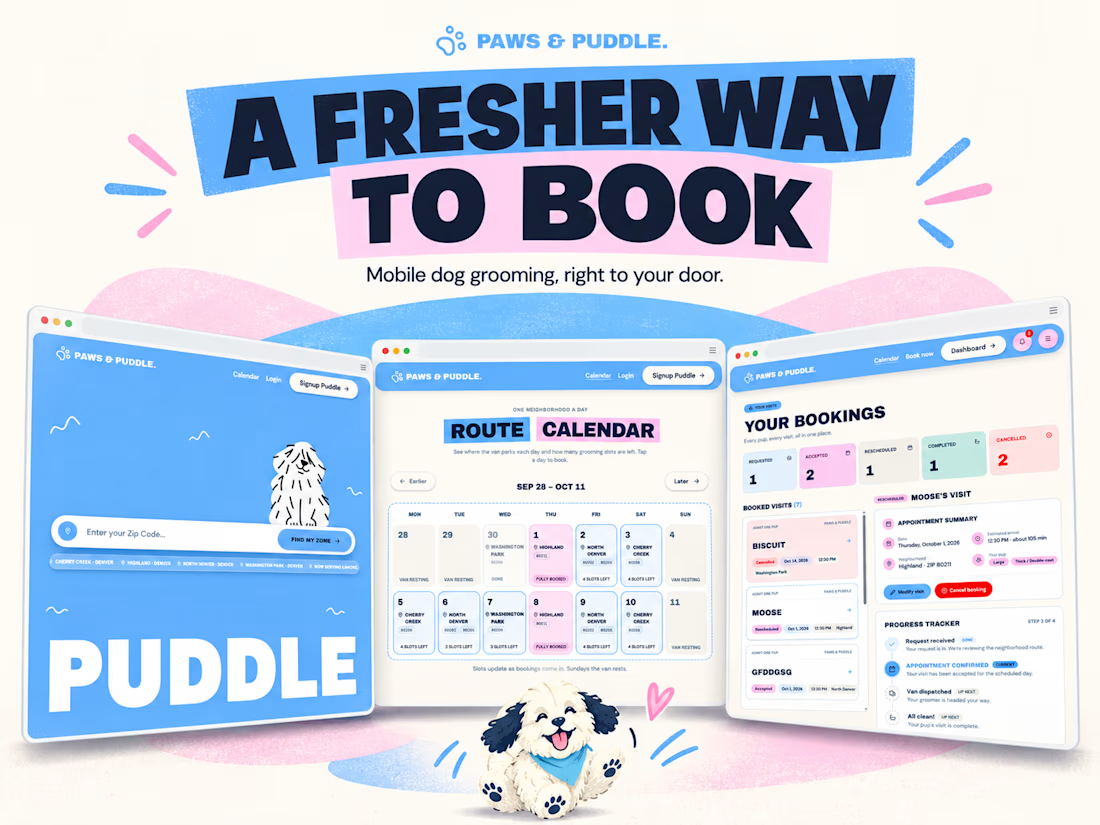
Visit the live app here: https://paws-and-puddle-pro.lovable.app/
Meet Sam. He runs a highly requested mobile pet grooming van in Denver, but standard booking calendars are quietly killing his margins. Because generic apps let customers pick any time slot they want, Sam spends two to three hours a day zig-zagging across the city in traffic, burning fuel and losing out on actual appointments just to accommodate a messy schedule.
To fix this, I built Paws & Puddle, a web app that solves his geographic routing nightmare before a booking ever hits the calendar. Instead of a basic form, I engineered a zero-click geo-gate. It automatically fetches a user's zip code via location services and dynamically filters the calendar to only show availability for the specific days Sam’s van is already assigned to their neighborhood.
Because forced logins instantly kill conversion rates, I designed a completely frictionless guest checkout. But to ensure long-term retention, the Thank You page features a "Guest-to-Auth" funnel that seamlessly converts their inputted data into an account post-booking, simply by asking the user to "set a password to track your van's ETA."
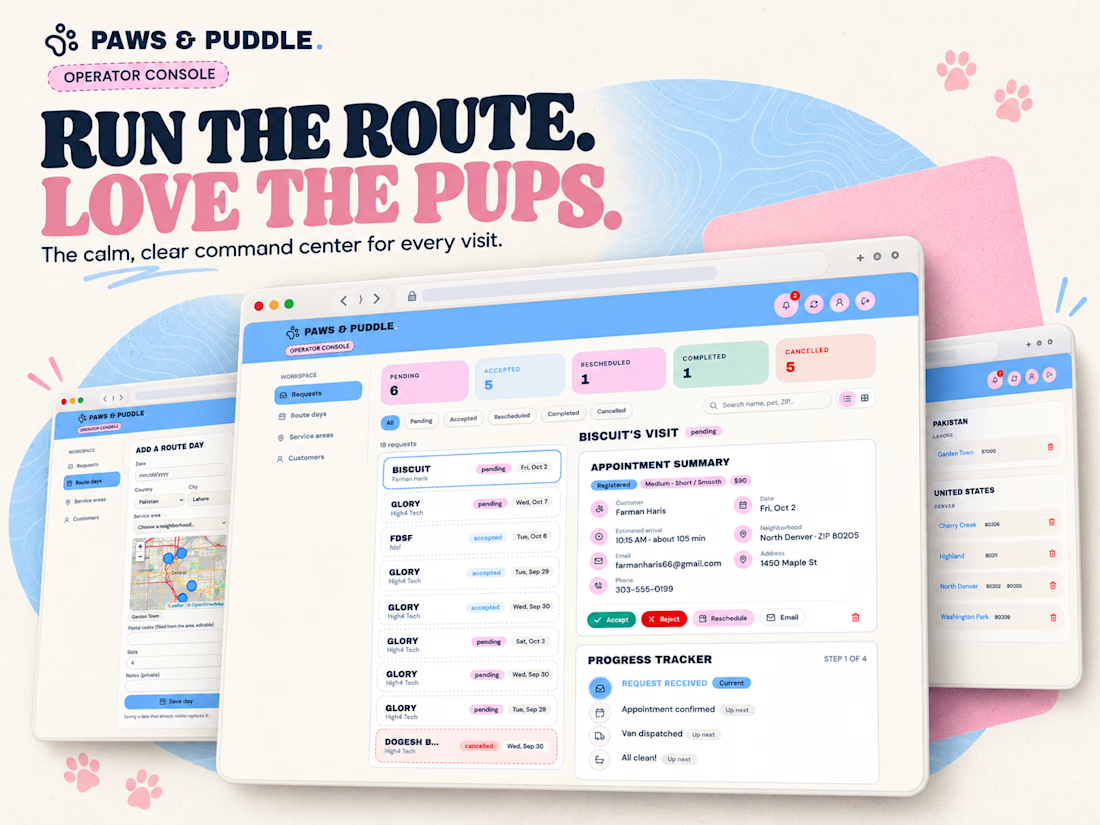
Backed by a full operator console where Sam can manage custom service zones, assign route days, and trigger automated status emails, this build proves that premium, minimalist design and aggressive problem-solving belong in the exact same app.
Check out the demo video & Process behind it below! #lovablechallenge