The network for creativity
Join 1.25M professional creatives like you
Connect with clients, get discovered, and run your business 100% commission-free
Creatives on Contra have earned over $150M and we are just getting started
Back to feedPost

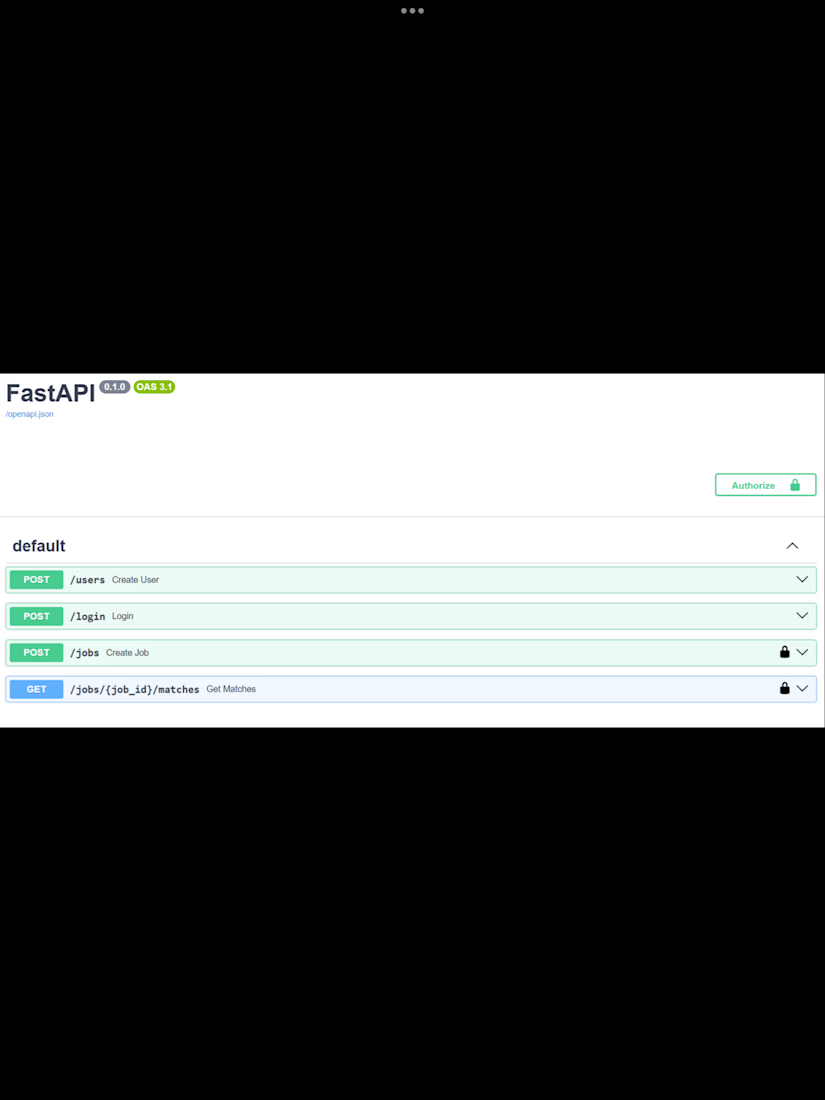
Trades & Services Marketplace Backend API
Built a backend system connecting clients with local tradespeople (plumbers, electricians, technicians) for service requests and order management.
Key Features:
Role-Based Auth: JWT-secured access distinguishing between Clients and Vendors/Tradespeople.
Service Directory: Full CRUD system for vendors to create, update, and manage service listings and pricing.
Order Management: Structured API endpoints handling job requests, bookings, and status updates.
Database & Docs: Powered by FastAPI, PostgreSQL, and SQLAlchemy ORM, with automated Swagger UI documentation.
Here is the GitHub link to the project


The network for creativity
Join 1.25M professional creatives like you
Connect with clients, get discovered, and run your business 100% commission-free
Creatives on Contra have earned over $150M and we are just getting started






Related posts

Reading a document is easy. Understanding its meaning is the real challenge.
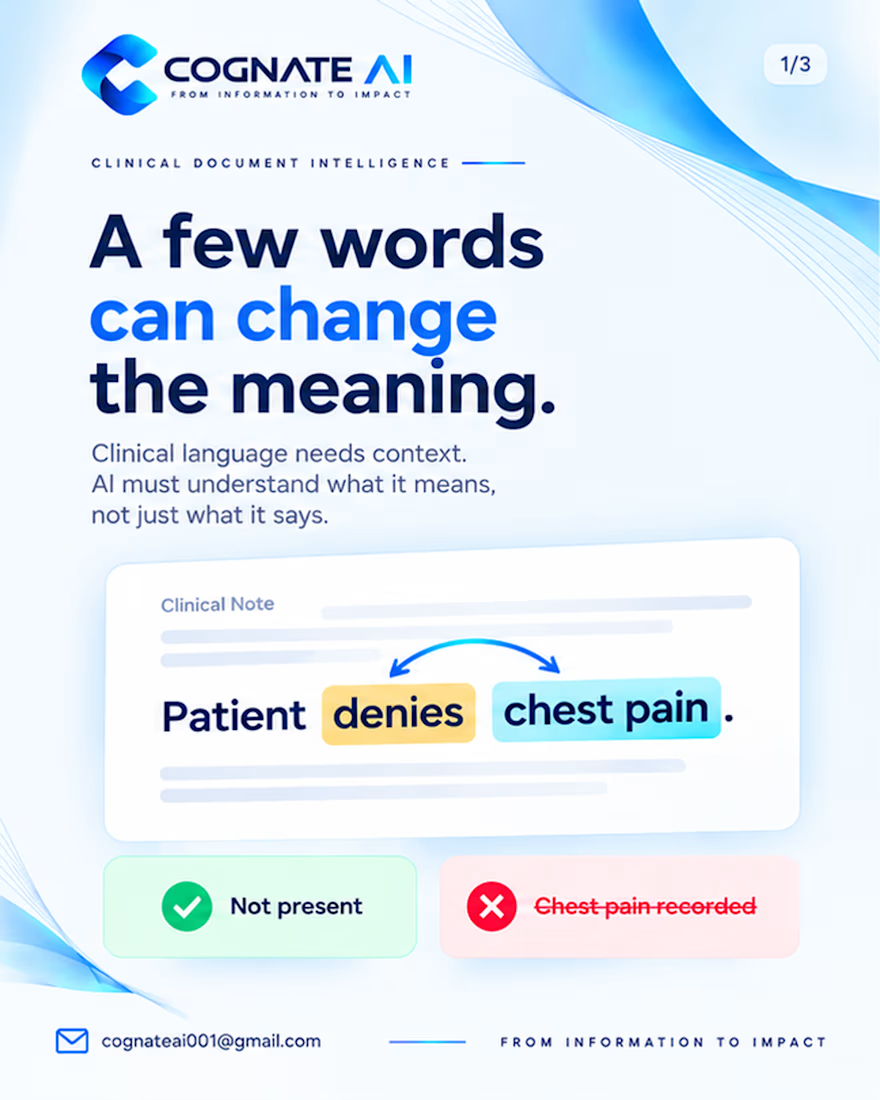
While building AI-powered medical document intelligence systems, I’ve been learning that extracting words is only one part of the problem.
Consider this sentence:
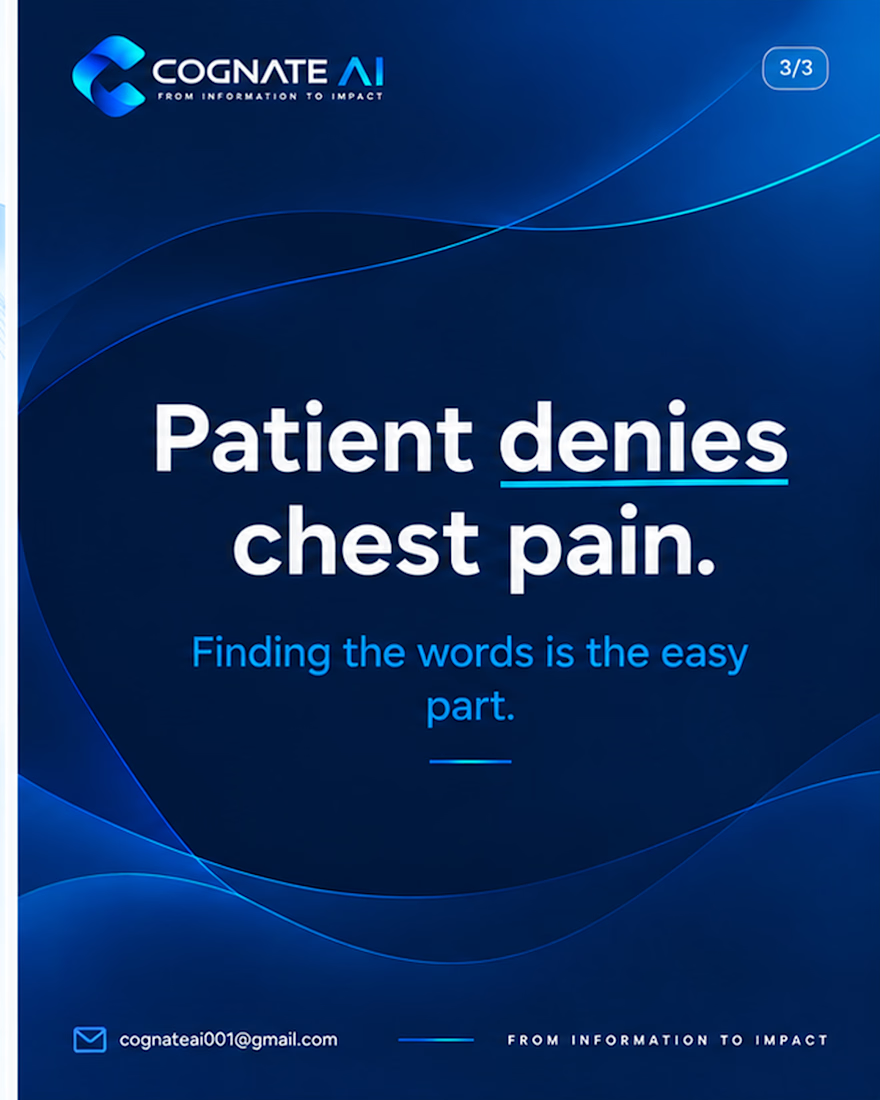
“Patient denies chest pain.”
A system might recognize the words correctly but still extract the wrong information if it ignores the word “denies.”
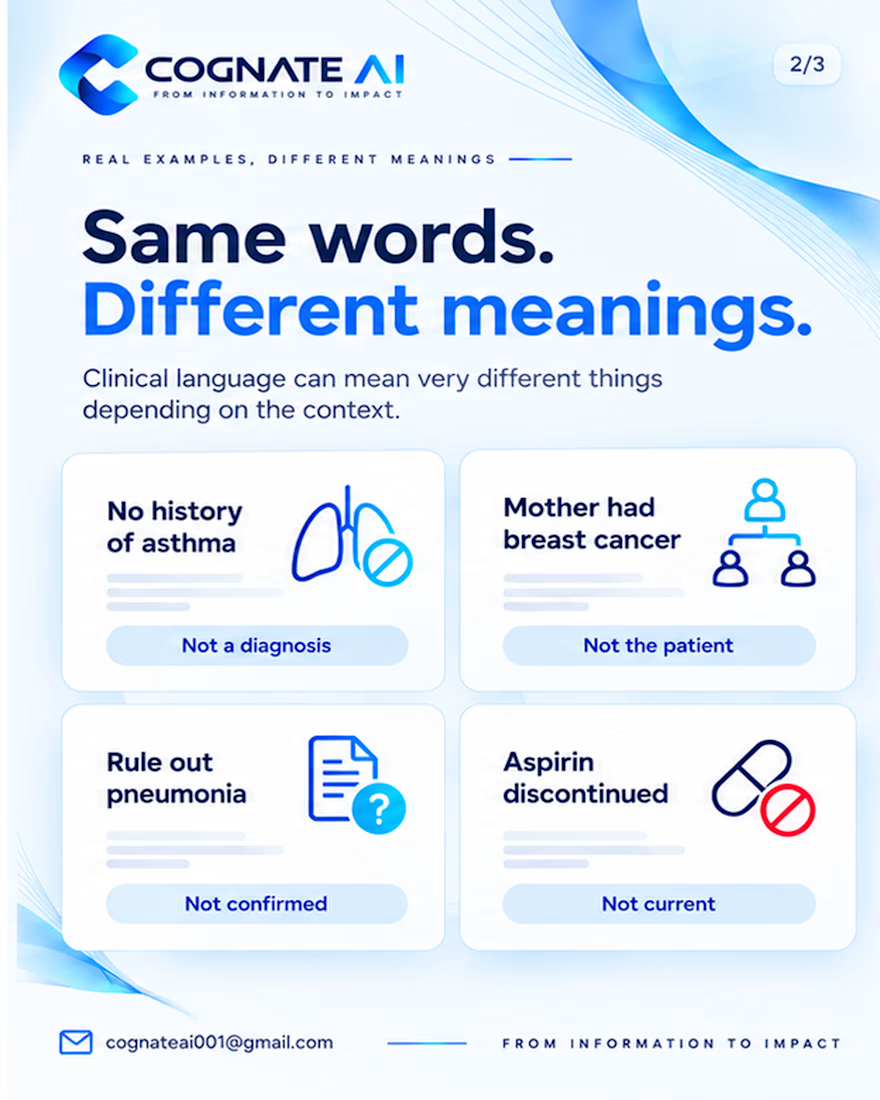
The same challenge appears in phrases like:
“No history of asthma”
“Mother had breast cancer”
“Rule out pneumonia”
“Aspirin discontinued”
Each sentence requires more than text recognition. It requires understanding context, negation, uncertainty, relationships, and whether information is current.
This is one of the challenges I’m exploring while building MDIS (Medical Document Intelligence System) at Cognate AI.
My focus is on developing systems that go beyond extracting information—toward structured outputs, validation, evidence traceability, and human review.
Because in healthcare AI, extracting the right words is not enough. The system must preserve what those words actually mean.
I’m continuing to learn, build, test, and improve this system one step at a time.
What do you think is the biggest challenge in making AI understand clinical language accurately?
#AIEngineering #HealthcareAI #MedicalAI #DocumentIntelligence #BuildingInPublic


negation like that is exactly where naive extraction falls apart, great example

Secure AI Knowledge Assistant for Businesses
Helping businesses access internal knowledge securely with AI.
Businesses often struggle with employees spending valuable time searching through company policies, internal documents, and knowledge bases. At the same time, sharing sensitive business information with AI systems creates privacy and security concerns.
I developed a Secure AI Knowledge Assistant designed to address both challenges.
The Business Solution
Faster Access to Information: Employees can ask questions in natural language and retrieve relevant information from company documents.
Reduced Manual Work: Teams can spend less time searching through policies and repetitive documentation.
Sensitive Data Protection: Built-in safeguards help detect and mask personal information before it is sent for AI processing.
Safer AI Interactions: Content moderation helps identify and block certain inappropriate or potentially harmful requests.
Custom Business Knowledge: Organizations can upload their own documents to create an AI assistant tailored to their internal information.
The Result
A working AI assistant prototype that demonstrates how businesses can make internal knowledge more accessible while incorporating privacy and AI safety controls.
Ideal For: Businesses looking to build internal knowledge assistants, employee support chatbots, or privacy-conscious AI solutions.


For the company-document uploads, I'd test the same question as two employees with different access rights, with permissions enforced before retrieval. How does the prototype handle a document whose access is revoked after indexing?

AN END TO END YOUTUBE AUTUMATION
- that manages multiple channels across different niches.
- It can research topics, plan content, generate scripts, create videos, prepare titles and metadata, and automate publishing.
- It uses configurable workflows and decision logic to evaluate tasks.
- Add and manage channels as your workflow grows, with different niches and content formats.
I think this is enough to explain what it can do.......

