The network for creativity
Join 1.25M professional creatives like you
Connect with clients, get discovered, and run your business 100% commission-free
Creatives on Contra have earned over $150M and we are just getting started
Back to feedPost

A Go concurrency bug that's easy to miss (and how to catch it)
Ran into this in a production service last month — a classic goroutine leak that didn't show up until load testing.
The pattern looked innocent:
Before Go 1.22, order was a shared loop variable — every goroutine could end up processing the same (usually last) order instead of its own. Even after the Go 1.22 fix, it's worth knowing why this broke so many codebases for years.
The fix (pre-1.22 style, still good practice for clarity):
Or simpler — pass it as a parameter:
Small thing, but it's the kind of bug that only shows up under concurrent load — never in a quick local test. Worth a lint rule or code review checklist item if your team ships concurrent Go code.
The network for creativity
Join 1.25M professional creatives like you
Connect with clients, get discovered, and run your business 100% commission-free
Creatives on Contra have earned over $150M and we are just getting started

Challenges
View all


Related posts

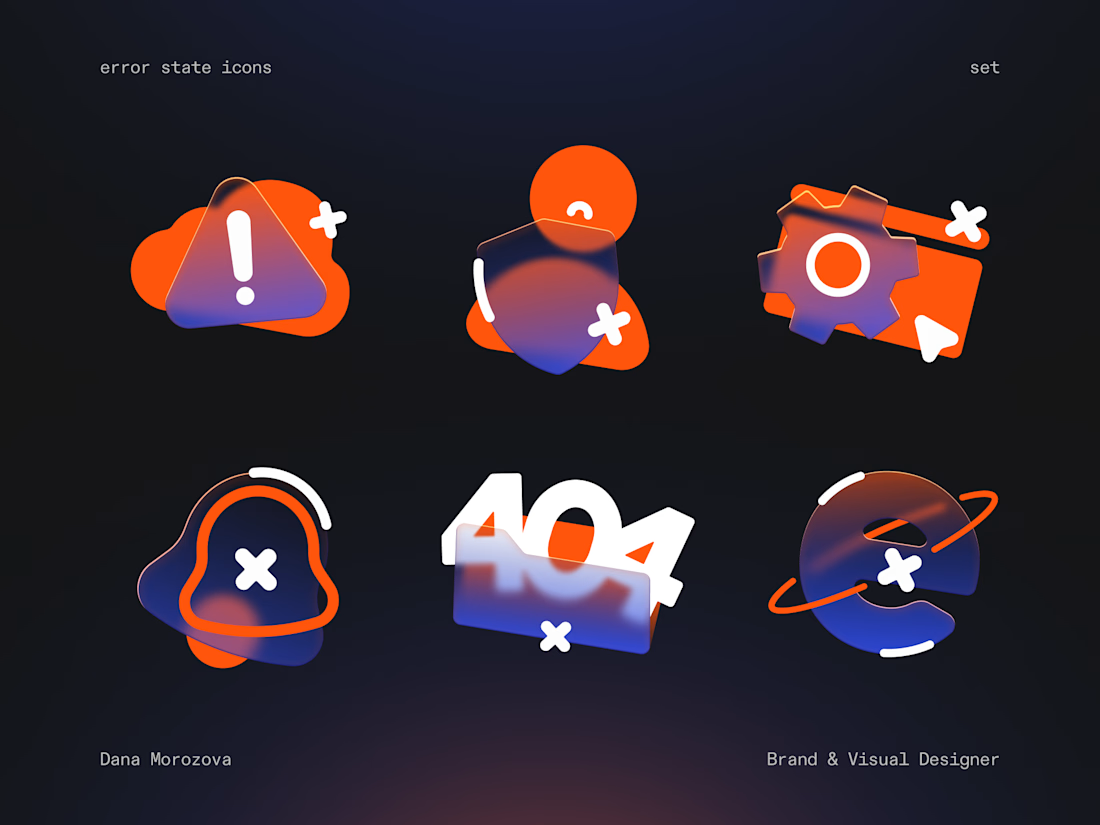
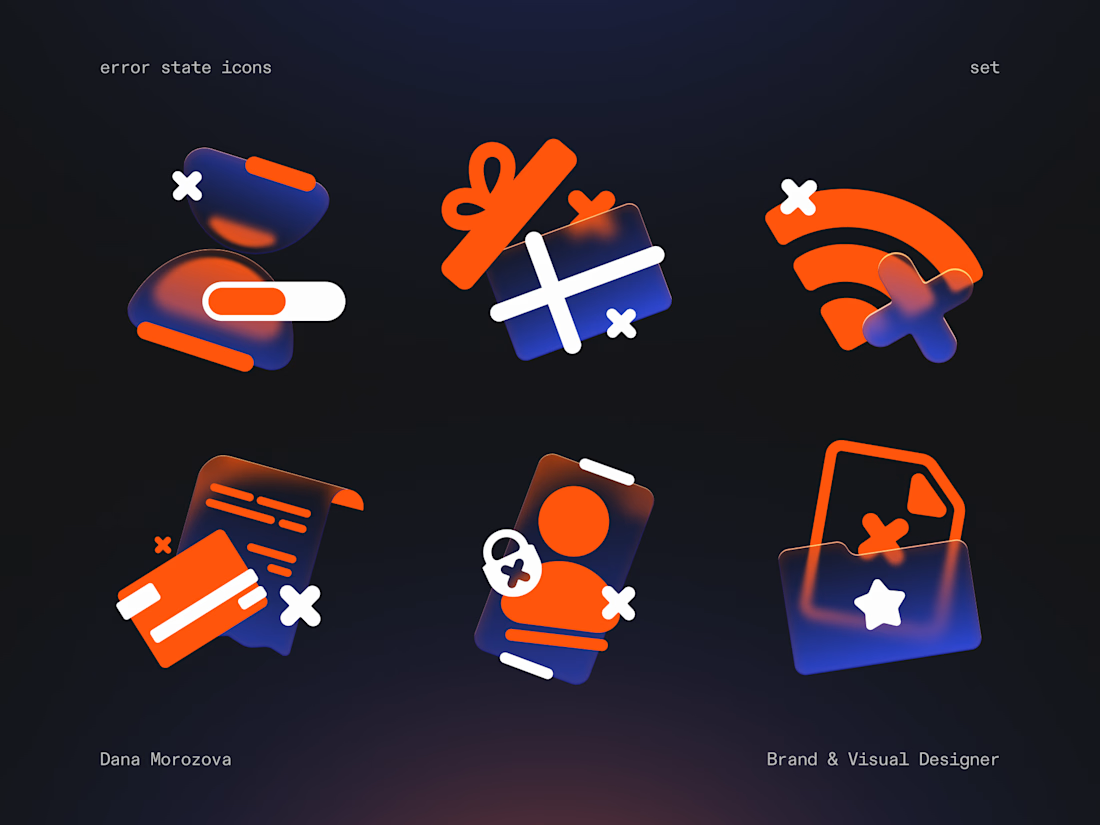
New set of 3D error/empty state icons 🧡
No connection, payment declined, 404, locked profile, notifications off - a few of those "painful" app screens, done in my signature orange/navy style. This is actually my second set like this - the first one was in a completely different visual language, so it's fun to see how much the approach has changed 👀


very interesting icons, good job Dana🙌

The 404 was treated as a proper page rather than a fallback state.
The number is constructed as an architectural drawing. The 4 and the 0 are formed from walls at true thickness, with furniture laid out inside the resulting rooms and dimension strings running along both edges. It sits inside the same drafting system as the rest of the site rather than borrowing a display typeface.
The error message then repeats. Instead of a single dialog, identical windows cascade back across the canvas, each one carrying the same 404 notice. It reads as a system throwing an unresolved warning over and over, which is the exact behaviour Heron is built to prevent inside a model.
Error pages are never in the brief. They're a good measure of whether a team understood the product or just styled it.


Treating a 404 as an actual page instead of a dead end is such a good instinct, where did the architectural drawing idea come from, personal interest bleeding into the work?


First contract on Contra finished!


How was it?