The network for creativity
Join 1.25M professional creatives like you
Connect with clients, get discovered, and run your business 100% commission-free
Creatives on Contra have earned over $150M and we are just getting started
Back to feedPost

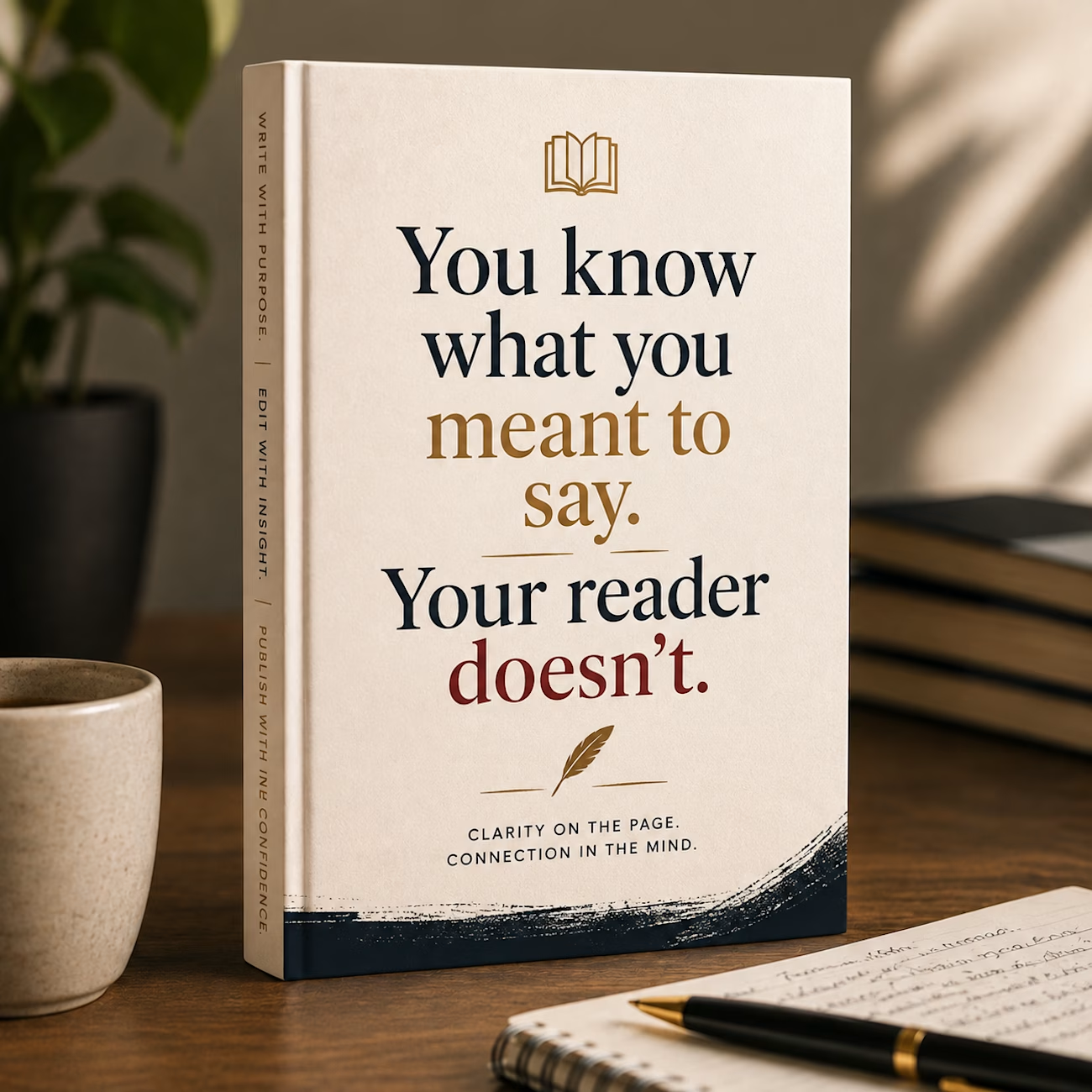
You know what you meant to say. Your reader doesn't.
This is one of the biggest blind spots authors face.
When you've spent months writing a book, you already know the message behind every chapter. You know why a character made a decision. You understand the point of that paragraph.
Your reader doesn't have that advantage.
So a sentence that feels perfectly clear to you may leave a reader wondering:
What does this actually mean?
That's why good editing isn't simply about correcting what's wrong. It's about identifying where the reader might hesitate, misunderstand, lose interest, or need to reread a sentence.
An editor looks for things such as:
• Ideas that are assumed rather than explained
• Transitions that feel abrupt
• Repetition the author no longer notices
• Sentences that sound clear to the writer but confusing to the reader
• Sections where the message gets buried under unnecessary words
One useful test is to step away from your manuscript and ask:
If I had never written this book, would this passage still make sense to me?
That shift in perspective can reveal problems that are almost impossible to see when you're too close to the work.
Your job as an author is to know what you want to say.
Your editor's job is to help make sure the reader receives it the way you intended.
#BookEditing #WritingTips #Authors
The network for creativity
Join 1.25M professional creatives like you
Connect with clients, get discovered, and run your business 100% commission-free
Creatives on Contra have earned over $150M and we are just getting started
Trending
retrofuturism
Share your favorite designs from the past exploring the distant future. Or your own take on the aesthetic 🚀
halftone
Dots. Texture. Grain. Let's see your designs using the halftone technique.

Midjourney
Creatives are showing off what they're making with Midjourney.
colorgrade
Video editors sound off: How do you enhance the mood of your video in color grading?


Related posts

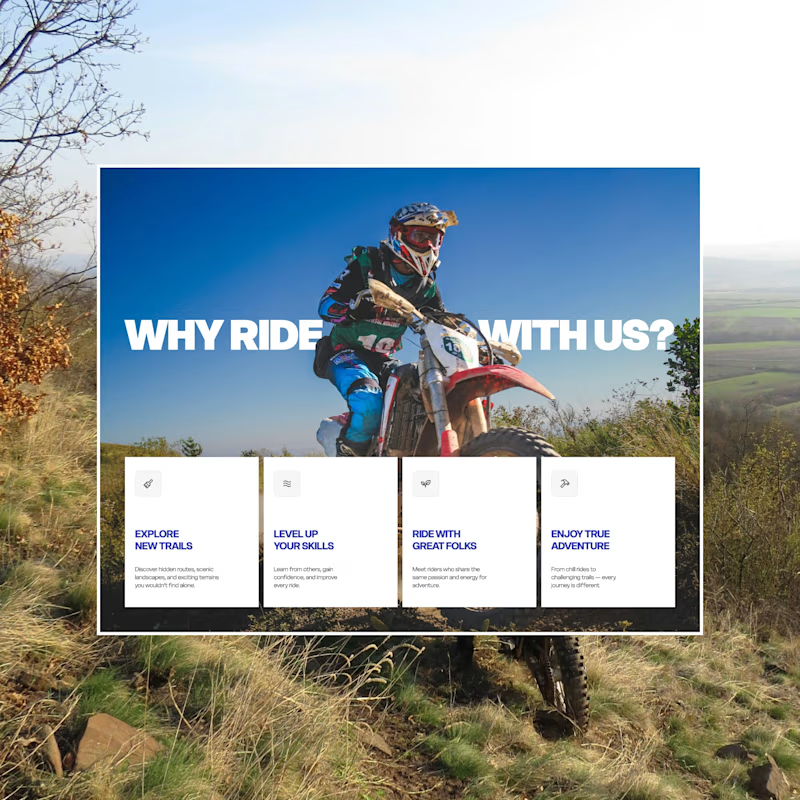
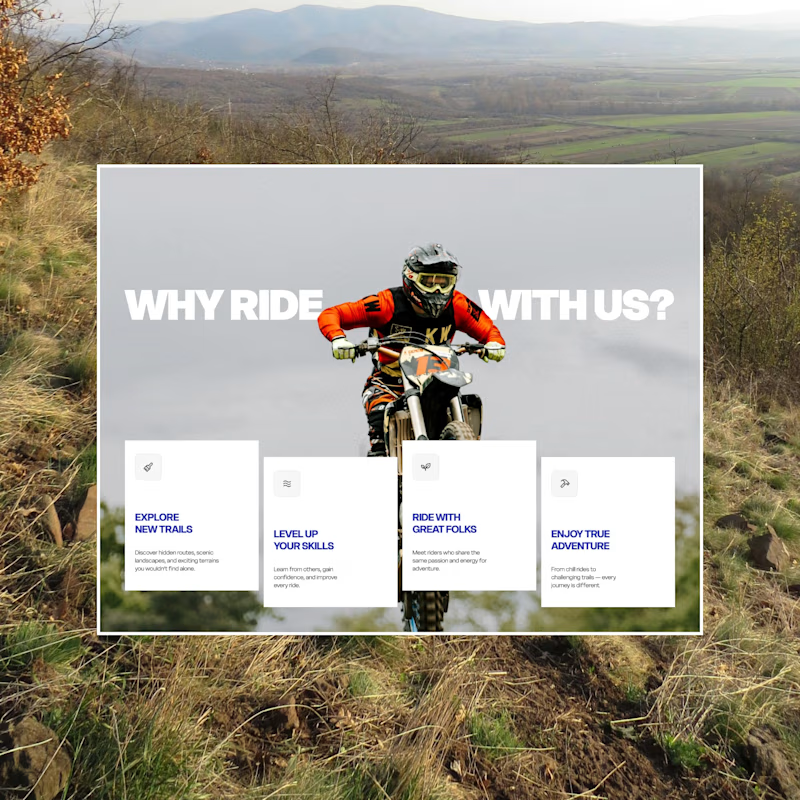
The hero sets the tone for the whole page.
Exploring a couple of ways to get it right.
38 voted
68%
18 voted
32%
56 votes
Closed

I can go with A

✍🏽 Learning to trust the reader.
One thing I’ve been exploring in my fiction writing class lately is the power of diction and dialogue.
I recently revisited one of my own scenes and realized something: I was explaining too much.
Instead of telling readers exactly what my character was feeling, I started experimenting with letting the dialogue, physical reactions, word choice, and silence carry the emotion.
📖 Reading Jerome Stern’s Making Shapely Fiction and Ernest Hemingway’s Hills Like White Elephants helped me see this differently.
Sometimes, what a character doesn't say can be just as important as what they do say.
I’m learning that good fiction doesn’t always hand the reader every emotion and every answer. Sometimes, we have to leave enough space for the reader to step into the scene and experience it for themselves.
That realization has changed how I approach my writing.
I wrote more about this process, including an excerpt from my own fiction, on my Substack.
🔗 Read “Learning to Leave Room for the Reader” on my Substack:
https://leylandthewriter.substack.com/p/learning-to-leave-room-for-the-reader
📚 Want to read along with me?
Making Shapely Fiction — Jerome Stern
🛒 Amazon: https://www.amazon.com/s?k=Making+Shapely+Fiction+Jerome+Stern
Hills Like White Elephants — Ernest Hemingway
🛒 Amazon: https://www.amazon.com/s?k=Hills+Like+White+Elephants+Ernest+Hemingway
If you’re interested in following my writing journey, subscribe to my Substack. I’ll be sharing more about fiction, creativity, reading, and what I’m learning as I continue developing my craft. ✍🏽📚
What are you currently learning about your own creative process? 👇🏽


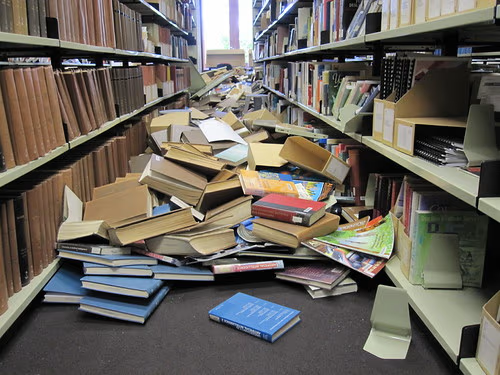

This week in the edit bay:
• A launch film + multiple cutdowns
• 8 short-form clips from a single webinar
• Rescuing underexposed interview footage
• A sound redesign that completely changed a difficult location recording
A lot of editing isn’t about making good footage look better.
It’s about finding ways to make imperfect footage work.
The best edits often happen when you’re solving problems you didn’t expect when the camera started rolling.
What are you working on in the edit bay this week?
