The network for creativity
Join 1.25M professional creatives like you
Connect with clients, get discovered, and run your business 100% commission-free
Creatives on Contra have earned over $150M and we are just getting started
Back to feedPost

Continuous Improvement is better when we can do it together.
I've always believed that Lean tools should make improvement easier to practise, not add another layer of complexity to people's work.
That's one of the ideas behind our two newest LLeanStore features.
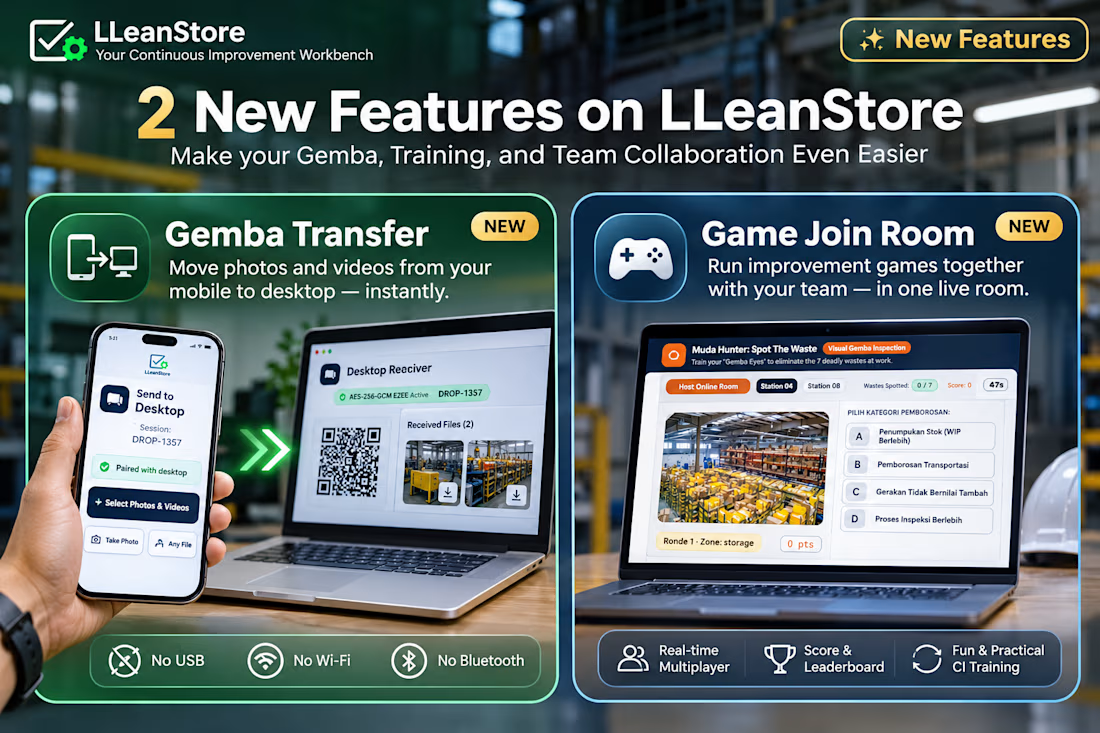
✨ 1. Gemba Transfer — From mobile to desktop, in one scan.
Have you ever taken photos or videos during a Gemba walk, only to struggle with transferring them to your laptop afterwards?
We wanted to make that process simpler.
With Gemba Transfer, you can move photos and videos from your mobile device to your desktop by scanning a QR code. No USB cable, Bluetooth pairing, or manual file transfer.
🎮 2. Game Join Room — Learn and play with your team.
Continuous Improvement can be more engaging when people learn together.
Now, you can host a game room and invite your peers to join. Play improvement games together, compare scores, and turn learning into a shared experience.
Why are we building these features?
Because I want LLeanStore to become more than a collection of Lean applications.
I want it to be a practical workbench where people can explore, learn, experiment, and improve — individually and together.
These two features are another step in that direction.
Both are now available on LLeanStore.
Explore them here:
https://www.lleanstore.com
And if you try them, I'd genuinely love to hear what you think.
What's one small thing that could make your Continuous Improvement work easier?
The network for creativity
Join 1.25M professional creatives like you
Connect with clients, get discovered, and run your business 100% commission-free
Creatives on Contra have earned over $150M and we are just getting started



Related posts

Sometimes, the biggest opportunity is hidden within an existing user flow.
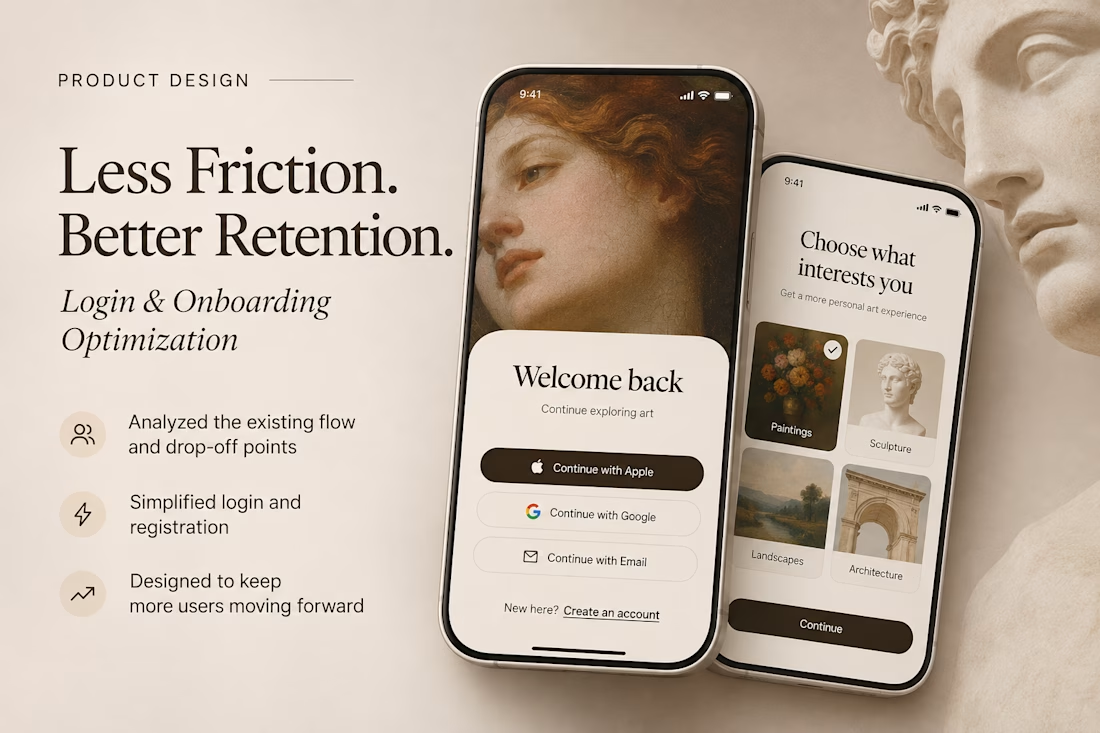
When I joined this project, the application was already live. My main challenge was to improve the login experience, reduce unnecessary friction, and help more users continue their journey.
My approach focused on:
• Analyzing the existing authentication flow.
• Identifying potential user drop-off points.
• Simplifying login and registration.
• Reducing unnecessary steps and cognitive load.
• Designing with user retention in mind.
Product design is not just about making interfaces look better. It's about understanding why users leave and giving them fewer reasons to do so.
Before redesigning an entire product, ask yourself: are users even getting past the first screen?
👉 What's your priority when improving an existing product: user activation, retention, or conversion?

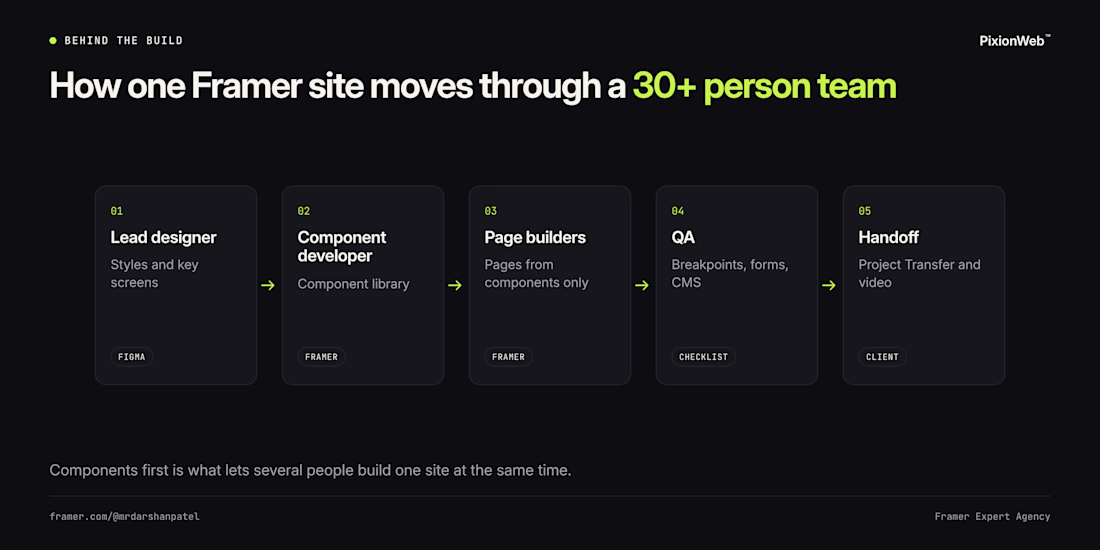
How a 30+ person team builds one Framer site without stepping on each other 🧩
Lead designer sets styles and key screens in Figma
One developer builds the component library in Framer
Page builders assemble pages from those components only
QA checks every breakpoint and form
Handoff: Project Transfer plus a walkthrough video
Components first is what lets several people work on one site at once.
How does your team split the work? 👇



Handing off with a Project Transfer plus a walkthrough video is a smart touch. It keeps the developer's component structure intact for everyone building pages.


Most productivity tools are great at organizing tasks.
But organizing work and actually getting things done are two very different problems.
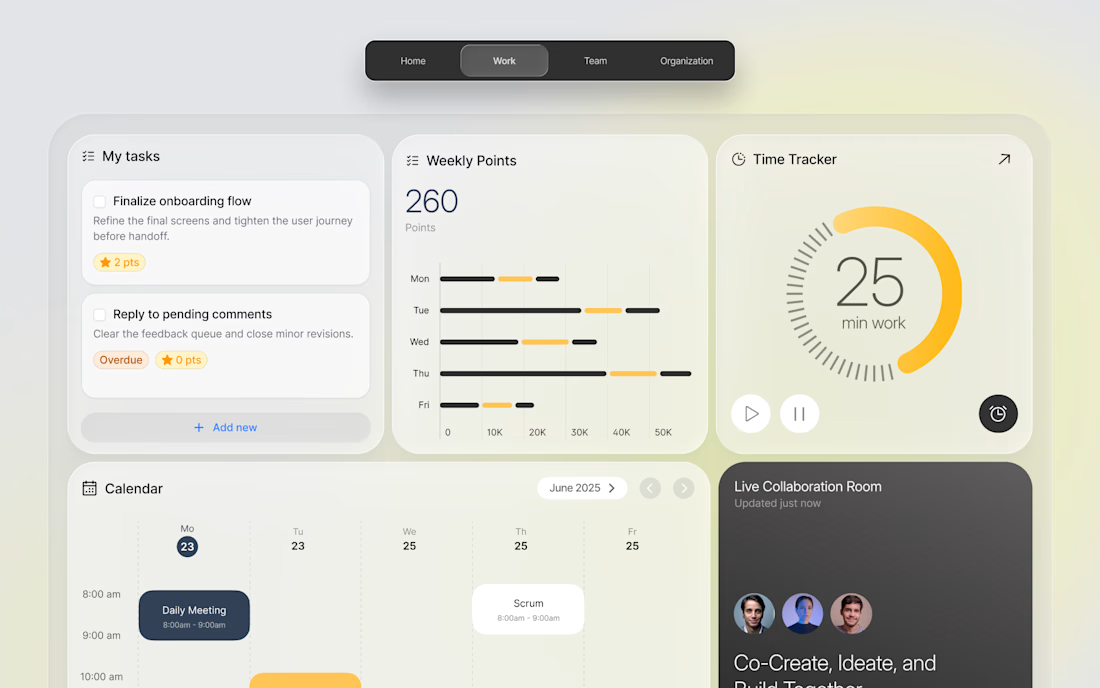
That's an interesting challenge we worked on with Highper, an Execution OS designed to bring personal productivity and team coordination into one connected experience.
I helped shape the product strategy and UX architecture, focusing on making complex workflows feel intuitive without sacrificing flexibility.
The goal wasn't to add another layer of task management. It was to create a system where priorities, workflows, and next actions felt connected.
One takeaway from the experience:
The more capable a product becomes, the more intentional its simplicity needs to be.
Sharing a glimpse of the product below.

Nicely done!