The network for creativity
Join 1.25M professional creatives like you
Connect with clients, get discovered, and run your business 100% commission-free
Creatives on Contra have earned over $150M and we are just getting started
Back to feedPost

Most developers make a mistake before writing a single line of code.
They start coding too early.
Yesterday I spent ~4 hours on a potential project and didn’t write any code.
Instead, I:
– broke the idea down into a realistic MVP
– mapped core user flows
– defined the structure (pages, interactions)
– suggested a technical approach
– even generated a quick visual direction using AI
And honestly — that was the most valuable part.
Because code without this is just an expensive way to figure out your product doesn’t work.
My default approach:
System first. Code second.
Curious how others handle this:
Do you invest time in shaping the product early,
or jump straight into implementation?
(quick visual of how I usually think about MVP structure)

The network for creativity
Join 1.25M professional creatives like you
Connect with clients, get discovered, and run your business 100% commission-free
Creatives on Contra have earned over $150M and we are just getting started




Related posts

I woke up with an idea today.
After working with Design Systems for a couple of years, I've often used Claude to scale and refine components. But today, I wanted to try an experiment: What if Claude handled the foundations, documentation, components, and variables?
I want to see exactly how much of the Design System creation process AI can accurately handle, and where the human touch remains fundamentally necessary.
Would you like to see how this process unfolds?



Curious to see your process because this combo (Claude + Figma) is next level 👌.
What I can tell from my experience on a daily basis dealing with DS is that if you know to articulate really well your ideas/thoughts, then the sky is your limit!

Before you pay for a new website, walk through what happens after someone clicks ‘work with me.’
Can they tell which offer fits? Where does their inquiry go? What do they receive next? And how much of that process depends on you remembering to do it?
That’s where I like to start. A founder can have beautiful branding and still spend the whole week chasing details between an inbox, a spreadsheet, and three different tools.
My Poised project brings that bigger picture into view: the brand identity, website, client onboarding, and operations workspace belong in the same conversation.
Try this: write down every step from first inquiry to first delivery. Circle the places where a customer has to wait for you to figure out the next step. Those are useful places to improve before adding another tool.
I’m available for brand, website, and business-systems projects. If your business has outgrown the way it’s currently stitched together, let’s talk.

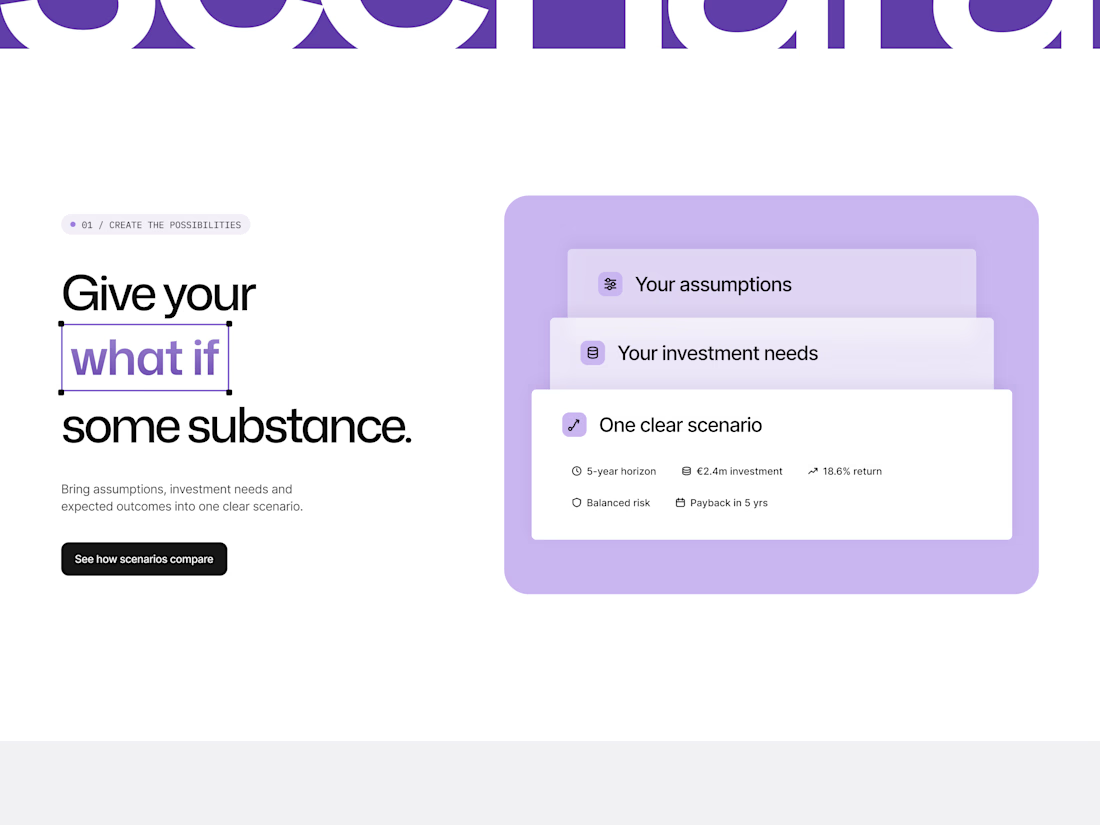
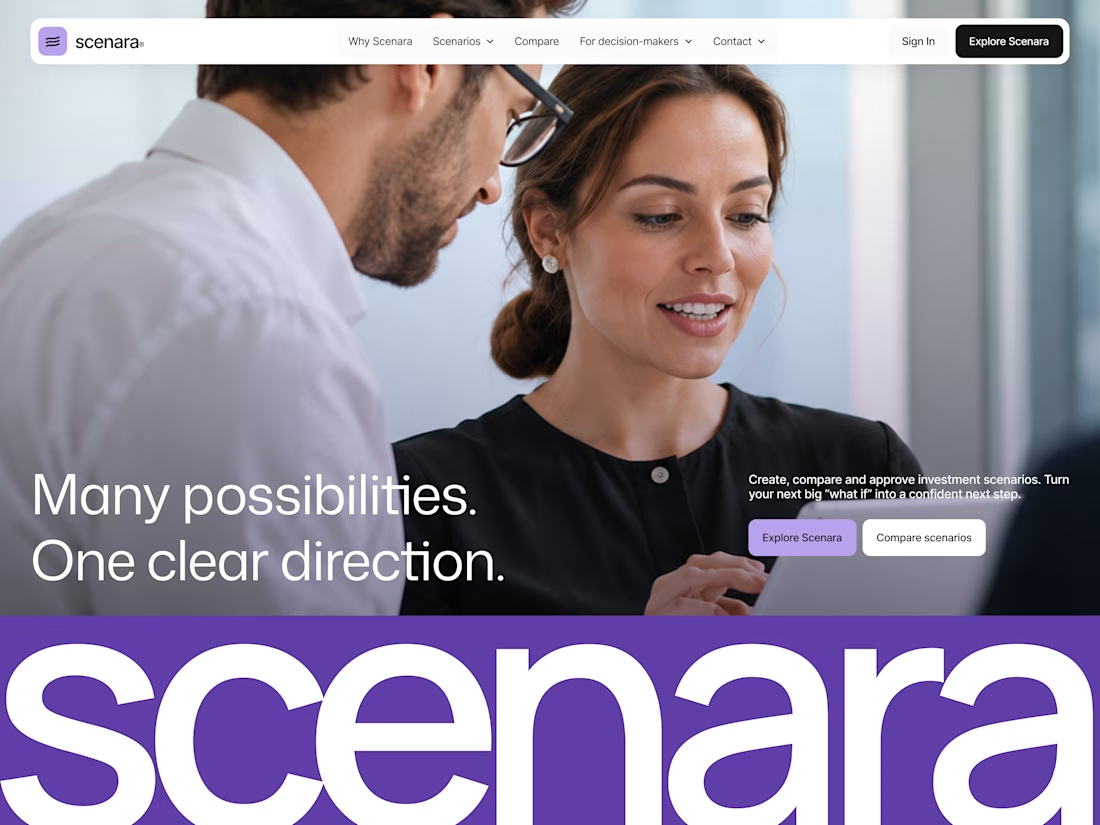
Investment planning often involves complex assumptions, multiple scenarios, and a lengthy approval process. Scenara brings these steps together in one collaborative platform, helping teams create, compare, and approve investment projects.
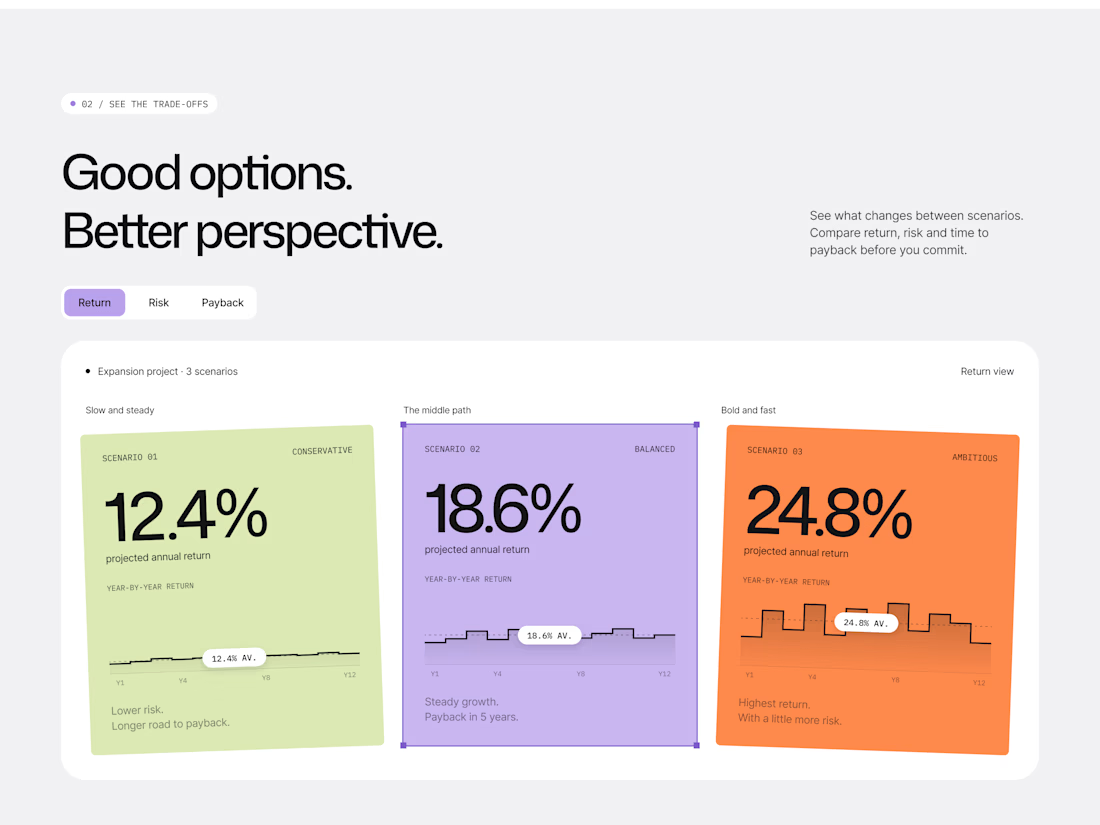
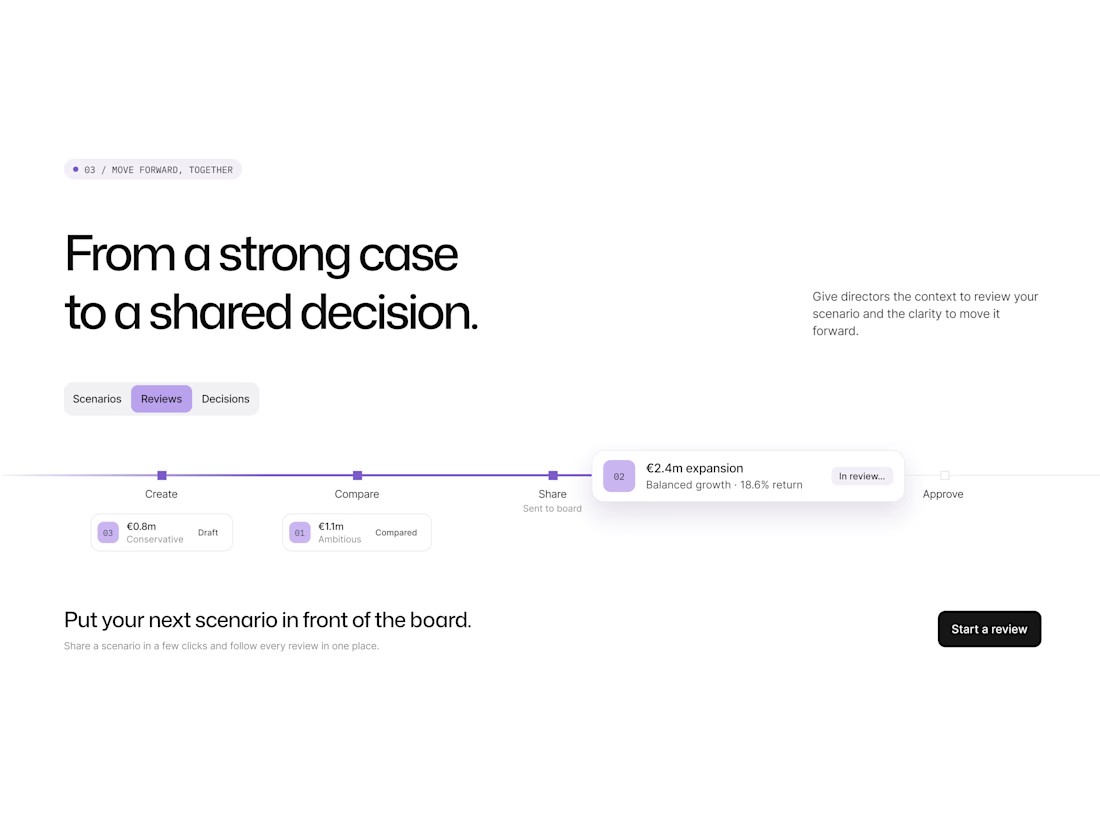
The landing page presents the product through a clear progression: start with assumptions, explore financial scenarios, and move toward a shared decision. Color-coded cards make it easier to compare possible outcomes, while the platform’s approval flow shows how teams can take a scenario from a strong case to an informed decision.
A clean editorial layout, oversized typography, and vibrant purple accents give the experience a distinctive identity while keeping the product story clear.