The network for creativity
Join 1.25M professional creatives like you
Connect with clients, get discovered, and run your business 100% commission-free
Creatives on Contra have earned over $150M and we are just getting started
Back to feedPost

🔥 From streetwear to a standout Shopify experience.
I recently worked on DOPE BEYOND, building a bold e-commerce store for a streetwear brand using Shopify and the Palo Alto theme.
From mega menu navigation to size charts and color swatches, every detail was designed to make shopping easier while keeping the brand’s identity strong.
What do you think matters most in a fashion e-commerce store: design, user experience, or functionality? 👇


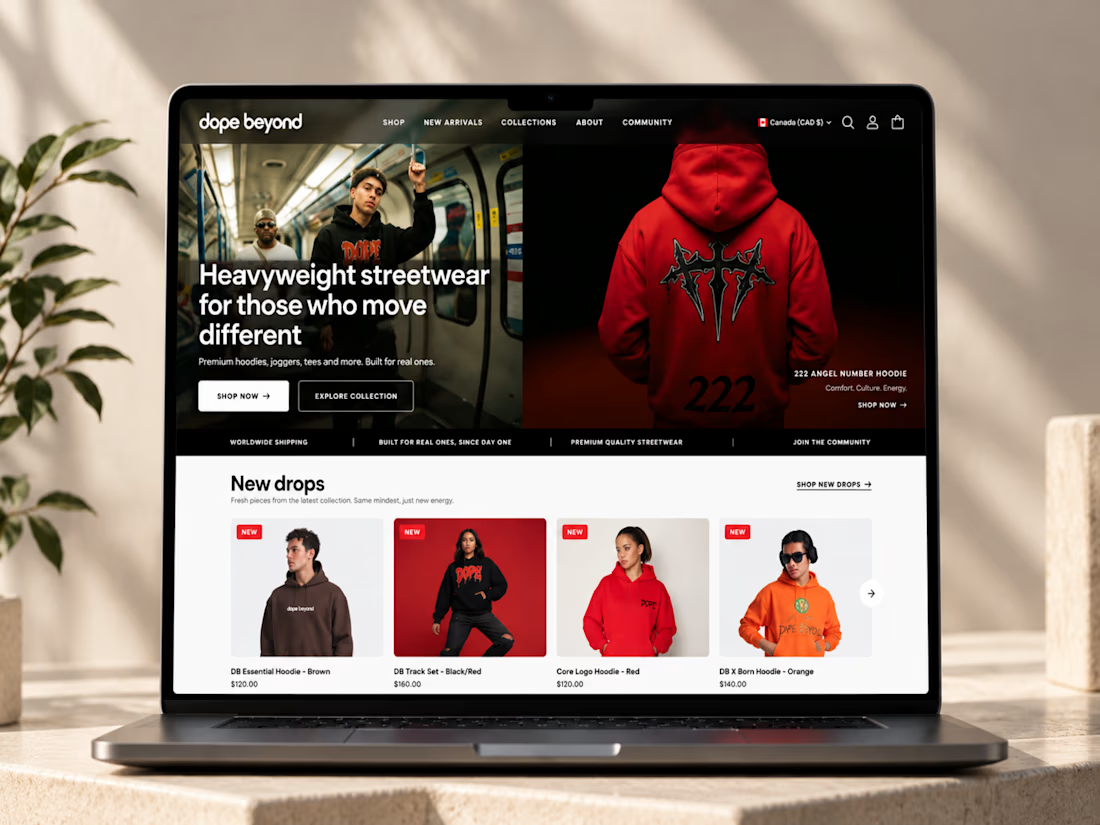

Great use of contrast and composition.

This is really looking good

The mega menu and size charts detail work is exactly what separates a streetwear store that looks good from one that sells. The hero shot with the red hoodie carries the brand energy perfectly.
The network for creativity
Join 1.25M professional creatives like you
Connect with clients, get discovered, and run your business 100% commission-free
Creatives on Contra have earned over $150M and we are just getting started






Related posts

Eyewear Ecommerce Website Redesign — AI vs. WaxyWeb
A side-by-side design comparison exploring two approaches to an online eyewear store.
The WaxyWeb redesign focuses on the relationship between product presentation, collection browsing, editorial imagery, and the store’s visual identity.
Design considerations:
Eyewear product presentation
Ecommerce layout and hierarchy
Collection and product discovery
Fashion-focused visual direction
Consistent online shopping experience
For fashion, eyewear, and lifestyle brands, the goal is to create a store that presents products clearly while giving the brand a recognisable visual presence.
Website design and development: www.waxyweb.com

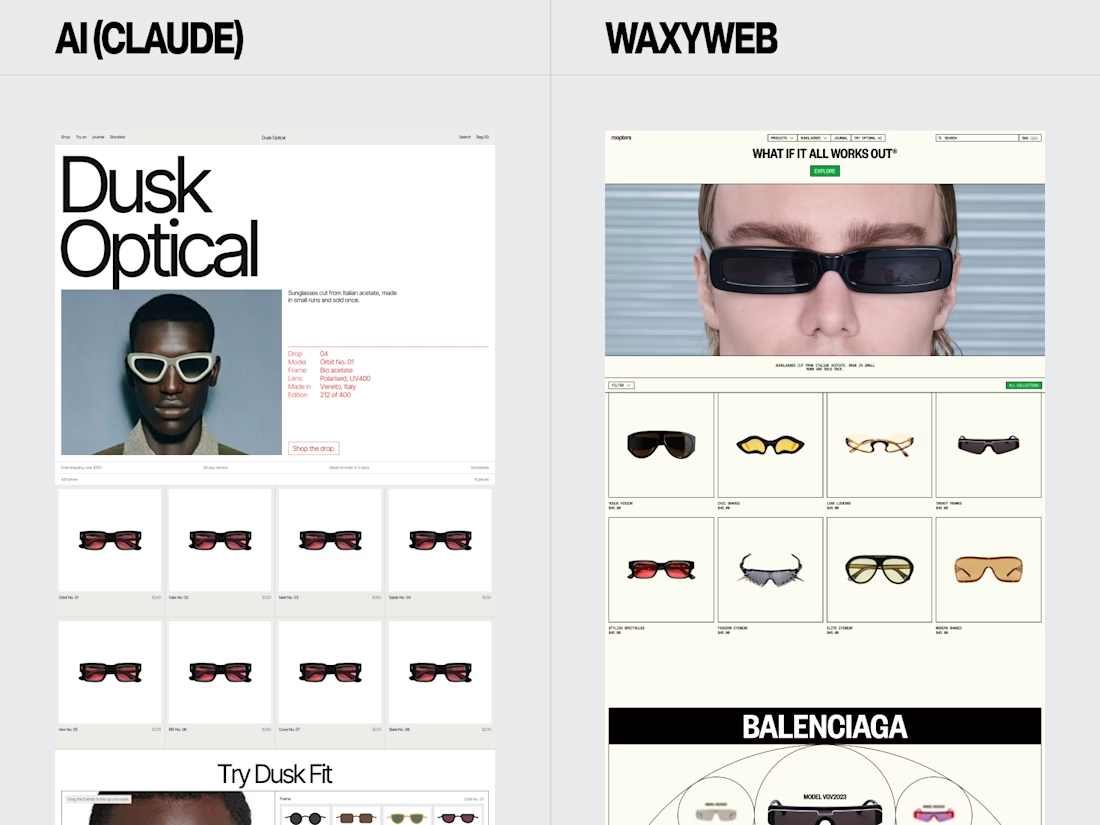

WaxyWeb

Built a headless Shopify storefront straight from the Storefront API. Next.js handles the routing and rendering, the API feeds in 23 products from Shopify's sample catalog, photos and prices included.
Color swatches swap the product shot and the price on click. Filters sit in the URL, so a filtered collection page is a shareable link. There's a set builder: pick three pieces, 15% off.
The cart is real. Add items, change quantities, close the tab, come back a month later. Still there (30-day cookie). Checkout is a mock, no payment.
Also wrote three Liquid sections for Dawn and ran them through theme-check. Zero issues.
100 on accessibility, best practices and SEO on Lighthouse desktop.
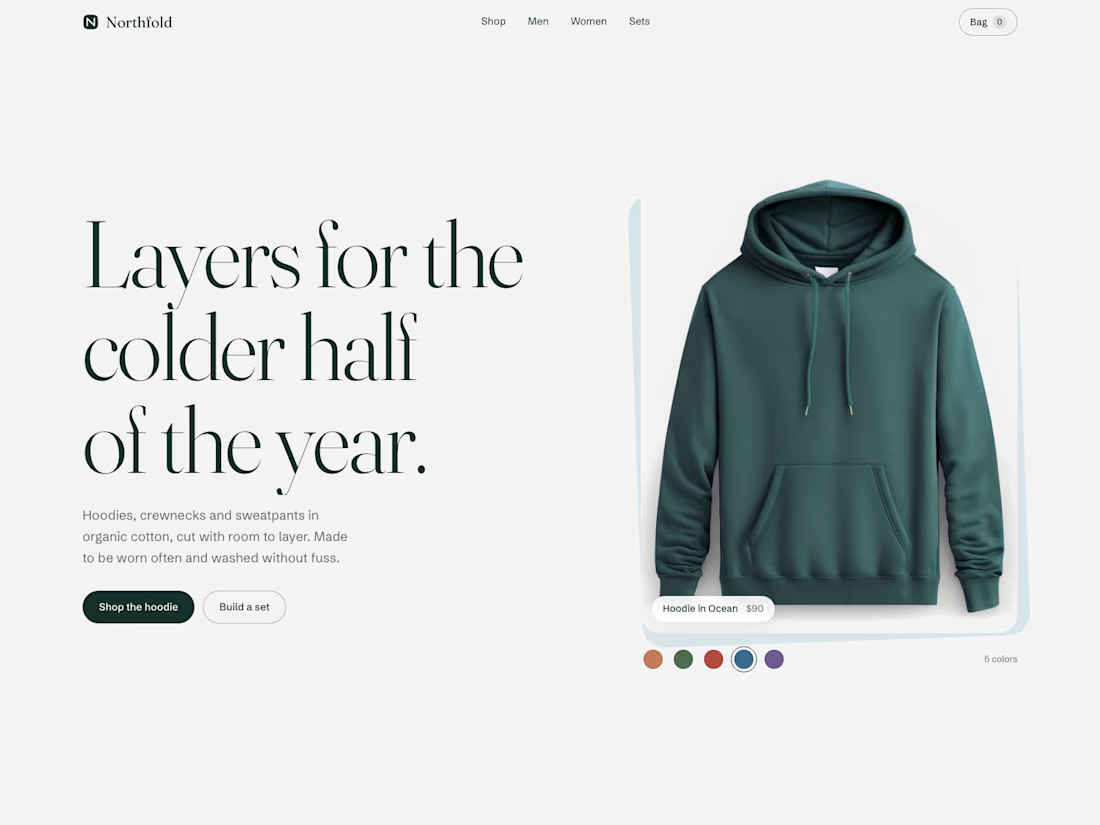

Impressive build. The shareable filters and persistent cart show great attention to the shopping experience.


Clean layout pure focus