Fresh Ink’s Guided Intake Brings Tattoo Ideas Closer to Booking
A person who enquires about a tattoo will have further questions.
For Fresh Ink, the (fictional) custom linework tattoo studio based in Saint Paul, Minnesota, often has to repeat itself when inquiries are incomplete. Although the client has shown interest, the owner hasn't received enough information to proceed with the conversation.
This entry from the Lovable Challenge centres on that initial interaction. The process is a structured way to take in the inquiry and turn it into a more definite booking request, without jeopardizing the artist's professional judgment.
The idea is simple: let clients share useful information earlier, reducing the number of basic explanations the owner has to repeat. This is the intention behind the design, not a measurable result.
The client problem starts before booking.
A person may have an idea for a tattoo but not know how to express it in a way that is useful for an inquiry. Placement, size, references, and timing all contribute in their own way to the overall picture. If any of these aren't clear, it can lead to another conversation before the owner can explain what follows.
The client needs help figuring out what information matters, while the owner needs enough background context so that they don't have to gather the same basic details over and over.
The design challenge is to make the exchange easier for both parties.
The intake form should allow the client to state an idea without needing the confidence or extensive vocabulary of an experienced tattoo artist; it should also allow for uncertainty. Although the client's first preferences serve as the basis for the discussion, the artist must still interpret them.
For Fresh Ink, the goal is to clarify that starting point by focusing on what incomplete inquiries leave unresolved, rather than moving to an unverified booking process.
Before the guided intake
The initial workflow includes owner effort when an inquiry comes through with insufficient details and the owner then has to ask follow-up questions.
Those questions concern the same recurring areas:
Where the client wants the tattoo.
References: The way in which the idea is communicated.
When the client wishes to proceed.
What comes next: the actions that are required after the inquiry.
Every topic has a valid role in the discussion, and we repeatedly revisit them because the client has already contacted us.
That distinction is important. You can't eliminate all follow-up questions, since custom work involves discussion and an intake cannot predict every consideration an artist might bring up.
A more focused and practical aim should be to cut down on unnecessary repetition. When the first request includes clearer context, the owner can spend less effort laying out the basics and instead focus on the specific idea.
It is still a beneficial aspect of the workflow. The submission does not indicate how much time the intake would save or how it would impact booking outcomes.
The intended workflow after guided intake
The suggested change takes place at the start of the inquiry.
A guided intake gives the client a more organized way to make a booking request. Rather than completely depending on the client to know what information to give, the process is designed to help get the pertinent information into the conversation sooner.
The before-and-after comparison is simple:
Until the inquiry is complete, the owner must obtain missing information through follow-up questions.
This happens after a guided inquiry results in a more specific request that gives the artist greater context to consider.
The word request matters: completing an intake shows interest and provides information, but it does not mean the artist has agreed to the work or that a booking is complete.
It is therefore advisable for the artist to begin with the intended handover. A clearer request can help facilitate the discussion without controlling the outcome.
This boundary helps keep the project progressing and improves the quality of the inquiry, while the artist remains responsible for their professional judgment.
Areas that make an inquiry clearer
Repeated questions offer a useful way to clarify the purpose of the intake. Each section explains one different part of the client's request.
References function to indicate direction.
References clarify what the client has in mind and can help with talks about things words alone might not make clear.
For a custom linework studio, the key is to distinguish between giving direction and deciding on the final piece; the intake should support the first while preserving the artist's judgment on the second.
The timing of things makes it easier to talk about expectations.
It is useful for a booking request to have the customer's preferred timing. The fact that this preference is recorded should not be taken to mean that availability has been checked or that a date has been secured.
Separating those meanings makes the request clearer to the client, as it prevents them from taking the intake as confirmation.
The following steps will set clear limits on the inquiry
An intake should help the client understand why they're providing the information; it should then amount to a distinct request for consideration.
Reducing repetition
The owner-effort argument rests on the humble expectation that clearer formation earlier on will reduce the need for some time-consuming clarification later.
This submission does not provide any measured time savings; its value lies in the suggested change to how the inquiry starts.
There also exists a limit. Even if a request is thoroughly described, it may still call for further questions, discussion, or amendment. The artist might need to look into some details which a general intake cannot deal with.
The project must therefore provide for two types of work: guided intake can gather the basic context, and professional review will still be needed to interpret that context and decide how the conversation should proceed.
If you consider those different roles on their own it is possible to prevent a misleading interpretation of efficiency. Fewer questions from owners would only help insofar as the request still allows for attentive discussion. The experience would suffer if we removed the necessary discussion.
The aim is to be more specific by reducing the need to ask the same introductory questions while still retaining the level of attention required for custom tattoo work.
What the demo shows
The demonstration shows the guided-intake idea and the change it aims to make from an incomplete inquiry to a more definite booking request.
The main focus is the handoff; the experience should help convey what the client has in mind while also allowing the artist to evaluate the request. A well-designed interface alone would not achieve that advantage.
Three questions provide a useful lens for viewing the submission:
Does the experience involving guidance make the aim of the inquiry clear?
Can it provide the information necessary to understand the client's request?
Does it retain the difference between making the request and getting the booking decision?
The questions remain focused on the problem that Fresh Ink has stated. The submission makes no assertions about live integrations, calendar syncing, payment processing, customer usage, completed bookings, or measurable results.
The text focuses on the proposed intake workflow and the clearer kind of conversation it is meant to facilitate.
Explore the submission
Fresh Ink's submission in the Lovable Challenge addresses a particular aspect of the owner's work: the need to clarify incomplete tattoo inquiries repeatedly.
The build’s intended contribution is a more useful first request, with the client better guided through the information that matters and the artist’s judgment preserved.
View the project and demo to explore that proposed handoff:
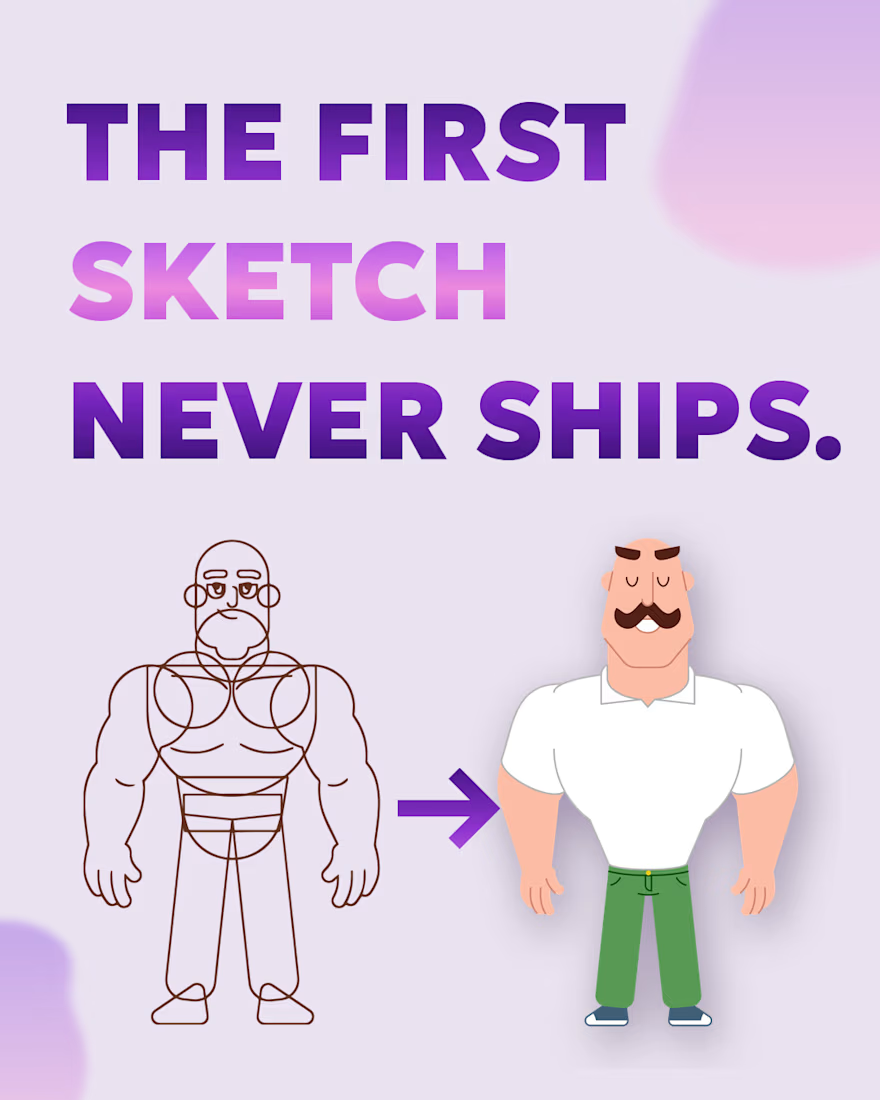
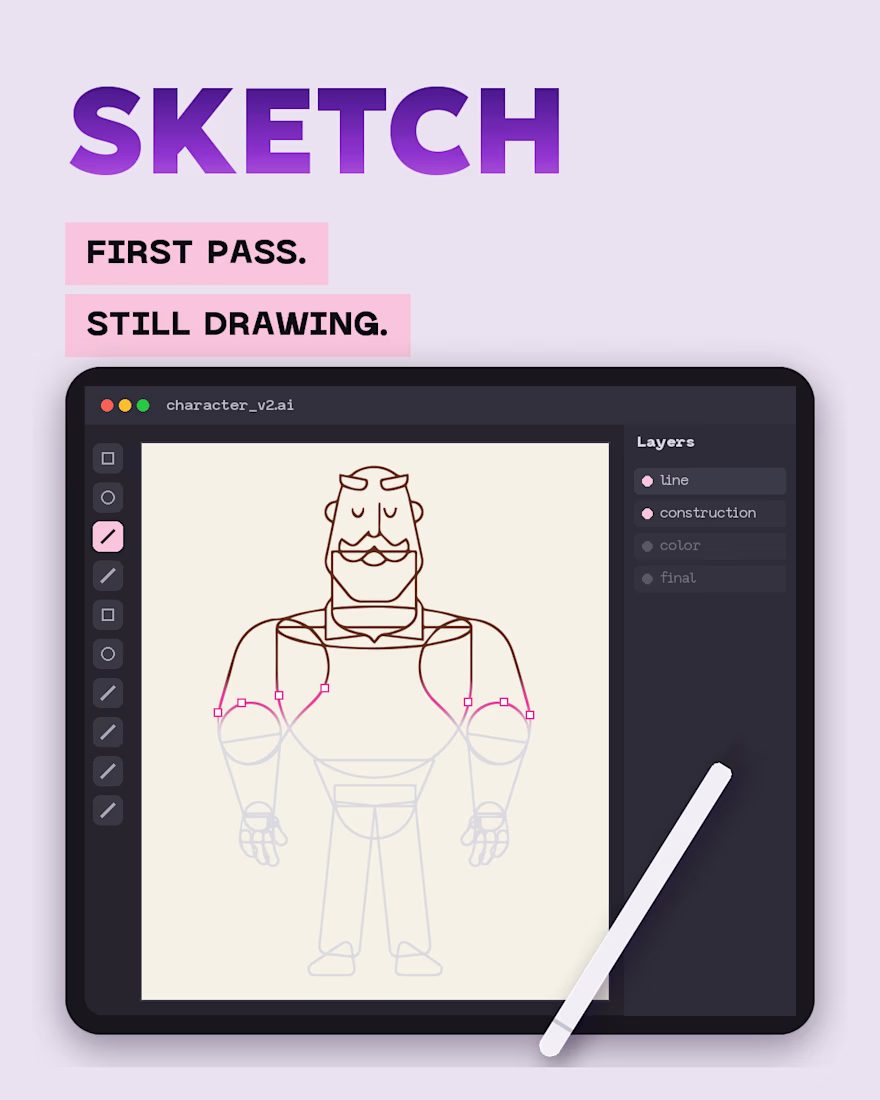
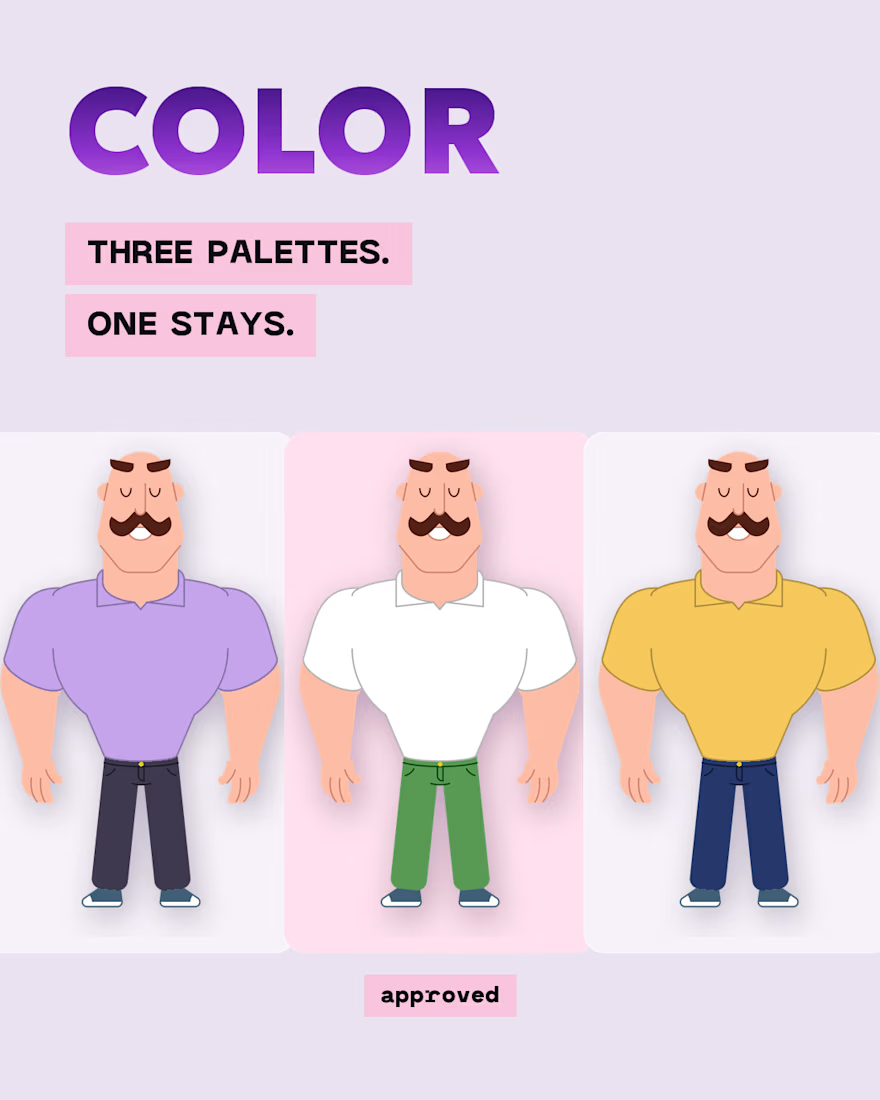
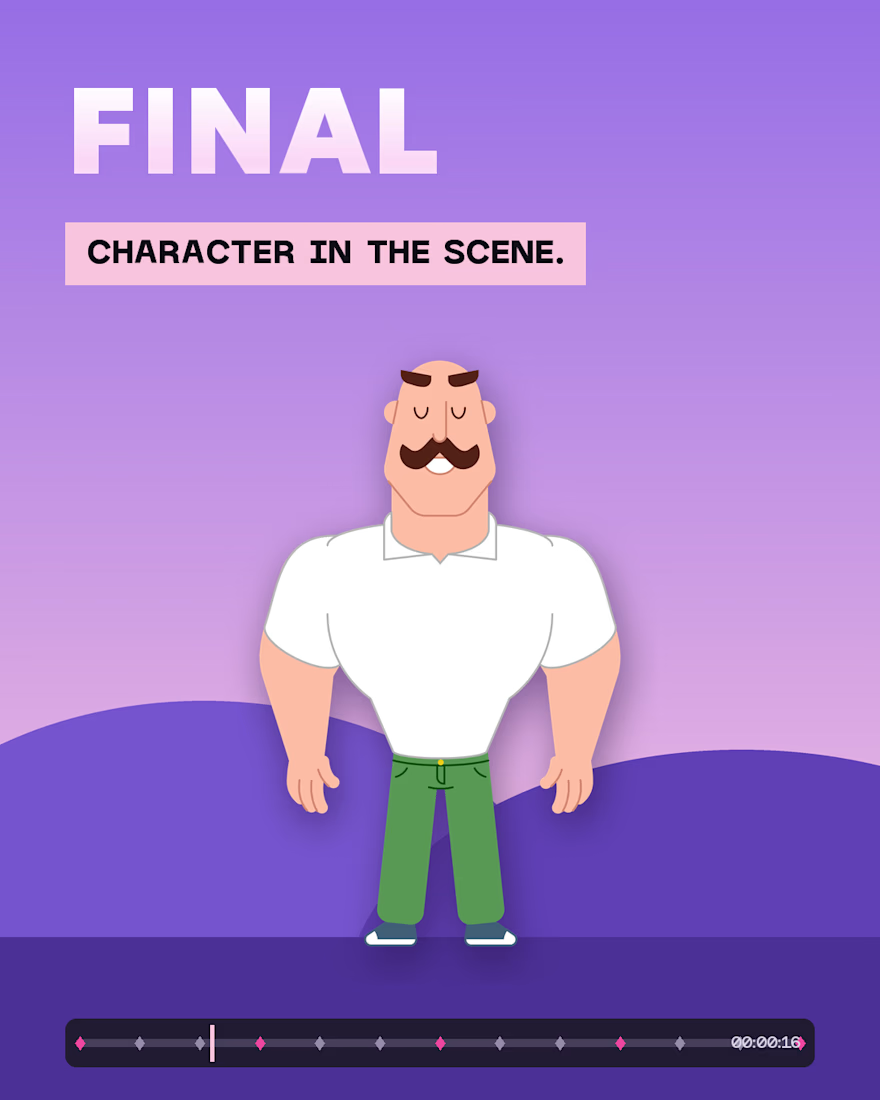
A motion designer recently watched a one-minute branded animation recreated from their visual reference in roughly 15 minutes.
The most interesting question wasn’t whether the result looked good.
It was what happens when the client asks for precise revisions, consistent branding, editable files, and changes that need to carry across every scene.
The first draft is becoming cheaper.
Creative control is not.
For real client work, where do you think the value sits now?
- Speed to the first draft
- Consistency through revisions
- Editable delivery
- Taste and creative direction
I’m especially curious whether clients and creatives would answer this differently.