The network for creativity
Join 1.25M professional creatives like you
Connect with clients, get discovered, and run your business 100% commission-free
Creatives on Contra have earned over $150M and we are just getting started
Back to feedPost

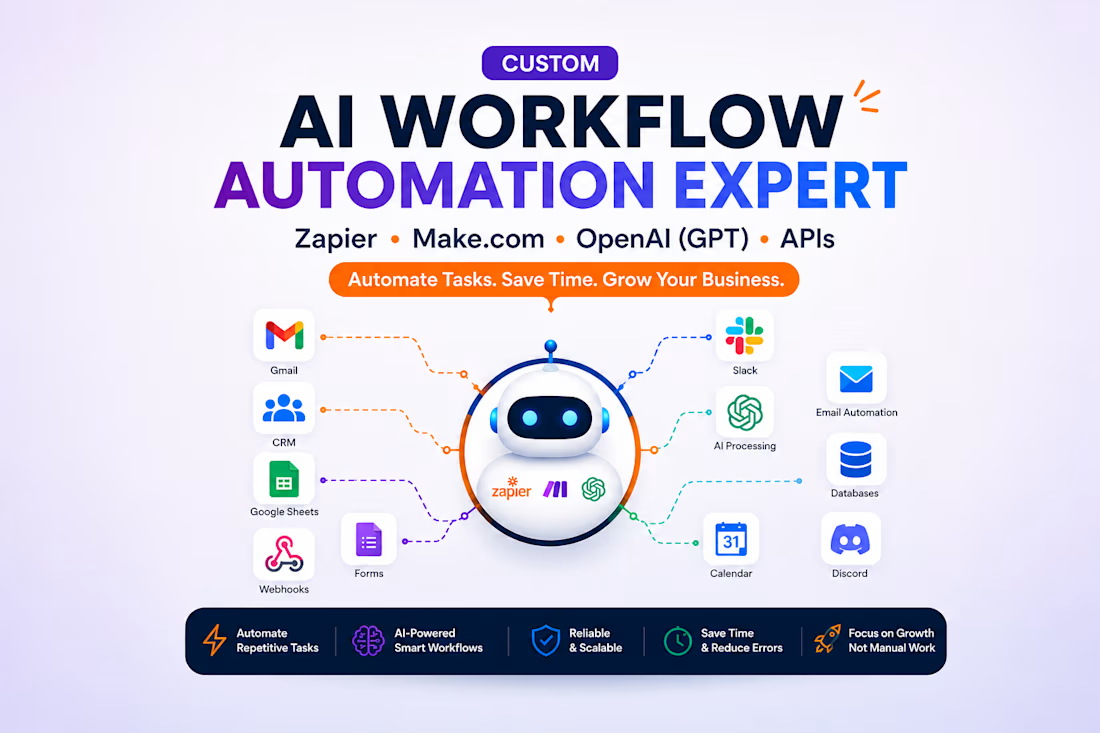
AI is no longer just about chatbots it's becoming the engine behind smarter business operations.
Every business has repetitive tasks that consume valuable time. The right AI workflow can automate those processes, reduce manual effort, and keep everything running seamlessly.
That's exactly what I help businesses build.
With OpenAI (GPT), Zapier, Make.com, APIs, and custom workflow automation, I help businesses connect their tools, eliminate repetitive work, and build smarter, more efficient processes.
Feel free to check out the service on my Contra profile.

The network for creativity
Join 1.25M professional creatives like you
Connect with clients, get discovered, and run your business 100% commission-free
Creatives on Contra have earned over $150M and we are just getting started



Related posts

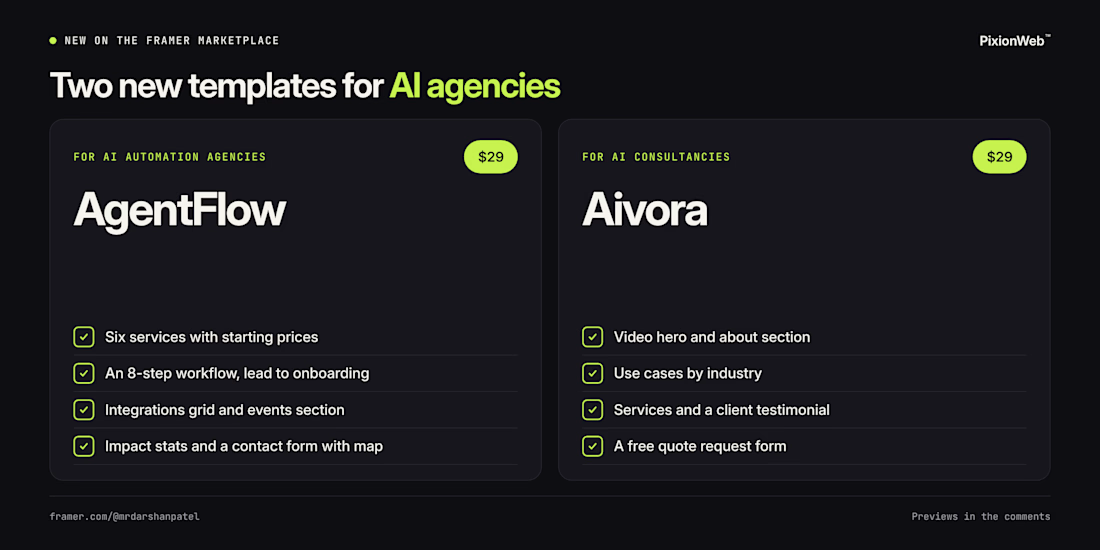
Most AI agency websites explain the technology. Buyers want to know what changes in their business. 🤖
So we built two templates around that:
AgentFlow, for automation agencies: an 8-step workflow from first lead to onboarding, plus services with starting prices.
Aivora, for AI consultancies: one block per industry (healthcare, e-commerce, finance, education), so visitors find their own use case in one scroll.
Both are now on the Framer Marketplace. Previews and links in the first comment.
Which approach would win you more sales calls? 👇


Nice job

For one of my latest hero animations, I built an interactive grid background in @Rive 🟦
Not long ago, something like this meant either digging into code or animating every square by hand — which would have been a nightmare to optimize with this many cells.
Now, with Claude, it takes minutes.
The real skill isn't the tool — it's knowing exactly what you want and how to guide it there. AI doesn't replace taste or direction, it just removes the busywork between the idea and the result.
How are you using AI in your motion workflow — or are you still skeptical? 👇


One of the harder problems in AI product design is the gap between what the AI can do and what users expect it to do. I've been thinking about this a lot while working on conversational commerce interfaces.
The challenge with AI chatbots for eCommerce isn't the intelligence — it's the interaction design. The difference between a product advisor that converts and one that gets dismissed comes down to a few specific things: how quickly it reaches a useful recommendation, whether the language feels human, and whether it asks one question at a time rather than presenting a wall of options at once.
My process starts in Figma, mapping out the conversation as a user journey rather than a technical flow. Each decision point in the chat isn't just a question — it represents a moment where the user either stays in the flow or disengages. I think carefully about what the user knows and what they're uncertain about at that exact moment in the browsing session, and design the agent prompt accordingly.
What I've found works consistently: establish context before asking anything. If the first message explains why the assistant is there and what kind of help it can offer, the user reads every subsequent question differently. That framing changes the entire interaction quality.
This design-first thinking also shaped how I approached the Askflow no-code builder. Campaigns are represented as visual nodes — conversation steps you can see, sequence, and rearrange — so marketers can think about the conversation logic without touching code. The goal was to put design control closer to the people who understand the customer.
If you're building anything with conversational AI, design the interaction model before you touch the tech layer. It's the part that's hardest to fix once you've shipped.
