The network for creativity
Join 1.25M professional creatives like you
Connect with clients, get discovered, and run your business 100% commission-free
Creatives on Contra have earned over $150M and we are just getting started
Back to feedPost

Two experienced English teachers can listen to the same student and arrive at different speaking scores.
Why?
Not necessarily because one is right and the other is wrong.
Sometimes, they are paying attention to different aspects of the performance.
One assessor may focus on grammatical accuracy. Another may give more weight to fluency, while a third may interpret hesitation or pronunciation differently.
A speaking rubric can help, but simply giving teachers the same rubric doesn't automatically mean they will interpret it in the same way.
What matters is how assessors discuss the criteria, identify evidence in student responses, and explain their judgments.
This has become an important part of my work in English-language assessment and educational research.
I've recently developed an ESL Speaking Assessment Rater Calibration Mini-Lab, designed to help teachers examine differences in scoring decisions and practise evidence-based assessment discussions.
The resource includes structured calibration activities, scoring guidance, and practical materials for teacher professional development.
It's intended as a training resource, not a validated assessment benchmark.
You can explore it here:
https://www.teacherspayteachers.com/Product/ESL-Speaking-Assessment-Rater-Calibration-Mini-Lab-Teacher-Scoring-Feedback-17916219
A question for fellow English teachers and assessors:
When you assess speaking, which criterion do you find most difficult to apply consistently: fluency, pronunciation, grammatical accuracy, or interaction?
I'd be interested in hearing how you approach it.
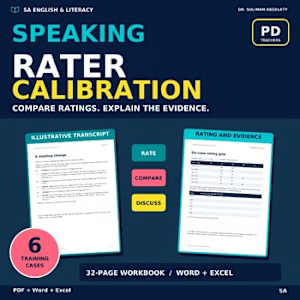
teacherspayteachers.com
ESL Speaking Assessment Rater Calibration Mini-Lab | Teacher Scoring & Feedback
What makes two teachers give different scores to the same response? Use this practical speaking-assessment mini-lab to examine the evidence, interpret descriptors and discuss the reasoning behind a rating.ESL Speaking Assessment Rater Calibration Mini-Lab | Teacher Scoring & Feedback Training is…
The network for creativity
Join 1.25M professional creatives like you
Connect with clients, get discovered, and run your business 100% commission-free
Creatives on Contra have earned over $150M and we are just getting started








Related posts

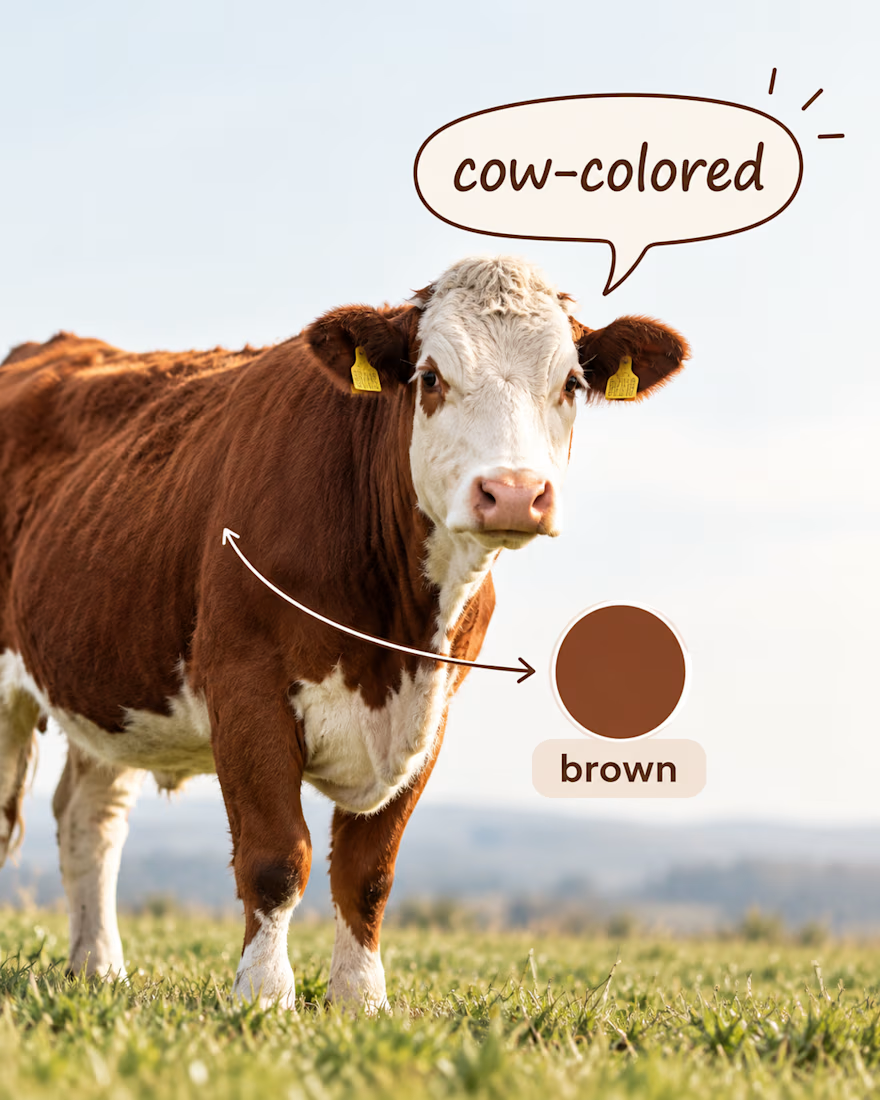
This month a supplier in China told me a product was "cow-colored." He meant brown.
I laughed, and then I remembered this has cost me.
This year I lost a role because I couldn't communicate well with a client: neither of us had English as a first language, and we didn't understand each other. On another urgent job I misread the scope, and that cost me too.
I learned that English matters, but there's a deeper skill that doesn't depend on language: saying ideas in simple, logical terms.
Now I rephrase my questions to remove ambiguity. Just like with LLMs, where prompt engineering matters, communicating clearly and with context is fundamental on any team.
What's a phrase that got misunderstood on your international team?




The oversized italic serif against the dark card is doing all the work here. It feels like a magazine pull quote, not a widget. That little carousel control at the bottom right is a nice touch too. Are the quotes auto-rotating, or does the user drive it?

Language Trainer — AI-Powered Language Learning App
Language Trainer brings AI writing feedback, personal vocabulary, structured grammar lessons, and review exercises into one learning workspace. Users can understand their mistakes through clear explanations, save words and phrases with contextual examples, and practice through translation, spelling, and contextual responses. A progress dashboard connects vocabulary and grammar activity with suggested next steps.


